
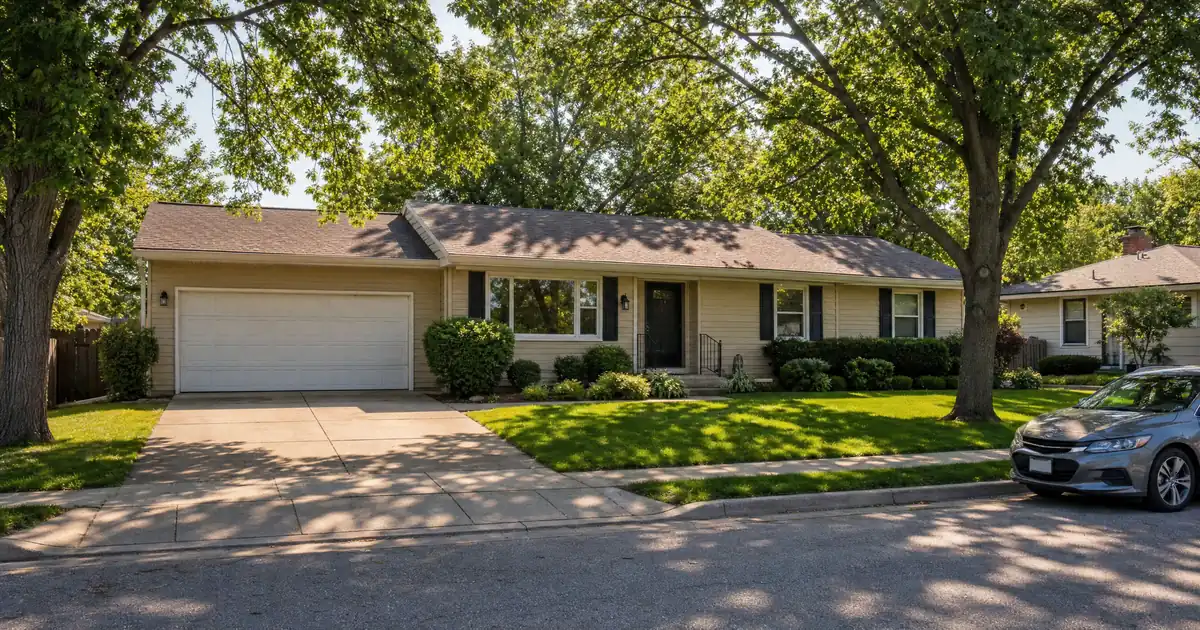
The Quick Read: Refinancing an investment property makes sense in three cases. First, the new loan clears the lender’s minimum debt-service coverage. Second, the equity you pull out or the rate improvement beats the closing costs and any prepayment penalty. Third, you plan to hold the property long enough to recoup those costs. It rarely makes sense if the property already runs tight on cash flow, you plan to sell soon, or the new payment drops coverage below what the lender wants. Everything else comes down to running the math on your specific property. There’s no generic rule that applies to every deal.
DSCR Calculator
Run the numbers in your market
Rate source: Freddie Mac 30-yr average via FRED® — Federal Reserve Bank of St. Louis · effective Jul 30, 2026
Prefilled with starting assumptions — enter your own rent or nightly figures, taxes, insurance, and HOA for a more accurate picture.
Program parameters update from Lendmire’s centralized guideline source. Taxes and insurance are editable estimates.
As of Jul 30, 2026 · General Freddie Mac market benchmark, not a Lendmire loan offer. Rent, nightly rate, occupancy, taxes, and insurance are editable estimates. Short-term rental figures are estimates only and vary significantly by season, property type, management approach, and local short-term-rental rules — confirm local regulations before relying on them. Qualifying income for short-term rentals varies by program — some use appraisal market rent, others use documented STR history or projections — and is confirmed in underwriting. Not a Loan Estimate, approval, or commitment to lend. Program availability and eligibility are subject to lender guidelines, credit approval, property review, and underwriting.
Refinancing a rental isn’t like refinancing the house you live in. The property’s income has to support the new payment on its own. The qualification path works differently too. And if you get it wrong, the cost hits your investment return — not just a monthly bill. Here’s how to actually work through the decision.
Good Reasons to Refinance a Rental Property
The strongest reasons to refinance share one trait. The new loan gives you more usable equity, better coverage, or lower risk than the loan it replaces — without wrecking your cash flow.
Pulling cash out to buy the next property. This is a common reason active investors refinance. A rate-and-term refinance resets your terms without touching the balance. A cash-out refinance increases the loan and hands you the difference. Most lenders in Lendmire’s network cap this around 75% loan-to-value on investment properties. That’s a lower ceiling than purchase-money leverage on the same property, because pulling equity out carries more risk than simply repricing existing debt. Investors use that cash to fund a down payment on the next deal. This is the core move behind BRRRR-style scaling: recycle your equity instead of raising new capital every time.
Converting a former primary residence into a fully financed rental. A house that started as an owner-occupied purchase and is now leased out often refinances more cleanly than a property that was always an investment. Why? It usually comes with a longer operating history and clearer rent documentation. Lendmire’s guide to refinancing a primary residence into an investment property walks through that transition step by step.
Improving the debt-service coverage ratio. Has your rent grown since the original loan closed? Refinancing into a new note sized to that stronger rent roll can lift your coverage ratio. That, in turn, can open better leverage or terms on your next deal. But this only works if you run the math on the new payment — not the old one. More on that below.
Switching structures. Some investors move off an adjustable-rate note and into a 30-year fixed. Others restructure into an interest-only period to free up monthly cash for repairs or reserves. Both options exist through select lenders in Lendmire’s network. Both count as legitimate reasons to refinance, even when no cash comes out.
When Refinancing Doesn’t Make Sense
Refinancing usually fails the math test in four situations. Your remaining hold period is too short to recoup closing costs. The new debt-service coverage ratio drops below what the lender requires. An existing prepayment penalty eats the benefit. Or the property doesn’t have enough equity to reach a workable loan-to-value.
Short hold periods are the easiest kill switch. Closing costs on a refinance are a real, upfront cost. If you plan to sell in the next year or two, you often don’t have enough time left to recover them — no matter how good the new terms look on paper.
Tight coverage trips up refinances almost as often. A property that comfortably supported its original loan at a lower balance can fail to clear a lender’s minimum coverage ratio once the loan amount goes up. Cash-out refinances are the classic example here. A bigger balance means a bigger monthly obligation measured against the same rent.
Prepayment penalties on your current loan are the piece investors miss most. Non-QM investor loans commonly carry step-down penalty structures calculated against the payoff balance. And unlike consumer mortgages, no federal cap forces these penalties to expire in three years. That penalty is a real dollar cost. You have to subtract it from any equity or rate benefit before you know if the refinance actually helps.
Weak equity closes the door outright. If the property hasn’t appreciated, or the balance is still high relative to value, you may not have enough room to refinance into a workable loan-to-value for cash-out purposes.
Rate-and-Term vs. Cash-Out: What’s Actually Different
These are two different transactions with two different risk profiles. Lenders treat them differently on leverage.
| Factor | Rate-and-Term Refinance | Cash-Out Refinance |
|---|---|---|
| Loan balance | Same or lower | Increases; investor receives the difference |
| Typical max LTV | Follows standard purchase-style leverage | Generally capped near 75% |
| Seasoning | Often minimal | Commonly around 6 months of ownership expected |
| Primary use case | Improve terms, switch structure | Fund next purchase, renovation, debt payoff |
| Coverage impact | Payment often flat or lower | Payment typically rises — recheck DSCR |
A rate-and-term refinance is the lower-risk move. You create no new debt, so your coverage math usually holds close to where it was. A cash-out refinance is a bigger swing. You take on more leverage, a bigger payment, and a real seasoning expectation. Most lenders in the network want to see around six months of documented ownership before they’ll even consider it.
How DSCR Qualification Works on a Refinance
DSCR loans qualify mainly on one thing: does the property’s rent cover the payment? This is subject to lender guidelines. It doesn’t rely on your personal income documentation. On a refinance specifically, the lender recalculates the ratio using the proposed new payment — not the payment on the loan you’re replacing. That detail trips up otherwise-solid deals more than any other.
Here’s the trap. A property that cash-flows fine on its current, smaller loan can post a much different — and sometimes worse — coverage number once the balance goes up, the rate resets, or both happen at once. Across the wholesale network Lendmire works with, most programs use a 1.00 coverage ratio as a starting floor for select programs. That’s not a universal standard. Properties that clear meaningfully above that number typically unlock stronger leverage and pricing tiers. Files sitting right at the line get more scrutiny on reserves and credit.
It helps to be precise about what DSCR actually measures. It’s rent divided by the monthly principal, interest, taxes, insurance, and association dues (PITIA). Nothing else. Clearing 1.00 doesn’t mean the property is cash-flow positive the way an investor thinks about profit day to day. Vacancy, repairs, management fees, utilities, and capital expenses all sit outside that ratio. A property posting a 1.10 DSCR on paper can still break even — or lose money — once you factor in real operating costs. The ratio measures debt coverage, not profit.
Credit and leverage move together across the network. Some parts of the network use a 620 floor, but most programs want something closer to 660. Borrowers at 700 or above typically see access to the strongest leverage tiers — commonly up to 75-80% loan-to-value on a purchase, with select high-leverage programs reaching 85% for borrowers who clear roughly a 700 score. On a cash-out refinance specifically, leverage tops out closer to 75% loan-to-value across most of the network, regardless of credit tier. That reflects the added risk of pulling equity out rather than simply repricing debt.
Reserve requirements vary by lender, leverage, loan size, and transaction type. There’s no single number that applies everywhere. A conservative rate-and-term refinance at modest leverage under roughly $1,500,000 can sometimes see reserves waived entirely. A more common expectation across the network runs around six months of PITIA. Loans above roughly $1,500,000 typically step up to around nine months. Loan sizes in the network generally run from smaller balances handled by select lenders up to roughly $3,000,000 on standard programs. Anything above roughly $2,500,000 is generally structured as 30-year fixed rather than shorter or adjustable terms.
Picture a duplex that has appreciated in value. It refinances at a conservative loan-to-value ratio, and the rent comfortably clears a solid coverage cushion on the new payment. That’s a clean file — plenty of cushion on both equity and coverage. Now picture a single-family rental refinancing at a higher loan-to-value ratio, with coverage landing right around the program floor. That’s a thinner file. It may still work, but expect closer review on credit tier and reserves — and less room for error if rent softens.
Portfolio Investors: Why This Gets Harder With Each Property
Coverage math doesn’t get harder just because you own more properties. But documentation and reserve stacking do. Each additional financed rental in a portfolio typically means the lender wants to see reserves not just for the subject property, but often layered across the whole portfolio. Rent documentation gets more detailed too — leases, proof of collected rent, sometimes 12 months of payment history on newer leases. This is one practical reason DSCR financing appeals to investors scaling past four or five properties. It isn’t underwritten off personal debt-to-income the way conventional financing is. So a growing portfolio doesn’t automatically choke off your next refinance the way it can with agency lending. Lendmire’s breakdown of investment property loan rules covers more of what changes as a portfolio grows.
Self-employed investors and those holding property in an LLC face a related but separate issue. Tax write-offs that reduce your taxable income can also reduce the income a conventional lender sees on your return — even though the property performs fine. DSCR lender review sidesteps that entirely by looking at the property’s rent instead of your tax return. That’s often why an investor who “doesn’t qualify” for a conventional refinance still qualifies for a DSCR one on the exact same property.
Short-Term Rentals: A Different Refinance Profile
Short-term rental properties refinance on a tighter leverage band than standard long-term rentals across most of the network. Purchase money reaches up to 75% loan-to-value. Refinances generally sit closer to 70%. Cash-out refinances also cap around 70%. Lenders typically want to see roughly 12 months of hosting history and a 640-plus credit score, with coverage still measured against a 1.00 floor on select programs.
The appraisal side is where STR refinances get complicated. Standard rent-schedule appraisal forms are built around comparable monthly leases — not nightly rates multiplied out over a month. So the appraiser’s stated market rent on an STR property can understate what the property is actually earning. This is why STR-specific income documentation, rather than a standard rent schedule, tends to drive qualification on these files. Short-term rental rules can also vary by city, county, HOA, and property type. Confirm local rules before you rely on projected rental income.
What’s Not Eligible
A handful of property types fall outside DSCR programs entirely across the network. Manufactured homes — both single- and double-wide — log homes, and barndominiums don’t qualify. These aren’t “harder to finance.” They simply aren’t offered under these programs. If you own one of these, expect to look at different financing altogether rather than a DSCR refinance.
State Overlays Worth Knowing
The standard program carries no state-specific leverage overlays on DSCR purchases. In Connecticut, Florida, Illinois, and New Jersey, purchase leverage reaches the same 80% loan-to-value seen elsewhere, and loan amounts follow the same standard limits. Individual lenders can add tighter overlays of their own, so confirm the specific number against the actual program before you assume anything.
A Practical Decision Order
Work through these steps in order, not all at once:
1. Check the coverage ratio on the new payment. Not the old one. If rent doesn’t clear what the target program requires, nothing else matters yet.
2. Confirm seasoning. Cash-out refinances commonly expect around six months of ownership; rate-and-term refinances are typically more flexible.
3. Price the prepayment penalty on the current loan, if one exists, against the benefit of the new terms.
4. Add up closing costs and compare against the hold period remaining.
5. Check the equity position against the leverage ceiling for the transaction type — 75% is the common cash-out ceiling across most of the network.
6. Confirm reserves. Larger loans and higher leverage generally require more months of PITIA in reserve.
If a property clears steps 1 and 2 but stumbles on 3 or 4, the refinance may still be directionally right — just not right now. If it stumbles on step 1, shift the conversation. Consider a smaller cash-out amount, a rate-and-term instead of cash-out, or simply waiting for rent to grow.
Here’s an experience note from working these files. The deals that get stuck usually aren’t the ones with weak coverage — those get caught early and restructured. The real trouble comes from deals where the investor assumed the old loan’s coverage number would carry over to the new balance. It never does. Run the ratio on the proposed payment before you order an appraisal. That single habit saves the most wasted time on any refinance file.
Tax treatment can depend on how you use the funds and how you hold the property. Keep clear records and speak with a qualified tax professional before you rely on any deduction.
DSCR loans are built for non-owner-occupied investment properties. Because they’re business-purpose investor loans, lenders review them differently than a standard owner-occupied mortgage. That’s part of why the qualification path runs through the property’s rent instead of your personal income.
Key Terms Defined
DSCR (debt-service coverage ratio): the property’s monthly rent divided by its monthly principal, interest, taxes, insurance, and association dues — a measure of whether rent covers the payment, not overall profitability.
Cash-out refinance: a new loan larger than the payoff balance on the existing loan, with the difference disbursed to the borrower as cash.
Rate-and-term refinance: a new loan that pays off the existing balance and resets terms without increasing the loan amount or extracting cash.
Seasoning: the minimum length of ownership a lender requires before a cash-out refinance is eligible, commonly around six months on DSCR programs.
PITIA: principal, interest, taxes, insurance, and association dues combined — the full monthly obligation used to calculate DSCR.
Reserves: liquid funds a borrower must show available after closing, typically expressed in months of PITIA.
For deeper background on the mechanics discussed here, see CFPB Regulation Z §1026.3 Exempt Transactions and CFPB Regulation Z §1026.3 Official Interpretations.
Frequently Asked Questions
Should I refinance my investment property?
Refinance if the new loan clears your lender’s minimum coverage ratio on the new payment, the equity gained or rate improvement outweighs closing costs and any prepayment penalty, and you plan to hold long enough to recoup those costs. If any of those three fail, it’s usually better to wait or restructure the request — a smaller cash-out amount or a rate-and-term instead of cash-out, for example.
Can you refinance an investment property loan?
Yes. Both rate-and-term and cash-out refinances are available on investment property loans, including DSCR loans, subject to lender approval and program guidelines. The property’s rental income, not the borrower’s personal income documentation, typically drives qualification.
Can you refinance an investment property?
Yes, as long as the property has enough equity to support the target leverage and the rent covers the new payment at whatever coverage ratio the chosen program requires. Manufactured homes, log homes, and barndominiums fall outside DSCR programs and would need a different financing path.
How to refinance investment property?
Start by checking the coverage ratio on the proposed new payment, then confirm seasoning (commonly around six months for cash-out), price any prepayment penalty on the current loan, total the closing costs against your remaining hold period, and confirm the equity position supports the leverage needed — cash-out refinances commonly cap near 75% loan-to-value across the network.
Can I refinance if I own more than one rental property?
Yes, though documentation and reserve requirements often increase with each additional financed property. DSCR lender review, which is based on the subject property’s rent rather than the borrower’s overall debt-to-income, tends to scale better across a growing portfolio than conventional financing does — a large part of why active portfolio investors lean on it for repeat refinances.
About Lendmire
Lendmire (NMLS# 2371349) is a mortgage broker that arranges DSCR investor loans through select lenders in its wholesale network, spanning 40 states plus Washington, D.C. — 41 markets total. Lendmire doesn’t fund or underwrite loans directly. It structures files and places them with lenders in that network, subject to lender approval and program guidelines. For a broader walkthrough of how these loans work end to end, Lendmire’s complete DSCR loans guide is a good starting point, and its playbook on investment property refinancing goes deeper into refinance-specific strategy. Have you tried a local bank first and hit a wall on documentation or portfolio limits? Lendmire’s piece on local banks and investment property refinancing offers useful context on why DSCR ends up being the workable path for many rental owners. Scotsman Guide named Lendmire a Top Mortgage Workplace in both 2025 and 2026.
No loan approval is guaranteed, and nothing here is a commitment to lend. Every scenario described here is subject to lender approval and to your credit profile, the property’s condition and income, and the guidelines of the program ultimately used. This article is general information only. It isn’t financial, legal, or tax advice — confirm current program terms and consult qualified professionals before you make a refinance decision.
Get Started
Ready to find the right loan for you?
In about 30 seconds you can review financing options available for your investment property. No commitment required.
Informational only. Not a Loan Estimate, approval, or commitment to lend. Program availability and eligibility are subject to lender guidelines, credit approval, property review, and underwriting.
References
1. CFPB Regulation Z §1026.3 Exempt Transactions
2. CFPB Regulation Z §1026.3 Official Interpretations
This article is part of Lendmire’s DSCR loan program — full qualification details, guidelines, and scenarios live on the program page.
Related reading: Investment Property Loan Rules You Should Know · Can a DSCR Loan Be Refinanced? · Cost to Refinance an Investment Property Mortgage
Brandon Miller
Founder & CEO, Mortgage Loan Originator, Lendmire LLC
- Mortgage Loan Originator · NMLS# 1129696 · Verify on NMLS Consumer Access
- North Carolina Real Estate Broker · License# 343312 · Verify on NCREC
- North Carolina Insurance Producer · License# 19053198 · Property, Casualty, Life, Health · Verify on NAIC SBS
- Lendmire LLC · Firm NMLS# 2371349 · Verify firm licensure
Compliance and disclosures. Lendmire (NMLS# 2371349) is a licensed mortgage broker and is not a direct lender, depository institution, financial advisor, or tax professional. Content in this article is general market analysis and educational information — not financial, legal, or tax advice for any specific situation. Lendmire does not guarantee loan approval; every transaction is subject to underwriting by the funding lender. Mortgage pricing and loan program guidelines are subject to change at any time without notice and vary by borrower characteristics, property type, and state regulations. Lendmire complies with Equal Housing Opportunity. Licensure verification: NMLS Consumer Access.