
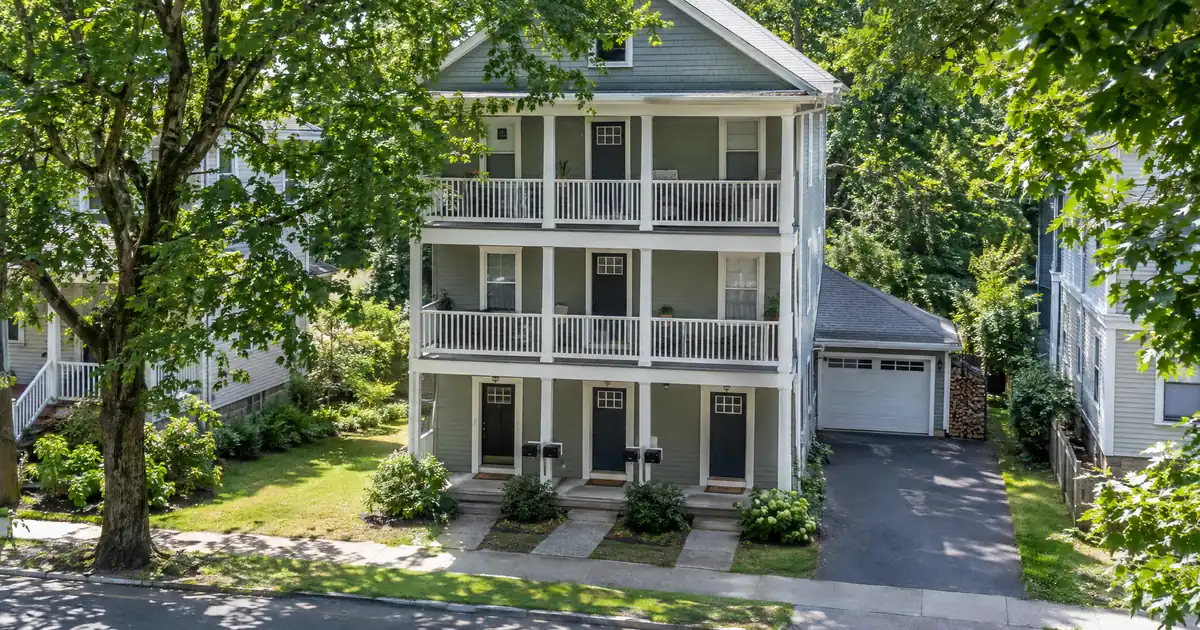
The Quick Read: To show enough reserves on a 2–4 unit cash-out refinance, document liquid assets that exceed a set number of months of the new loan’s full monthly payment (principal, interest, taxes, insurance and association dues) after closing costs and payoff shortfalls are paid. Across most programs in Lendmire’s wholesale network, that number is commonly around 6 months, subject to lender guidelines.
- Reserves are measured after closing, on the new and larger payment, not the old one.
- Rent coverage and reserves are two separate tests, and passing one does not waive the other.
- Cash counts in full, while retirement and brokerage balances are usually discounted.
- Loans above $1,500,000 typically step up to about 9 months.
Key Terms Defined
Reserves: Verified liquid funds left in your accounts after the loan closes, expressed as months of the monthly payment.
PITIA: Principal, interest, taxes, insurance and association dues, which together make up the full monthly obligation on the property.
DSCR (debt service coverage ratio): Qualifying monthly rent divided by PITIA, the property-level test that runs alongside the reserve test.
Seasoned funds: Money that has sat in your account long enough, with a clear paper trail, for the lender to treat it as yours.
Cash to close: The money needed at closing for costs and any payoff shortfall, which is separate from reserves and is subtracted before reserves are counted.
DSCR Cash-Out Calculator
Run the cash-out numbers in your market
Rate source: Freddie Mac 30-yr average via FRED® — Federal Reserve Bank of St. Louis · effective Oct 29, 2026
Prefilled with starting assumptions — enter your property’s value, balance, taxes, and insurance for a more accurate picture.
Program parameters update from Lendmire’s centralized guideline source. Taxes and insurance are editable estimates.
As of Oct 29, 2026 · General Freddie Mac market benchmark, not a Lendmire loan offer. Property value, balance, taxes, and insurance are editable estimates. Maximum loan-to-value varies by lender, program, property type, and seasoning. Not a Loan Estimate, approval, or commitment to lend. Program availability and eligibility are subject to lender guidelines, credit approval, property review, and underwriting.
What Are Reserves on a Rental Cash-Out Refinance?
Reserves are your safety cushion in the lender’s eyes. They show that if a unit sits empty or a roof fails, you can keep paying the loan without relying on the property alone.
Reserves are not a down payment. They are not the cash you need at closing, either. They are what remains after everything else is paid.
DSCR loans are business-purpose investor loans, so they are reviewed differently from a standard owner-occupied mortgage. No federal regulator sets reserve counts for them. Each program in the network sets its own, and the lender verifies the number file by file.
How Do Lenders Decide How Many Months You Need?
Most programs we place files with ask for about 6 months of PITIA on a cash-out. The exact number moves with leverage, loan size and transaction type, so treat it as a range rather than a rule.
| Factor | Typical effect on reserves |
|---|---|
| Cash-out refinance | Commonly about 6 months |
| Loan above $1,500,000 | Typically steps up to about 9 months |
| Rate-and-term, modest leverage, under $1,500,000 | Can be reduced or waived |
| Coverage below 1.00 (select lenders) | Leverage and terms adjust; reserves may rise |
| Higher leverage or lower credit tier | Stricter overlays are common |
Credit matters here too. A 620 score floor exists in parts of the network, most programs want around 660, and 700 or higher unlocks the strongest leverage tiers. Stronger credit tends to give the file more room on every other test.
Unit count matters indirectly. A fourplex carries higher taxes, insurance and payment than a single-family rental, so the same number of months produces a larger reserve requirement. Reserves on a new DSCR loan are generally counted on the subject property only, though each program should be confirmed.
How Do You Calculate the Reserve Requirement?
Terms vary by lender guidelines, property type, leverage, credit profile, and full file review.
The calculation takes four steps, and the order matters.
1. Find the new PITIA. Use the payment on the new loan, because a cash-out raises the balance and the payment with it.
2. Multiply by the program’s months. If the program wants 6 months, multiply the new PITIA by 6.
3. Total your eligible assets. Count cash at full value and apply the program’s discount to retirement or brokerage balances.
4. Subtract what the deal consumes. Remove closing costs, points and any payoff shortfall, then compare what is left to the number from step 2.
Run a modeled example in ratios rather than dollars. Picture a fourplex refinanced at 75% LTV, the ceiling for a cash-out on a standard rental. Rent clears coverage at roughly 1.2x, which passes the property test. The program asks for 6 months of PITIA. After paying closing costs, the borrower’s remaining liquid assets equal about 5 months of the new payment. Exact terms depend on the lender’s guidelines, property type, leverage, and a full review of the borrower’s file.
Equity was sufficient, but liquidity was not.
Why Does the Cash-Out Itself Complicate Reserves?
The cash-out raises the payment, and a higher payment raises the reserve target. This is the circularity problem. The more you pull, the more you must keep.
Whether the proceeds can count toward reserves is program-specific. Some programs allow it on 1–4 unit properties and others do not. The safest plan assumes they do not, and treats any permission as a bonus once confirmed.
The flow below shows how the money moves.
| Step | What happens |
|---|---|
| Payoff | Existing loan is retired first |
| Closing costs | Fees and points come out of proceeds or your funds |
| Reserves | Counted from your own seasoned liquid assets |
| Net cash | What remains to you, if the file clears all tests |
Equity available is not a guaranteed cash figure. It depends on rent used for lender review, the new PITIA, the reserve requirement and the 75% LTV ceiling together. Final terms depend on lender guidelines, property type, leverage, and the borrower’s complete credit picture.
Seasoning applies to the property as well. Most files need about 6 months of ownership, measured from title recording, before a cash-out is available. That rule is separate from reserves, and a file must satisfy both.
What Counts as Reserves and What Doesn’t?
Liquid, verifiable and seasoned funds count. Anything borrowed, unverifiable or recently dropped in without a source usually does not.
| Generally counts | Generally excluded or discounted |
|---|---|
| Checking and savings, at full value | Gift funds, usually not allowed |
| Money market balances | Borrowed funds (SBA, EIDL, personal loans) |
| Brokerage accounts, often discounted | Unsourced or unseasoned deposits |
| Vested retirement balances, discounted | Crypto, often discounted or excluded unless converted |
Retirement accounts get a haircut because withdrawing from them can be costly. The IRS says early distributions from traditional and Roth IRAs before age 59½ generally carry an additional 10% tax on top of regular income tax. Lenders do not publish their discounts in those terms, but that exposure is the logical reason a retirement balance is not treated like cash. Only the vested amount counts, and any outstanding 401(k) loan is deducted. Some programs do not accept retirement assets at all. Tax treatment varies; consult a qualified professional.
Business-account funds are also program-specific. When the borrower is an entity, lenders generally look to the guarantor’s accounts, and holding title in an LLC is subject to lender program eligibility.
How Do You Document Reserves?
Plan on recent account statements, all pages included. Two consecutive months is a common ask. Lenders compare balances across those statements to confirm the money is seasoned and not borrowed for the occasion.
Large deposits draw questions. A written explanation with supporting paperwork, such as a sale record or transfer confirmation, usually settles it. A deposit that cannot be sourced is typically removed from the total.
| Document | What it proves | Common snag |
|---|---|---|
| Bank statements, all pages | Balances and seasoning | Missing pages |
| Brokerage statement | Liquid market value | Margin loans reduce value |
| Retirement statement | Vested balance | Outstanding loan not deducted |
| Deposit explanation | Source of large deposits | No paper trail |
Do not count the same dollars twice. Money used for closing costs cannot also be reserves. Lenders subtract it, and an honest total at the start saves a redo later.
Are Reserves and Rent Coverage the Same Test?
No. They are separate gates, and clearing one never waives the other. Many investors find this confusing because both appear on the same checklist.
On a 2–4 unit, the appraiser documents market rent on the small residential income property form, known as Form 1025. Fannie Mae’s Selling Guide names that form for 2–4 unit properties and the rent schedule form, Form 1007, for one-unit rentals. Agency rules do not govern DSCR loans. The form names simply explain how rent gets documented.
The lender divides that rent by the new PITIA. One-point-zero is where many select programs start, and stronger ratios open better pricing and leverage. A separate select-lender path accepts coverage below 1.00, with leverage and terms adjusted.
A passing ratio is also not the same as positive cash flow. DSCR compares rent to PITIA only. Repairs, vacancy, management, utilities and capital expenses sit outside the calculation.
Where Does the General Rule Break?
Several situations change the answer, and the investor should check each before applying.
- Loan size. Balances above $1,500,000 typically push reserves toward about 9 months.
- Weak coverage. A ratio below 1.00 can trigger higher reserves, since the property carries less of the payment.
- Rate-and-term refinance. Conservative files under $1,500,000 at modest leverage can see reserves waived. A cash-out does not get that treatment.
- Retirement-heavy files. If most liquidity sits in a retirement account, the discount can create a shortfall that cash would not.
- Ineligible property types. Manufactured homes, log homes and barndominiums are not offered in these programs, so reserves never become the question.
- Short-term rentals. Cash-out on a short-term rental tops out around 70% LTV, with about 12 months of hosting history and a 640 or higher score expected.
A borrower with plenty of equity and thin liquidity may do better with a smaller loan than a maximum one, though the extra cash is tempting.
What If You’re Short on Reserves?
Several practical options exist, and none is a promise of approval. Lender review decides.
- Take a smaller loan. A lower balance means a lower PITIA and a smaller reserve target.
- Let cash season. Money that sits in a statement-backed account counts. Money moved in yesterday often does not.
- Move assets into an eligible account. Document the transfer so the paper trail is clean.
- Use eligible alternatives. Brokerage balances may count at a discount.
- Revisit the transaction. A rate-and-term refinance, where it fits your goal, can carry lighter reserve rules than a cash-out.
If you are reaching for a sub-1.00 structure only to meet the rent test, step back. The better question is whether the property, the leverage or the timing is the problem. Reducing leverage can help coverage and reserves together.
Pre-Application Checklist
- Estimate the new PITIA based on the loan size you want.
- Multiply by 6, or by 9 if the loan would exceed $1,500,000.
- Total your cash at full value and apply discounts to non-cash assets.
- Subtract closing costs, points and any payoff shortfall.
- Confirm the property has about 6 months of recorded ownership.
- Gather all pages of recent statements and explain any large deposits.
- Check your credit tier against the 660 and 700 thresholds.
Frequently Asked Questions
Can cash-out proceeds count as reserves?
It depends on the program. Some allow proceeds on 1–4 unit properties and others do not, so the safe plan is to prove reserves from your own funds. If a program does allow it, you will still need the rent coverage and leverage tests to clear. Ask for the rule on your specific file before relying on it.
Do retirement accounts count?
Often yes, but at a discount, and only for the vested balance. Any outstanding loan against the account is deducted. A few programs do not accept retirement assets, so a file that depends heavily on them is worth confirming early.
Does a 2–4 unit count as one property for reserves?
Generally yes, since reserves on a DSCR loan are counted on the subject property rather than across a whole portfolio. The unit count still raises the payment, which raises the dollar target. Confirm the treatment for each program.
Do gift funds count?
Usually not. Gifts are typically excluded from reserves, and borrowed money is treated as debt rather than an asset. Your own seasoned funds are the dependable route.
How recent should statements be?
Most programs ask for recent statements, commonly two consecutive months with every page included. The point is to show the funds are seasoned and sourced. Keep explanations ready for any deposit that stands out.
Next Step
If you are buying or refinancing a rental property and want to see how the numbers work, Lendmire can help you compare DSCR loan options based on the property income, credit profile, leverage, and investor goals. Lendmire’s complete DSCR loans guide covers the basics. The illustrative calculator on the site can help you test scenarios, though it is an estimate and not a quote.
Lendmire is a DSCR-focused mortgage broker that arranges investor loans through select lenders in its wholesale network, across 41 markets including Washington, D.C. It is not a lender, and every file is subject to lender guidelines, credit approval and property review.
A good reserve plan starts before the application, because liquid, seasoned cash is the one input the investor fully controls.
Investors weighing their equity options can start with Lendmire’s guide to cash-out refinance on an investment property.
About Lendmire
Lendmire, NMLS# 2371349, is a mortgage brokerage focused on investor financing, arranging DSCR loans in 40 states plus Washington, D.C. — 41 markets total. Qualification is based on the property’s income rather than personal income documentation, subject to lender guidelines, making it a fit for LLC-held rentals and scaling portfolios. Scotsman Guide named Lendmire a Top Mortgage Workplace in both 2025 and 2026.
Get Started
Ready to find the right loan for you?
See your offer in seconds. No credit pull, no obligation.
Informational only. Not a Loan Estimate, approval, or commitment to lend. Program availability and eligibility are subject to lender guidelines, credit approval, property review, and underwriting.
References
1. IRS Topic 557, Additional Tax on Early Distributions
This article is part of Lendmire’s investment property cash-out refinance program — full qualification details, guidelines, and scenarios live on the program page.
Related reading: How to Plan and Use a Short-Term Rental Cash-Out Refinance to Pay for Renovations · How a Lender Counts Reserves on a BRRRR Cash-Out Refinance · How Lenders Underwrite a Short-Term Rental Cash-Out Refinance After One Payment
Brandon Miller
Founder & CEO, Mortgage Loan Originator, Lendmire LLC
- Mortgage Loan Originator · NMLS# 1129696 · Verify on NMLS Consumer Access
- North Carolina Real Estate Broker · License# 343312 · Verify on NCREC
- North Carolina Insurance Producer · License# 19053198 · Property, Casualty, Life, Health · Verify on NAIC SBS
- Lendmire LLC · Firm NMLS# 2371349 · Verify firm licensure
Legal disclosures. Lendmire (NMLS# 2371349) is a state-licensed mortgage brokerage that arranges financing through wholesale lender relationships. Lendmire is not a direct lender, depository institution, or registered financial advisor. The discussion above is general informational content about real estate financing — it is not financial, legal, or tax advice, and readers should consult licensed professionals for guidance on their individual circumstances. Loan inquiries are subject to lender underwriting; this article does not represent a commitment to lend. Loan terms, rates, and qualification standards vary by borrower, property, and state, and are subject to change at any time. Equal Housing Opportunity. NMLS Consumer Access: nmlsconsumeraccess.org.