
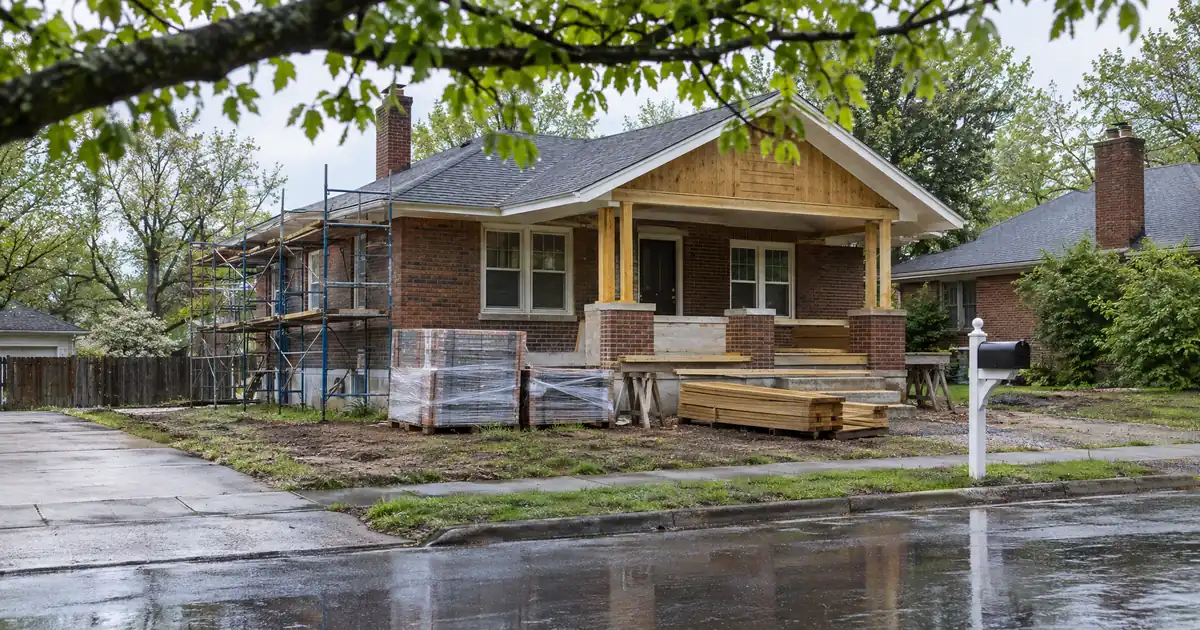
The Quick Read: Yes, often, but it depends on the program and the condition of the property, not on any law: a vacant rehab that is finished and rent-ready can usually be run on the appraiser’s market-rent opinion, an under-rented one is sized on the rent the lender counts, and an unfinished rehab stays in the bridge. DSCR (debt service coverage ratio) is a rent-based test. The lender asks whether the property’s rent covers its full monthly payment. Everything below is subject to lender guidelines and is not a commitment to lend.
- Finished and vacant: many programs underwrite on appraiser-supported market rent instead of a lease. Policy on vacant refinances varies more than on vacant purchases.
- Unfinished: DSCR is built for rentable property, not construction. The hard money loan stays in place until the work is done.
- Under-rented: a below-market lease pulls coverage down while it stays in place. An above-market lease adds nothing.
- Seasoning: the ownership clock runs from the recorded deed. Vacancy does not reset it, and a tenant does not satisfy it.
- Passing is not profit: clearing the ratio does not mean the property cash flows.
Why Vacancy Is Not the Real Gate
The real gate is condition. A vacant house that is finished, insured and ready to rent looks very different to a lender than a vacant house with open walls.
Hard money underwrites a plan: the purchase, the budget, the after-repair value and your exit. A DSCR loan underwrites a finished asset. It looks at what the property can rent for today, what it appraises for today, and whether you have the credit and reserves to hold it.
So the question is not “is anyone living there?” The question is whether the property is a finished rental that an appraiser can put a market rent on. If yes, vacancy becomes a program-by-program question. If no, you are not at the exit yet.
Across the wholesale network Lendmire works with, the DSCR lenders that handle vacant files treat the appraiser’s rent opinion as the whole rent story. Others want a signed lease or some operating history on a refinance. Both camps exist. That is why one investor hears yes and another hears no on what looks like the same house.
Where Is Your Property Today?
Find your row first. Then read the section that matches it.
| Your situation | Rent the lender counts | Main blocker | Next move |
|---|---|---|---|
| Rehab unfinished | None yet | Not rentable | Finish; extend the bridge |
| Finished, vacant | Appraiser market rent | Program policy on vacancy | Ask each program in writing |
| Finished, listed, no lease | Appraiser market rent | Lease-up vs. maturity | Sign a lease or proceed vacant |
| Leased below market | Often the lower figure | Thin coverage | Compare options; consider a smaller loan |
| Leased at or above market | Often market rent | Appraiser’s opinion | Order the rent schedule early |
Treat the table as a map, not a verdict. Every file is underwritten individually.
Which Rent Counts?
With no lease, only the market rent counts. With a lease, a common convention is to use the lower of the lease rent or the market rent. It is a practice, not a rule, and programs differ.
Here is what that means in plain terms:
- Vacant: the appraiser’s market-rent opinion is the only rent number on the file. If it is off, your coverage is off.
- Below-market lease: you signed a friendly lease, or inherited one. Coverage can drop below what the property could support at market. Some programs let market rent govern. Many look at the lower number.
- Above-market lease: a lease signed at a high number adds nothing. The lower figure usually governs, so do not count on it to raise the loan.
- Month-to-month or expired lease: these typically lean on market rent as well.
The appraiser’s rent opinion comes from a rent schedule. Fannie Mae’s appraiser forms page names the two forms: Form 1007, the Single-Family Comparable Rent Schedule, and Form 1025, the Small Residential Income Property Appraisal Report for two-to-four-unit properties. Those are form names only. DSCR loans are not agency loans, and the lender sets its own rules on how the rent figure is used.
One practical point: check the appraiser’s facts. A wrong bedroom count or square footage can move the rent comps. Ask for corrections before the report is final, not after.
What a DSCR Lender Actually Tests
A DSCR loan makes two tests. The strongest files clear both.
Test one is value. The lender orders its own appraisal. Your after-repair value (ARV), the number you projected when you bought, does not matter here. The appraisal does. That appraisal sets the loan-to-value (LTV) limit, which is the loan amount as a share of appraised value.
Test two is coverage. Monthly rent is divided by the full monthly payment, known as PITIA: principal, interest, taxes, insurance and any HOA dues. The result is the coverage ratio. A reading of 1.00 means the rent just covers the payment.
Here is the catch for rehabbers. Your hard money loan was interest-only. The DSCR loan is usually larger than the bridge balance, because it must also cover costs, and it carries a full payment. A thin rent can cap the loan before equity does. You can have plenty of equity and still not enough rent.
On the program side, many select DSCR programs start at 1.00 coverage, and stronger ratios open better pricing and leverage. A separate select-lender path takes coverage below 1.00, with leverage and terms adjusted. Both are different paths, not one program with a moving floor.
A rate-and-term refinance, where the loan only pays off the bridge and returns no cash, can carry a higher ceiling under the program guidelines Lendmire works from. Any cash back at closing makes it a cash-out. Credit matters too. A 620 floor exists in parts of the network, most programs want around 660, and 700 or higher unlocks the strongest leverage. Reserves commonly run around six months of PITIA, stepping up to about nine months on loans above $1,500,000. Reserve requirements vary by lender, leverage, loan size and transaction type.
For the full picture of how these loans work, see the complete DSCR loans guide.
Seasoning Is a Separate Clock
Seasoning is the waiting period between buying a property and refinancing it. It starts when the deed is recorded in your name. It does not start when you finish the rehab. It does not start when a tenant moves in.
For cash-out refinances, about six months of ownership is the common expectation across the network. A tenant does not clear that clock. Being vacant does not slow it.
Inside the seasoning window, some lenders size the loan on your cost basis, meaning the purchase price plus documented rehab spending, rather than the appraised value. That can pinch an investor who bought well below value. Some programs offer seasoning waivers. Treat them as a bonus, not a plan.
Hard money terms run 6-18 months, interest-only, with no prepayment penalty, though terms vary by lender, property and experience. That is wide enough that a fast, clean project can season before maturity. A slow one cannot. Which brings us to the clock that matters most.
Work Backward From Maturity
Plan the exit before the bridge closes. The bridge maturity has to outlast four things, in this order:
1. The rehab itself, through the last draw.
2. Lease-up, if your program wants a lease.
3. The seasoning window.
4. The appraisal and underwriting process for the new loan.
Work backward. Start at your maturity date. Leave room for underwriting and appraisal. Leave room for the seasoning clock to finish. Leave room for a lease, if you choose to sign one. What is left is the time you have to finish the work.
(Most investors do this math backward only after the note is already close to due. By then it is a rescue, not a plan.)
Extension fees are real money. They stack up on top of accrued interest, and both feed into the number the new loan has to clear.
The Payoff Test, Without the Spreadsheet
The new loan has to pay off the bridge. That sounds obvious. It trips up more files than people expect.
Add up what you owe at the payoff: the bridge principal, accrued interest, any extension fees, and the closing costs on the new loan. Compare it to the amount the new loan can be.
Now picture a bridge that was sized near its ceiling. Hard money fix-and-flip leverage is capped at 75% of after-repair value, with the percentage of project cost depending on your completed-project count. Say the bridge sat at that cap. The DSCR cash-out refinance tops out around 75% LTV of the appraised value. Even if the appraisal comes in right at your ARV, the new loan is at best equal to the old one, before interest, extension costs and closing costs. There is no room. A cash-out is off the table, and the file becomes a payoff-only refinance where you may need to bring cash. Leverage, reserves, and pricing vary by lender and program; the final terms follow the full file review.
Now add a thin rent. A coverage ratio that falls short of the lender’s floor shrinks the loan further. Equity does not rescue a file that rent cannot support.
Run this test before you buy, not before you refinance. Use conservative market rent and realistic costs.
If the Numbers Do Not Clear: Go, Pause or Pivot
Go when the property is finished and insured, the appraisal supports the loan, and coverage clears with your credit and reserves in place. Lender guidelines still decide.
Pause when one piece is missing and time is cheap. Wait for seasoning to finish. Sign a lease at market. Extend the bridge if the cost is smaller than the cost of a worse exit. This is the best option when the file is close.
Pivot when pausing will not fix it:
- Payoff-only refinance. Skip the cash-out and take a loan that only pays off the bridge. Seasoning and leverage limits can be friendlier.
- Smaller loan. Bring cash to close the gap. Painful, but it frees the equity from the bridge’s clock.
- Sub-1.00 coverage. Programs below 1.00 are available through select lenders in the network, with leverage and terms adjusted. Expect less leverage, and the pricing reflects the thinner coverage.
- No-ratio structures. These are available only through select lenders, generally for borrowers who already own a primary residence. Lendmire’s piece Exiting Hard Money Into a No-Ratio DSCR Loan When the Rent Is Still Thin walks through that route.
- Sell. If the exit fails and the extension math is ugly, selling can be the cleanest way to protect your capital.
If an exit fails on value, rent, seasoning or timing, your equity stays locked in the deal and the extension costs keep stacking. That trapped equity is the real risk of the whole strategy.
Many investors move from the bridge into long-term rental financing once the property is stabilized. Lendmire arranges that path through its hard money exit refinance program, with the long-term loan itself being a DSCR loan.
Where the Sources Disagree, and What to Ask
Some investors are told a lease is required. Others close on a vacant house. Both are telling the truth. DSCR is a private-market product, so each lender sets its own rule. Nothing in federal law governs it.
For contrast, the agency world does have rules. The Fannie Mae Selling Guide section on rental income from the subject property requires Form 1007 or 1025 for rental income and, on refinances, adds leases and traditional personal-income documentation in certain cases. DSCR programs do not follow that rule set. Do not assume agency seasoning or lease rules apply to your exit.
Before you commit to an exit, ask any program these questions in writing:
- Will you take a vacant refinance on a rent-ready property?
- If I have a lease, which rent do you count?
- Do you allow vacant units in a small multifamily building?
- How is seasoning measured, and is it different for a payoff-only refinance?
- Do you size inside the seasoning window on cost basis or on appraised value?
A written answer is worth ten phone calls. If you have several properties under one hard money loan, one vacant or weak house can delay or reshape the entire closing, so ask that question early too.
Key Terms Defined
DSCR: the ratio of a property’s monthly rent to its full monthly payment. It measures the property, not your paycheck.
PITIA: principal, interest, taxes, insurance and any HOA dues. It is the payment that rent is divided by.
Market rent: what an appraiser says the property would rent for today, based on comparable rentals.
Seasoning: the waiting period between buying a property and refinancing it, measured from the recorded deed.
Payoff-only refinance: a refinance that pays off the old loan and returns no cash. Any cash back makes it a cash-out.
ARV (after-repair value): your projection of the finished property’s value. The exit lender uses its own appraisal instead.
Documents to Gather Early
Missing paperwork stalls more exits than weak math. Gather these before the bridge gets close to due:
- Payoff letter from the hard money lender
- Recorded deed and settlement statement
- Rehab invoices and draw history
- Proof of insurance
- Entity documents, if the property sits in an LLC (subject to lender program eligibility)
- Reserve statements
- A lease, deposit proof and first month’s rent, if the property is leased
If cash comes out at closing, tax treatment varies; consult a qualified professional.
Mistakes That Sink the Exit
Thinking vacant means no DSCR. Wrong on many programs, which use market rent. Programs differ, so ask.
Thinking finished work starts the seasoning clock. It runs from title recording, full stop.
Thinking an above-market lease raises the loan. The lower figure governs.
Treating ARV as the value. The exit lender orders its own appraisal.
Assuming the ratio equals cash flow. It does not. DSCR compares rent to PITIA only. Repairs, vacancy, management, utilities and capital expenses sit outside the calculation. A property can clear 1.00 and still lose money each month, especially with turnover costs on a freshly finished rehab.
Ignoring prepayment terms on the bridge. Hard money terms vary, so check yours, because they become part of the payoff.
Frequently Asked Questions
Can a vacant rehab get a DSCR loan if there is no lease?
Often, yes, on programs that use the appraiser’s market rent in place of a lease. Policy is stricter on vacant refinances than on vacant purchases, and some programs want a signed lease or operating history. Ask each program in writing, and treat the appraiser’s rent opinion as the number that matters.
Does an unfinished rehab qualify?
Generally not. DSCR is built for rentable property, not construction. Stay in the bridge, or extend it, until the work is finished, the property is insured and the appraiser can put a market rent on it.
Will the lender use my ARV?
No. The DSCR lender orders its own appraisal and uses that value for the LTV test. Your ARV was a planning number. If the appraisal comes in low, your options are to bring cash, take a smaller loan, wait or challenge the value.
Does a payoff-only refinance count as cash-out?
Only if cash comes back to you. A refinance that pays off the bridge and returns nothing is rate-and-term. Any cash back at closing makes it a cash-out, which carries a lower leverage ceiling (around 75% LTV on an investment property in this network) and about six months of seasoning. Terms vary by lender guidelines, property type, leverage, credit profile, and full file review.
What if the hard money note matures before I can refinance?
Extension is the usual first fallback, and it costs money. If extension is not available or not worth it, a payoff-only refinance with cash from you, a smaller loan, or a sale are the other routes. This is why planning backward from maturity matters so much.
Next Step
If you are buying or refinancing a rental property and want to see how the numbers work, Lendmire can help you compare DSCR loan options based on the property income, credit profile, leverage and investor goals. As a mortgage broker, it arranges these loans through select lenders in its wholesale network across 41 markets, including Washington, D.C., and you can reach the team at 828-256-2183.
A finished rehab with a clear lease-up path and room before maturity gives the exit lender the least to argue about, and that is worth more than any single guideline.
About Lendmire
As a non-QM mortgage broker (NMLS# 2371349), Lendmire facilitates DSCR investor loans across 41 markets, including Washington, D.C. DSCR eligibility is generally reviewed around property-level rental income instead of personal income documentation, subject to lender guidelines, serving LLC-structured portfolios and self-employed borrowers who don’t fit conventional boxes. A two-time Scotsman Guide Top Mortgage Workplace (2025, 2026).
Get Started
Ready to find the right loan for you?
In about 30 seconds you can review financing options available for your investment property. No commitment required.
Informational only. Not a Loan Estimate, approval, or commitment to lend. Program availability and eligibility are subject to lender guidelines, credit approval, property review, and underwriting.
References
1. Fannie Mae Learning Center, Appraisers & Property Underwriting
2. Fannie Mae Selling Guide B3-3.8-02, Rental Income from the Subject Property
This article is part of Lendmire’s hard money loan program — full qualification details, guidelines, and scenarios live on the program page.
Related reading: Can BRRRR Rehabs Go in a DSCR Portfolio Loan Before Leasing? · Can 25 Scattered Houses Go Under One 30-Year DSCR Loan? · How a Portfolio DSCR Lender Underwrites a Small Partnership
Brandon Miller
Founder & CEO, Mortgage Loan Originator, Lendmire LLC
- Mortgage Loan Originator · NMLS# 1129696 · Verify on NMLS Consumer Access
- North Carolina Real Estate Broker · License# 343312 · Verify on NCREC
- North Carolina Insurance Producer · License# 19053198 · Property, Casualty, Life, Health · Verify on NAIC SBS
- Lendmire LLC · Firm NMLS# 2371349 · Verify firm licensure
Disclosures. The information presented in this article is general market commentary, not financial, legal, or tax advice. Lendmire is a mortgage brokerage (NMLS# 2371349) — not a direct lender or depository institution — and loan placement is subject to lender underwriting. Nothing in this content represents a commitment to lend. Loan terms, pricing, and program availability vary based on borrower qualifications, property characteristics, and state of subject property, and are subject to change at any time. Lendmire complies with Equal Housing Opportunity requirements. Consumer access: nmlsconsumeraccess.org.