
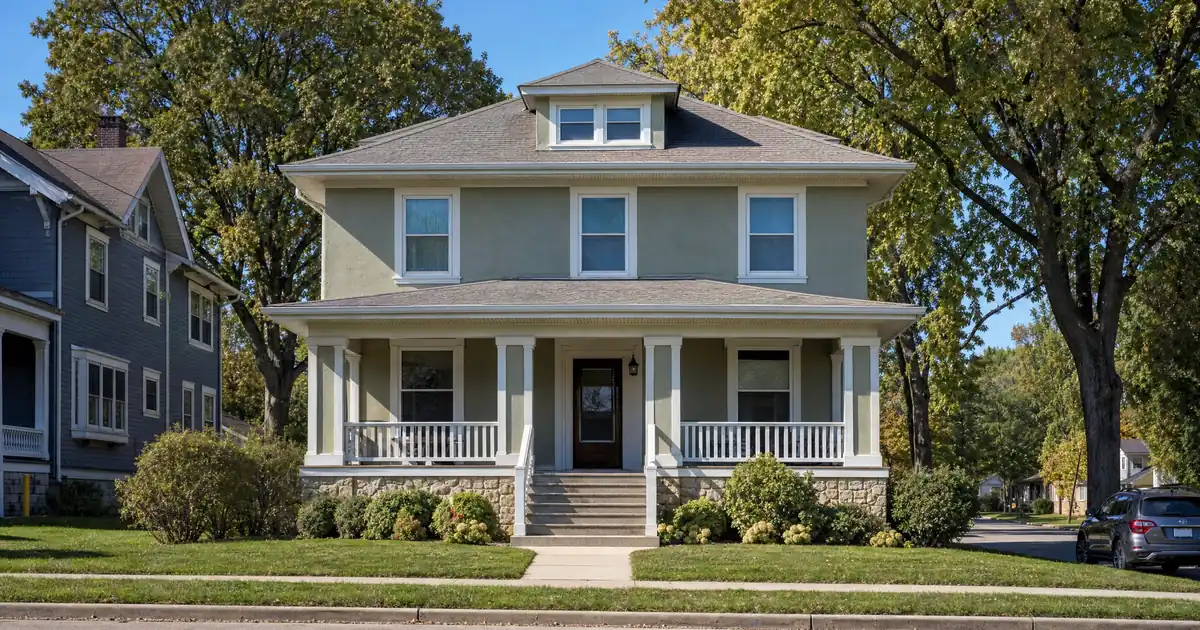
Tapping Investment Property Equity With A Cash Out Refinance — The Quick Read: A cash-out refinance replaces an existing rental-property loan with a new, bigger one. The lender sizes the new loan against the property’s current appraised value. The new loan pays off the old balance and covers closing costs. The investor keeps what’s left over as cash at closing. On DSCR programs, the property’s rent must cover the new, larger payment at a ratio the lender will accept. Most lenders in the wholesale network cap this loan type at 75% of the property’s value. They also want about six months of ownership first. This is one of the more direct ways to turn paper equity into cash the investor can use. But it resets the loan clock and raises the monthly payment. Those are tradeoffs worth weighing before signing.
Key Takeaways
- Cash-out refinances on investment property generally cap around 75% loan-to-value across the non-QM network. That’s a hard ceiling, not a target.
- Most programs want about six months of ownership (seasoning) before they will size a cash-out draw against the property’s full current value.
- Qualification runs mainly off the property’s own rent-to-payment coverage — the DSCR — not the investor’s usual personal-income paperwork.
- Cash buyers can sometimes skip the seasoning wait through a delayed-financing structure. But that path caps the loan at the original purchase price plus documented improvements, not the current appraised value.
- Some lenders offer deals with coverage below 1.00. But these trade off leverage and terms. It’s not a workaround — it’s a different structure.
What a Cash-Out Refinance on a Rental Actually Does
A cash-out refinance starts with a property the investor already owns. The lender orders a new appraisal to find its current market value. Then the lender originates a new, bigger loan based on that value. The new loan pays off the old one. Whatever cash is left after that payoff and closing costs goes to the investor. On a home someone lives in, this is simple personal finance. On a rental, it works differently — it’s a business-purpose loan. The lender looks at whether the property’s rent can cover its own debt. The borrower’s paycheck doesn’t matter here.
DSCR Cash-Out Calculator
Run the cash-out numbers in your market
Rate source: Freddie Mac 30-yr average via FRED® — Federal Reserve Bank of St. Louis · effective Aug 13, 2026
Prefilled with local estimates — enter your property’s value, balance, taxes, and insurance for a more accurate picture.
Program parameters update from Lendmire’s centralized guideline source. Taxes and insurance are editable estimates.
As of Aug 13, 2026 · General Freddie Mac market benchmark, not a Lendmire loan offer. Property value, balance, taxes, and insurance are editable estimates. Maximum loan-to-value varies by lender, program, property type, and seasoning. Not a Loan Estimate, approval, or commitment to lend. Program availability and eligibility are subject to lender guidelines, credit approval, property review, and underwriting.
That difference matters. It opens the door to DSCR lender review. Under this model, a lender sizes and approves the loan mainly on whether the rent covers the monthly payment — not on the investor’s personal income paperwork. Lendmire’s complete DSCR loans guide explains this qualification model in more depth. The short version: the rent-to-payment ratio does most of the underwriting work, not the investor’s usual income documents.
DSCR loans are built for properties the owner doesn’t live in. Because they’re business-purpose investor loans, lenders review them differently than a standard owner-occupied mortgage. That’s also why the steps below look a bit different from the primary-residence cash-out refinance many investors have already done on their own home.
Key Terms Defined
DSCR (debt-service coverage ratio): take the property’s monthly rent and divide it by the full monthly payment — principal, interest, taxes, insurance, and any HOA dues (PITIA). A ratio of 1.00 means rent equals the payment. Above 1.00 means rent is more than the payment.
Seasoning: the minimum time a borrower must hold title before a lender will size a refinance on current appraised value instead of the original purchase price.
LTV (loan-to-value): the new loan amount shown as a percentage of the property’s current appraised value. It’s the single biggest lever that controls how much cash an investor can pull out.
Reserves: liquid funds a lender wants the borrower to keep in the bank after closing, measured in months of PITIA. This money is separate from the down payment or the cash-out proceeds.
Delayed financing: an underwriting exception for investors who bought a property with cash. It waives the seasoning wait. In exchange, it caps the new loan at the documented purchase price instead of a fresh appraisal.
The Mechanics, Step by Step
The process follows a predictable order. This holds true no matter which lender in a wholesale network ends up underwriting the file.
1. Seasoning check. Underwriting first checks how long the investor has held title. DSCR loans aren’t agency products, but it helps to compare them. Fannie Mae’s Selling Guide requires at least one borrower to be on title for six months before a new cash-out loan pays out. There are narrow exceptions for inherited property, divorce awards, and delayed financing. Most non-QM cash-out programs in the wholesale network follow a similar six-month clock before they size the loan against current value.
2. Appraisal and rent documentation. An appraiser sets the property’s current as-is value. When rental income drives qualification, lenders typically pull the same standard forms used on agency loans. For a one-unit property, that’s the Single-Family Comparable Rent Schedule (Form 1007). For a two-to-four unit building, it’s the equivalent operating-income form. Appraisers filling out Form 1007 pull comparable rental data. They adjust for differences to land on a supported market-rent figure (Blueprint).
3. Coverage-ratio recalculation. A cash-out draw makes the loan balance bigger. That means the new payment is bigger than the old one too. The lender must recalculate the DSCR against that larger payment. This new number can look very different from the ratio on the old, smaller loan. This step is where a lot of cash-out plans quietly fall apart. The equity might be there, but the coverage math on the bigger payment doesn’t clear the floor the program wants.
4. LTV sizing. The new loan gets capped at a percentage of the appraised value. Across most of the wholesale network, that ceiling sits around 75% for a cash-out loan on investment property. That’s tighter than purchase-money leverage, which can run higher on strong files. Nearly every non-QM program underwrites cash-out deals more carefully than purchases. Pulling equity out concentrates risk in a way a fresh purchase doesn’t.
5. Reserve verification. The lender checks that the investor will still have enough liquid reserves after closing, measured in months of PITIA. There’s no single number here. Reserve requirements shift with loan size, leverage, and how strong the DSCR is. On many files under about $1.5 million with conservative leverage, reserves usually land around six months of PITIA. Above that loan size, the network typically steps up toward nine months.
6. Entity and title paperwork. If the property sits inside an LLC, the lender collects the entity’s articles of organization, EIN, and operating agreement. This is standard for a business-purpose loan. A consumer mortgage works differently — it generally won’t allow LLC ownership at all.
7. Closing. Once the appraisal, DSCR, credit, title, and reserves all clear, the new loan closes. The proceeds pay off the existing mortgage first. The investor gets whatever cash is left at the closing table.
Eligibility at a Glance
| Factor | Typical Range (Cash-Out, Investment Property) |
|---|---|
| Max LTV | Up to roughly 75% |
| Ownership seasoning | About 6 months, generally |
| Minimum DSCR | 1.00 on select programs |
| Credit score | 620 floor; 660+ common; 700+ unlocks top leverage |
| Reserves | ~6 months PITIA; ~9 months above ~$1.5M loan size |
| Loan size | Up to roughly $3,000,000 on standard programs |
These are typical ranges seen across select lenders in a wholesale non-QM network. They aren’t a guarantee for any one file. Every scenario is still subject to lender guidelines, credit approval, and property review. A larger down payment or a stronger equity position can lift the coverage ratio and open better leverage. But neither one erases a credit floor, a reserve requirement, or a property-eligibility rule. The strongest cash-out files clear both tests at once: enough equity to meet the 75% ceiling, and enough rent to clear the DSCR floor on the new, larger payment.
Not every property type qualifies for this kind of financing, no matter how much equity sits inside it. Manufactured homes — single- and double-wide — along with log homes and barndominiums, fall outside these DSCR cash-out programs entirely. That’s a property-type exclusion. A bigger down payment or a stronger credit score can’t fix it.
Delayed Financing: The Cash-Buyer Exception
Investors who bought a rental with cash face a different seasoning question than investors who financed the purchase. On the agency side, a documented all-cash purchase waives the six-month title-seasoning wait entirely. This is called the delayed-financing exception. There’s a trade-off, though. Delayed financing waives the wait time, but not the value ceiling. The new loan gets capped at the documented original purchase price plus eligible closing costs. It doesn’t use a fresh — and possibly higher — appraisal. Say an investor bought at a discount and the property appreciated afterward. That investor generally can’t capture that appreciation through delayed financing alone. That gap only opens up once the standard seasoning period has passed and a current appraisal supports the higher value.
Short-Term Rental Equity Is a Different Math Problem
Pulling equity from a short-term rental runs on its own set of numbers — sitting five percent lower on leverage than what the same program allows on a standard long-term rental, and carrying a 1.00 coverage floor on both purchases and refinances rather than matching the long-term-rental figures above. They don’t match the long-term-rental figures above. Purchase-side leverage on STR properties tops out around 75% LTV in the network. Refinance and cash-out both generally cap closer to 70%. Credit expectations run higher too — commonly 700 or above — along with about twelve months of documented hosting history. Coverage floors split by transaction type. Purchases commonly want a DSCR around 1.10. Refinances, including cash-out, commonly run closer to 1.00. Short-term rentals qualify at a 1.00 coverage threshold on purchase and refinance at reduced maximum leverage, and require a 12-month income history or market data report at most lenders.
There’s also a documentation gap worth knowing before ordering an appraisal. The standard Form 1007 rent schedule wasn’t built for short-term rentals. It leaves out vacancy-rate and business-expense data, and appraisers can’t fold platform income into the value estimate on that form (McKissock Learning). Some lender programs do accept platform income. When they do, it usually comes through separate documentation — a projected-revenue report or booking history — added on top of the standard rent schedule, not built into it. Short-term rental rules can also vary by city, county, HOA, and property type. Confirming local rules before relying on projected rental income is worth doing before the file goes to underwriting, not after.
Cash-Out Refinance vs. Alternatives
| Factor | Cash-Out Refi | Investor HELOC | Home Equity Loan | DSCR Cash-Out Refi |
|---|---|---|---|---|
| Review basis | Personal income/DTI | Property equity | Property equity | Property rental income (DSCR) |
| Structure | Replaces existing loan | Revolving line, second lien | Lump-sum second lien | Replaces existing loan |
| Typical cap | Varies by lender | Roughly $500,000 total on investor lines | Varies by lender | Up to ~75% LTV |
| Best fit | Strong personal income, wants one loan | Smaller, reusable draws | One-time need, keep first lien | Self-employed, LLC-held, or income-thin personal files |
Investor-property HELOC lines in the wholesale network cap at $500,000 total. There’s no larger investment-property HELOC tier above that. Some investors want a bigger single draw. Others don’t want personal income documentation driving the decision. For those investors, a DSCR cash-out refinance is the more direct comparison against a conventional cash-out refi — not the HELOC line at all. Lendmire’s refinance investment property cash-out and cash-out refinance investment property DSCR loan pages break down how the property-income path compares to a personal-income-qualified refinance in more detail.
What Can Go Wrong
Nationally, the equity cushion investors are drawing against is thinner than it was a year ago. That’s worth knowing before assuming a cash-out draw will pencil out the way it did last cycle. Roughly 43.3% of mortgaged residential properties were equity-rich as of the first quarter of 2026. That’s down from 44.6% the quarter before — the lowest share since the fourth quarter of 2021. At the same time, 3.2% of mortgaged properties were seriously underwater, up from 3.0% the prior quarter and 2.8% a year earlier (ATTOM). Two things are moving in opposite directions at once: equity share is shrinking, and underwater share is growing. That means the appraisal-and-DSCR math on a cash-out file matters more now than it did when equity cushions were expanding across the board.
A few other failure points show up often enough to name directly:
The amortization clock resets. A cash-out refinance replaces the existing loan with a new one on a fresh term. That reset changes the long-run payoff path of the asset, even without touching the interest-rate question.
The new payment is bigger, and the DSCR has to clear it — not the old payment. A common mistake is running the coverage ratio against the old, smaller payment out of habit. The number that matters is the ratio against the new, bigger payment after the draw.
Sub-1.00 coverage isn’t a workaround — it’s a different, more expensive structure. Select lenders in the network will consider deals where market rent doesn’t quite clear a 1.00 ratio. But those files typically come with reduced leverage and other adjusted terms, not standard pricing and standard leverage. It’s an option to review with a lender, not a guaranteed path. A no-ratio option is available for DSCR below 1.00 with stronger credit or higher down payment; qualification on that path rests on credit and equity rather than a rent-coverage calculation.
Reserve requirements don’t disappear because the equity is there. A big cash-out draw can actually work against reserve math. This happens if too much of the investor’s liquidity gets pulled out at closing and not enough is held back. These specifics are subject to lender guidelines and a full review of property, leverage, and credit.
Property type can end the conversation before leverage or credit even come up. Manufactured housing, log homes, and barndominiums simply fall outside these DSCR programs. No amount of equity changes that.
Who This Fits — and Who It Doesn’t
A cash-out refinance on a rental tends to fit a certain kind of investor. That investor has held the property long enough to clear seasoning. They have real appreciation or loan paydown to draw against. And they have a specific plan for the cash — a down payment on the next property, a renovation that lifts achievable rent, or debt consolidation that lowers total monthly payments across a small portfolio. Lendmire’s page on using a cash-out refinance to buy an investment property covers that redeployment case specifically.
It fits less well for an investor who just closed on the property. The seasoning clock hasn’t run yet, and delayed financing — if it applies — caps the draw at the original purchase price anyway. It also fits less well when the rent, recalculated against the new and larger payment, lands well below what a program’s DSCR floor wants. Pulling cash out in that scenario means one of three things: accepting a smaller draw, bringing a stronger credit tier or more reserves to the table, or exploring one of the sub-1.00 structures a select lender might consider — with the leverage and terms tradeoffs that come with it. Terms vary by lender guidelines, property type, leverage, credit profile, and full file review.
Tax treatment can depend on how the funds are used and how the property is held. Investors should keep clear records and speak with a qualified tax professional before relying on any deduction related to the transaction.
This article gives general information about how cash-out refinancing on investment property typically works. It is not legal or tax advice. Investors should speak with a qualified attorney or CPA about their own situation before acting. Lendmire (NMLS# 2371349) is a mortgage broker that arranges DSCR investor loans through select lenders in its wholesale network, spanning 41 markets including Washington, D.C. It doesn’t fund, underwrite, or guarantee approval on any loan. Every scenario described here is subject to lender guidelines, credit approval, and property review. Nothing here is a commitment to lend. Investors can reach Lendmire at 828-256-2183 or request a quote to see how a specific property’s rent, current value, and existing balance size against these program ranges.
Frequently Asked Questions
How much equity can an investor actually pull out in a cash-out refinance?
The available cash depends on several things: the property’s appraised value, the existing loan balance, the LTV ceiling (generally around 75% for investment-property cash-out), the reserve requirement after closing, and whether the recalculated DSCR clears the program’s floor on the new payment. It’s not a fixed percentage of equity. All four factors interact together, and a strong equity position doesn’t override a coverage ratio that comes up short.
Does a cash-out refinance require six months of ownership in every case?
Generally, yes, on most non-QM cash-out programs — but there are exceptions. Investors who bought with cash may qualify for delayed financing. That waives the wait, but it caps the new loan at the documented purchase price instead of a fresh appraisal. Inherited property and certain divorce or separation transfers can also carry their own seasoning carve-outs on the agency side. DSCR programs apply their own version of this logic.
Can an investor do a cash-out refinance if the property’s DSCR is below 1.00?
Select lenders in the wholesale network will consider sub-1.00 coverage scenarios. But leverage and terms adjust to compensate. It’s a different structure, not the standard program at standard pricing. Qualification still runs through lender guidelines, credit approval, and property review.
Is a cash-out refinance on a short-term rental treated the same as a long-term rental?
No. STR cash-out transactions generally cap around 70% LTV, lower than the roughly 75% seen on long-term-rental cash-out. They also commonly ask for a 640+ credit score, about twelve months of hosting history, and a DSCR floor that runs closer to 1.00 on the refinance side. The purchase-side floor on STR deals tends to sit higher, around 1.10. These are two separate numbers for two separate transaction types.
What happens to the cash after a rental cash-out refinance closes?
The new, larger loan first pays off the existing mortgage balance and covers closing costs. Whatever remains is disbursed to the investor at the closing table. What the investor does with it afterward — another acquisition, a renovation, debt consolidation — is a separate decision from the refinance itself. Usually, though, that plan is the whole reason the transaction gets done in the first place.
About Lendmire
As a DSCR and non-QM mortgage broker, Lendmire — NMLS# 2371349 — connects investors with wholesale lending channels across 41 markets, including Washington, D.C. Lender review centers on the property’s rental income, not the borrower’s tax returns. That works well for self-employed operators and for portfolios beyond four financed properties. Scotsman Guide named Lendmire a Top Mortgage Workplace in both 2025 and 2026.
To see how equity extraction works on an investment property, check out cash-out refinance on an investment property.
Get Started
Ready to find the right loan for you?
In about 30 seconds you can review financing options available for your home or investment property. No commitment required.
Informational only. Not a Loan Estimate, approval, or commitment to lend. Program availability and eligibility are subject to lender guidelines, credit approval, property review, and underwriting.
References
1. Fannie Mae Selling Guide B2-1.3-03 — Cash-Out Refinance Transactions
2. Fannie Mae Selling Guide B3-3.8-01 — Rental Income
3. Blueprint — What Is Form 1007?
4. McKissock Learning — Form 1007’s Impact on Short-Term Rental Appraisals
5. ATTOM — Q1 2026 Home Equity and Underwater Report
This article is part of Lendmire’s investment property cash-out refinance program — full qualification details, guidelines, and scenarios live on the program page.
Related reading: Cash Out Refinance Investor · Cash Out Refinance Investment Property Without Tax Returns · Young Investor Cash Out Refinance First Rental
Brandon Miller
Founder & CEO, Mortgage Loan Originator, Lendmire LLC
- Mortgage Loan Originator · NMLS# 1129696 · Verify on NMLS Consumer Access
- North Carolina Real Estate Broker · License# 343312 · Verify on NCREC
- North Carolina Insurance Producer · License# 19053198 · Property, Casualty, Life, Health · Verify on NAIC SBS
- Lendmire LLC · Firm NMLS# 2371349 · Verify firm licensure
Disclosure information. Lendmire is a state-licensed mortgage brokerage under NMLS# 2371349. Lendmire is not a depository institution, direct lender, or financial advisor — all loans referenced are placed through wholesale lender partners and are subject to each lender's underwriting standards. This article is provided for general informational purposes and is not a commitment to lend, nor does it constitute financial, legal, or tax advice. Loan programs, terms, rates, and qualification standards change without notice and depend on borrower profile, property type, and the state in which the subject property is located. Equal Housing Opportunity provider. NMLS Consumer Access: nmlsconsumeraccess.org.