
The Quick Read: A DSCR lender sizes a pool of this kind by adding up the rent from every house, dividing it by the combined monthly obligation of one new note, and capping the loan by the combined appraised value, so the smaller of those two limits sets the amount, and the house count must also fit the structure. Twenty-five houses is more than the 20-property range of the 30-year portfolio structure. A file this size usually runs as a rental portfolio term loan or splits into two pools, subject to lender guidelines.
- Pooled coverage: On the 30-year structure, the 1.00 coverage floor is measured on the whole pool, so stronger houses can offset weaker ones.
- Two structures: The 30-year portfolio loan takes 2 to 20 properties. The rental portfolio term loan takes five or more and handles much larger pools.
- Leverage caps: Up to 80% of value on a purchase or rate-and-term refinance of investment rentals on the 30-year structure, and up to 75% on the term loan.
- One note, shared collateral: Every house secures the full debt, and selling one later means paying a release price above its allocated balance.
- Not cash flow: Clearing 1.00 means rent covers the payment. Repairs, vacancy, management and capital costs sit outside the calculation.
What One Loan on Twenty-Five Houses Really Means
It means one note, one lender, and a lien on every house. Instead of 25 separate mortgages, you sign one set of loan documents, and the lender underwrites the group as a single package.
Brokers use three labels for this, and they overlap. “Blanket” describes the legal structure of one loan over many properties. “Portfolio” describes the group of rentals. “DSCR” describes how the lender tests the income. A single file can be all three at once.
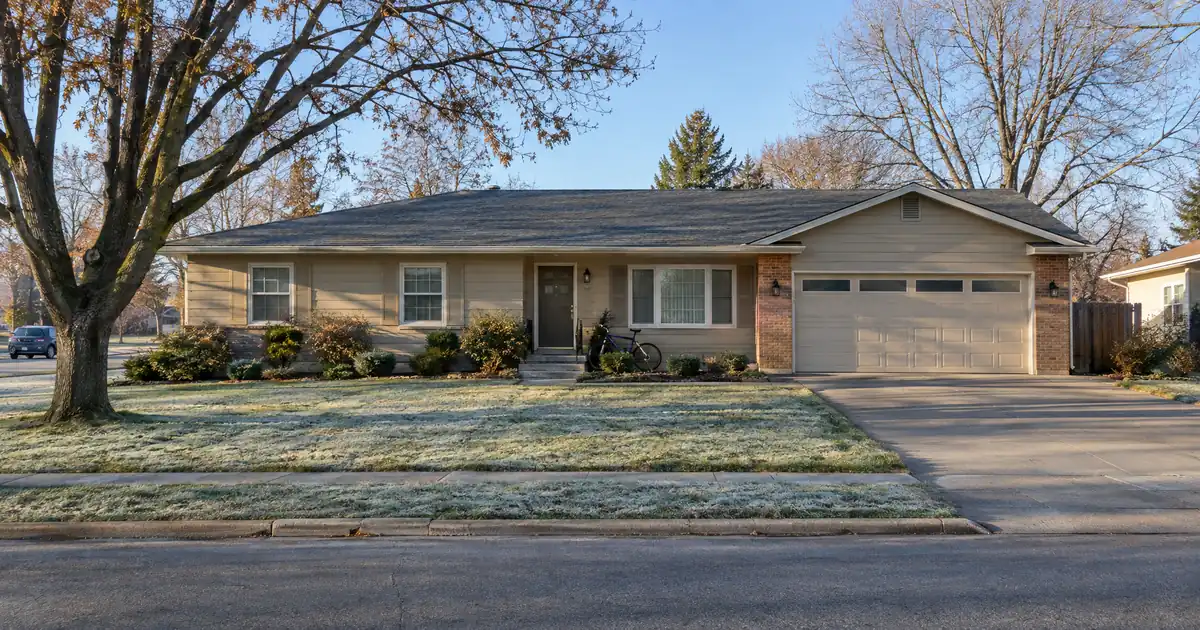
“Scattered” here simply means the houses are not next to each other. They may sit in different neighborhoods, counties or markets. Agencies use “scattered site” for housing programs, and that is a different subject. Lenders also tend to think of blanket loans as a fit for lots or buildings in the same place, so a scattered single-family pool is the less common use. Underwriting for it takes more care, not a different method.
DSCR loans are designed for non-owner-occupied investment properties. Because they are business-purpose investor loans, they are reviewed differently from a standard owner-occupied mortgage. For the single-property basics, start with Lendmire’s complete DSCR loans guide.
Key Terms Defined
- DSCR (debt service coverage ratio): Rent divided by the monthly housing obligation. Coverage of 1.00 means the rent equals the obligation.
- PITIA: Principal, interest, taxes, insurance and association dues, which together make up the monthly obligation in the ratio.
- Pooled coverage: Total rent used for lender review across all houses divided by total PITIA on the one note, producing a single blended ratio.
- Blanket loan: One loan secured by two or more properties.
- Cross-collateralization: Every property secures the whole debt, not just its own share.
- Allocated balance: The share of the debt the loan documents assign to each house.
- Release clause: A contract term that lets one house leave the pool when you pay a stated amount.
- Balloon: A lump sum due at maturity that the regular payments did not fully pay down.
- Yield maintenance: A prepayment charge designed to compensate the lender when a fixed-rate loan is paid off early.
Which Program Fits Twenty-Five Houses?
Two structures cover pooled rentals across our wholesale network, and the property count decides between them. Most programs we place files with cap the 30-year version at 20 properties. A 25-house pool therefore needs the term loan, or it needs to be divided.
| Factor | 30-year portfolio DSCR | Rental portfolio term loan |
|---|---|---|
| Property count | 2 to 20 under one note | Five or more |
| Loan size | $300,000 to $5,000,000 | $500,000 to $50,000,000 |
| Leverage | Up to 80% (purchase, rate-and-term) | Up to 75% of value |
| Term | 30-year, fixed or adjustable | 3, 5, 7 or 10 years, balloon |
| Interest-only | Period available | Not a stated feature |
Larger balances on either structure are reviewed case by case. A cash-out on a portfolio loan never exceeds 75% of the pooled value, and inside the first six months of ownership the seasoning rule caps the amount further.
Both structures accept single-family houses, 2-4 unit buildings, condos and townhomes. The term loan also accepts small multifamily. Owner-occupied property, mobile homes, co-ops, mixed-use and commercial property cannot sit in the pool. Manufactured homes, log homes and barndominiums are not offered in these programs.
The term loan has more moving parts. It can be recourse or non-recourse. A recourse loan carries a personal guarantee. A non-recourse loan looks to the real estate, with carve-outs such as fraud and bankruptcy. It carries yield-maintenance prepayment. Properties in several markets or states may sit under one loan. Reserves are held for taxes, insurance and capital expenditures.
For comparison, a loan on one rental typically runs 75%-80% on a purchase of an investment property, up to $3,000,000 on standard programs, and that rental is tested alone. Do not carry those numbers into a pooled file.
How the Lender Sizes the Pool, Step by Step
Sizing is a sequence of house-level inputs rolled into pool-level tests. Here is the order underwriters generally work in.
1. Rent for each house. Each house is appraised with a rent schedule. Appraisers commonly use Form 1007 for a single-family investment property when rental income is used, and Form 1025 for 2-4 units, both listed in Fannie Mae’s guide forms. Those are only the form names appraisers use. Agency loan rules do not govern a DSCR file.
2. Which rent counts. Many lenders credit the lower of the lease and the appraiser’s market rent. Every property still needs a lease or an appraiser-supported market rent.
3. Value for each house. The appraised values are summed into one pooled value.
4. The loan cap. The leverage ceiling for the structure is applied to that pooled value. It is 80% on the 30-year structure’s purchase or rate-and-term and 75% on the term loan.
5. The coverage test. Total rent used for lender review is divided by total PITIA on the one note. The pool must clear the lender’s floor, which is 1.00 on the 30-year structure. Some programs also run a per-house test, so ask whether yours does.
6. The smaller limit wins. If value allows more than the rent supports, coverage sets the loan. If rent supports more than value allows, the leverage cap binds.
7. Allocation. The documents assign each house a share of the debt. That share drives the release price later.
8. Borrower tests. Credit and reserves apply on top. Pool credit floors start around 640, and some portfolio structures want 680 or 720. Reserve rules vary by lender, leverage and loan size.
A larger down payment lowers the monthly obligation and can lift coverage. It never erases leverage caps, credit floors, reserve rules or property eligibility. The strongest pools clear both tests: enough equity and enough rental coverage.
A Worked Example: One Weak Group of Houses
A weak house can ride in a strong pool, up to a point. Run the numbers on this modeled pool, assuming every house carries the same monthly obligation so the ratios can be averaged directly.
Twenty houses each cover their own obligation at 1.15x. Five houses cover theirs at only 0.90x. The pooled coverage is (20 × 1.15 + 5 × 0.90) ÷ 25, or 1.10x. The pool clears a 1.00 floor even though five houses would not on their own.
Whether those five houses can sit in the pool depends on what underwriting tests: the pooled coverage, the leverage and the terms. A lender that adds a per-house test can still stop them.
Now make the weak group bigger. Ten houses at 0.85x and fifteen at 1.15x give about 1.03x. That is a pass with almost no cushion. If appraiser rent support comes in 0.20x lower on three of the strong houses, the pool slides to about 1.01x. One more soft appraisal puts it under 1.00x.
The lesson is that a pool is only as safe as its margin. The tests use appraised and leased rent, not what you hope to collect. Clearing 1.00 is also not positive cash flow. Repairs, vacancy, management, utilities and capital costs all sit outside the ratio, so a thin pool can pass underwriting and still be tight in real life.
Which Limit Binds First?
Four limits can set the loan amount, and the one that binds first tells you what to fix. Here is how to read the symptoms.
| Limit | Symptom | Typical fix |
|---|---|---|
| Pooled coverage | Pool lands near 1.00x | Drop the weakest houses or add down payment |
| Combined value | Appraisals under expectations | Bring more cash or trim the pool |
| Property count | More than 20 houses | Use the term loan or split into pools |
| Reserves | Cash short after funding | Hold more liquid funds; rules vary |
In practice, pools of lower-priced houses in softer rental markets tend to hit the coverage test first. Pools with strong rents but modest appraisals tend to hit the leverage cap first. The experienced move is to model both before ordering 25 appraisals. A pooled spreadsheet on rough rents takes an afternoon and can save the appraisal fees on houses that will never help the pool.
Allocation, Cross-Collateral and Release
Because there is one note, every house secures the full debt. A BiggerPockets thread on cross-collateralization describes the collective set of property being pledged for the full obligation of the note. A problem at one house can reach all of them.
The allocated balance matters at exit. If you want to sell one house, the release clause names what you must pay to free it. In the term loan, the release price runs above the property’s allocated balance. A BiggerPockets discussion of cross-collateral loans shows the practical friction. Partial releases can be hard to obtain, and the clause is negotiated rather than automatic.
Three points deserve attention before you sign:
- No clause, no right. Without a release clause, selling one house can put the whole debt in play.
- Retesting. Partial releases, substitutions and sales follow the loan documents, and the remaining pool must still cover its debt service.
- Prepayment cost. On the term loan, yield maintenance prices an early payoff.
This structure suits hold-and-keep investors more than traders. If you plan to sell several houses within a few years, price that into the decision now.
What Happens When a House Fails?
Expect some houses to fall out. When a house fails appraisal, rent support, title or insurance review, the lender usually has four options: drop it, substitute another house, resize the loan, or reprice the file.
Dropping is the cleanest, though it changes the pooled ratio and value. Substitution works if you have a house in reserve. Resizing happens when the loss of one house moves a limit, either coverage or the leverage cap. A lender may also ask for more cash or a tighter structure.
A 25-house pool means 25 chances for a title cloud, an insurance gap or a lease that does not match the schedule. Lendmire’s piece Can a Trust Hold Multiple Rentals Under One Super Jumbo DSCR Loan? covers how the title side works when the owner is not an individual.
| Per-house item | What it proves | Common problem |
|---|---|---|
| Appraisal with rent schedule | Value and market rent | Value below plan |
| Lease | Rent in place | Lease and market rent disagree |
| Title search | Clear lien position | Old liens or vesting issues |
| Insurance | Coverage on each house | Gaps or lapses |
| Entity documents | Who owns the house | Mixed ownership |
One Pool, Two Pools, or Separate Loans?
Your exit plan and your weakest houses should drive the choice. This table compares the three realistic paths for a 25-house portfolio.
| Path | Fits when | Main tradeoff |
|---|---|---|
| One term loan | You hold long and want one note | Balloon and priced releases |
| Two 30-year pools | Houses split into two groups of 20 or fewer | Two notes, two files |
| Separate loans | You plan to sell houses one at a time | More files, each tested alone |
Separate loans are not always more expensive than a pool, and a pool is not always cheaper. It depends on how a lender prices pooled risk against individual risk. They also keep each house’s debt separate, which protects the rest of the portfolio if one house runs into trouble. Pools give up that protection in exchange for simplicity and a blended test that lets weaker houses in.
If your goal is to pull equity from the pool, read Lendmire’s piece Is One Portfolio Cash-Out Refinance Worth It for Five or More Rentals?. Remember that the cash-out ceiling on a portfolio is 75% of the pooled value on standard rentals.
Getting the File Ready
Preparation decides how many of the 25 houses make it through. Build one organized package before you ask for a quote.
- A schedule of all 25 houses with ownership, lease dates and current rent.
- Copies of every lease and the most recent insurance declarations.
- Entity documents, where houses sit in an LLC, subject to lender program eligibility.
- Current mortgage statements if you plan to refinance existing loans into the pool.
- A realistic sense of which houses you might sell soon, since those matter for release terms.
Tax treatment can depend on how the funds are used and how the property is held; investors should keep clear records and speak with a qualified tax professional before relying on any deduction.
If you are buying or refinancing a rental property and want to see how the numbers work, Lendmire can help you compare DSCR loan options based on the property income, credit profile, leverage and investor goals. As a broker, Lendmire arranges these loans through select lenders in its wholesale network across 41 markets, including Washington, D.C. Every file is underwritten individually, and nothing here is a commitment to lend.
Frequently Asked Questions
Can all twenty-five houses go under the 30-year portfolio structure?
Usually not. That structure typically takes 2 to 20 properties under one note. For 25, you would use the rental portfolio term loan, which starts at five properties, or divide the houses into two pools. Property caps vary by lender, so confirm the count before ordering appraisals.
Can the houses be different types or in different markets?
Often yes, within limits. Single-family houses, 2-4 unit buildings, condos and townhomes are eligible, and the term loan also takes small multifamily. Properties in several markets or states may sit under the term loan. Owner-occupied homes, mobile homes, co-ops, mixed-use and commercial property are excluded, and manufactured homes, log homes and barndominiums are not offered.
Can I refinance my existing loans into one pool?
Yes, as either a rate-and-term refinance or a cash-out. Cash-out is capped at 75% of the pooled value on standard rentals, and a recently bought house is limited by the seasoning rule. The remaining pool must still cover its debt service after any release.
What happens if I want to sell one house later?
The release clause controls it. You pay the release price, which runs above that house’s allocated balance on the term loan. The lender may retest the remaining pool afterward. Without a release clause, a sale can put the whole debt in play.
Does clearing 1.00 mean the pool produces positive cash flow?
No. The ratio compares rent to PITIA only. Repairs, vacancy, management, utilities and capital costs sit outside it, so a pool can clear the floor and still run tight in real life.
About Lendmire
Lendmire, NMLS# 2371349, is a non-QM mortgage broker serving real estate investors in 41 markets, including Washington, D.C., through DSCR investor loan programs. Qualification is generally reviewed around the subject property’s rental income, not the borrower’s W-2 history — a practical fit for LLC-titled portfolios and self-employed investors. All scenarios remain subject to lender review and program guidelines. Two consecutive Scotsman Guide Top Mortgage Workplace recognitions (2025, 2026).
Get Started
Ready to find the right loan for you?
In about 30 seconds you can review financing options available for your investment property. No commitment required.
Informational only. Not a Loan Estimate, approval, or commitment to lend. Program availability and eligibility are subject to lender guidelines, credit approval, property review, and underwriting.
References
1. Form 1007 for a single-family investment property when rental income is used
3. BiggerPockets: cross-collateralization and blanket mortgages
4. BiggerPockets: pros and cons of cross-collateral loans
This article is part of Lendmire’s DSCR loan program — full qualification details, guidelines, and scenarios live on the program page.
Related reading: How Much Low-Value Houses Change the Allocated Loan on a DSCR Portfolio · How a DSCR Lender Sizes a 30-Year Note Versus a Rental Term Loan · Landlord at Five Doors vs Operator at Twenty on a Portfolio DSCR Loan
Brandon Miller
Founder & CEO, Mortgage Loan Originator, Lendmire LLC
- Mortgage Loan Originator · NMLS# 1129696 · Verify on NMLS Consumer Access
- North Carolina Real Estate Broker · License# 343312 · Verify on NCREC
- North Carolina Insurance Producer · License# 19053198 · Property, Casualty, Life, Health · Verify on NAIC SBS
- Lendmire LLC · Firm NMLS# 2371349 · Verify firm licensure
Required disclosures. Lendmire (NMLS# 2371349) operates as a licensed mortgage broker, not a direct lender or depository. The discussion in this article is general in nature and should not be relied upon as financial, legal, or tax advice — every investment scenario is unique and should be reviewed by a qualified professional. Any loan inquiry is subject to lender underwriting, and this article is not a commitment to lend or a guarantee of approval. Mortgage rates, loan terms, and program guidelines vary by borrower, property, and state, and may change without notice. Equal Housing Opportunity. Verify licensure at NMLS Consumer Access.