
The Quick Read: Usually not, because a true park model is built to the recreational vehicle standard, titled like a vehicle, and designed not to be attached to land, while a DSCR loan is a mortgage on real property that lenders appraise and underwrite on rental income, so most files with park-model collateral never reach the coverage test.
- A park model that carries an RV certification seal and a vehicle title is personal property, not a dwelling a mortgage can attach to.
- Manufactured homes, log homes, and barndominiums are not offered through the DSCR programs in Lendmire’s wholesale network, and park models are not on the eligible list either.
- A conventional 2-4 unit building can qualify, and park models added on the same lot are generally treated as extras, not as the collateral.
- Short-term-rental purchases typically run up to 75% LTV with a 640 score and about 12 months of hosting history, but only on eligible real property.
- A park model converted to a permanent foundation and re-titled as real estate is a different conversation, and it still faces property-type questions.
This article covers two to four individual park models. It does not cover RV parks, campgrounds, or mobile-home parks, which are larger commercial assets financed differently.
Short-Term Rental Calculator
Run the STR numbers in your market
Rate source: Freddie Mac 30-yr average via FRED® — Federal Reserve Bank of St. Louis · effective Oct 15, 2026
Prefilled with starting assumptions — enter your nightly rate, occupancy, taxes, and insurance for a more accurate picture.
Short-term rental income is documented with a 12-month history or a market data report. Program parameters update from Lendmire’s centralized guideline source.
As of Oct 15, 2026 · General Freddie Mac market benchmark, not a Lendmire loan offer. Nightly rate, occupancy, taxes, and insurance are editable estimates. Qualifying income for short-term rentals varies by program — some use appraisal market rent, others use documented STR history or projections — and is confirmed in underwriting. Not a Loan Estimate, approval, or commitment to lend. Program availability and eligibility are subject to lender guidelines, credit approval, property review, and underwriting.
What a Park Model Is in Lender Terms
A park model is a recreational vehicle, not a small house. The RV Industry Association describes it as a unit on a single chassis, capped at 400 square feet in set-up mode and 8.5 feet wide in transport. Manufacturers certify it to the RV standard, and the association states plainly that it is not meant to be affixed to real property or used as a permanent residence.
That one sentence explains most of the DSCR answer. A mortgage needs real property to attach to. A vehicle-titled unit is personal property, so a lender has nothing to record a mortgage against.
Many investors assume that anything under 400 square feet is a tiny house or an accessory dwelling. It is not. The certification drives the classification, and square footage does not. The RV association says tiny homes are not RVs unless they are built to the RV standard, which also means a cabin built to local code on a foundation is a different product from a park model.
Here is how the common small-structure categories sit side by side.
| Structure | Typical title | DSCR treatment in general terms |
|---|---|---|
| Park model RV | Vehicle/RV title | Personal property; no mortgage attaches |
| Manufactured home | HUD-code home | Not offered in this network |
| Modular home | Real property | Reviewed like site-built |
| Site-built cabin | Real property | Eligible type, with STR conditions |
Park models are also not manufactured homes. The Federal Register rulemaking that exempts RVs from the manufactured-home code ties the exemption to the RV standard and repeats that RVs were never meant as permanent dwellings. The motor-vehicle administrators’ group AAMVA treats the unit as an RV for temporary or seasonal quarters, and units that meet highway size limits can be registered and plated.
A note on certainty: no published lender guideline names park models by name. The conclusion above comes from what a park model legally is, combined with how DSCR programs define eligible property. Your file is still reviewed individually by the lender.
How DSCR Treats a 2-4 Unit Short-Term Rental
DSCR loans qualify a property primarily on its rental income covering the payment, subject to lender guidelines. For a 2-4 unit building, the appraiser prepares an operating income form that shows value and per-unit rent together. The lender then divides rent used for lender review by the full monthly obligation: principal, interest, taxes, insurance, and any HOA dues.
DSCR loans are designed for non-owner-occupied investment properties. Because they are business-purpose investor loans, they are reviewed differently from a standard owner-occupied mortgage.
For short-term rentals, the programs we see across the network apply their own rules. Purchases generally reach up to 75% LTV on the strongest files. Refinance and cash-out run lower, with refinance around 70% and STR cash-out at 70%. Lenders typically expect a 640 minimum score and about 12 months of landlord or hosting experience. The coverage floor starts at 1.00 on both purchases and refinances, and stronger ratios open better pricing and leverage.
Some select lenders in the network go below 1.00 coverage, with leverage and terms adjusted. That is a separate path from the 1.00 programs, and it does not change the property-type rules.
Loan sizes run up to $3,000,000 on standard programs. Reserves vary by lender, leverage, and loan size, and about six months of payment obligation is common.
A reminder on what the ratio measures. Clearing 1.00 does not mean positive cash flow. Repairs, vacancy, management, utilities, and capital expenses all sit outside the calculation.
Each of these programs assumes eligible real property. If you want the full framework, the complete DSCR loans guide walks through how the pieces fit.
Does a Park-Model Cluster Count as 2-4 Units?
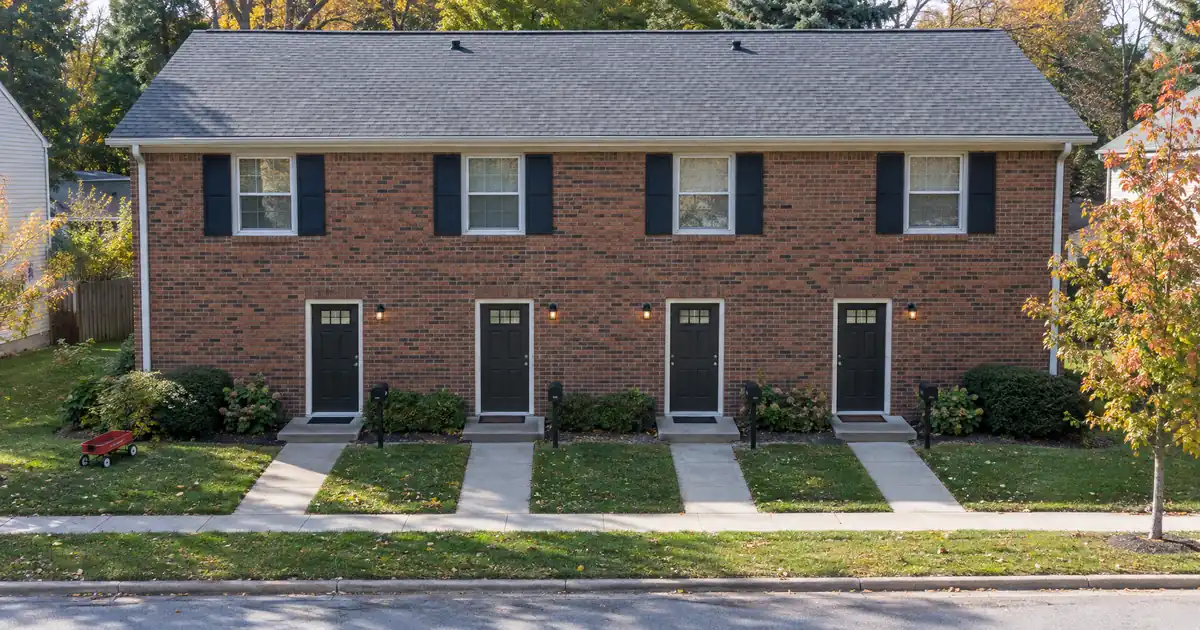
No, three park models on one lot are not a triplex. A 2-4 unit property in lender language is one residential building, or a recognized residential structure, with two to four separate dwelling units. Separate vehicle-titled units on pads read as something else.
Several RVs on pads look like a campground or RV-park income model. That is a commercial or specialty question, and it is not a standard residential DSCR file.
The practical line looks like this:
- One building, two to four dwellings: fits the 2-4 unit category when it is real property.
- Several detached structures on one parcel: depends on how the structures are classified and titled, and many such sites drift toward commercial treatment.
- Many pads, hookups, and nightly turnover: reads as a campground, outside residential DSCR.
This distinction matters because the appraiser must produce a value and a rent schedule for the real property. The appraiser values real property only. As McKissock notes in its guidance on short-term-rental appraisals, personal property and business income stay out of value, and the lender decides how to treat income. A vehicle-titled unit gives the appraiser nothing to value as real estate.
The Gate Checklist: What Decides the File
Five gates decide whether a park-model deal ever reaches underwriting. Fail the first and the rest rarely matter.
| Gate | What the lender checks | Pass looks like |
|---|---|---|
| Classification | RV seal, VIN, title type | Real-property title, no RV label |
| Land | Who owns the ground | Owned, deeded with the structure |
| Foundation | How the unit is attached | Permanent, code-compliant |
| Unit count | Building and dwelling count | One property, 2-4 dwellings |
| STR legality | Local rules and zoning | Nightly rental allowed on site |
The RV association says the certification seal sits beside the main door. If you see it, plus a vehicle identification number and an RV title, you are looking at personal property. That ends the mortgage discussion.
Leased land adds a second problem. A unit sitting on a rented pad in a resort has no land to secure at all. Zoning, utilities, and insurance sit behind these gates. Septic and water hookups affect habitability, and an insurer may treat the unit as an RV, a dwelling, or a lodging business.
Short-term rental rules can vary by city, county, HOA, and property type, so investors should confirm local rules before relying on projected rental income. Income the property cannot legally earn does not help the file.
How Short-Term Income Gets Documented
Lenders choose their own evidence for nightly-rental income, and every method trims gross revenue. The usual options are platform booking history, a third-party market projection, or a conventional market rent. Each program applies its own discount to gross income.
Do not take nightly rate times 30 and call it monthly rent. Fannie Mae’s appraiser update calls that math incorrect and says the rent form cannot estimate a nightly fee. DSCR programs set their own rules and agency guidelines do not govern them, but the point about the math carries over. Nightly revenue needs real evidence behind it.
For a 2-4 unit building, part of the qualifying income can come from long-term leases on some units, with the rest from nightly bookings. That blend helps coverage when one unit has a thin booking record.
Thin comparable sales are the other trap. An unusual structure gives an appraiser few matches, which weakens both value and rent support. A conventional duplex or fourplex is easy to appraise. A cluster of small cabins is not.
A Worked Scenario (Modeled, Not Market Data)
Run the numbers on a hypothetical lot with a conventional triplex and one park model parked behind it. These inputs are modeled assumptions for illustration only. They are not market figures.
Assume the three real-property units rent well enough that the building clears coverage of roughly 1.25x against its full monthly obligation. Assume the park model earns strong nightly revenue and the investor wants it counted.
The lender would likely count only the real-property units. The park model is personal property, so its revenue is excluded or documented separately, and the 1.25x stands on the triplex alone. Financing the park model itself usually runs through an RV loan, a chattel loan, or a personal loan, which are separate from the mortgage. A chattel loan is secured by movable property and not by land.
Now change the assumption. Say the investor underwrote the deal expecting park-model income to lift the ratio, and the building alone covers closer to 0.90x. The file is now in sub-1.00 territory. Select lenders in the network offer sub-1.00 programs with leverage and terms adjusted, and an interest-only structure may improve coverage on some files. Whether any of that applies depends on lender guidelines, credit approval, and property review. Lendmire’s piece How to Qualify for an Interest-Only DSCR Loan on 2-4 Unit Properties covers that structure in more detail.
On a purchase of that triplex, LTV could reach up to 75% for a short-term rental with a strong file. On a cash-out refinance of a short-term rental, the ceiling is 70%. That is why the strongest files clear two tests at once: enough equity and enough rental coverage.
Practitioner pattern: when investors bring a mixed lot, the deals that move are the ones where the real-property units carry the coverage by themselves. The deals that stall are the ones where the park models were counted as the reason the numbers worked.
Why These Files Get Declined
Most park-model declines trace to property type, not to the investor. The table pairs each trigger with what may help.
| Trigger | Why it blocks | What may help |
|---|---|---|
| RV or vehicle title | No real property | Conversion to real property |
| Leased pad | No land to secure | Owned land with the unit |
| Detached cluster | Not a 2-4 unit building | Restructure around one building |
| Thin comps | Weak value support | Conventional building as collateral |
| STR not permitted | Income can’t be earned | Long-term lease income |
| Manufactured classification | Not offered in network | Site-built or modular alternative |
Manufactured homes, log homes, and barndominiums are not offered through the network’s DSCR programs. If a re-titled park model ends up reading as a manufactured or non-standard structure, it would likely land in that same not-offered group.
DSCR vs. conventional financing
There are two common ways to finance an investment property, and they qualify you differently — here’s how investors weigh them.
Why investors choose it
- Qualifies on the property’s rental income — no personal tax returns, W-2s, or pay stubs needed to document income.
- No personal debt-to-income ceiling to clear, so existing mortgages and obligations don’t cap your borrowing the same way.
- Can be closed in an LLC, keeping the property inside a business entity.
- Built for scaling — not held to the limit on number of financed properties that conventional financing applies.
- Underwriting centers on the deal: generally qualifies when the rent covers the payment, a 1.00x coverage ratio being a common baseline (confirmed in underwriting).
- Designed specifically for investment property, including long-term and, where the program allows, short-term rentals.
Where it’s strong
- Often the lowest ongoing financing cost for a buyer who fully qualifies on personal income — a fit for a first property or a cost-first purchase.
Trade-offs for investors
- Requires full personal income documentation and must fit within a debt-to-income limit — salary, existing debts, and other mortgages all count.
- Typically held in your personal name rather than a business entity.
- Caps how many financed properties you can carry, which can become a ceiling as a portfolio grows.
- Evaluates you as a borrower as much as the property, which usually means more paperwork.
How investors usually choose: a first or single property often optimizes for the lowest financing cost; portfolio builders often optimize for leverage, vesting in an LLC, and scaling past conventional caps. The right answer depends on your goals, the property, and current guidelines — both paths run through select lenders in Lendmire’s wholesale network, with eligibility and terms confirmed in underwriting.
What If the Park Model Is the Plan?
The realistic paths are narrow, and each one changes the property, not the loan.
Convert it to real property. A cabin builder’s guidance, which is a seller-side view and not legal advice, says removing the wheels and setting the unit on a permanent foundation changes its classification to real estate. That moves it away from the RV standard and into a question of local code, title, and zoning, with permitting steps along the way. Even then, a lender may read the finished structure as non-standard.
Build site-built or modular cabins instead. Cabins constructed to local or state code on foundations are not park models. They are a different and generally easier conversation, though short-term-rental conditions still apply and the full-time-residence test matters. Park models are explicitly not designed for permanent residence, which weakens them on that test.
Make a conventional 2-4 unit building the collateral. If you already own or are buying a real duplex, triplex, or fourplex, underwrite it on its own units. Treat park-model income as a bonus outside the loan.
Finance the park model separately. Consumer financing guides such as Sapling point to RV loans, personal loans, and chattel loans for the unit itself. Land is a separate matter, and none of these is a 30-year mortgage on the structure.
One caution on sales pitches: payoff claims from park-model sellers come from sellers. Check classification before you model returns.
Key Terms Defined
DSCR (debt service coverage ratio): Monthly rent used for lender review divided by the full monthly obligation on the loan.
PITIA: Principal, interest, taxes, insurance, and association dues, the full monthly cost the rent must cover.
Park model RV: A recreational vehicle on a single chassis, built to the RV standard and designed for seasonal use.
Real property: Land and anything permanently attached to it, the only thing a mortgage can secure.
Personal property: Movable items, including vehicle-titled units such as park models.
Chattel loan: A loan secured by movable property instead of land.
STR (short-term rental): A property rented by the night or week, typically through a booking platform.
Operating income form: The appraisal form for 2-4 unit properties that shows value and per-unit rent.
Before You Apply: A Short Checklist
Gather these facts before talking to a broker.
- The title document for each structure and whether any carries a vehicle identification number.
- Whether the land is owned or leased, and whether it will be deeded with the structure.
- A survey or site plan showing how many buildings and dwelling units sit on the parcel.
- Written confirmation that nightly rental is allowed for the address.
- Booking history for the past 12 months, if you already host.
- Your credit profile and cash reserves, since reserves vary by lender, leverage, and loan size.
Tax treatment can depend on how the funds are used and how the property is held; investors should keep clear records and speak with a qualified tax professional before relying on any deduction.
Lendmire is a mortgage broker arranging DSCR financing through select lenders in its wholesale network, across 41 markets including Washington, D.C. Programs change and every file is underwritten individually. Nothing here is a commitment to lend.
Frequently Asked Questions
Can a park model be financed on a DSCR loan?
Usually not, because a true park model carries an RV certification and a vehicle title, which makes it personal property. A DSCR loan is a mortgage on real property. The unit itself is typically financed through RV, chattel, or personal loans, and a lender reviews any file individually.
Does a park model on leased land qualify?
Leased land makes it harder still. With no owned ground to secure, a lender has no real property to place a mortgage on. Owned land deeded together with a permanent, code-compliant structure is the baseline before property-type rules even come up.
Can three park models on one lot count as a triplex?
No. A triplex in lender terms is a single residential building with three dwelling units. Separate vehicle-titled units on pads tend to be reviewed as a campground or RV-park model, which is commercial and outside residential DSCR.
Does short-term-rental income count on a 2-4 unit?
Yes on eligible real property, with conditions. Programs typically expect around 12 months of hosting experience and a 640 score, and lenders choose the income evidence, whether booking history, a market projection, or lease income on some units. Income from an unqualifying structure does not count.
Can I hold the property in an LLC?
Many investors do, subject to lender program eligibility. The LLC does not change the property-type rules, so an ineligible structure stays whoever owns it.
If you are buying or refinancing a rental property and want to see how the numbers work, Lendmire can help you compare DSCR loan options based on the property income, credit profile, leverage, and investor goals.
Investors focused on short-term rentals can review DSCR loans for Airbnb and short-term rentals.
About Lendmire
Lendmire is a non-QM mortgage brokerage (NMLS# 2371349) arranging DSCR investor loans in 41 markets, including Washington, D.C., through wholesale and investor-lending channels. DSCR loans are evaluated by the lender on rental income rather than personal income, subject to lender guidelines — a fit for LLC-owned portfolios, self-employed investors, and operators scaling beyond conventional loan caps. Recognized as a Scotsman Guide Top Mortgage Workplace in 2025 and 2026.
Get Started
Ready to find the right loan for you?
In about 30 seconds you can review financing options available for your investment property. No commitment required.
Informational only. Not a Loan Estimate, approval, or commitment to lend. Program availability and eligibility are subject to lender guidelines, credit approval, property review, and underwriting.
References
1. RV Industry Association – What is an RV?
2. Federal Register – HUD RV exemption rule
3. AAMVA – Recreational park trailer policy position
4. McKissock – Form 1007 and short-term rental appraisals
5. Fannie Mae – Appraiser Update
6. Sapling
This article is part of Lendmire’s short-term rental loan program — full qualification details, guidelines, and scenarios live on the program page.
Related reading: How to Qualify for a Blanket DSCR Loan for a Portfolio Held in LLCs · One Blanket DSCR Loan vs Individual Loans for a High-W-2 STR Operator · Can You Get a Loan on a Condotel Unit?
Brandon Miller
Founder & CEO, Mortgage Loan Originator, Lendmire LLC
- Mortgage Loan Originator · NMLS# 1129696 · Verify on NMLS Consumer Access
- North Carolina Real Estate Broker · License# 343312 · Verify on NCREC
- North Carolina Insurance Producer · License# 19053198 · Property, Casualty, Life, Health · Verify on NAIC SBS
- Lendmire LLC · Firm NMLS# 2371349 · Verify firm licensure
Disclosures. The information presented in this article is general market commentary, not financial, legal, or tax advice. Lendmire is a mortgage brokerage (NMLS# 2371349) — not a direct lender or depository institution — and loan placement is subject to lender underwriting. Nothing in this content represents a commitment to lend. Loan terms, pricing, and program availability vary based on borrower qualifications, property characteristics, and state of subject property, and are subject to change at any time. Lendmire complies with Equal Housing Opportunity requirements. Consumer access: nmlsconsumeraccess.org.