
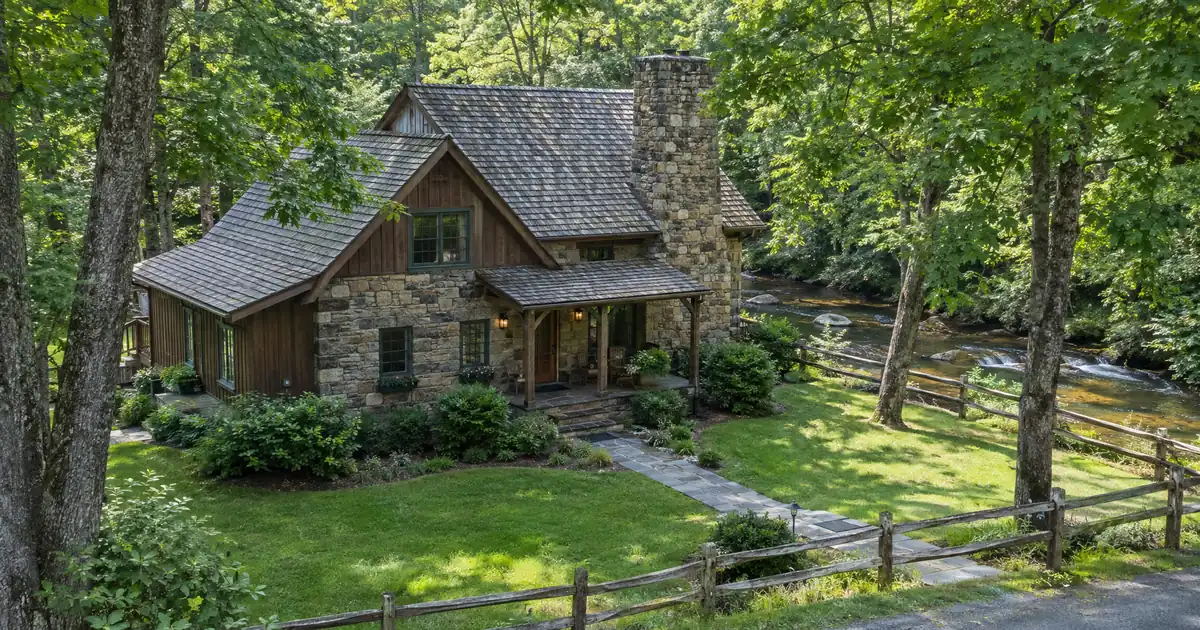
The Quick Read: A purchase with no operating history is underwritten on the appraiser’s short-term-rent income estimate, counted at a discount to gross, and then tested against the full monthly obligation. At this price the deciding factor is usually the short-term-rental loan-size ceiling, not the income projection.
- Through select wholesale programs, short-term-rental files top out at $2,000,000 in loan amount, so a $3M price needs leverage of roughly two-thirds of price or less.
- Purchase income comes from the appraisal’s short-term-rent analysis, counted at 80% of gross, with coverage of 1.00 or higher.
- The borrower typically needs experience: twelve months owning income property in the last thirty-six.
- Rural collateral adds acreage limits and a thin-comparable problem that can weaken the projection.
- Every figure here is a ceiling or typical range, subject to underwriting and not a commitment to lend.
What Does Financing on Projected Income Actually Mean?
Financing on projected income means the lender relies on an estimate of what the cabin will earn instead of what it has earned. On a purchase, a new owner has no history. Lendmire, a DSCR-focused mortgage broker arranging business-purpose investor loans in 41 markets including Washington, D.C., sees this structure most often on purchases. Refinances lean on twelve months of actual operating results.
Short-Term Rental Calculator
Run the STR numbers in your market
Rate source: Freddie Mac 30-yr average via FRED® — Federal Reserve Bank of St. Louis · effective Oct 15, 2026
Prefilled with starting assumptions — enter your nightly rate, occupancy, taxes, and insurance for a more accurate picture.
Short-term rental income is documented with a 12-month history or a market data report. Program parameters update from Lendmire’s centralized guideline source.
As of Oct 15, 2026 · General Freddie Mac market benchmark, not a Lendmire loan offer. Nightly rate, occupancy, taxes, and insurance are editable estimates. Qualifying income for short-term rentals varies by program — some use appraisal market rent, others use documented STR history or projections — and is confirmed in underwriting. Not a Loan Estimate, approval, or commitment to lend. Program availability and eligibility are subject to lender guidelines, credit approval, property review, and underwriting.
The loan is reviewed primarily on property-level rental income covering the payment, subject to lender guidelines. Your traditional personal-income documentation is not the center of the file. Credit, reserves, collateral and experience still matter. Anyone new to the product can start with the complete DSCR loans guide.
The ratio itself is simple. Qualifying monthly income is divided by the full monthly obligation: principal, interest, taxes, insurance and any association dues. A result of 1.00 means income matches the obligation. Higher means a cushion. On this program, a short-term-rental file needs 1.00 or higher.
How Does Underwriting Treat the Projection, Step by Step?
Underwriting treats the projection as an estimate to be discounted, not a promise to be honored. Here is the sequence on most files in Lendmire’s network.
1. Business purpose and vesting. The cabin must be a true investment property. Entity vesting is welcome, subject to program terms, though layered entities are not.
2. Local permission. Permission to operate a short-term rental must be documented for the specific property. Short-term rental rules can vary by city, county, HOA, and property type, so investors should confirm local rules before relying on projected rental income. Lendmire’s piece How to Underwrite STR Permit Risk Before Buying a Rural Cabin covers the diligence side.
3. Income estimate. On a purchase, the appraisal’s short-term-rent analysis supplies the income figure.
4. Discount. The program counts 80% of that gross figure. The gap covers vacancy, management, cleaning and platform costs that gross revenue ignores.
5. Coverage test. The discounted monthly income is divided by the full monthly obligation. Taxes and insurance sit inside that obligation, which matters on a large rural property.
6. Collateral review. Appraisers look at acreage, access, water, septic and how far the comparable sales sit from the cabin.
7. Reserves, credit and experience. Reserves typically run six months on the subject property, and twelve for first-time investors. Credit and leverage requirements tighten as the balance grows.
Notice what is missing: a nightly-rate multiplication done by the borrower. The lender does not simply accept your spreadsheet.
Why Is the $3M Price the Real Gate?
The short-term-rental ceiling of $2,000,000 in loan amount is the gate. A $3M purchase at the standard ladder leverage of 75% on a purchase would overshoot that ceiling. To keep the loan inside the cap, the loan must be roughly two-thirds of the price or less. That puts the required down payment at about a third of the price or more, before closing costs and reserves. Final terms depend on the lender’s guidelines, the property type, and the borrower’s complete credit picture.
That structure lands in the $1.5M to $2M loan tier, where leverage reaches 75% on a purchase. That tier also asks for credit of 720 or higher, subject to underwriting. Appraisal requirements step up with loan size, and two appraisals are required above $2,000,000.
The standard rental program carries loans up to $3,000,000, and the broader ladder goes to $10,000,000. Those tiers do not rescue this deal. Above $3,000,000 in loan amount, rural property is excluded and parcels are capped at ten acres. Short-term-rental files do not extend past the $2,000,000 cap. No-ratio loans are available through select lenders in the network, with leverage and terms set by that program.
Here is the practical read. If the cabin costs $3M and you want leverage near 75%, the file likely does not fit the short-term-rental path. Either the price comes down, the down payment goes up, or the cabin is underwritten on long-term rent instead. Long-term rent on a high-end rural cabin often produces weak coverage, which is the reason investors seek the short-term route in the first place.
Which Income Method Applies to Which File?
The income method depends on whether the file is a purchase or a refinance, and whether the cabin has history.
| Method | When it applies | Main risk |
|---|---|---|
| Appraisal STR analysis | Purchase, no history | Thin rural comps |
| Twelve months of operating history | Refinance | Poor or partial year |
| Long-term market rent | Fallback only | Understates cabin income |
On a purchase, the appraiser’s analysis is the document that counts. Investors often run an outside estimate from a data service as a cross-check. That is a sensible habit. It is not what the lender necessarily underwrites.
One trap deserves attention. The standard appraisal rent schedule, Form 1007, was built to estimate long-term monthly market rent. HousingWire reports that it cannot capture nightly pricing, seasonality or cleaning costs, so using it for a short-term rental can produce an artificially low coverage ratio. A Fannie Mae appraiser update reproduced by the Nevada Real Estate Division confirms the form must be supported by monthly-lease comparables and cannot estimate a nightly fee. Those form names are appraisal vocabulary only. They do not set DSCR program rules.
Why Does a Rural Cabin Weaken the Projection?
Rural location weakens the projection because projections are built from comparable listings, and rural comps are scarce. AirDNA’s help documentation describes its calculator as a weighted average of comparable listings within a 10-mile radius. In a resort town, that radius holds dozens of matches. Around a remote cabin, it may hold a handful.
Rental Recon notes that a low confidence score signals few comps, which is common in rural areas, and that the output is then best read as a rough range. Treat any rural projection the same way.
Appraisers face the same shortage. When sales comparables sit far away, the appraiser may lean on different property types or different terrain. That affects value as well as income. A cabin priced for its views and acreage may be valued as lifestyle land, and the lender weighs the residential value, not the emotional one. Furniture, fixtures and equipment come out of the value too.
An investor would be wise to ask three questions before contract:
- How many true comparables sit within a reasonable distance?
- Is the cabin’s income driven by location features that comps do not share?
- Does the property fit the program’s rural acreage limits?
On acreage, rural collateral carries stepped limits. Parcels of five acres or less reach 75% leverage on a purchase, and larger parcels face tighter limits, all subject to underwriting. Large parcels can also reduce the value the lender uses. Each figure is subject to lender guidelines and a complete review of property type, leverage, and credit.
What Does a Passing $3M File Look Like?
A passing file has a down payment large enough to hold the loan under the cap, plus income that clears 1.00 after the discount. The numbers below are modeled assumptions, not market data.
Picture an experienced investor buying a $3M cabin on a modest acreage parcel. The investor puts down about a third of the price. The appraisal’s short-term-rent analysis is supported by a reasonable set of comps. After the 80% discount, assume the file clears roughly 1.25x against the full monthly obligation. Credit is above 720, and reserves cover six months on the subject property. This is the shape of file a lender can review on its merits, subject to underwriting.
A 120-month interest-only option can help a file like this. The loan is qualified on interest, taxes and insurance rather than a fully amortizing payment. Interest-only reaches 75% on the program, though the short-term-rental cap still binds at the loan-size level. Because the short-term-rental floor is 1.00, a thin file does not get a sub-1.00 path here.
What Does a Failing File Look Like, and What Are the Fixes?
A failing file shows a strong gross projection that collapses after the discount and the full obligation are applied. Assume the same cabin, but the comps are distant and the estimate is on the optimistic side. After the 80% discount, coverage comes out near 0.90x.
The levers, roughly in order of usefulness:
- Lower the loan. More cash down reduces the obligation and lifts the ratio directly.
- Lower the price. A price renegotiation does the same work.
- Improve the evidence. A stronger comp set or a more thorough appraisal analysis may support a better income figure.
- Consider an interest-only structure. It can ease the obligation used in qualification, subject to underwriting.
- Fall back on a different asset. A cabin that cannot clear 1.00 on this path may fit a different loan type, or a different cabin may fit this one.
Do not chase a sub-1.00 structure here. Select lenders do review sub-1.00 coverage on standard rentals, with leverage and terms adjusting, but that path does not carry over to short-term-rental files on this program. If the numbers only work below 1.00, that is a signal to rework the deal.
How Should You Stress-Test the Projection?
Stress-test by assuming the projection is too high. Independent reviewers consistently warn that property-level estimates are less reliable than market-level ones, especially in thin markets. Awning’s review of AirDNA cites a range of 15% to 30% error in thin markets. That is a third-party estimate, not a measured rule, but it is a sensible reason for caution.
The table below shows how coverage moves if only part of the projection shows up. It assumes a file that clears 1.30x on counted income. The figures are modeled.
| Share of projection realized | Resulting coverage |
|---|---|
| 100% | 1.30x |
| 80% | about 1.04x |
| 60% | about 0.78x |
The ratio scales in a straight line with income. A file that clears 1.30x has little room: a 20% miss puts it close to the floor. A file that clears 1.50x or better gives you real room to be wrong.
The ratio also leaves out costs. Repairs, vacancy and management sit outside the coverage number. Clearing 1.00 means the income covers the obligation. It does not mean the cabin produces profit.
Where Does the General Rule Break?
The general rule is that a strong projection and a clean ratio lead to a workable file. Five edge cases break it.
Personal use. A cabin the owner also uses is a gray area for business-purpose financing. CFPB’s rule on business-purpose credit exempts credit extended primarily for business purposes, and the purpose is judged case by case. DSCR loans are designed for non-owner-occupied investment properties. Because they are business-purpose investor loans, they are reviewed differently from a standard owner-occupied mortgage. A cabin you plan to use half the year invites questions.
Blocked owner dates. Some investors count owner-blocked nights as demand when building a projection. That inflates the figure. A prudent approach is to underwrite year one at a meaningful discount to any projection.
First-time investors. The program’s experience requirement, twelve months owning income property in the last thirty-six, means a first-time buyer may not qualify for the short-term-rental path. Reserves also double for first-time investors, to twelve months.
Cash-out later. If you buy now and refinance later, the cash-out ladder is tighter than the purchase ladder. Cash-out reaches 60% on collateral in the $1.5M to $3M range, and there is none above $3,000,000. Rural acreage can reduce the value the lender uses.
Permit change. A permit or local rule that changes after purchase can undercut the income overnight. Local rules are set locally and change, which is why permission is documented per property and never assumed.
One practitioner pattern is worth stating. On large rural files, the income figure rarely sinks the deal alone. The combination of thin comps, a lifestyle valuation and a loan balance near the cap does. Brokers who see many lenders’ guidelines notice that the strictest overlays focus on collateral and acreage, not on the income math. Getting the appraisal approach and the parcel details settled before contract prevents most late surprises.
DSCR vs. conventional financing
There are two common ways to finance an investment property, and they qualify you differently — here’s how investors weigh them.
Why investors choose it
- Qualifies on the property’s rental income — no personal tax returns, W-2s, or pay stubs needed to document income.
- No personal debt-to-income ceiling to clear, so existing mortgages and obligations don’t cap your borrowing the same way.
- Can be closed in an LLC, keeping the property inside a business entity.
- Built for scaling — not held to the limit on number of financed properties that conventional financing applies.
- Underwriting centers on the deal: generally qualifies when the rent covers the payment, a 1.00x coverage ratio being a common baseline (confirmed in underwriting).
- Designed specifically for investment property, including long-term and, where the program allows, short-term rentals.
Where it’s strong
- Often the lowest ongoing financing cost for a buyer who fully qualifies on personal income — a fit for a first property or a cost-first purchase.
Trade-offs for investors
- Requires full personal income documentation and must fit within a debt-to-income limit — salary, existing debts, and other mortgages all count.
- Typically held in your personal name rather than a business entity.
- Caps how many financed properties you can carry, which can become a ceiling as a portfolio grows.
- Evaluates you as a borrower as much as the property, which usually means more paperwork.
How investors usually choose: a first or single property often optimizes for the lowest financing cost; portfolio builders often optimize for leverage, vesting in an LLC, and scaling past conventional caps. The right answer depends on your goals, the property, and current guidelines — both paths run through select lenders in Lendmire’s wholesale network, with eligibility and terms confirmed in underwriting.
What Do the Alternatives Look Like?
Alternatives start with the observation that conventional second-home loans generally do not let rental income help you qualify. Agency loans also stop at conforming limits, which sit far below a $3M price. A high price therefore points toward non-QM or portfolio paths.
Within DSCR, there are three realistic routes for a cabin at this price:
1. Lower leverage so the short-term-rental file fits under the ceiling. 2. Buy first, season the income, and refinance on twelve months of operating history. 3. Underwrite on long-term rent through the standard program, which carries loans to $3,000,000, if the cabin’s long-term coverage supports it.
Each route involves a tradeoff. Route two trades certainty today for evidence later, and the cash-out ladder is tighter than the purchase ladder. Route three avoids the short-term-rental cap but often produces thin coverage.
Key Terms Defined
DSCR (debt service coverage ratio): Qualifying monthly income divided by the full monthly housing obligation.
PITIA: Principal, interest, taxes, insurance and any association dues, the full obligation used in the ratio.
Projected income: An estimate of what a property without history will earn, usually from an appraisal analysis or data service.
Haircut: The discount a lender applies to gross income before the ratio is calculated, 20% on this program’s short-term-rental purchase path.
ITIA: Interest, taxes, insurance and dues, the obligation used when a loan is interest-only.
Comparable (comp): A similar nearby listing or sale used to estimate income or value.
Frequently Asked Questions
Can a DSCR lender use my own spreadsheet as the projection?
Usually not. On a purchase, the program relies on the appraisal’s short-term-rent analysis, counted at 80% of gross. Your spreadsheet is useful for your own stress test and for discussing the deal, but it is not the underwriting document.
Can I get 75% leverage on a $3M rural cabin?
Rarely on a short-term-rental file. The ladder allows 75% on a purchase in the $1.5M to $3M tiers, but the short-term-rental ceiling is $2,000,000 in loan amount. Leverage on a $3M price therefore lands near two-thirds or lower, subject to underwriting. Leverage, reserves, and pricing vary by lender and program; the final terms follow the full file review.
Do I need prior rental experience?
For short-term-rental files on this program, yes. The typical requirement is twelve months of owning income property in the last thirty-six. First-time investors also carry a higher reserve requirement. A first-time buyer may find another route better suited. Terms vary by lender guidelines, property type, leverage, credit profile, and full file review.
Does a low coverage ratio always kill the deal?
Not always on standard rentals, since select lenders in the network review coverage below 1.00 with adjusted leverage and terms, subject to underwriting. On short-term-rental files in this program, the coverage floor is 1.00 or higher, so a thin file needs a different structure.
Should I buy first and refinance on history?
It depends on your cash position and exit plan. History makes the income evidence stronger, and refinances use twelve months of operating results. The cash-out ladder is tighter than the purchase ladder, and rural acreage can limit the value used. Run both paths before committing.
Next Step
If you are buying or refinancing a high-balance rental property and want to see how the numbers work, Lendmire can help you compare super jumbo DSCR loan options based on the property income, the loan balance, credit profile, leverage, and investor goals. Reach the team at 828-256-2183 or request a quote. Tax treatment varies; consult a qualified professional.
For current guidelines and terms, see Lendmire’s super jumbo DSCR loan programs page.
Self-employed borrowers can also review other financing options on Lendmire’s self-employed mortgages page.
About Lendmire
Lendmire (NMLS# 2371349) is a mortgage brokerage built around DSCR investor lending, with programs available in 41 markets, including Washington, D.C. DSCR lenders commonly evaluate rental-income coverage instead of personal income paperwork — a practical fit for LLC-owned and multi-property investors. Terms vary by lender, property, leverage, and program. Scotsman Guide named Lendmire a Top Mortgage Workplace in both 2025 and 2026.
Get Started
Ready to find the right loan for you?
In about 30 seconds you can review financing options available for your investment property. No commitment required.
Informational only. Not a Loan Estimate, approval, or commitment to lend. Program availability and eligibility are subject to lender guidelines, credit approval, property review, and underwriting.
References
1. HousingWire: short-term rentals and the appraisal playbook
2. Fannie Mae short-term rental appraiser update, via Nevada Real Estate Division
3. AirDNA help center: Rentalizer revenue calculator
4. Rental Recon: AirDNA Rentalizer guide
6. CFPB Regulation Z § 1026.3, exempt transactions
This article is part of Lendmire’s super jumbo DSCR loan program — full qualification details, guidelines, and scenarios live on the program page.
Related reading: How to Structure IO on a Super Jumbo DSCR Purchase vs Cash-Out · How To Apply Seller Credits On A Jumbo DSCR Rental Purchase · How To Qualify A Vacant Rental On Projected Rent With A DSCR Loan
Brandon Miller
Founder & CEO, Mortgage Loan Originator, Lendmire LLC
- Mortgage Loan Originator · NMLS# 1129696 · Verify on NMLS Consumer Access
- North Carolina Real Estate Broker · License# 343312 · Verify on NCREC
- North Carolina Insurance Producer · License# 19053198 · Property, Casualty, Life, Health · Verify on NAIC SBS
- Lendmire LLC · Firm NMLS# 2371349 · Verify firm licensure
Compliance and disclosures. Lendmire (NMLS# 2371349) is a licensed mortgage broker and is not a direct lender, depository institution, financial advisor, or tax professional. Content in this article is general market analysis and educational information — not financial, legal, or tax advice for any specific situation. Lendmire does not guarantee loan approval; every transaction is subject to underwriting by the funding lender. Mortgage pricing and loan program guidelines are subject to change at any time without notice and vary by borrower characteristics, property type, and state regulations. Lendmire complies with Equal Housing Opportunity. Licensure verification: NMLS Consumer Access.