
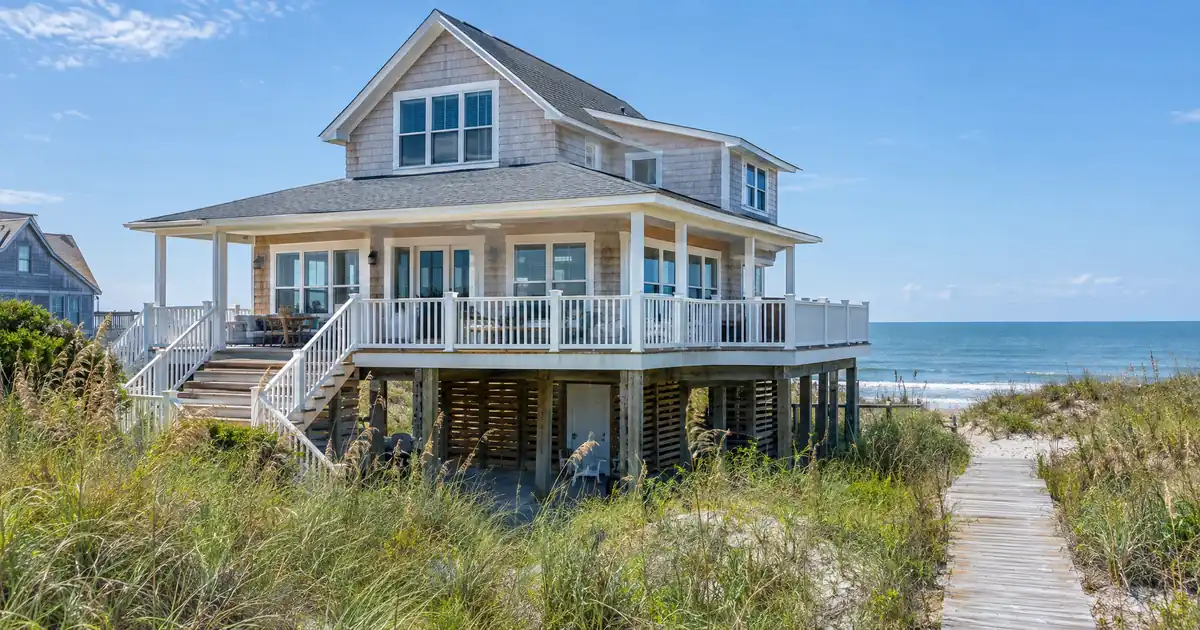
Founder Use a Second-home Loan on a Beach — The Quick Read: No. If the plan is to run the property on Airbnb or VRBO on a regular basis, a second-home loan is the wrong instrument, not just a risky one. Lenders classify occupancy based on intent and use, and a beach house rented out regularly is an investment property in the lender’s eyes, whatever box gets checked at closing. The workable path for a founder who wants both personal use and rental income is a DSCR loan built for exactly this — a property that earns its keep.
A second-home loan requires the borrower to keep exclusive control of the property and use it personally for part of the year. Fannie Mae’s own guide spells out three occupancy buckets — primary residence, second home, or investment property — and a second home can’t be handed to a rental agreement or management firm, and future rental income can’t be used to qualify for the loan. A beach house that goes live on a booking platform right after closing is the exact pattern underwriters are trained to flag.
DSCR Calculator
Run the numbers in your market
Rate source: Freddie Mac 30-yr average via FRED® — Federal Reserve Bank of St. Louis · effective Sep 17, 2026
Prefilled with local estimates — enter your own rent or nightly figures, taxes, insurance, and HOA for a more accurate picture.
Program parameters update from Lendmire’s centralized guideline source. Taxes and insurance are editable estimates.
As of Sep 17, 2026 · General Freddie Mac market benchmark, not a Lendmire loan offer. Rent, nightly rate, occupancy, taxes, and insurance are editable estimates. Short-term rental figures are estimates only and vary significantly by season, property type, management approach, and local short-term-rental rules — confirm local regulations before relying on them. Qualifying income for short-term rentals varies by program — some use appraisal market rent, others use documented STR history or projections — and is confirmed in underwriting. Not a Loan Estimate, approval, or commitment to lend. Program availability and eligibility are subject to lender guidelines, credit approval, property review, and underwriting.
Key Terms Defined
Occupancy classification — the category a borrower selects on a loan application (primary residence, second home, or investment property) that determines underwriting rules and terms.
Occupancy fraud — stating an intent to live in a property, or use it personally, when it’s actually being run as a rental business.
DSCR loan — a business-purpose loan that qualifies a property based on its rental income covering the monthly payment, rather than the borrower’s traditional personal-income documentation.
Coverage ratio (DSCR) — gross monthly rent divided by the monthly payment (principal, interest, taxes, insurance, and dues); a ratio above 1.00 means the rent covers the payment with room left over.
Short-term rental (STR) DSCR — a version of DSCR underwriting that uses projected or historical nightly-rental income instead of a long-term lease.
Why the Second-Home Box Doesn’t Fit
The second-home category exists for a borrower who occasionally lives somewhere else — a ski condo, a lake cabin, a beach place the family visits a few weeks a year. It was never built for a property generating regular rental revenue on a platform.
The requirement is about control, not just occupancy. A borrower must retain exclusive control over the property, and the property “cannot be a rental property or subject to a timeshare arrangement.” Once a founder lists a beach house on a booking site with a calendar open most of the year, that control test becomes hard to satisfy honestly. This isn’t about how many nights get booked. It’s about whether the property functions as an income-producing asset, based on the borrower’s own stated intent going into the loan.
Some borrowers assume a “100-mile rule” settles the question — that if the second home is far enough from the primary residence, rental use is automatically fine. That’s not written into the underlying guide as a hard distance requirement; it’s a lender-imposed overlay in some cases, not a bright line either way. Distance alone doesn’t convert an income property into a second home, and it doesn’t disqualify one either.
What Actually Happens If a Founder Tries It Anyway
The consequence isn’t usually a knock on the door. It’s a buyback demand or a forced restructure that shows up at the worst possible time.
Federal regulators see this as a serious misrepresentation problem, not just a paperwork issue. Rate assumptions belong in the calculator, and the article should discuss coverage in general terms only. In practice, most cases get resolved financially. The lender may call the loan, force a buyback, or push the borrower into a refinance at investment-property terms. This is disruptive if it happens mid-renovation or mid-season. It also follows the borrower’s credit file into future financing.
The occupancy affidavit signed at closing on a standard second-home or primary-residence loan isn’t a formality. Occasional personal use during the year doesn’t undo the underlying pattern if the property is booked regularly and managed like a business.
The DSCR Path — Built for This Exact Property
DSCR loans qualify the property, not the occupancy story, which is why they’re the structurally correct tool for a beach house that’s going to earn money on a booking platform.
The ratio itself never changes: gross monthly rent divided by the full monthly payment. What changes with a short-term rental is the income input. Instead of a signed lease, underwriting typically looks at twelve months of operating history on a refinance, or the appraisal’s short-term-rent analysis on a purchase, applied at a discount to gross income — commonly around 80% of gross across programs in Lendmire’s wholesale network, subject to underwriting. That haircut exists because nightly income is lumpier than a signed twelve-month lease, and lenders want cushion built in before they trust the number.
A founder buying a beach house purely as a rental doesn’t need to manufacture a personal-use story. The property is reviewed on its own income, and the loan is documented as what it actually is from day one. That removes the mismatch risk entirely — there’s no affidavit to explain later, no listing history that contradicts the file if a future lender or title reviewer looks back at the property’s use.
For a full walkthrough of how these loans are structured, Lendmire’s complete DSCR loans guide covers qualification mechanics in more depth.
What Founders Get Wrong About Personal Income Docs
Founders often assume the second-home route is easier because it skips deep income scrutiny. It’s usually the opposite for someone with complex income.
Conventional underwriting on a second home still relies on the borrower’s traditional personal-income documents. Founders with K-1s, multiple entities, or heavy business deductions often show paper income that doesn’t match their real cash position. A DSCR loan avoids this problem entirely. The property’s income drives the lender’s review, not the borrower’s Schedule C or K-1. That’s a real advantage on its own, separate from the occupancy question. It’s often the bigger reason founders end up using DSCR loans instead of trying to fit into a second-home box.
How the Numbers Actually Work on a Beach STR
Loan sizing on short-term-rental collateral in Lendmire’s network runs to $2,000,000, with a coverage ratio of 1.00 or better required — sub-1.00 STR files aren’t part of that particular path. Leverage steps down as loan size climbs: files up to $1,000,000 can reach 80% on a purchase, but STR collateral is priced and reviewed on its own income profile rather than the standard ladder, and cash-out on short-term-rental collateral tops out around 70%, scoped specifically to that property type in the same sentence as the number.
Say an investor buys a $1,200,000 beach property with a documented STR operating history. They might land at 75% leverage on the purchase, with income calculated using the appraisal’s short-term analysis or twelve months of platform statements, discounted by roughly 80% of gross. If the resulting rent-to-payment math clears comfortably above 1.00, full leverage at that tier applies, subject to underwriting. If the numbers come in lower — say borderline coverage in the high 0.80s to 0.90s — some lenders in the network will still work the file at reduced leverage, since sub-1.00 coverage is a real path through select programs. In that case, LTV and terms adjust accordingly. Final terms always depend on lender guidelines, property type, leverage, and the borrower’s complete credit picture.
Reserve requirements typically run six months of the full monthly payment held on the subject property for most files, stepping up to twelve months for a first-time investor with no prior landlord history. Credit floors sit around 660 on most standard-size files, moving up on larger loans. These are typical ranges from select wholesale-network guidelines, not universal thresholds — every file gets underwritten on its own facts.
Across STR-heavy files, one pattern shows up again and again: seasonality mismatch. A beach property might have strong coverage in peak summer and weak coverage in the off-season. Underwriting typically averages the whole year rather than qualifying based on the best month. Founders who model only their July numbers often end up with a file that doesn’t clear the way they expected.
Two Rules That Get Confused — and Aren’t the Same
The IRS has its own 14-day test, and it has nothing to do with how a lender classifies the loan.
Under federal tax law, IRS Topic 415 treats a property as a personal residence for tax purposes if personal use exceeds 14 days or 10% of the days it’s rented at fair value, whichever is greater. That test decides whether rental losses can be deducted and how income gets reported — it says nothing about mortgage occupancy. A property can pass the IRS’s personal-use threshold and still be an investment property on a loan application, because the two frameworks are answering completely different questions. Founders who assume clearing the IRS test also clears the lender’s occupancy test are conflating two rulebooks that were never meant to line up.
Local Rules Are a Separate Gate
Even after the financing question is settled, municipal rules decide whether the rental plan actually works. Short-term rental rules can vary by city, county, HOA, and property type, so investors should confirm local rules before relying on projected rental income. Municipal permission must be documented for the specific property being financed. It’s never assumed just because a nearby town or a similar coastal market allows it.
What This Means for the Financing Choice
DSCR loans are designed for non-owner-occupied investment properties. Because they are business-purpose investor loans, they are reviewed differently from a standard owner-occupied mortgage.
For a founder weighing the two paths, the decision usually comes down to intent, not paperwork convenience. Occasional personal use with no real rental plan can still fit a second home. Regular income-producing rental use — the kind that shows up on a booking platform calendar — belongs on DSCR paper from the start. Trying to force the second one into the first box doesn’t save money; it just moves the risk downstream to a worse moment.
Entity vesting is welcome on DSCR files for founders who want the property held inside an LLC or similar structure rather than personally, which is often the cleaner setup for a business-purpose asset anyway.
Tax treatment can depend on how the funds are used and how the property is held; investors should keep clear records and speak with a qualified tax professional before relying on any deduction.
Frequently Asked Questions
Can a founder rent a second home occasionally without it becoming an investment property?
Light, occasional personal use with minimal rental activity can sometimes still fit a second-home classification, since the core test is whether the borrower keeps exclusive control and isn’t running a rental business through the property. Once the property is booked regularly on a platform and managed like income real estate, it stops looking like a second home regardless of how the paperwork is filled out.
What income counts on a DSCR beach house with no rental history yet?
On a purchase, lenders in Lendmire’s network typically use the appraisal’s short-term-rent analysis rather than the borrower’s projections. On a refinance, twelve months of documented operating history is the usual standard, applied at a discount to gross income, commonly around 80%, subject to underwriting.
Does the 14-day IRS rule mean the loan can be a second home?
No. The IRS’s 14-day personal-use test only decides tax treatment of rental income — it has no bearing on how a lender classifies the loan’s occupancy. A property can satisfy the tax test and still be underwritten as an investment property.
Can a founder still qualify if their traditional personal-income documentation shows low income due to depreciation?
That’s one of the practical reasons DSCR financing exists — qualification runs primarily on the property’s rental income covering the payment, subject to lender guidelines, rather than the borrower’s traditional income documentation. Founders with K-1s or heavy write-offs often find this path more workable than a conventional second-home loan.
Is there a minimum coverage ratio to get an STR DSCR loan?
Most programs in Lendmire’s wholesale network want a coverage ratio of 1.00 or better on short-term-rental collateral to access full leverage on that tier. Coverage between roughly 0.75 and 0.99 is a real path through select programs at reduced leverage, but terms adjust, subject to underwriting.
If a founder is weighing a second-home loan against a DSCR loan for a beach property, Lendmire can help compare leverage, coverage, and documentation paths based on the property’s income and the investor’s goals. For more on how a booking-platform property gets treated differently from a signed lease, see Lendmire’s coverage of short-term rental DSCR loans.
For current guidelines and terms, see Lendmire’s super jumbo DSCR loan programs page.
Self-employed borrowers can compare both super jumbo programs on Lendmire’s self-employed mortgages page.
About Lendmire
Lendmire, NMLS# 2371349, is a mortgage brokerage focused on investor financing, arranging DSCR loans in 39 states plus Washington, D.C. — 40 markets total. Qualification is based on the property’s income rather than personal income documentation, subject to lender guidelines, making it a fit for LLC-held rentals and scaling portfolios. Scotsman Guide named Lendmire a Top Mortgage Workplace in both 2025 and 2026.
Get Started
Ready to find the right loan for you?
In about 30 seconds you can review financing options available for your home or investment property. No commitment required.
Informational only. Not a Loan Estimate, approval, or commitment to lend. Program availability and eligibility are subject to lender guidelines, credit approval, property review, and underwriting.
References
1. Fannie Mae Selling Guide — Occupancy Types (B2-1.1-01)
This article is part of Lendmire’s super jumbo DSCR loan program — full qualification details, guidelines, and scenarios live on the program page.
Related reading: Why A Rented Beach House Qualifies As A Business-purpose DSCR Loan? · Does A Beach House You Rent Out Qualify As A Second-home Loan? · Can You Use A Second-home Loan On A Beach House You Plan To Rent?
Brandon Miller
Founder & CEO, Mortgage Loan Originator, Lendmire LLC
- Mortgage Loan Originator · NMLS# 1129696 · Verify on NMLS Consumer Access
- North Carolina Real Estate Broker · License# 343312 · Verify on NCREC
- North Carolina Insurance Producer · License# 19053198 · Property, Casualty, Life, Health · Verify on NAIC SBS
- Lendmire LLC · Firm NMLS# 2371349 · Verify firm licensure
Compliance and disclosures. Lendmire (NMLS# 2371349) is a licensed mortgage broker and is not a direct lender, depository institution, financial advisor, or tax professional. Content in this article is general market analysis and educational information — not financial, legal, or tax advice for any specific situation. Lendmire does not guarantee loan approval; every transaction is subject to underwriting by the funding lender. Mortgage pricing and loan program guidelines are subject to change at any time without notice and vary by borrower characteristics, property type, and state regulations. Lendmire complies with Equal Housing Opportunity. Licensure verification: NMLS Consumer Access.