
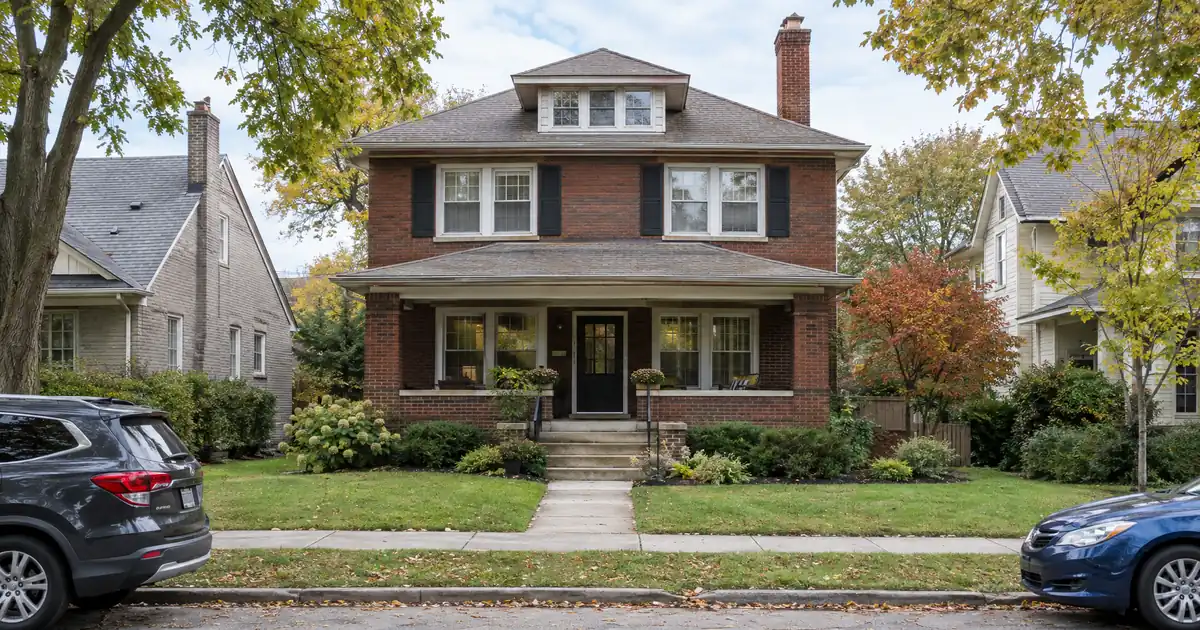
Most Dublin investors assume the appraisal sets the cash-out check. It doesn’t. With the citywide median closing price near $630,000 across 460 recent sales, values are rarely the problem. The rent-to-debt ratio is. A Dublin house can appraise beautifully and still return a thin check because the rent doesn’t carry the new loan once taxes and insurance are counted. The investors who pull equity cleanly here work backward from coverage and treat the 75 percent loan-to-value ceiling as a cap they may never reach.
TL;DR: A DSCR cash-out refinance in Dublin, Ohio is underwritten primarily on the property’s rental income measured against its full monthly obligation, so the rent, the leverage and the reserves have to work together before appraised equity matters.
DSCR Cash-Out Calculator
Run the cash-out numbers in Dublin, OH
Rate source: Freddie Mac 30-yr average via FRED® — Federal Reserve Bank of St. Louis · effective Sep 24, 2026
Prefilled with starting assumptions — enter your property’s value, balance, taxes, and insurance for a more accurate picture.
Program parameters update from Lendmire’s centralized guideline source. Taxes and insurance are editable estimates.
As of Sep 24, 2026 · General Freddie Mac market benchmark, not a Lendmire loan offer. Property value, balance, taxes, and insurance are editable estimates. Maximum loan-to-value varies by lender, program, property type, and seasoning. Not a Loan Estimate, approval, or commitment to lend. Program availability and eligibility are subject to lender guidelines, credit approval, property review, and underwriting.
- Median-priced Dublin houses are the hardest fit for coverage. Condos and lower-band houses do better.
- Cash-out is capped at 75 percent LTV, and coverage usually binds first.
- Apartment rent data is mixed: RentCafe shows a small gain, Apartment List a decline.
- Seasoning runs about 6 months from title recording, with reserves around 6 months of PITIA.
Dublin Market Snapshot
A quick read on the Dublin investor landscape — figures come from the cited sources below. Confirm current property-level numbers before underwriting.
| Metric | Detail |
|---|---|
| Vacancy | Overall 10.3% (City of Dublin ED) |
Riverside, Olde Sawmill and Tuttle: Where the Coverage Holds Best
The apartment-and-condo belt around Riverside, Olde Sawmill and Tuttle is the strongest cash-out candidate in Dublin because entry prices are lowest there. Apartments.com lists Riverside, Olde Sawmill and Haydens Falls Condominiums as the most affordable dublin neighborhoods. It also lists Tuttle West, Tuttle and Gramercy Place as having the most apartments available.
No verified per-neighborhood rent figure exists for this belt, so treat it as directional. A local broker guide puts entry-level condos and townhomes at about $250,000 to $450,000. Against citywide rents in the $1,600 to $1,800 range for smaller units, that price band is the one where coverage has a chance to approach the 1.00 baseline at moderate leverage.
The file friction here is not the math. It’s the association. Condo cash-outs stall on HOA questionnaire completeness, condo certification and budget documentation. An incomplete questionnaire holds a file up longer than a weak number does. Order the questionnaire and the current budget early and confirm the rental cap and litigation status before the appraisal goes in.
Say you own a condo in this belt that you bought below the band’s top end, and it has sat past the seasoning window. The refinance is mechanically simple. Rent in, PITIA out, HOA dues counted in the obligation. Most of these files fail on paperwork, not on value.
Lendmire is a DSCR-focused mortgage broker. It arranges these cash-out files through wholesale investor lending channels and structures them around this kind of coverage constraint.
Bridge Park: Rents Look Fine Until You Read the Pipeline
Bridge Park is the walkable, newer-build core of the Bridge Street District. It is also the submarket where underwriting should assume the most vacancy pressure. Pricing and available terms vary by lender, borrower profile, property type, and full underwriting review. Bridge Park’s property manager advertises studio through four-bedroom apartments.
The metro context matters more than the listing. Matthews reports Columbus multifamily vacancy at 10.2 percent with 11,000 additional units under construction. Marcus & Millichap reports downtown vacancy at a record 8.1 percent against suburban vacancy at 4.2 percent. The two figures use different definitions and don’t compare directly. Both point the same way for new-build product: concessions are plausible and rent bumps shouldn’t be underwritten.
Bridge Park condos are the lower entry point in the district, with some developer releases starting in the low $400,000s according to the same broker guide (directional only). A cash-out on one of these needs a conservative rent, a vacancy cushion in the coverage figure and a clean condo package. The rent has to hold up in the lender’s review, not just on the listing.
The West Innovation District Is a Slow Anchor (That’s the Point)
The West Innovation District supports long-term tenant demand rather than near-term rent spikes. The City of Dublin describes a 2,250-acre district with a future passenger rail station. Ohio State’s outpatient campus there is a $161.2 million, 272,000-square-foot building, and the site handles nearly 2,000 patient encounters a day per Spectrum News.
The City of Dublin reports council approved the sale of about 16.3 acres so Ohio State Wexner Medical Center can build a specialized medical building of at least 150,000 square feet. The city calls the rail station “future,” so don’t underwrite anything on its timing.
The employer base is what makes the demand durable. The city’s top employers page lists Cardinal Health at 4,000 Dublin full-time employees and OhioHealth at 3,354. The Dublin Chamber says company activity here exceeds $8 billion a year, or 7.4 percent of the $108 billion Columbus metro economy. The city cites more than 20 corporate headquarters and 4,300 businesses for a population of roughly 49,000. That footprint supports a professional-tenant story and low tenant churn. It does not support cheap houses.
Running the Coverage Math on a Dublin House
Coverage on a median-priced Dublin house lands below 1.00 at full leverage, and the gap is wide. Run the numbers this way, with modeled inputs rather than sourced ones. Assume a $3,000 monthly rent, which is in line with the property-manager estimate that single-family rentals average over $3,000. That estimate is directional. Assume a value modeling a $630,000 purchase. Assume a 30-year fixed structure with full PITIA, meaning principal, interest, taxes and insurance.
At 75 percent LTV, coverage falls in the low-0.7 range including taxes and insurance. At 60 percent it improves to the mid-0.8s. Only around 50 percent LTV does the number approach 1.00, and it stays just under. Monthly rent works out to about half of one percent of price on those inputs.
Two things follow from that.
First, the cash-out is set by coverage, not value. Equity may be plentiful and still not extractable.
Second, price band matters. The middle half of closings ran $520,000 to $760,000, and a house near the bottom of that band with the same rent covers noticeably better than the median. Zillow puts the typical value lower, at $566,623, reflecting an index method rather than closed sales. Either way, underwrite the specific property against its own price, not the headline number.
When a file lands below 1.00, a lender may review other structures. Options can include a sub-1.00 program, interest-only payment structuring or a lower loan amount. Each usually adds tradeoffs in leverage, pricing or reserves, and eligibility stays subject to lender guidelines, credit approval and property review. Unlike lenders whose sub-1.00 programs add meaningful leverage and eligibility tradeoffs without saying so up front, a broker should put those tradeoffs on the table before the application, not after.
Working DSCR brokers see a recurring pattern in high-price, single-family-dominated suburbs like this one: the borrower brings the appraisal and the lender returns a coverage number. The files that clear are the ones where the investor already picked the lower-priced house, the condo with clean paperwork or the property with a lease that supports rent at the high end of comparables. Files built on the assumption that rents will catch up to price rarely do.
Muirfield, Ballantrae and Tartan Fields: Big Equity, Thin Coverage
The luxury and amenity communities are equity-rich and coverage-poor. Muirfield Village, home of the Memorial Tournament, lists from the high $600,000s into the $1 million-plus range, and it is largely an owner-occupant market. Ballantrae and Tartan Fields are planned amenity communities where maintenance-free and patio homes are common.
An investor sitting on a large gain in one of these neighborhoods may find the refinance disappointing. Value is high, rent is not proportionally high, and the 75 percent ceiling never becomes the binding constraint. Above $1,500,000 the reserve requirement steps up from about 6 months of PITIA to about 9 months, which is another cash demand on top of thin coverage. A lot of these houses are better held or sold than refinanced under a DSCR structure. Exact terms depend on the lender’s guidelines, property type, leverage, and a full review of the borrower’s file.
DSCR vs. conventional financing
Two common ways to finance an investment property in Dublin, OH. They qualify you differently — here’s how investors weigh them.
Why investors choose it
- Qualifies on the property’s rental income — no personal tax returns, W-2s, or pay stubs needed to document income.
- No personal debt-to-income ceiling to clear, so existing mortgages and obligations don’t cap your borrowing the same way.
- Can be closed in an LLC, keeping the property inside a business entity.
- Built for scaling — not held to the limit on number of financed properties that conventional financing applies.
- Underwriting centers on the deal: generally qualifies when the rent covers the payment, a 1.00x coverage ratio being a common baseline (confirmed in underwriting).
- Designed specifically for investment property, including long-term and, where the program allows, short-term rentals.
Where it’s strong
- Often the lowest ongoing financing cost for a buyer who fully qualifies on personal income — a fit for a first property or a cost-first purchase.
Trade-offs for investors
- Requires full personal income documentation and must fit within a debt-to-income limit — salary, existing debts, and other mortgages all count.
- Typically held in your personal name rather than a business entity.
- Caps how many financed properties you can carry, which can become a ceiling as a portfolio grows.
- Evaluates you as a borrower as much as the property, which usually means more paperwork.
How investors usually choose: a first or single property often optimizes for the lowest financing cost; portfolio builders often optimize for leverage, vesting in an LLC, and scaling past conventional caps. The right answer depends on your goals, the property, and current guidelines — both paths run through select lenders in Lendmire’s wholesale network, with eligibility and terms confirmed in underwriting.
Event demand is color, not underwriting. The Dublin Irish Festival drew 48,750 unique attendees, 51 percent from outside the Greater Columbus area, and the Memorial Tournament generates more than $35 million in annual economic impact. None of that shows up in a long-term lease.
What Seasoning and Reserves Do to a Dublin File
Seasoning is about 6 months of ownership measured from title recording, and it is documented by the settlement statement. Files that assume the requirement away get kicked back. Nothing in Dublin’s market compensates for that clock. Zillow shows about 1.0 percent one-year appreciation, so a purchase made above market won’t be rescued during the seasoning window.
Comps, at least, are deep. Redfin counted 227 homes sold in a recent August, up from 194 a year earlier, with homes selling after about 40 days on market. Houzeo reports sales at about 98 percent of asking. Appraisals should be predictable, which shrinks the appraisal-reconsideration risk you see in thinner markets. That matters for the cash-out qualification details: the value step is usually clean, and the coverage step is where the file gets tested.
The other pieces are typical program guidance. Credit tiers step from a 620 floor up through 660, 680 and 700, and reserves run about 6 months of PITIA. Loan amounts go up to $3,000,000 on standard programs, with smaller balances routed through select lenders in the network. All of it is subject to lender guidelines and varies by borrower, property and loan scenario. For an LLC-titled rental, entity documents, operating agreement and lease evidence should be in the file before submission, subject to lender program eligibility.
Property types matter too. Manufactured homes, log homes and barndominiums fall outside these DSCR programs. That is rarely an issue in Dublin, where the stock is dominated by large single-family houses per NeighborhoodScout. Small multifamily is scarce, so don’t build a duplex-stacking strategy around Dublin. Confirm any 2-4 unit listing with a local agent before counting on it.
What Breaks the Pattern: Indicators for the Next 6 to 24 Months
The cash-out case here shifts on three variables, and each is trackable.
1. Rent direction. Sources disagree today. RentCafe shows average apartment rent at $1,586, up 1.79 percent, while Apartment List shows a $1,770 median, down 1.9 percent. Call it flat to mixed. If house rents hold above $3,000 while apartment rents soften, the single-family premium widens and cash-out files get a little easier. If the apartment pipeline drags house rents down, coverage gets harder.
2. Metro supply. The 11,000 units under construction in Columbus matter most for Bridge Park-type product. Suburban vacancy at 4.2 percent is a healthy number today, but deliveries are concentrated in outer suburbs including Dublin. Watch concessions before you watch asking rents.
3. Medical-campus buildout. The Ohio State expansion and OhioHealth’s plans support tenant demand for professionals near Dublin Methodist Hospital and University Boulevard. That feeds occupancy, not price. Don’t count on it to lift an appraisal.
The stronger play might be the lower-band house or the condo with clean paperwork over the trophy property. Investors chasing appreciation could argue the other way, but flat pricing makes that a harder bet to defend. For how DSCR stacks up against conventional cash-out on a house like this, the difference is the income test. A conventional file would key on personal income, while a DSCR file keys on the lease. Read the DSCR qualification mechanics before committing to leverage, and look at the refinance side if a rate-and-term move fits better than cash-out. Reach the team at 828-256-2183 to walk a specific Dublin property through the coverage math.
Investors with Columbus-area holdings can compare DSCR loan options for Ohio investors. Verify current local rental rules, taxes and insurance with qualified local professionals before you finalize any underwriting assumptions.
Frequently Asked Questions
How do you qualify for a DSCR cash-out refinance in Dublin, Ohio?
The property’s rent has to cover its full monthly obligation, with 1.00 as the common baseline. Rent is divided by principal, interest, taxes, insurance and any HOA dues. On most files the loan is capped at 75 percent LTV, credit starts around a 620 floor and about 6 months of ownership is needed. Reserves run about 6 months of PITIA. Final eligibility is subject to lender review.
What are the requirements for an investment property loan in Dublin, Ohio?
Expect a lease or rent documentation, an appraisal with rent schedule, entity documents for LLC borrowers and reserves documentation. Condos add an HOA questionnaire and certification package. Manufactured homes, log homes and barndominiums are outside these programs. Terms vary by borrower, property and lender program.
How much equity can a Dublin investor actually pull out?
Less than the appraisal suggests, in most cases. The 75 percent LTV ceiling is a maximum, and on a median-priced house the rent often supports a lower loan amount before coverage reaches 1.00. Cash-out proceeds depend on rent, PITIA, reserves and the LTV limit, and no figure is guaranteed.
Does a Bridge Park condo work for a cash-out refinance?
It can, but it needs a conservative rent and a clean condo package. Starting rents around $1,325 are a listing figure, and the metro apartment pipeline argues for a vacancy cushion. Lender review of the HOA questionnaire and budget is part of the file.
Can an LLC-owned Dublin rental be reviewed for DSCR financing?
For current guidelines and terms, see Lendmire’s DSCR loan programs page.
Get Started
Ready to find the right loan for you?
See your offer in seconds. No credit pull, no obligation.
Informational only. Not a Loan Estimate, approval, or commitment to lend. Program availability and eligibility are subject to lender guidelines, credit approval, property review, and underwriting.
About Lendmire
Lendmire, NMLS# 2371349, is a non-QM mortgage broker that arranges DSCR investor loans for real estate investors in 41 markets, including Washington, D.C. Qualification is generally reviewed around the subject property’s rental income rather than the borrower’s W-2 history, which suits LLC-titled portfolios and self-employed investors. Every scenario stays subject to lender review and program guidelines. The firm has been named a top-ranked workplace in 2025 and a 2026 Scotsman Guide Top Workplace.
If you only take one thing from this piece, it’s this: in Dublin, rent coverage rather than appraised value sets the size of the cash-out, so the house that rents best against its price beats the one that simply appraises highest.
References
1. $630,000 across 460 recent sales
2. Freddie Mac 30-yr average via FRED® — Federal Reserve Bank of St. Louis
3. RentCafe
5. entry-level condos and townhomes at about $250,000 to $450,000
6. studio through four-bedroom apartments
7. Matthews
9. City of Dublin describes a 2,250-acre district
10. $161.2 million, 272,000-square-foot building
11. Spectrum News
12. City of Dublin
This article is part of Lendmire’s investment property cash-out refinance program — full qualification details, guidelines, and scenarios live on the program page.
Related reading: Cash Out Refinance Investment Property in Dublin, Ohio: The 2026 DSCR Guide to Bridge Park · Cash Out Refinance Investment Property in Grove City, Ohio: Does Grove City Rent Cover the Loan? · DSCR Cash Out Refinance in Cleveland, Ohio: East Side Equity and Medical-Corridor Demand
Guides: Investment Property Cash-Out Refinance in Ohio
Brandon Miller
Founder & CEO, Mortgage Loan Originator, Lendmire LLC
- Mortgage Loan Originator · NMLS# 1129696 · Verify on NMLS Consumer Access
- North Carolina Real Estate Broker · License# 343312 · Verify on NCREC
- North Carolina Insurance Producer · License# 19053198 · Property, Casualty, Life, Health · Verify on NAIC SBS
- Lendmire LLC · Firm NMLS# 2371349 · Verify firm licensure
Required disclosures. Lendmire (NMLS# 2371349) operates as a licensed mortgage broker, not a direct lender or depository. The discussion in this article is general in nature and should not be relied upon as financial, legal, or tax advice — every investment scenario is unique and should be reviewed by a qualified professional. Any loan inquiry is subject to lender underwriting, and this article is not a commitment to lend or a guarantee of approval. Mortgage rates, loan terms, and program guidelines vary by borrower, property, and state, and may change without notice. Equal Housing Opportunity. Verify licensure at NMLS Consumer Access.