
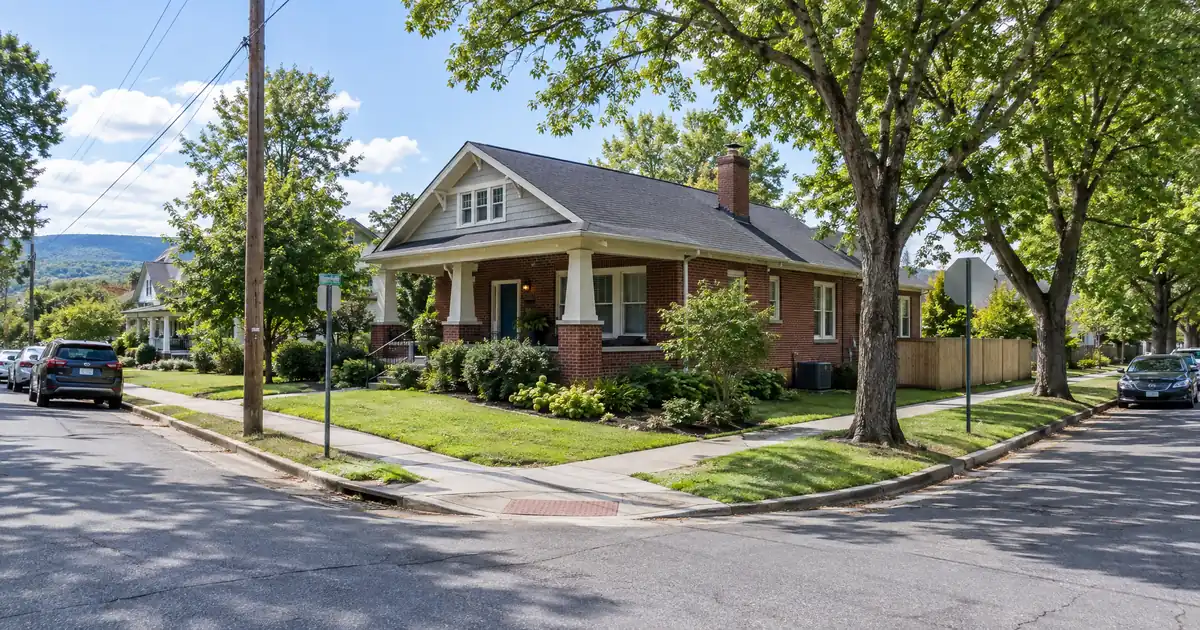
A rental in Downtown Statesville hits the DSCR math like this. An investor owns a three-bedroom near the courthouse, valued around $277K (close to the Redfin median sale price for Downtown Statesville), and wants to pull equity at the 75 percent LTV ceiling. Market rent for a three-bedroom in the city runs from $1,388 on RentCafe to $1,750 on Zumper. Run the full monthly obligation (principal, interest, taxes and insurance) against those two rents, and modeled coverage lands near 0.8 at the low end and roughly 1.0 at the high end.
Same house. Same loan. Two rent assumptions, two very different answers. That gap is the central fact of cash-out refinancing in Statesville, and the rest of this piece walks through how to work with it.
DSCR Cash-Out Calculator
Run the cash-out numbers in Statesville, NC
Rate source: Freddie Mac 30-yr average via FRED® — Federal Reserve Bank of St. Louis · effective Oct 1, 2026
Prefilled with starting assumptions — enter your property’s value, balance, taxes, and insurance for a more accurate picture.
Program parameters update from Lendmire’s centralized guideline source. Taxes and insurance are editable estimates.
As of Oct 1, 2026 · General Freddie Mac market benchmark, not a Lendmire loan offer. Property value, balance, taxes, and insurance are editable estimates. Maximum loan-to-value varies by lender, program, property type, and seasoning. Not a Loan Estimate, approval, or commitment to lend. Program availability and eligibility are subject to lender guidelines, credit approval, property review, and underwriting.
Real estate investors buying in Statesville, North Carolina can work with Lendmire, a DSCR-focused mortgage broker, to access DSCR programs across a 41-market footprint that includes D.C. The angle here is equity extraction. The reader already owns the property, so the questions are how much equity can come out, whether the remaining rental coverage supports the larger balance, and where the proceeds should go next.
The Quick Read: A cash-out refinance investment property loan in Statesville, North Carolina is underwritten primarily on the property’s rental income measured against its full monthly obligation, letting an owner past the seasoning period convert built-up equity into capital for the next deal, within a lender-set loan-to-value ceiling and subject to lender guidelines.
- Downtown Statesville’s median sale price sits near $277K, per Redfin.
- Three-bedroom rents span $1,388 to $1,750 depending on the source.
- At the citywide typical value, modeled coverage at 75 percent LTV runs thin, roughly 0.8 to 1.0.
- West Iredell’s roughly $225K new-build band is where coverage clears 1.0 more comfortably.
- Multi-unit comps are scarce, so duplex cash-outs carry real appraisal risk.
Statesville Market Snapshot
A quick read on the Statesville investor landscape — figures come from the cited sources below. Confirm current property-level numbers before underwriting.
| Metric | Detail |
|---|---|
| Recent appreciation | +2.2% yoy (Zillow Home Values) |
| University enrollment | 5,000+ students (Iredell EDC Post-Secondary) |
| Employment | 2,300+ employees (Iredell Health (City directory)) |
Downtown Statesville: Where the Equity Is Showing Up
Downtown is the strongest equity story in the city on the data available. Redfin shows a median sale price of $277K, up 21.0 percent year over year, with homes selling in about 68 days. The housing is older, with small multifamily and character stock around the courthouse and Main Street. It sits near Mitchell Community College‘s Broad Street campus.
Treat that 21.0 percent with suspicion. Neighborhood medians in a city of this size rest on a small number of sales, and one or two renovated closings can move the figure. An investor who bought Downtown at a discount and renovated may well have real equity. An investor assuming the whole neighborhood repriced 21 percent is building on sand. The appraiser will pick comps, not neighborhood headlines.
Downtown also fits the cash-out thesis for a structural reason. Older, lower-basis properties tend to carry a smaller existing balance relative to value, which leaves more room under the 75 percent ceiling. If the payoff sits at 55 percent of appraised value, 20 points of equity are theoretically available, before reserves and before the coverage test. Theoretically is the operative word, and the next section shows why.
How the Cash-Out Math Works, Step by Step
The cash you can pull is set by two tests, and the tighter one wins. The first is the loan-to-value test. Take the appraised value, multiply by the 75 percent ceiling, and subtract the existing payoff. What remains is the maximum proceeds, a ceiling and not a promise. The second is the coverage test. The new, larger loan carries a larger payment, so rent divided by the new full obligation must still clear the program minimum, typically 1.00 on standard programs, subject to lender guidelines.
Here’s the catch most owners miss: the second test often binds first. A property that covered comfortably on its original loan can slip below 1.00 once the balance rises to 75 percent of value. For a refresher on how the ratio is built, see the guide “What Is a DSCR Loan”.
Two other program guideposts shape the file. Cash-out typically requires about six months of ownership measured from title recording. Reserves generally run about six months of the full housing payment. Credit tiers commonly start at a 620 floor and improve at 660, 680 and 700, which affects how much a lender will extend. These are guidance ranges, not commitments. The DSCR cash-out structure and the rate-and-term versus cash-out distinctions are covered in more depth elsewhere.
The table below models coverage at 75 percent LTV against the full obligation, including taxes and insurance. The values and rents are modeled assumptions drawn from the cited ranges, not quotes, and the coverage figures are rounded down.
| Modeled value | Modeled rent | Coverage (full PITIA) |
|---|---|---|
| ~$289K (citywide typical) | $1,388 | about 0.8 |
| ~$289K (citywide typical) | $1,750 | about 1.0 |
| ~$277K | $1,388 | about 0.8 |
| ~$277K | $1,750 | about 1.0 |
| ~$225K (West Iredell new-build) | $1,388 | about 1.0 |
| ~$225K (West Iredell new-build) | $1,750 | about 1.3 |
The $289K value mirrors Zillow’s home value for Statesville, which also shows about 2.2 percent appreciation over the past year.
Read the table honestly. At the city’s typical value, a refinance at the full 75 percent ceiling only reaches the 1.00 benchmark if the property rents near the top of the range. That is a feature of this market, not a flaw in the loan.
If a file lands below 1.00 on long-term rent, there are structures a lender may review: a sub-1.00 program with stronger credit and lower leverage, an interest-only structure, or a smaller cash-out amount that keeps the balance lower. Qualification remains subject to lender guidelines, credit approval and property review. The question worth asking first is whether the investor should pull the maximum at all. Taking less cash often beats chasing a sub-1.00 structure.
West Iredell and the Lower Price Bands
West Iredell is where the coverage math improves most. Redfin’s West Iredell new-homes page shows 10 homes at a median of $225K with a typical 76 days on market, while the citywide new-construction median is $325K across 92 listings. These are listing snapshots of new construction, not rental comps. Still, the modeled rows above show why the $225K band matters. Rent doesn’t fall in proportion to price, so coverage on a lower-basis house runs about 1.0 to 1.3 on the same two rent assumptions.
For an investor who already owns in that band, a cash-out is more likely to pencil cleanly. For an investor who owns at the citywide median and is hoping rents will catch up, it is a tighter call.
The older entry neighborhoods tell a similar story qualitatively. Oakdale, College Park and Shepherd’s Vineyard are named by local sources as among the more affordable areas, and the southeast side of the city is described the same way. No sourced neighborhood-level rent data exists for these areas, so no coverage ratio should be claimed for any of them. The newer, higher-priced pockets are a poor fit for DSCR cash flow. Carson Creek’s new-construction sales sit well above what local rents support, and the golf-course and Lake Norman-adjacent areas price higher still.
Where Cash-Out Investors Get Statesville Wrong
Equity here comes mostly from basis, not from market lift. Zillow shows about 2.2 percent appreciation, and Movoto puts the median list price near $359K with homes sitting a median of 96 days. Redfin’s latest monthly median sale price of $272K was down 13.7 percent year over year. That figure comes from a small sample and swings sharply, but it is a reminder that Statesville is a flat-to-modest market, not a boom.
An owner who bought several years ago at a discount, renovated or paid down principal can still have solid equity. An owner who bought near the current median and expects appreciation to fund the next deal may be waiting a long time. The honest read is a toss-up between “equity is there” and “equity is thin,” and the answer depends entirely on purchase price versus today’s appraised value, which no neighborhood statistic can settle.
Supply adds a second watch item. Livabl lists six new-home communities in Statesville, all low-rise, with D.R. Horton the most active builder. Builder inventory competes with resale stock and can add newer rental supply, which may cap appreciation on older homes. No absorption or vacancy data was found, so this is a risk to monitor, not a number to model.
Single-Family or Small Multifamily?
Single-family wins on liquidity and multifamily wins on income stacking, and the cash-out lane favors the former. NeighborhoodScout puts single-family detached homes at about 65.55 percent of units, with duplexes and small conversions near 11.68 percent. Workforce single-family, especially three-bedrooms, is the deepest rental pool.
Multi-unit stock is thin. Homes.com showed six multi-family listings priced from $270K to $5M, averaging about 64 days listed. Redfin’s investment-property page shows 39 homes sold in the past month against just seven multi-family units for sale. Single-family comps are deep, so appraisals are easy to support. Multi-unit comps are scarce, which raises appraisal risk on a duplex cash-out. Get a comp check before anyone commits to a target LTV.
Legacy rents are the other trap. One West Statesville listing bundles three houses grossing $1,500 per month with a long rental history, about $500 per house against a $1,388 to $1,750 three-bedroom market range. A lender may qualify on market rent while the actual rent roll needs a plan to reach it. That is one listing, not a trend, but the lesson generalizes: underwrite each rent roll, because long-tenured below-market rents can make a multi-unit file look worse on paper than it is, or better than it is, depending on which number the appraiser uses.
On deal flow in markets like this one, the cleaner cash-out files tend to be single-family rentals with a recent lease, a rent schedule close to appraiser comps and a fresh insurance quote in the package. The common friction point is a gap between in-place rent and market rent. When the file leads with the lower of the two, the coverage conversation tends to be shorter and surprises tend to be fewer.
Who Actually Rents Here (Industrial Hub, Not a College Town)
Statesville’s tenant base is built on manufacturing and interstate logistics, not a four-year university. Per Census Bureau QuickFacts, the Statesville urban area has 43,885 residents and a median household income of $57,570. RentCafe puts renter-occupied households at 48 percent, about 5,944 homes.
Bobcat anchors the industrial side. According to BusinessWire, a $70 million expansion made the Statesville plant the company’s largest North American manufacturing facility, with up to 250 jobs to be added over five years and nearly 600 staff already in place. NC Commerce reported 235 new jobs and a $7.9 million production facility from JELD-WEN. The Iredell EDC cites high-tech, manufacturing, warehousing and distribution, and agribusiness as the economic drivers, and I-40 and I-77 meet in the northeastern part of the city.
Healthcare and education add steadier demand. Iredell Health System took over the Davis campus on the east side of the city, and acute care may eventually return there per Iredell Health. Headcounts conflict across sources. The Iredell EDC list shows 1,448 at the hospital, the city directory says over 2,300 and the system’s own careers page cites roughly 2,000, so treat it as a range of about 1,400 to 2,300 depending on the source and how part-time staff are counted. Mitchell Community College reported record enrollment of over 5,000 students, per the Iredell EDC, though that figure includes continuing education and overstates degree-seeking renters.
Rent growth is modest: Zumper shows +2.4 percent year over year and RentCafe +1.06 percent. For a cash-out investor that means coverage will not rescue a thin file by itself. The ratio at refinance is roughly the ratio for the next few years.
Where the Proceeds Go (And When Conventional Wins)
The cash-out thesis only holds if the proceeds earn more than they cost. If the investor redeploys into a West Iredell-band house, or into an older entry-neighborhood rental where the numbers can be tested against actual rents, the argument is straightforward once the property’s coverage ratio is confirmed. If the proceeds go into an out-of-state market where the numbers don’t pencil, or into a property bought at a price this city’s rents can’t support, that deserves a stress test before committing. Verify current local rental rules, taxes and insurance with qualified local professionals before sizing any acquisition.
DSCR vs. conventional financing
There are two common ways to finance an investment property in Statesville, NC, and they qualify you differently — here’s how investors weigh them.
Why investors choose it
- Qualifies on the property’s rental income — no personal tax returns, W-2s, or pay stubs needed to document income.
- No personal debt-to-income ceiling to clear, so existing mortgages and obligations don’t cap your borrowing the same way.
- Can be closed in an LLC, keeping the property inside a business entity.
- Built for scaling — not held to the limit on number of financed properties that conventional financing applies.
- Underwriting centers on the deal: generally qualifies when the rent covers the payment, a 1.00x coverage ratio being a common baseline (confirmed in underwriting).
- Designed specifically for investment property, including long-term and, where the program allows, short-term rentals.
Where it’s strong
- Often the lowest ongoing financing cost for a buyer who fully qualifies on personal income — a fit for a first property or a cost-first purchase.
Trade-offs for investors
- Requires full personal income documentation and must fit within a debt-to-income limit — salary, existing debts, and other mortgages all count.
- Typically held in your personal name rather than a business entity.
- Caps how many financed properties you can carry, which can become a ceiling as a portfolio grows.
- Evaluates you as a borrower as much as the property, which usually means more paperwork.
How investors usually choose: a first or single property often optimizes for the lowest financing cost; portfolio builders often optimize for leverage, vesting in an LLC, and scaling past conventional caps. The right answer depends on your goals, the property, and current guidelines — both paths run through select lenders in Lendmire’s wholesale network, with eligibility and terms confirmed in underwriting.
On entity structure, many investors close in an LLC, subject to lender program eligibility, and DSCR programs are commonly used by investors with four or more financed properties. For a single rental owned personally by a high-W-2 borrower, though, conventional cash-out may carry a lower cost and fit cleanly. The flip point tends to be the third or fourth financed property, or earlier when traditional personal-income documentation doesn’t cleanly support rental income.
Unlike some larger non-QM lenders that treat investor loans as a side product, a DSCR-focused broker builds the file around the property’s rent, appraisal comps and seasoning, which is exactly where Statesville files tend to succeed or stall. Investors weighing a cash-out can see how the math pencils or call Lendmire at 828-256-2183. More statewide context sits on the North Carolina DSCR investor loans page.
Frequently Asked Questions
How do you qualify for a DSCR loan in Statesville?
Qualification rests mainly on the property: monthly rent divided by the full monthly obligation of principal, interest, taxes, insurance and any HOA dues. A 1.00 baseline is common, though some lenders review lower ratios with stronger credit, more reserves or lower leverage. Credit tiers typically start around 620, and entity-owned properties are generally accepted subject to program terms. Statesville’s rent spread makes the rent assumption the swing factor.
What are the requirements for a cash-out refinance on an investment property in Statesville, North Carolina?
Typical guidelines include about six months of ownership from title recording, a loan-to-value ceiling of 75 percent, a coverage ratio of at least 1.00 and reserves of roughly six months of the full housing payment. Loan amounts can reach up to $3,000,000 on standard programs. Manufactured homes, log homes and barndominiums fall outside these programs. All of it is subject to lender guidelines, credit approval and property review.
Can a Downtown Statesville duplex be cash-out refinanced when so few multi-unit comps exist?
It can be reviewed, but appraisal risk is higher than for a single-family rental. With only a handful of multi-family listings on the market at any time, the appraiser may reach for limited comps or adjust from single-family sales. A comp check before choosing a target LTV is the practical safeguard, and a smaller cash-out request gives more cushion.
Does the gap between Statesville price sources change how much equity an investor can pull?
Only the appraisal matters for the loan. Zillow, Redfin, Movoto and other aggregators land anywhere from about $272K to $359K depending on method and whether new construction skews the sample, so none of them should be treated as the appraised value. Use them to frame expectations, then let a fresh appraisal set the number the 75 percent ceiling applies to.
What documents matter most for a Statesville DSCR cash-out review?
The lease or market rent support, the current mortgage payoff, a recent insurance quote and entity documents if applicable carry the most weight, because the review centers on property cash flow.
The Blind Spot in Statesville
The biggest blind spot for DSCR-financed investors here is the rent assumption. Sources disagree sharply: RentCafe’s $1,388 and Zumper’s $1,750 for a three-bedroom bracket the same market, and a listing-based figure runs higher still. Coverage that clears 1.00 on one source can miss it on another, and a cash-out raises the balance, so there is less room for error afterward. Underwrite to the lower number, treat the higher one as upside, and in Statesville the difference between those two rents is where a good refinance and a stretched one part ways.
For current guidelines and terms, see Lendmire’s DSCR loan programs page.
About Lendmire
Lendmire (NMLS# 2371349) is a mortgage brokerage focused on DSCR investor financing. It arranges programs through wholesale and investor-lending channels in 41 markets, including Washington, D.C. Lenders evaluate DSCR loans on property cash flow rather than personal income, subject to lender guidelines. The programs support LLC closings and investors with four or more financed properties. Lendmire is a Scotsman Guide Top Mortgage Workplace, named in both 2025 and 2026.
Get Started
Ready to find the right loan for you?
In about 30 seconds you can review financing options available for your investment property. No commitment required.
Informational only. Not a Loan Estimate, approval, or commitment to lend. Program availability and eligibility are subject to lender guidelines, credit approval, property review, and underwriting.
References
1. Redfin: Downtown Statesville housing market
2. RentCafe: Statesville average rent and market trends
3. Zumper: Statesville rent research
4. Zillow: Statesville home values
5. Iredell EDC: Post-secondary education
6. Iredell Health (City directory)
8. Redfin’s West Iredell new-homes page
9. Redfin — Statesville New Homes
10. Movoto
11. Livabl
12. Homes.com
13. Redfin — Amenity Investment Property
14. Census Reporter: Statesville urban area
15. NC Commerce
16. Iredell Health System: Growing
17. 2025
18. 2026
This article is part of Lendmire’s investment property cash-out refinance program — full qualification details, guidelines, and scenarios live on the program page.
Related reading: DSCR Cash Out Refinance in Statesville, North Carolina: Can Your Rent Cover the New Loan? · DSCR Cash Out Refinance in High Point, North Carolina: Pulling Equity Out of Furniture District Rentals · Cash Out Refinance Investment Property in Monroe, North Carolina: Pulling Equity From Older Workforce Rentals
Guides: Investment Property Cash-Out Refinance in North Carolina
Brandon Miller
Founder & CEO, Mortgage Loan Originator, Lendmire LLC
- Mortgage Loan Originator · NMLS# 1129696 · Verify on NMLS Consumer Access
- North Carolina Real Estate Broker · License# 343312 · Verify on NCREC
- North Carolina Insurance Producer · License# 19053198 · Property, Casualty, Life, Health · Verify on NAIC SBS
- Lendmire LLC · Firm NMLS# 2371349 · Verify firm licensure
Disclosure information. Lendmire is a state-licensed mortgage brokerage under NMLS# 2371349. Lendmire is not a depository institution, direct lender, or financial advisor — all loans referenced are placed through wholesale lender partners and are subject to each lender's underwriting standards. This article is provided for general informational purposes and is not a commitment to lend, nor does it constitute financial, legal, or tax advice. Loan programs, terms, rates, and qualification standards change without notice and depend on borrower profile, property type, and the state in which the subject property is located. Equal Housing Opportunity provider. NMLS Consumer Access: nmlsconsumeraccess.org.