
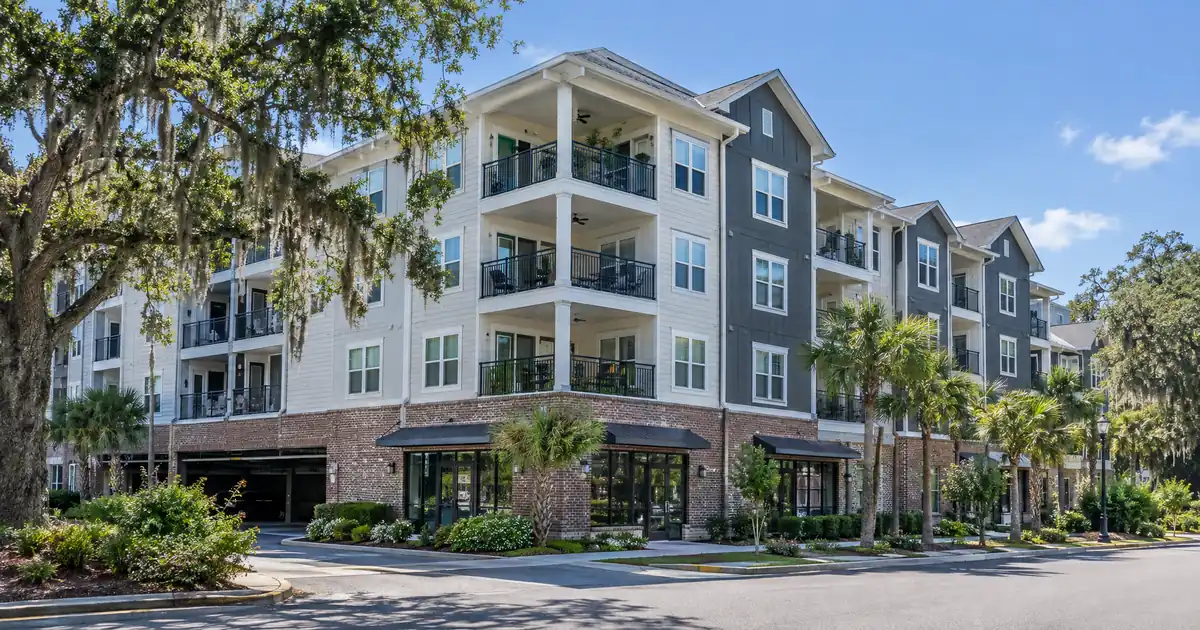
Zillow puts the typical Sumter home value at $175,127, while Redfin’s median sale price sits at $260K. That spread is the core issue for a DSCR cash out refinance in Sumter, South Carolina. The 75% LTV ceiling applies to whatever number the appraiser lands on, and in a market priced this low, that number decides how much equity actually comes out. Exact terms depend on the lender’s guidelines, property type, leverage, and a full review of the borrower’s file.
The Quick Read: A DSCR cash-out refinance in Sumter, South Carolina fits investors who already hold a seasoned 3BR rental or small multifamily and want capital for the next purchase; the file is underwritten primarily on the property’s rental income measured against its full monthly obligation, with proceeds capped by a 75% LTV ceiling on appraised value. Every figure here varies by lender and program — guidelines, property type, leverage, and credit profile all apply.
DSCR Cash-Out Calculator
Run the cash-out numbers in Sumter, SC
Rate source: Freddie Mac 30-yr average via FRED® — Federal Reserve Bank of St. Louis · effective Sep 24, 2026
Prefilled with starting assumptions — enter your property’s value, balance, taxes, and insurance for a more accurate picture.
Program parameters update from Lendmire’s centralized guideline source. Taxes and insurance are editable estimates.
As of Sep 24, 2026 · General Freddie Mac market benchmark, not a Lendmire loan offer. Property value, balance, taxes, and insurance are editable estimates. Maximum loan-to-value varies by lender, program, property type, and seasoning. Not a Loan Estimate, approval, or commitment to lend. Program availability and eligibility are subject to lender guidelines, credit approval, property review, and underwriting.
- Modeled 3BR coverage runs roughly 0.93-1.10 at a $240,000 Hampton Park median, including taxes and insurance.
- Shaw Air Force Base carries a $2.1 billion annual economic impact and anchors rent demand.
- Cash-out requires about 6 months of ownership, measured from title recording.
- Appreciation is slow and rents are soft, so forced equity beats market drift.
Through Lendmire’s DSCR program footprint — 41 markets, including Washington, D.C. — lenders may review qualifying rental income subject to program guidelines for Sumter, South Carolina investors. Lendmire (NMLS# 2371349) is a DSCR-focused mortgage broker. It arranges these loans through investor lending channels rather than funding them directly. For the statewide picture, see Lendmire’s South Carolina DSCR loan programs.
This article assumes the purchase is already behind you. The question is what the property can support now and where the proceeds go next.
Which Value Does the Appraiser See?
The appraiser sees recent comparable sales, not a portal average, so underwrite the cash-out against the likely appraised value of the specific house. Sumter’s published value figures disagree enough to swing a file from workable to thin.
The spread across sources is wide:
- Zillow’s typical value sits at the low end of the range.
- Redfin’s city median sale price sits at the high end.
- NeighborhoodScout reports a median home cost that lands between the two, closer to Redfin’s figure.
- Homes.com shows a median near the middle of the range, with its city guide pointing noticeably higher.
Against the city’s average rent of $1,195 per RentCafe, rent-to-value comes to about 0.68% against Zillow’s number and 0.46% against Redfin’s. That is Lendmire Research arithmetic, not a published ratio. A house that appraises toward the top of that range needs materially more rent to hold a 1.00 benchmark than one appraising near the bottom.
Direction of travel matters too. Zillow shows values up 5.4% over the past year, and Redfin shows the city median up just 1.0% with price per square foot flat. The county median is $250K, up 4.1%. Call it a 1-5% market, and sources disagree on where. Nobody should plan a cash-out around drift at those numbers. Plan it around equity you created.
The Seasoning Clock and the 75% Ceiling
The cash-out cap is 75% of appraised value, and the file typically needs about 6 months of ownership measured from title recording. Everything else in the structure flows from those two constraints plus the coverage ratio. Subject to lender guidelines, credit tiers generally start at a 620 floor, and reserves run about 6 months of PITIA.
Coverage works like this. Monthly rent divided by the full monthly obligation (principal, interest, taxes, insurance, and any HOA dues) gives the ratio. Most standard programs are built around a 1.00 baseline. Some lenders may review lower or no-ratio scenarios, but those generally mean less leverage, stronger credit, or both. Lendmire’s primer on DSCR loans covers the mechanics. This article sticks to the Sumter math.
Here is the forced-equity arithmetic, in percentages. Say an investor buys a distressed 3BR and rehabs it until the all-in basis is 65% of the post-renovation appraised value. A cash-out at 75% LTV then returns the full basis plus about 10 points of value, before transaction costs. If the all-in basis is 80% of value, the investor has to leave about 5 points of value in the property. The first investor recycles the entire stack. The second is stuck. Final terms depend on lender guidelines, property type, leverage, and the borrower’s complete credit picture.
That is the model for a market with soft appreciation. Pulling equity with a DSCR cash-out works best here on a property bought below value. It works worst on one bought at retail and left alone.
Where Sumter Cash-Out Files Pencil
Dalzell and the Shaw-adjacent northwest produce the cleanest coverage math. The 3BR brick ranch there fits the most common rental product in the city. All coverage figures below are modeled on a 30-year amortizing structure at 75% LTV, including taxes and insurance, using the cited prices as assumed appraised values. Rents are the citywide 3BR range of roughly $1,300 to $1,550 from Rentometer and RentCafe. Neighborhood-level rents were not available, so none are assigned to a specific area. These specifics are subject to lender guidelines and a full review of property, leverage, and credit.
Dalzell. Homes.com shows a median home price of $214,950 and about 58 days on market. The stock is mostly one-story brick ranches built from the 1970s through the 2020s. At that price, a 3BR at citywide rents models at roughly 1.0 to 1.2. The base is the demand story: Shaw is the city’s largest employer, with about 7,200 active-duty personnel and about 1,000 civilians, per the city’s comprehensive plan economic element. This is the strongest submarket for a clean cash-out.
Swan Lake and Second Mill. Swan Lake homes typically sell near $251,500 per Homes.com, and the higher basis thins coverage to roughly 0.9 to 1.05 at the same rents. Honestly, this is a toss-up. The Swan Lake Iris Gardens (150 acres, the only US public park with all eight swan species, host of SC’s oldest festival) gives the area a livability edge that helps retention. But a retention edge doesn’t fix a 0.9 ratio. Investors cashing out here should carry a rehab-driven value gain or lower leverage.
Hampton Park and the historic core. The Homes.com neighborhood page shows a $240,000 median, though the city-wide portal puts single-family homes in the area at a $320,000 price point. Sources differ, so appraise carefully. At $240,000, 3BR coverage models at roughly 0.93 to 1.10. The housing is older, including 1930s four-bedroom homes, and renovation candidates exist. Prisma Health Tuomey Hospital sits across from the Sumter County Museum, which supplies healthcare-worker demand nearby. Condition risk is the catch. An appraiser will value the house as it stands, not as you plan to leave it.
East Sumter. Single-family homes average about $165,000, the lowest entry point found. At that basis, coverage models above 1.3 if a renovated 3BR rents near the citywide range, though no verified East Sumter rent figure exists, so treat that as an assumption. The caution is scale: a small basis means a small cash-out, and comp depth is likely thin. Smaller balances may route through select lenders in the network.
The Burns-Downs and Bultman Drive corridor sits near USC Sumter and Central Carolina Technical College, which adds student and staff demand. Price data was not available, so there’s nothing to model. Newer-build areas like Wilder, Lakewood, and Cane Savannah are drawing Shaw-driven development, which means new supply will compete with older rentals.
Duplex Math Versus the 3BR House
Small multifamily out-covers single-family on DSCR when the purchase price doesn’t scale with the unit count. In Sumter it is a thin niche: NeighborhoodScout shows single-family detached at 65.39% of housing units and duplexes or small converted buildings at 8.08%.
Run the numbers on a hypothetical duplex with a modeled $320,000 appraised value (an assumption, not a sourced comp). Two 2BR units at RentCafe’s $1,216 2BR average produce a combined gross rent that models near 1.3 at 75% LTV including taxes and insurance. Using asking rents of $1,350 per unit from a Shaw-area listing feed, the file models near 1.4. Asking rents run above Rentometer’s $1,045 2BR average, so underwrite to leased rents, not listings. Terms vary by lender guidelines, property type, leverage, credit profile, and full file review.
A single 3BR at Rentometer’s $1,541 would need a much lower basis to match. The 3BR house still carries a premium over apartments (RentCafe shows 3BR apartments at $1,292), so single-family stays the dependable product. But for an investor choosing what to refinance, the duplex is where the coverage cushion lives. No multi-unit rent-to-value data by submarket exists, so claims about which pocket wins would be guesses. Hampton Park and East Sumter are where to start looking.
Working DSCR brokers see a recurring pattern in military-anchored, slow-appreciation markets like this one. The refinance appraisal comes in near the purchase price plus documented improvements, and rarely above it. Files that were underwritten on in-place leases and documented rehab spend tend to hold together. Files that assumed a rent bump or a market lift tend to get resized.
Shaw Sets the Floor (Not the Ceiling)
Shaw AFB gives Sumter rents a demand floor that doesn’t depend on local wage levels, but it doesn’t push rents up on its own. The base hosts the 20th Fighter Wing and Ninth Air Force headquarters, per MyBaseGuide. Sumter is also its own BAH area. 2026 BAH rates rose 4.9% from the prior year, and a housing allowance that keeps rising helps the rent a lender will underwrite.
The broader base is diversified. The city’s plan names Sumter School District, Prisma Health Tuomey, Continental Tire of the Americas, Pilgrim’s, Eaton, Becton Dickinson, Sylvamo, and SKF among major employers. Prisma Health has served Sumter and neighboring counties since 1913. Sumter County has about 105,100 residents, and RentCafe reports 44% of households rent. For equity extraction, that mix means tenant turnover is manageable and the lease base is broad.
Morris College enrolls roughly 400 students and the technical college a few thousand, so student demand is real but modest. Don’t underwrite on it.
Skip the Aggressive Rent Bump.
Rents in Sumter are flat to slightly down, so size the cash-out on in-place or conservative market rent. RentCafe shows average rent down 1.65%, from $1,215 to $1,195. Redfin shows homes taking 65 days to sell versus 58 a year earlier, and county homes taking 52 days versus 36.
A thin comp pool and a lengthening sale cycle mean appraisers lean conservative. Picture an owner with a 3BR at a $240,000 appraisal and rent at the low end of the $1,300-$1,550 range. Coverage lands around 0.93. That is below the 1.00 baseline. Some lenders may review sub-1.00 scenarios through a dedicated program, an interest-only structure, or reduced leverage, but each of those typically means stronger credit, more reserves, or less cash out. Qualification stays subject to lender guidelines, credit approval, and property review. Whether the structure still fits the investor’s return model is the real question.
The better fix is usually on the property side: a documented rehab, a lease at true market rent, or a smaller loan. A fresh look at taxes and insurance with local professionals belongs in the file too, along with current local rental rules.
What the Proceeds Do Next
Cash-out proceeds are acquisition capital, and in Sumter they stretch further than in most Southeast markets because entry prices are low. A seasoned rental in Dalzell can fund the down-payment layer on the next property. The East Sumter basis suggests a repeating buy-renovate-cash-out loop.
DSCR vs. conventional financing
There are two common ways to finance an investment property in Sumter, SC, and they qualify you differently — here’s how investors weigh them.
Why investors choose it
- Qualifies on the property’s rental income — no personal tax returns, W-2s, or pay stubs needed to document income.
- No personal debt-to-income ceiling to clear, so existing mortgages and obligations don’t cap your borrowing the same way.
- Can be closed in an LLC, keeping the property inside a business entity.
- Built for scaling — not held to the limit on number of financed properties that conventional financing applies.
- Underwriting centers on the deal: generally qualifies when the rent covers the payment, a 1.00x coverage ratio being a common baseline (confirmed in underwriting).
- Designed specifically for investment property, including long-term and, where the program allows, short-term rentals.
Where it’s strong
- Often the lowest ongoing financing cost for a buyer who fully qualifies on personal income — a fit for a first property or a cost-first purchase.
Trade-offs for investors
- Requires full personal income documentation and must fit within a debt-to-income limit — salary, existing debts, and other mortgages all count.
- Typically held in your personal name rather than a business entity.
- Caps how many financed properties you can carry, which can become a ceiling as a portfolio grows.
- Evaluates you as a borrower as much as the property, which usually means more paperwork.
How investors usually choose: a first or single property often optimizes for the lowest financing cost; portfolio builders often optimize for leverage, vesting in an LLC, and scaling past conventional caps. The right answer depends on your goals, the property, and current guidelines — both paths run through select lenders in Lendmire’s wholesale network, with eligibility and terms confirmed in underwriting.
The risk compounds with every cycle, because each cash-out raises the debt service on a property whose rent isn’t growing. Stress-test each refinance as if it were the last one. When a house’s coverage after cash-out sits close to 1.00, there is no cushion if a unit sits vacant. Look at refinancing options for properties that clear the ratio comfortably, and use the program-to-program comparison if you’re weighing a conventional route. When you’re ready to test a specific property, see how the math pencils or call 828-256-2183.
Frequently Asked Questions
How do you qualify for a DSCR cash out refinance in Sumter, South Carolina?
Qualification centers on the property’s rent versus its full monthly obligation, with a 1.00 ratio as the common baseline. Credit tiers typically start at a 620 floor and step up through 660, 680, and 700. Reserves generally run about 6 months of PITIA. Final eligibility depends on lender guidelines, credit profile, and property review.
What are the requirements for an investment property loan in Sumter, South Carolina?
For a cash-out, expect about 6 months of ownership from title recording and a 75% LTV ceiling on appraised value. Manufactured homes, log homes, and barndominiums fall outside these programs, which matters in a county with rural housing stock. Program details are subject to change, so confirm current terms before planning around them.
Will Sumter appraisals support a cash-out given slow appreciation?
Only if the equity is real. With values moving roughly 1-5% depending on the source, appraisals track recent comps and documented improvements rather than a market lift. Investors who bought below value or rehabbed tend to see the proceeds they planned. Those banking on drift should expect a smaller number.
Is a Shaw-area 3BR or a small duplex the better cash-out candidate?
It depends on basis. The 3BR is the most common product and carries a rent premium over apartments. The duplex models with more cushion if it isn’t priced at double the single-family house. Underwrite duplex rents to leased figures, not asking rents.
Can an LLC-owned Sumter rental be reviewed for DSCR financing?
Yes, LLC-titled rentals are commonly reviewed, subject to lender program eligibility. Lendmire arranges DSCR investor loans. The core feature is qualification based primarily on the property’s rental income rather than personal income documentation.
Sumter Against Columbia
Columbia sits about 40 miles west and offers a deeper comparable-sales pool, which tends to make appraisals more predictable. Sumter’s math favors a different play right now. Entry prices are low, Shaw-backed rent demand is steady, and the best returns come from buying below value and refinancing once the improvements are documented. For forced-equity investors working small balances, Sumter’s cost basis beats Columbia’s. For investors who need a market to appreciate on its own, neither city is the answer, and Sumter’s lengthening sale times make it the weaker of the two.
For current guidelines and terms, see Lendmire’s DSCR loan programs page.
About Lendmire
Lendmire (NMLS# 2371349) is a mortgage brokerage built around DSCR investor lending, with programs available in 41 markets, including Washington, D.C. DSCR lenders commonly evaluate rental-income coverage instead of personal income paperwork, a practical fit for LLC-owned and multi-property investors. Terms vary by lender, property, leverage, and program. Lendmire has been recognized as a Scotsman Guide Top Workplace; read the Top Workplace press announcement. Scotsman Guide named Lendmire a Top Mortgage Workplace in both 2025 and 2026.
Get Started
Ready to find the right loan for you?
In about 30 seconds you can review financing options available for your investment property. No commitment required.
Informational only. Not a Loan Estimate, approval, or commitment to lend. Program availability and eligibility are subject to lender guidelines, credit approval, property review, and underwriting.
References
2. $240,000 Hampton Park median
3. NeighborhoodScout, Sumter real estate
4. RentCafe, Sumter rent trends
7. City of Sumter, economic development element
9. City of Sumter, Swan Lake Iris Gardens
11. MyBaseGuide
14. the Top Workplace press announcement
15. 2025
16. 2026
This article is part of Lendmire’s investment property cash-out refinance program — full qualification details, guidelines, and scenarios live on the program page.
Related reading: Cash Out Refinance Investment Property Sumter South Carolina · DSCR Cash Out Refinance in Columbia, South Carolina: Pulling Equity Without Assuming Appreciation · DSCR Cash Out Refinance in West Columbia, South Carolina: How Rent Math Clears at 75% LTV
Guides: Investment Property Cash-Out Refinance in Sumter, SC · Investment Property Cash-Out Refinance in South Carolina
Brandon Miller
Founder & CEO, Mortgage Loan Originator, Lendmire LLC
- Mortgage Loan Originator · NMLS# 1129696 · Verify on NMLS Consumer Access
- North Carolina Real Estate Broker · License# 343312 · Verify on NCREC
- North Carolina Insurance Producer · License# 19053198 · Property, Casualty, Life, Health · Verify on NAIC SBS
- Lendmire LLC · Firm NMLS# 2371349 · Verify firm licensure
Disclosure information. Lendmire is a state-licensed mortgage brokerage under NMLS# 2371349. Lendmire is not a depository institution, direct lender, or financial advisor — all loans referenced are placed through wholesale lender partners and are subject to each lender's underwriting standards. This article is provided for general informational purposes and is not a commitment to lend, nor does it constitute financial, legal, or tax advice. Loan programs, terms, rates, and qualification standards change without notice and depend on borrower profile, property type, and the state in which the subject property is located. Equal Housing Opportunity provider. NMLS Consumer Access: nmlsconsumeraccess.org.