
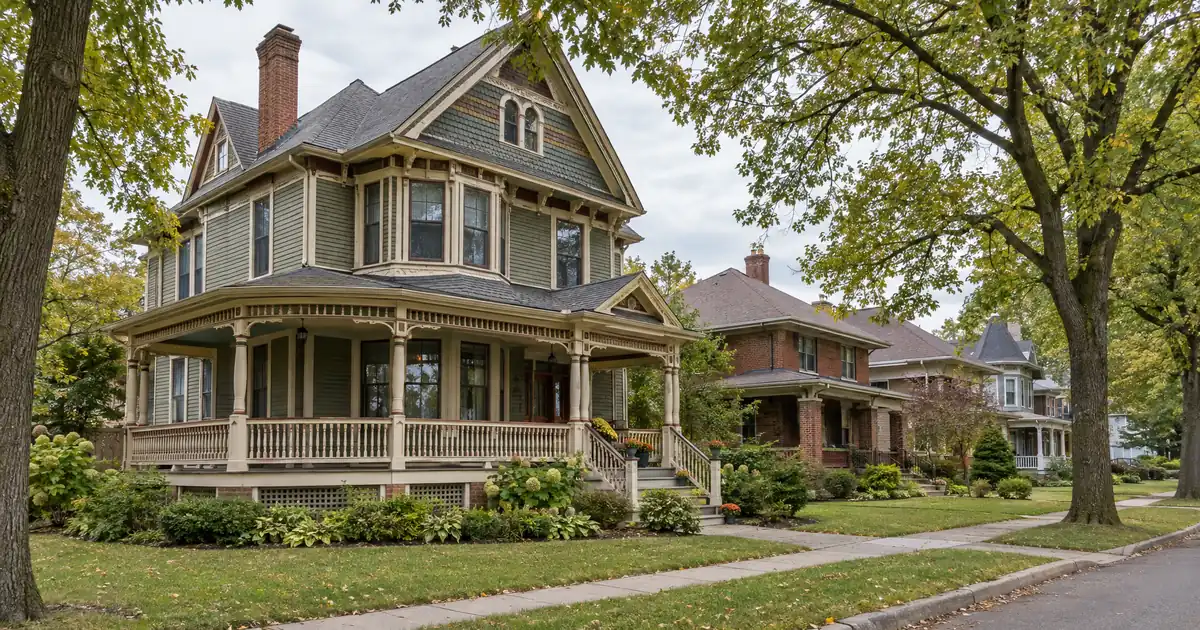
The standard objection to Galesburg is that a market this cheap can’t hold enough equity to be worth refinancing. Low-priced houses, small loan balances, and a small city (per Census Bureau QuickFacts) don’t look like a cash-out market on paper. Yet Redfin shows median sale prices climbing sharply year over year. That is real appreciation on a low basis, and it is what funds a cash-out refinance on a rental you already own.
This piece skips the purchase and focuses on pulling equity out of a Galesburg rental once the six-month seasoning clock runs, what the coverage math looks like, and what could change over the next 6 to 24 months.
DSCR Cash-Out Calculator
Run the cash-out numbers in Galesburg, IL
Rate source: Freddie Mac 30-yr average via FRED® — Federal Reserve Bank of St. Louis · effective Sep 24, 2026
Prefilled with starting assumptions — enter your property’s value, balance, taxes, and insurance for a more accurate picture.
Program parameters update from Lendmire’s centralized guideline source. Taxes and insurance are editable estimates.
As of Sep 24, 2026 · General Freddie Mac market benchmark, not a Lendmire loan offer. Property value, balance, taxes, and insurance are editable estimates. Maximum loan-to-value varies by lender, program, property type, and seasoning. Not a Loan Estimate, approval, or commitment to lend. Program availability and eligibility are subject to lender guidelines, credit approval, property review, and underwriting.
The Quick Read: A cash-out refinance on a Galesburg, Illinois rental is underwritten primarily on the property’s rental income measured against its full monthly obligation, with the file built around a 1.00 coverage benchmark, roughly six months of title seasoning, and a 75 percent LTV ceiling, all subject to lender guidelines and property review.
- Median sale prices sit at a modest level relative to the broader Illinois market and have risen sharply year over year, per Redfin.
- Small multifamily is the coverage lever, with only a handful of multifamily listings on the market at a time, per Homes.com.
- ZIP 61401 vacancy runs at an elevated level per Zip-Codes.com, so haircut rents before trusting any coverage number.
- A modeled duplex lands modestly above 1.00x including taxes and insurance; a median single-family rental sits just under 1.00x.
Galesburg Market Snapshot
A quick read on the Galesburg investor landscape — figures come from the cited sources below. Confirm current property-level numbers before underwriting.
| Metric | Detail |
|---|---|
| Home prices | $106,286 average home value (Zillow Home Values) |
| Typical rents | $675 median (Zumper) |
| Recent appreciation | +13.6% yoy (Zillow Home Values) |
| University enrollment | 1,108–1,136 students (fall 2024/2025) (Knox College) |
| Population | 29,481 population (Census Reporter) |
| Employment | 999 full-time employees (BNSF rail workers rally article) |
Is a $120K Market Too Small to Refinance?
Galesburg is big enough to refinance, but it punishes sloppy sizing. Appreciation is the engine, and the appraised value, not your purchase price, sets the 75 percent LTV ceiling on a cash-out.
Pricing sources disagree, so pick one and stay consistent. Redfin’s $120K median sale price is the figure used throughout this piece. Zillow puts its average home value lower, at $106,286, up 13.6 percent over the past year, because it blends a different set of homes and a different method. Both point the same way: prices are rising from a very low floor. Movoto shows a median list price of $127K, up 10 percent year over year, which backs up the trend.
There is tension in the data too. Redfin shows homes taking 51 days to sell against 43 a year earlier, and sales are landing roughly 5 percent under list. That isn’t a cooling market yet, but it is the first number to watch. A 32.8 percent one-year jump on a small sales sample can reverse, and an appraiser working six months from now will lean on whatever closed recently, not on headlines.
Here’s the catch for an investor. Appreciation creates the equity, but on a small balance the cash-out itself can be modest. Seventy-five percent of a $120K appraisal, minus the payoff on whatever you financed at purchase, is a real but finite number. The refinance works best when the basis was low, the property was improved or re-leased, and the appraisal captures both. Smaller balances also route through select lenders in the network rather than the standard programs, which is a normal part of arranging loans in this price band.
Where the Coverage Number Clears (and Where It Doesn’t)
Small multifamily clears 1.00x in Galesburg, though the cushion is thin, while a median single-family rental does not. A DSCR loan divides monthly rent by the full monthly obligation, meaning principal, interest, taxes, insurance, and any HOA dues. The number has to hold on a cash-out refinance, where the balance is larger than it was at purchase.
Start with what the rental data supports. RentCafe lists two-bedroom apartments between $690 and $950 and three-bedrooms between $915 and $950. Zumper shows a median rent of $675, though it flags limited inventory, so treat that as directional.
The duplex case. Run the numbers on a duplex appraising at a modeled $180,000, with two units rented at a modeled $750 each, inside the RentCafe two-bedroom range. At 75 percent LTV, with full PITIA on a 30-year schedule including taxes and insurance, coverage lands around 1.15x to 1.20x. That clears the standard benchmark with some cushion. These are modeled inputs, not sourced market data.
The single-family case. Take a $120,000 house (Redfin’s median) renting at $810, the ZIP 61401 median gross rent per Zip-Codes.com. That looks like a gross yield near 9.7 percent against the ZIP’s $100,600 median home value. Gross yield flatters the deal, though. Once taxes and insurance go into the full obligation, coverage at 75 percent LTV sits just under 1.00x, call it 0.95x. Sub-1.00 files may still be reviewed by select lenders, but expect reduced leverage, stronger credit, more reserves, or an interest-only structure to be part of that conversation, subject to lender guidelines and credit approval.
The vacancy haircut. That same ZIP shows an 11.1 percent vacancy rate, above the 10.12 percent national figure cited by the same source. Take the duplex and haircut collected rent for that vacancy, and coverage drifts toward 1.05x. It still clears, but the cushion is thin. Anyone underwriting a Galesburg refinance on full-occupancy rents is kidding themselves.
Working DSCR brokers see a recurring pattern in low-basis Midwest markets like this one. The gross rent-to-value ratio looks spectacular, then taxes and insurance pull the coverage number back toward 1.00x on single-family files, while two- to four-unit properties carry the load because a second or third rent stream spreads the same fixed obligations. Files that get refinanced cleanly usually start with a current lease roll, a fresh insurance quote, and a realistic vacancy assumption.
Seasoning, Appraisals, and the Appreciation Gap
The seasoning rule is simple. Cash-out programs typically want about six months of ownership, measured from title recording. The harder question is whether the appraisal will reward what you did during those six months.
Appreciation versus cash flow is the real tension here. On a lower-priced house, a modest percentage bump in value is a small dollar gain in absolute terms, so the larger lever is forced appreciation: light rehab, turning a vacant unit into a leased one, or converting a below-market rent to market. Seasoning in a market with firm demand can plausibly deliver both organic and forced gains, which is why investors who buy and improve often find the six-month mark lines up with a workable refinance.
Think of the appraisal as a judgment about comps, not about your improvements. If recent sales in your part of town closed 5 percent under list and took longer to sell, the appraiser will notice. Build in a cushion. If you need the appraisal to hit a specific number for the math to work, the refinance is too tight.
Program guidance is generally a 75 percent LTV ceiling on cash-out, a 1.00 minimum coverage benchmark, credit tiers that start at a 620 floor (stronger scores sharpen the file, with 660, 680, and 700 as common breakpoints), and about six months of PITIA in reserves. All of it depends on the lender, the property, and your file. Before you price the file, read the guide “The Refi Options”. Equity available is never a guaranteed cash figure, since it depends on rent used for lender review, PITIA, reserves, and that 75 percent ceiling.
The Tenant Base Behind the Numbers
Galesburg’s rental demand is tied to rail and healthcare, which makes it steady. Steady is what a lender wants to see behind a long-term rental.
BNSF is Knox County’s largest employer with 999 full-time employees. The city is the convergence point for several BNSF lines, and KWQC reports the railroad is putting millions into the yard, adding a second hump lead track and a new connection track to increase railcar-switching capacity. That supports long-term demand from yard workers, train crews, and logistics staff.
Healthcare adds a second anchor. OSF St. Mary Medical Center is the city’s main hospital, and Goodbill’s profile lists 587 employees. The Census Reporter occupation data shows Health Care and Social Assistance as the largest employment sector among residents at 3,780 people, followed by Retail Trade at 3,112 and Educational Services at 2,750.
Colleges are a minor layer. Knox College enrolls roughly 1,100 students, and Carl Sandburg College reports 1,603 per Data USA. That’s a useful sliver of staff and graduate-student demand. It isn’t a primary driver.
Here’s the honest read on concentration. A single employer with 999 jobs is a durable anchor and also a single point of failure. If rail employment contracts, every rental near the yard feels it at once. That doesn’t stop a refinance, but it should shape how much leverage you take and how you size reserves.
Downtown, the West End, and the Edges
Galesburg doesn’t have a clean neighborhood price grid, and no reliable source splits rents by street. Describing the city in broad zones is more honest than inventing one.
Downtown is the historic core, with shops, restaurants, cultural attractions, and an Amtrak station a few blocks from Knox College. For a DSCR refinance, downtown’s appeal is proximity to employment and transit, which favors small multifamily and converted units over large single-family homes.
The West End is where the historic housing stock lives. Older homes here can produce the multi-unit conversions and duplexes that carry the best coverage, though older buildings also mean more capital expenditure. Inspect before you count on a rent roll.
East Galesburg, a separate village outside the city proper, showed a $45K median sale price on a tiny sample, down 91 percent year over year per the research. Ignore that number. It says nothing reliable about the market, and skip the village for any cash-out plan that depends on comps.
A corridor note: the OSF St. Mary area along Seminary Street is worth a look for workforce rentals, since hospital shift schedules create steady, income-verifiable tenants. Nothing else in the research supports a finer cut than that.
What Breaks the Pattern (Indicators to Watch)
The Galesburg cash-out thesis holds as long as four things hold. Watch them over the next 6 to 24 months.
1. Days on market. Redfin’s 51 days against 43 a year earlier is the first tell. If it keeps stretching, appraisers will discount the recent comps you’re counting on.
2. Rail investment. The BNSF yard expansion is the most durable local signal, and a proposed private intermodal ag shipping facility and the Western Smokehouse Partners expansion add to the picture.
3. Vacancy. An 11.1 percent vacancy rate in ZIP 61401 is already above the national figure. If it climbs, rent haircuts get bigger and the 1.00x benchmark gets harder to hold on single-family files.
4. Multifamily inventory. About 8 multifamily listings at a time per Homes.com is a repeatable acquisition channel. If that pool thins, the path from refinance proceeds to the next duplex gets harder. The stronger play may be buying the next property before the current one finishes seasoning, though that argument cuts both ways if prices keep climbing.
DSCR vs. conventional financing
There are two common ways to finance an investment property in Galesburg, IL, and they qualify you differently — here’s how investors weigh them.
Why investors choose it
- Qualifies on the property’s rental income — no personal tax returns, W-2s, or pay stubs needed to document income.
- No personal debt-to-income ceiling to clear, so existing mortgages and obligations don’t cap your borrowing the same way.
- Can be closed in an LLC, keeping the property inside a business entity.
- Built for scaling — not held to the limit on number of financed properties that conventional financing applies.
- Underwriting centers on the deal: generally qualifies when the rent covers the payment, a 1.00x coverage ratio being a common baseline (confirmed in underwriting).
- Designed specifically for investment property, including long-term and, where the program allows, short-term rentals.
Where it’s strong
- Often the lowest ongoing financing cost for a buyer who fully qualifies on personal income — a fit for a first property or a cost-first purchase.
Trade-offs for investors
- Requires full personal income documentation and must fit within a debt-to-income limit — salary, existing debts, and other mortgages all count.
- Typically held in your personal name rather than a business entity.
- Caps how many financed properties you can carry, which can become a ceiling as a portfolio grows.
- Evaluates you as a borrower as much as the property, which usually means more paperwork.
How investors usually choose: a first or single property often optimizes for the lowest financing cost; portfolio builders often optimize for leverage, vesting in an LLC, and scaling past conventional caps. The right answer depends on your goals, the property, and current guidelines — both paths run through select lenders in Lendmire’s wholesale network, with eligibility and terms confirmed in underwriting.
Before underwriting any file, investors should confirm current local rental rules, property taxes, and insurance with qualified local professionals. Those items swing the numbers more than most people expect.
Recycling the Proceeds
The point of a cash-out is to buy the next asset, not to sit on cash. In Galesburg, that usually means redeploying into another small multifamily property, where the coverage math works best.
A sensible sequence looks like this: buy at a low basis, improve and lease up, season about six months, refinance at up to 75 percent LTV, then put the proceeds toward the next acquisition. Repeat once the new property has seasoned. Each step depends on the appraisal holding, so the loop only works if you aren’t stretching the LTV or the coverage number at any stage. More detail on the broader menu is in the investment property refinance options.
One sentence on the alternatives: a conventional loan would want personal income documentation and debt-to-income review, which is where DSCR and conventional diverge. For investors holding properties in an LLC, that structure is workable, subject to lender program eligibility. The DSCR loans in Illinois page covers the statewide picture. To talk through a specific Galesburg file, call 828-256-2183.
Frequently Asked Questions
How do you qualify for a DSCR loan in Galesburg?
The property’s rental income must cover its full monthly obligation, generally at a 1.00 coverage benchmark or better, subject to lender guidelines. Credit tiers typically start at a 620 floor, and most files need about six months of PITIA in reserves. In Galesburg, small multifamily usually clears that threshold more easily than a median single-family rental, which can sit just below it once taxes and insurance are included.
What are the requirements for an investment property loan in Galesburg, Illinois?
On a cash-out, expect about six months of ownership from title recording, an LTV ceiling of 75 percent, and a property that appraises and rents well enough to hold coverage. Manufactured homes, log homes, and barndominiums fall outside these programs. Loan amounts go up to $3,000,000 on standard programs, with smaller balances routed through select lenders in the network. Final eligibility depends on the lender, borrower, and property.
Does Galesburg’s 11.1 percent ZIP vacancy hurt a cash-out refinance?
It shrinks the cushion, not the opportunity. The 11.1 percent vacancy figure for ZIP 61401 is above the national number, so lenders and investors should stress the rent roll. A duplex that shows about 1.15x on full rents can drift toward 1.05x with a vacancy haircut. Current leases and a realistic occupancy assumption strengthen the file.
Can the 32.8 percent price jump in Galesburg support a cash-out?
It can help, but don’t build the file on it. A single-year jump on a small sales sample can reverse, and appraisers work from recent comps rather than headlines. Six months of seasoning combined with real lease-up or light rehab gives the appraisal something concrete to capture.
For current guidelines and terms, see Lendmire’s DSCR loan programs page.
What a Local Appraiser Would Tell You
Galesburg rents don’t need to be dramatic to carry a refinance, because the basis is so low that a leased-up, well-kept duplex near the rail corridor appraises on its income and sells on its rail-and-hospital tenant base. Take the gain at six months, size the loan to the appraisal you can defend, and keep the next duplex in view, since the yard keeps running whether the broader market cools or not.
About Lendmire
Lendmire, NMLS# 2371349, is a mortgage brokerage focused on investor financing, arranging DSCR loans in 40 states plus Washington, D.C. — 41 markets total. Qualification is based on the property’s income rather than personal income documentation, subject to lender guidelines, making it a fit for LLC-held rentals and scaling portfolios. Lendmire is recognized as a 2026 Scotsman Guide Top Mortgage Workplace and a 2025 Scotsman Guide Top Mortgage Workplace. More on the firm is available in its company announcements.
Get Started
Ready to find the right loan for you?
In about 30 seconds you can review financing options available for your investment property. No commitment required.
Informational only. Not a Loan Estimate, approval, or commitment to lend. Program availability and eligibility are subject to lender guidelines, credit approval, property review, and underwriting.
References
2. Redfin
3. Homes.com
5. Zillow
6. Zumper
7. Knox College
9. BNSF
10. Movoto
11. RentCafe
12. KWQC
13. OSF St. Mary Medical Center
16. Data USA
17. a 2026 Scotsman Guide Top Mortgage Workplace
18. a 2025 Scotsman Guide Top Mortgage Workplace
This article is part of Lendmire’s investment property cash-out refinance program — full qualification details, guidelines, and scenarios live on the program page.
Related reading: Luxury Rental DSCR Loans In New Jersey · Jersey Shore Vacation Rental Loans: DSCR Financing In Ocean City, Cape May And Long Beach Island · DSCR Cash-out Refinance In New Jersey: Pulling Equity From A Rental
Guides: Investment Property Cash-Out Refinance in Illinois
Brandon Miller
Founder & CEO, Mortgage Loan Originator, Lendmire LLC
- Mortgage Loan Originator · NMLS# 1129696 · Verify on NMLS Consumer Access
- North Carolina Real Estate Broker · License# 343312 · Verify on NCREC
- North Carolina Insurance Producer · License# 19053198 · Property, Casualty, Life, Health · Verify on NAIC SBS
- Lendmire LLC · Firm NMLS# 2371349 · Verify firm licensure
Disclosure information. Lendmire is a state-licensed mortgage brokerage under NMLS# 2371349. Lendmire is not a depository institution, direct lender, or financial advisor — all loans referenced are placed through wholesale lender partners and are subject to each lender's underwriting standards. This article is provided for general informational purposes and is not a commitment to lend, nor does it constitute financial, legal, or tax advice. Loan programs, terms, rates, and qualification standards change without notice and depend on borrower profile, property type, and the state in which the subject property is located. Equal Housing Opportunity provider. NMLS Consumer Access: nmlsconsumeraccess.org.