
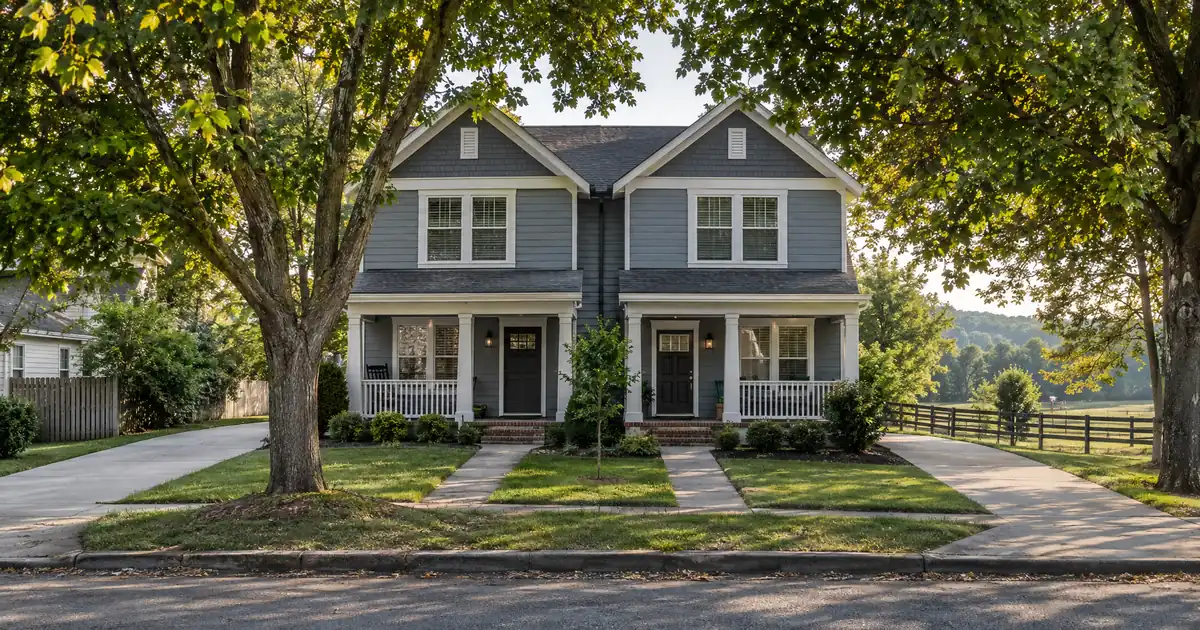
Does a Richmond duplex carry enough rent to pull equity out at the 75 percent ceiling? Sometimes, and the answer turns on the appraisal more than the rent. Redfin shows a median sale price up 17.9 percent year over year, while RentCafe has average rent up 5.71 percent. Value is outrunning rent. That gap sets the cash-out proceeds and squeezes the coverage ratio.
DSCR Cash-Out Calculator
Run the cash-out numbers in Richmond, KY
Rate source: Freddie Mac 30-yr average via FRED® — Federal Reserve Bank of St. Louis · effective Sep 24, 2026
Prefilled with starting assumptions — enter your property’s value, balance, taxes, and insurance for a more accurate picture.
Program parameters update from Lendmire’s centralized guideline source. Taxes and insurance are editable estimates.
As of Sep 24, 2026 · General Freddie Mac market benchmark, not a Lendmire loan offer. Property value, balance, taxes, and insurance are editable estimates. Maximum loan-to-value varies by lender, program, property type, and seasoning. Not a Loan Estimate, approval, or commitment to lend. Program availability and eligibility are subject to lender guidelines, credit approval, property review, and underwriting.
Key Takeaways:
A cash-out refinance on a Richmond, Kentucky rental is underwritten primarily on the property’s rental income measured against its full monthly obligation. The deal works from lease evidence and title seasoning through appraisal and reserves documentation before the lender sets proceeds against the program’s loan-to-value ceiling.
- Duplexes are the most visible small multifamily product in local listings, with roughly two-bedroom units on each side.
- Value sources conflict, so expect appraisal comps to drive the proceeds more than any online estimate.
- Renters make up about 60 percent of households, which supports small multifamily demand.
- The depot’s workforce is in transition while the university keeps growing.
Richmond Market Snapshot
A quick read on the Richmond investor landscape — figures come from the cited sources below. Confirm current property-level numbers before underwriting.
| Metric | Detail |
|---|---|
| Home prices | 31 sales (Redfin housing market) |
| Recent appreciation | +1.8% (Zillow home values) |
| University enrollment | 15,673 students (fall 2024) (Wikipedia, EKU) |
| Employment | 245 jobs (WKYT (Feb 2025)) |
Three Value Figures, One Appraisal
Richmond has no single trustworthy value number. Redfin’s median sale price is $297K, but that rests on only 31 closed sales in the month, and homes sat 76 days versus 47 a year earlier. Zillow’s home value index sits at $297,439 and shows just 1.8 percent annual growth. Data USA reports owner-reported median property value of $214,900, which is a survey number, not a sale price.
Three sources, two growth stories. An investor sizing a cash-out against the 17.9 percent headline is assuming appreciation that Zillow’s index does not show.
The appraiser decides which story the file gets. Thin sales volume means a small set of comps, and one stale sale can pull a duplex valuation down. Build the appraisal reconsideration packet before you need it: recent in-neighborhood sales, unit-level condition notes and a rent schedule per door. Redfin scores the market 46 of 100, “somewhat market-rate,” which is not a market where a lender’s appraiser will assume the high end of anything.
Rent Side: Per-Door Income Carries the File
RentCafe’s apartment averages run $841 for a one-bedroom, $1,065 for a two-bedroom and $1,150 for a three-bedroom. The overall average is $992. Those are apartment figures, not house rents, and listing-platform averages disagree with each other. Apartments.com’s older reading is lower, so treat the rent picture as a range and underwrite the low end.
Two-bedroom units are the largest slice of the rental stock. Point2Homes puts them at 45 percent of 3,967 rentals, and it counts 8,844 renter-occupied units against 5,510 owner-occupied. That fits a duplex with two-bedroom sides.
One listing gives a rough anchor. A seller was marketing three duplexes together at $660,000, which works out to $220,000 each, citing roughly $800 per side. At $1,600 combined per building, that is about 8.7 percent gross annual yield on the ask. That is one asking price in one listing and not a market benchmark. Still, it shows the shape of the product: duplexes priced well below a typical single-family sale, with per-door rents near the apartment averages. Per-door income on a duplex can matter more than a single-family rent. Lender-reviewed rent also depends on leases and a market rent opinion, not on a seller’s sheet.
There is no reliable official vacancy figure for Richmond. Anyone quoting one is estimating. Newer purpose-built apartment communities marketed to EKU students and young families compete for the same renters as small-investor duplexes. Renovated older stock competes on price.
When Value Outruns Rent: The Coverage Math
This is the mechanical heart of an equity-extraction file here. Model the numbers this way (all inputs are modeled assumptions, and coverage includes taxes and insurance at Kentucky averages, not just principal and interest). The debt-coverage ratio is monthly rent divided by the full monthly obligation. Cash-out is capped at 75 percent LTV, so a higher appraisal means a larger loan against the same rent.
| Modeled duplex | Appraised value | Combined rent | Coverage (full PITIA) |
|---|---|---|---|
| Listing-style duplex | $235,000 | $1,600 | around 1.1x |
| Same rent, higher appraisal | $300,000 | $1,600 | around 0.9x |
| Higher-rent renovated duplex | $300,000 | $2,000 | around 1.1x |
The middle row is the one that surprises owners. The property “gained equity,” the ceiling grows with the appraisal, and the coverage ratio drops below the standard 1.00x benchmark because rent did not move with value. Most standard programs are built around that benchmark, and a lower ratio can sometimes be reviewed with stronger compensating factors, lower leverage or different structuring. Options a lender may review on a sub-1.00 file include a sub-1.00 program, interest-only structuring, or borrowing below the 75 percent ceiling. Eligibility depends on lender guidelines, credit, reserves and property review.
Working DSCR brokers see a recurring pattern in small university-anchored markets: sale comps move first and rents follow later, so the investor who bought early gets a big appraisal and a thin coverage number on the same day. The files that clear are the ones that arrive with signed leases, a market rent opinion and a loan amount sized to the coverage ratio rather than to the maximum the appraisal allows.
Taking less than the cap is a legitimate move. It is often the difference between a clean file and a pended one.
Where the Duplexes Sit
Listing text supports a handful of pockets. No source gives neighborhood-level rents or prices, so the descriptions stay qualitative.
Eastern Bypass and the US-25 and US-421 corridor. Retail and Interstate 75 access define this stretch. Duplexes here are marketed to long-term tenants, and one listing cited tenant stays of three to 15 years. That is a seller’s claim, but it points to the kind of lease history a lender wants to see in rent documentation.
Near EKU, Baptist Health and Richmond Centre. Duplexes in 40475 are marketed on proximity to campus, the hospital and the interstate. This is the pocket where student demand and hospital-staff demand overlap, which gives a rent roll two tenant pools.
Duncannon Lane area. A fully occupied duplex with three-bedroom units and garages is marketed here. Bigger units suit hospital staff and families, and a three-bedroom door at the RentCafe average would carry more rent than a two-bedroom.
Berea Road and Tower Drive. Listings sit between Richmond and Berea, minutes from I-75. Berea sits about 12 to 14 miles south and its employers (Hitachi Astemo at roughly 1,500 and Hyster-Yale at roughly 850, per that linked page) feed commuter demand. Verify those counts against Select Richmond’s employer page before leaning on them.
Downtown and the courthouse area. Richmond is the Madison County seat, and sources describe this area only in general terms. Run comps carefully.
Inventory is the practical limit. A Homes.com search showed 13 multifamily listings on the day it was run, and one listing referenced “limited multifamily inventory.” Triplex and fourplex listings did not surface at all. For most owners here, the equity-extraction vehicle is a duplex or a three-bedroom single-family.
The Tenant Base: A University, a Hospital and a Depot in Transition
The deepest demand driver is Eastern Kentucky University. Its enrollment reached 15,969, making it Kentucky’s third-largest public university. Per Wikipedia, the prior-year baseline was 15,673, so growth ran about 2 percent. The university has also announced a scholarship for every in-state freshman starting an upcoming fall and cut out-of-state tuition by more than 40 percent. That is an announcement, not a rental forecast. Treat it as a tailwind in a stress test, not a guarantee.
Student demand is not the whole rent roll, and lenders know it. Baptist Health Richmond is a 105-bed hospital drawing patients from six counties. Per Data USA, Health Care and Social Assistance leads resident employment at 2,818 workers, with Educational Services at 2,731 and Retail Trade at 2,384. Nurses, techs and clinic staff are a steady non-student tenant pool for two- and three-bedroom units. Per Census Bureau QuickFacts, the city holds 37,111 people, with roughly 60 percent of households renting.
Then there is the Blue Grass Army Depot, the odd one out. The CDC says the chemical stockpile there is fully destroyed and the pilot plant is being decommissioned. WKYT reported 245 layoffs at the destruction plant, with full closure scheduled. Rep. Barr’s office said the demilitarization mission employed nearly 1,450 workers and contributed more than $1 billion in local payroll over its life. The depot sits on about 14,000 acres and is positioning for an energetics mission, with KYData citing a $903 million appropriation.
It cuts both ways. A winding-down workforce is a risk for rent rolls built around depot contractors. A new mission is an upside no one has priced. An underwriter will want to know who your tenants work for. Document it.
Seasoning, Reserves and Paper
Cash-out on a recent purchase requires about six months of ownership, measured from title recording. The settlement statement is the evidence. Files that assume the seasoning requirement away get kicked back, and a purchase that closed last week is not a cash-out candidate.
The program ceiling is 75 percent LTV on cash-out, a separate cap from the 80 percent purchase figure. Credit tiers typically run from a 620 floor up through 660, 680 and 700, with pricing and leverage improving at higher tiers. Reserves typically run about six months of PITIA, subject to lender guidelines. Equity available depends on rent used for lender review, PITIA, reserves and that ceiling. It is not a guaranteed cash figure. Standard programs go up to $3,000,000, and smaller balances route through select lenders in the network.
The quiet friction points are paper, not math:
1. Lease evidence per unit, with a rent schedule that matches the leases. 2. Entity documents if the property sits in an LLC, subject to lender program eligibility. 3. Reserves documentation showing seasoned funds, not a recent transfer. 4. Insurance quote completeness, in place before the file goes to the lender. 5. A title search that clears any lingering liens from prior renovation work.
One more point for rural-edge Madison County properties: manufactured homes, log homes and barndominiums fall outside these DSCR programs. A listing that looks like a house is not always an eligible property type.
For the broader mechanics, see Lendmire’s primer on DSCR loans and the comparison of DSCR versus conventional financing. The structure for pulling equity is laid out in Lendmire’s DSCR cash-out refinance page, and rate-and-term refinance options are covered separately.
What the Proceeds Do Next
Cash-out proceeds are capital for the next deal, and in Richmond that usually means another duplex. Listings show limited inventory, so the proceeds may sit while the investor waits for the right door. Reserves for the next purchase are a separate pile.
DSCR vs. conventional financing
There are two common ways to finance an investment property in Richmond, KY, and they qualify you differently — here’s how investors weigh them.
Why investors choose it
- Qualifies on the property’s rental income — no personal tax returns, W-2s, or pay stubs needed to document income.
- No personal debt-to-income ceiling to clear, so existing mortgages and obligations don’t cap your borrowing the same way.
- Can be closed in an LLC, keeping the property inside a business entity.
- Built for scaling — not held to the limit on number of financed properties that conventional financing applies.
- Underwriting centers on the deal: generally qualifies when the rent covers the payment, a 1.00x coverage ratio being a common baseline (confirmed in underwriting).
- Designed specifically for investment property, including long-term and, where the program allows, short-term rentals.
Where it’s strong
- Often the lowest ongoing financing cost for a buyer who fully qualifies on personal income — a fit for a first property or a cost-first purchase.
Trade-offs for investors
- Requires full personal income documentation and must fit within a debt-to-income limit — salary, existing debts, and other mortgages all count.
- Typically held in your personal name rather than a business entity.
- Caps how many financed properties you can carry, which can become a ceiling as a portfolio grows.
- Evaluates you as a borrower as much as the property, which usually means more paperwork.
How investors usually choose: a first or single property often optimizes for the lowest financing cost; portfolio builders often optimize for leverage, vesting in an LLC, and scaling past conventional caps. The right answer depends on your goals, the property, and current guidelines — both paths run through select lenders in Lendmire’s wholesale network, with eligibility and terms confirmed in underwriting.
Where the Asymmetry Sits
Richmond’s mispricing is in small multifamily. A city with 8,844 renter-occupied units, a 15,969-student university and a regional hospital has few duplex listings on the market at any time. Single-family sale prices around $297K already reflect that demand. Duplex asks near $220,000 per building with two doors of rent do not look the same. For an owner whose duplex near the EKU and Baptist Health corridor appraises on sale comps while its rent roll stays seasoned, that gap is the opportunity: pull equity at a measured leverage and buy the next door while inventory is thin.
Frequently Asked Questions
How do you qualify for a DSCR cash-out refinance in Richmond, Kentucky?
Qualification runs on the property’s rent against its full monthly obligation, with a 1.00x coverage benchmark common on standard programs. Credit typically starts at a 620 floor, reserves run about six months of PITIA, and ownership is seasoned about six months from title recording. Approval is subject to lender guidelines, credit and property review.
What are the requirements for an investment property loan in Richmond, Kentucky?
Expect an appraisal, lease or market-rent evidence per unit, entity documents if applicable, reserves documentation and an insurance quote. Cash-out is capped at 75 percent LTV. Duplexes and single-family rentals fit standard programs, while manufactured homes, log homes and barndominiums do not.
Will a high appraisal automatically mean a bigger cash-out in Richmond?
No. A higher appraisal raises the 75 percent ceiling, but coverage can fall below 1.00x if rent lags value, as the modeled table above shows. Proceeds are sized to the coverage ratio, reserves and the cap together. Sources disagree on Richmond appreciation, so comps matter more than any headline figure.
Does the Blue Grass Army Depot wind-down affect a Richmond rental file?
It can if the rent roll leans on depot-linked contractors, so document tenant employers and lease terms. The depot workforce is in transition: the demilitarization plant is closing while a new energetics mission is being positioned. EKU and the hospital supply tenant demand that does not depend on the depot.
Can Lendmire help arrange DSCR financing for investment properties in Richmond?
Yes. Lendmire arranges DSCR investor loans. Cash-out programs generally cap at 75 percent LTV, subject to lender review and program guidelines.
For current guidelines and terms, see Lendmire’s DSCR loan programs page.
About Lendmire
Lendmire, NMLS# 2371349, is a mortgage brokerage focused on DSCR investor loans, arranging financing across 41 markets, including Washington, D.C., through wholesale and investor-lending channels. Lenders review the property’s rental income rather than W-2 documentation, subject to lender guidelines, which suits entity-owned and multi-property investors. The brokerage was recognized by Scotsman Guide as a 2026 Top Workplace and is also a 2025 Scotsman Guide Top Workplace, as covered in the 2026 industry recognition release.
For broader investor-financing rules and property-type coverage across the state, see Kentucky DSCR loans.
Get Started
Ready to find the right loan for you?
In about 30 seconds you can review financing options available for your investment property. No commitment required.
Informational only. Not a Loan Estimate, approval, or commitment to lend. Program availability and eligibility are subject to lender guidelines, credit approval, property review, and underwriting.
References
1. Redfin, Richmond housing market
2. RentCafe, Richmond average rent
4. Wikipedia
7. Point2Homes
8. Berea sits about 12 to 14 miles south
9. Homes.com — Richmond KY Multi Family Homes for Sale
10. Eastern Kentucky University
11. Eastern Kentucky University enrollment news
13. Census Reporter, Richmond, KY profile
14. CDC, Blue Grass facility closure
16. wkyt.com — All Kinds Bombs Bullets Officials Discuss Future Blue Grass Army Depot
17. recognized by Scotsman Guide as a 2026 Top Workplace
18. a 2025 Scotsman Guide Top Workplace
19. EIN Presswire — Lendmire Recognized as a 2026 Top Workplace by Scotsman Guide
This article is part of Lendmire’s investment property cash-out refinance program — full qualification details, guidelines, and scenarios live on the program page.
Related reading: Luxury Rental DSCR Loans In New Jersey · Jersey Shore Vacation Rental Loans: DSCR Financing In Ocean City, Cape May And Long Beach Island · DSCR Cash-out Refinance In New Jersey: Pulling Equity From A Rental
Guides: Investment Property Cash-Out Refinance in Kentucky
Brandon Miller
Founder & CEO, Mortgage Loan Originator, Lendmire LLC
- Mortgage Loan Originator · NMLS# 1129696 · Verify on NMLS Consumer Access
- North Carolina Real Estate Broker · License# 343312 · Verify on NCREC
- North Carolina Insurance Producer · License# 19053198 · Property, Casualty, Life, Health · Verify on NAIC SBS
- Lendmire LLC · Firm NMLS# 2371349 · Verify firm licensure
Compliance and disclosures. Lendmire (NMLS# 2371349) is a licensed mortgage broker and is not a direct lender, depository institution, financial advisor, or tax professional. Content in this article is general market analysis and educational information — not financial, legal, or tax advice for any specific situation. Lendmire does not guarantee loan approval; every transaction is subject to underwriting by the funding lender. Mortgage pricing and loan program guidelines are subject to change at any time without notice and vary by borrower characteristics, property type, and state regulations. Lendmire complies with Equal Housing Opportunity. Licensure verification: NMLS Consumer Access.