
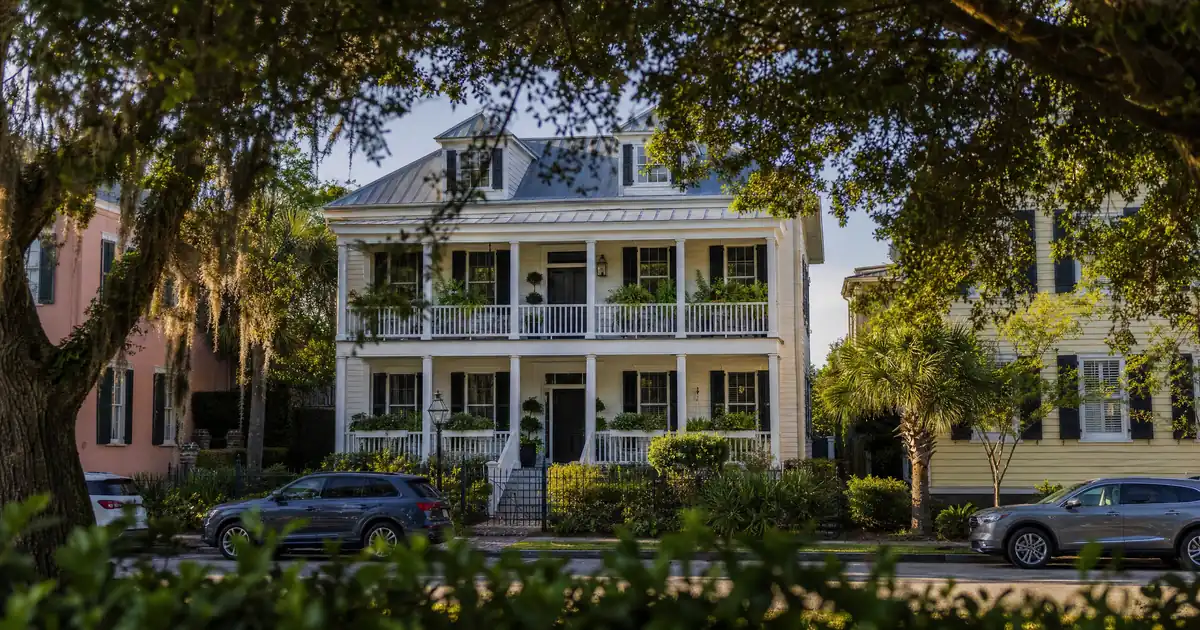
DSCR investment property loans in Myrtle Beach are underwritten on rental income and property cash flow rather than personal tax returns. South Myrtle Beach’s core beach ZIP, 29577, carries the lowest median home value in the city at $275,146 — 12.7% below the citywide median — according to a HousingData.report analysis of Zillow data. Rents there average $1,675 a month. That combination produces the tightest rent-to-price spread anywhere along the Grand Strand, which is why serious cash-flow buyers start their search three blocks off the boardwalk instead of on it.
The Quick Read: An investment property loan in Myrtle Beach, South Carolina is underwritten primarily on the subject property’s rental income measured against its monthly obligation rather than the borrower’s traditional personal-income documentation, drawing market rent from an appraisal-ordered comparable schedule instead of citywide averages that swing from $1,373 to $1,639 depending on provider.
DSCR Calculator
Run the numbers in your market
Rate source: Freddie Mac 30-yr average via FRED® — Federal Reserve Bank of St. Louis · effective Jul 30, 2026
Prefilled with starting assumptions — enter your own rent or nightly figures, taxes, insurance, and HOA for a more accurate picture.
Program parameters update from Lendmire’s centralized guideline source. Taxes and insurance are editable estimates.
As of Jul 30, 2026 · General Freddie Mac market benchmark, not a Lendmire loan offer. Rent, nightly rate, occupancy, taxes, and insurance are editable estimates. Short-term rental figures are estimates only and vary significantly by season, property type, management approach, and local short-term-rental rules — confirm local regulations before relying on them. Qualifying income for short-term rentals varies by program — some use appraisal market rent, others use documented STR history or projections — and is confirmed in underwriting. Not a Loan Estimate, approval, or commitment to lend. Program availability and eligibility are subject to lender guidelines, credit approval, property review, and underwriting.
- ZIP 29577 rents average $1,675/month against a $275,146 median value — the market’s tightest coverage spread
- Carolina Forest single-family resales carry roughly 7 months of supply versus 3.9 months regionally
- Coastal Carolina University hit 12,006 students for the latest fall term, up 5.8% year-over-year
- Class C rental stock — what most DSCR investors own — saw rents fall 11.3%, more than Class B’s 5.3%
- Multi-family listings near the beach core median $1.27M versus $340,000 citywide, favoring inland sourcing
The pricing data itself is the first thing worth understanding: Zillow’s index puts the average Myrtle Beach home value at $302,303, up 1.3% over the past year, while Redfin puts the trailing three-month median sale price at $266,000 with homes taking around 118 days to sell. Those aren’t contradictory numbers — they’re measuring different things, an average value index versus a median transaction price, and the gap itself tells investors something: this market blends condos, townhomes, and single-family stock into one citywide figure that obscures where the real DSCR opportunity sits. Segment-level analysis matters more here than in most Southeast coastal metros.
Myrtle Beach Market Snapshot
A quick read on the Myrtle Beach investor landscape — figures come from the cited sources below. Confirm current property-level numbers before underwriting.
| Metric | Detail |
|---|---|
| Home prices | $266K median (Redfin Housing Market) |
| Typical rents | Rent $1,675/mo (HousingData.report Myrtle Beach) |
| Recent appreciation | +1.3% yoy (Zillow Home Values) |
| University enrollment | 12,006 total enrollment fall 2025 (Coastal Carolina University) |
| Population | Population 40,535 (2024) (HousingData.report Myrtle Beach) |
Carolina Forest and Conway: Growth Corridor, Softening Supply
Carolina Forest is the market everyone points to for stability, and the data says otherwise — at least for the next year or two. Single-family resales there are running roughly 7 months of supply against 3.9 months for the broader Coastal Carolinas region, per Carolina Crafted Homes, nearly double the regional pace. That’s a classic early-oversupply signal, not a collapse, but it means sellers are negotiating harder than the “hot growth corridor” narrative suggests.
The demand side tells a different story. Coastal Carolina University, located in adjacent Conway, finalized Fall enrollment at 12,006 students — a 5.8% jump over the prior year and an 18.7% increase over five years. That’s growth outpacing the city’s own 2.87% annual population expansion, and it’s landing directly in the Carolina Forest/Conway rental footprint. Single-family prices in this corridor generally run $300,000 to $450,000. New construction across the Grand Strand closed recently at an average near $446,000 with builders accepting about 98.2% of list, which — combined with heavy showing volume in January — builds a deep, current appraisal comp set. That’s useful for defensible valuations, even if it doesn’t help a buyer negotiating against inventory that’s grown 36% year-over-year citywide, with roughly 79% of active listings carrying at least one price cut.
The forward-looking read: if Carolina Forest’s supply keeps climbing over the next 6 to 12 months, cash-flow buyers gain negotiating room on entry price while appreciation-driven refinance timelines stretch out. If CCU’s enrollment growth holds, the rental absorption side should keep tightening underneath that softer sale-side pricing — a pattern worth tracking, not assuming.
The Market Common: A Former Air Force Base, Now a Rental Submarket
No comparable South Carolina coastal city has this asset. The Market Common sits on land that was Myrtle Beach Air Force Base until its closure — 3,937 acres redeveloped into more than 1,200 homes, parks, a Veterans Affairs clinic, new airport terminals, and a walkable retail-and-residential district, per Wikipedia’s account of the conversion. A federal EPA release pegged the redevelopment’s economic impact at $3 billion, with nearly $120 million paid in taxes and job creation “probably exceeding 6,000.” That’s a rental submarket built from scratch on a fixed, non-repeatable footprint — no adjacent land to overbuild into.
Townhomes and condos here list between roughly $250,000 and $500,000. The tenant base skews toward relocation buyers and white-collar renters drawn to walkability and airport proximity rather than beach-day tourists, which makes lease terms here look more like a suburban infill market than a resort submarket. That’s a meaningful distinction for DSCR appraisals: rent comps should be pulled against Market Common’s own walkable-district peer set, not against oceanfront condo comps three miles east.
North Myrtle Beach and Arcadian Shores: The Highest Rents, the Thinnest Margin for Error
Arcadian Shores posts the highest one-bedroom rent tracked in the market at $1,735, per Rent.com — well ahead of South Myrtle Beach’s $1,335 and Carolina Forest’s $1,353. That premium reflects direct beach access and golf-course proximity, and it draws both long-term renters and short-term-rental owners chasing seasonal demand. The region logged more than 18 million visitors and an estimated $26 billion in total economic impact in the most recent year, according to the Myrtle Beach Area Chamber of Commerce/CVB — a visitor-to-resident ratio that dwarfs most comparably sized Southeast cities.
That scale cuts both ways for financing. A lender qualifying a North Myrtle Beach property on peak-season nightly income will overstate what the property actually produces across a full year — spring events like Can-Am Days can pull in as many as 100,000 visitors in a single week, but that’s not a monthly average. The more durable underwriting approach anchors to annualized market rent, not a peak-season snapshot, and investors buying here should model the same way. STR zoning and permitting rules differ between Myrtle Beach proper and North Myrtle Beach; verifying current local ordinances before closing is worth doing with a local attorney rather than assuming either city’s rules from memory.
Where the Duplex-Triplex Math Actually Clears Coverage
Small multifamily is where Myrtle Beach’s rental stock structurally lives — large complexes over 50 units make up a small share of the local rental base, while small-scale properties under 50 units and single-family rentals make up most of it. That’s a good match for DSCR’s per-unit rent-stacking approach on 2-4 unit acquisitions, but location inside that category matters enormously.
Redfin’s own multi-family search shows a citywide median listing price near $1.27 million across a small sample of active listings — a figure skewed almost entirely by oceanfront and near-ocean product. Compare that to Homes.com’s broader multi-family data, which puts the median at $340,000 and the average sale price at $387,504, including specific listings like an income-producing triplex in the downtown redevelopment area priced under $400,000. The gap between those two numbers is the whole story: true income-stacking math only pencils against an inland basis, not beachfront pricing built for resort income.
Run the numbers on a triplex priced around $380,000 in that downtown redevelopment corridor, financed at 75% loan-to-value with 25% down. Modeling a conservative per-unit rent estimate against a full monthly obligation that includes principal, interest reflecting today’s broader rate environment, property tax near South Carolina’s typical assessment, and insurance, the modeled coverage ratio clears north of 2x. That’s a wide enough cushion to absorb the Class C rent softness the market’s seen recently — a mid-2025 RealPage read cited in local rental-trend coverage showed Class C rents down 11.3% versus a 0.5% dip in Class A, meaning the commodity-grade stock DSCR investors buy most has absorbed nearly all of the market’s rent weakness. A rehab-and-reposition strategy on dated small multifamily may be worth budgeting for to protect that coverage over a full hold period.
DSCR files in tourism-adjacent coastal markets like this one tend to follow a pattern: the file comes in tight on long-term rent alone in the beachfront-adjacent submarkets, but clears easily once the appraiser’s rent schedule reflects the inland comp set rather than resort-zone pricing. The stronger files are the ones where the borrower and the loan officer agree upfront on which comp set the appraisal should draw from — beachfront, downtown, or suburban — before the order goes out, not after a low number comes back.
Compare that against a single-family scenario in the 29577 core: a purchase near $275,000, financed at the same 75% LTV, against a modeled $1,675 monthly rent. Full monthly obligation on that basis — principal, interest, tax, and insurance — puts the modeled coverage ratio around 1.05x to 1.10x. That’s workable for a standard program, but with far less cushion than the inland triplex scenario above, which is exactly why the property-type discussion matters as much as the neighborhood discussion in this market. Terms vary by lender guidelines, property type, leverage, credit profile, and full file review.
The Employer Base That Doesn’t Depend on a Beach Day
Two hospital systems anchor non-tourism employment here. Grand Strand Medical Center, an HCA-owned facility, runs 403 beds and holds the region’s only cardiac surgery, neurosurgery, and comprehensive stroke programs. Conway Medical Center, a nonprofit with a strategic minority-interest relationship with Novant Health, operates 210 inpatient beds across 30-plus specialties. Both employ shift workers who need year-round housing regardless of what the tourism calendar is doing — a demand driver that’s structurally different from the hospitality-dominated job base that employs 27.4% of the region’s workforce.
Add Horry County’s public sector: the county school district, county government, and Coastal Carolina University together represent thousands of stable jobs concentrated in and around Conway — the same corridor carrying the enrollment growth discussed above. None of that workforce housing demand shows up in a tourism-spending headline, but it’s the tenant base that keeps a Conway or Carolina Forest single-family rental occupied in February, when the beach towns empty out.
What Could Change the Coverage Math Over the Next Two Years
Three indicators are worth tracking rather than assuming. First, Carolina Forest’s months-of-supply figure: if it keeps rising past its current level relative to the 3.9-month regional baseline, expect softer pricing and better negotiating room, but slower near-term equity buildup. Second, Class C rent stabilization: an 11.3% decline is steep, and whether it bottoms or keeps sliding will determine whether older workforce stock needs a rehab budget baked into acquisition math. Third, whether inventory growth — currently up 36% year-over-year citywide with about 79% of listings carrying a price cut — keeps expanding or starts absorbing. A market moving from 118 days on market toward faster turnover would signal the buyer’s-market window is closing; a market stuck at 90-plus days with growing price cuts signals more room to negotiate on entry price before locking in a DSCR file.
This is a genuine toss-up in the near term — the supply data argues for patience, while CCU’s enrollment growth and the two-hospital employment base argue that inland rental demand isn’t going anywhere. Running both a current-rent and a stress-tested rent scenario before committing to a specific submarket makes more sense here than in a tighter, less data-scattered market.
Loan structure in this market generally follows standard purchase parameters: typical leverage runs 75%-80% loan-to-value (20%-25% down), with a minimum coverage floor around 1.00x rent used for lender review against the full monthly obligation, and reserve requirements generally landing near six months of that obligation. Investors comparing this against a conventional purchase loan can review DSCR versus conventional financing directly, and anyone unfamiliar with how DSCR coverage is calculated should start there before running scenarios. Investors working specifically in this state can also review Lendmire’s South Carolina DSCR platform for program specifics, or reach the team directly at 828-256-2183 to run numbers against a specific address.
Frequently Asked Questions
How do you qualify for a DSCR loan in Myrtle Beach?
Qualification centers on the property’s projected rent measured against its monthly obligation, not the borrower’s personal income documentation. A lender typically orders a market-rent appraisal — because citywide rent averages here swing from roughly $1,373 to $1,639 depending on the data source, an appraisal-based comparable schedule carries more weight than any single aggregator’s number. Credit, reserves, and property condition all factor into the final decision, subject to lender guidelines.
DSCR vs. conventional financing
Two common ways to finance an investment property in Myrtle Beach, SC. They qualify you differently — here’s how investors weigh them.
Why investors choose it
- Qualifies on the property’s rental income — no personal tax returns, W-2s, or pay stubs needed to document income.
- No personal debt-to-income ceiling to clear, so existing mortgages and obligations don’t cap your borrowing the same way.
- Can be closed in an LLC, keeping the property inside a business entity.
- Built for scaling — not held to the limit on number of financed properties that conventional financing applies.
- Underwriting centers on the deal: generally qualifies when the rent covers the payment, a 1.00x coverage ratio being a common baseline (confirmed in underwriting).
- Designed specifically for investment property, including long-term and, where the program allows, short-term rentals.
Where it’s strong
- Often the lowest ongoing financing cost for a buyer who fully qualifies on personal income — a fit for a first property or a cost-first purchase.
Trade-offs for investors
- Requires full personal income documentation and must fit within a debt-to-income limit — salary, existing debts, and other mortgages all count.
- Typically held in your personal name rather than a business entity.
- Caps how many financed properties you can carry, which can become a ceiling as a portfolio grows.
- Evaluates you as a borrower as much as the property, which usually means more paperwork.
How investors usually choose: a first or single property often optimizes for the lowest financing cost; portfolio builders often optimize for leverage, vesting in an LLC, and scaling past conventional caps. The right answer depends on your goals, the property, and current guidelines — both paths run through select lenders in Lendmire’s wholesale network, with eligibility and terms confirmed in underwriting.
What are the requirements for an investment property loan in Myrtle Beach, South Carolina?
Most standard purchase files run 75%-80% loan-to-value with a coverage floor near 1.00x, reserves generally around six months of the monthly obligation, and credit profiles reviewed against the lender’s program tiers. Entity/LLC closings are commonly supported depending on program guidelines, and requirements can vary by property type — condo, single-family, or small multifamily each carry their own review points.
Does buying near the beach or inland make a bigger difference for DSCR coverage?
Location matters more here than in most markets, because oceanfront-adjacent multi-family inventory prices for resort income (a median near $1.27 million on recent listings) while inland small multifamily in areas like the downtown redevelopment corridor trades closer to $340,000-$387,504. The inland basis is where per-unit rent-stacking math actually clears a strong coverage ratio.
Is Myrtle Beach’s rent data reliable enough to model a DSCR purchase?
Treat any single rent figure with some caution — average rent estimates range from about $1,373 to $1,639 depending on the provider, reflecting a genuinely thin, seasonally volatile rental inventory rather than bad data collection. The more defensible approach anchors to an appraiser’s market-rent schedule and a neighborhood-specific comp set rather than a citywide aggregator average.
How does DSCR lender review differ from a bank’s approach in Myrtle Beach?
A bank typically reviews personal income documentation and debt-to-income ratios; a DSCR program evaluates the property’s own rent against its monthly obligation instead. Lendmire arranges these loans through wholesale and investor-lending channels commonly supporting LLC-titled closings and investors holding four or more financed properties, subject to lender program eligibility.
Lendmire is a mortgage brokerage focused on DSCR investor financing, arranging programs through wholesale and investor-lending channels. Lenders evaluate these loans on property cash flow rather than personal income, subject to underwriting guidelines, with support for LLC closings and investors holding four or more financed properties in many cases. Investors weighing a specific property can run the numbers with Lendmire or review the Lendmire DSCR programs at a glance before submitting a file. Review details are subject to lender overlays and can vary by credit profile, property type, and state.
The choice in this market really comes down to two paths. Buy the 29577 core or Market Common now, where the rent-to-price math already clears a workable coverage ratio on older or walkable-district stock, accepting a market that’s largely built out with limited room for further appreciation. Or buy inland in Carolina Forest or Conway, where months-of-supply is running nearly double the regional average and near-term pricing favors the buyer, betting that Coastal Carolina University’s enrollment growth and the area’s hospital-anchored job base keep tightening the rental side faster than new construction can absorb it. Neither path is obviously wrong — but they’re not the same bet, and Myrtle Beach’s own supply-and-demand indicators over the next 12 to 24 months will likely decide which one paid off.
About Lendmire
Lendmire (NMLS# 2371349) is a mortgage brokerage focused on DSCR investor financing, helping arrange programs through wholesale and investor-lending channels in 41 markets, including Washington, D.C. DSCR loans are evaluated by the lender on property cash flow rather than personal income, subject to lender guidelines, supporting LLC closings and accommodating investors with four or more financed properties. Scotsman Guide named Lendmire a Top Mortgage Workplace in both 2025 and 2026.
Get Started
Ready to find the right loan for you?
In about 30 seconds you can review financing options available for your investment property. No commitment required.
Informational only. Not a Loan Estimate, approval, or commitment to lend. Program availability and eligibility are subject to lender guidelines, credit approval, property review, and underwriting.
References
1. HousingData.report – Myrtle Beach Analysis
2. Redfin Housing Market – Myrtle Beach
4. Coastal Carolina University Enrollment News
5. Carolina Crafted Homes – Myrtle Beach Market Analysis
6. Rent.com Myrtle Beach Rent Trends
7. Homes.com Myrtle Beach Multi-Family Listings
8. shop.bottegadelsarto.com — 2026 Myrtle Beach Rental Market Trends
9. Grand Strand Medical Center
10. a 2025 Scotsman Guide Top Workplace
11. a 2026 Scotsman Guide Top Workplace
12. the 2026 Top Workplace recognition announcement
This article is part of Lendmire’s DSCR loan program — full qualification details, guidelines, and scenarios live on the program page.
Related reading: DSCR Cash Out Refinance in Myrtle Beach, South Carolina: A 2026 Refi Guide to Ocean Blvd · DSCR Investment Property Loans in North Conway, NH: How Investors Qualify When the Median Runs $430K · DSCR Cash Out Refinance in Conway, South Carolina: Campus Corridor Equity Strategy
Guides: DSCR Loans in Myrtle Beach, SC · DSCR Loans in South Carolina
Brandon Miller
Founder & CEO, Mortgage Loan Originator, Lendmire LLC
- Mortgage Loan Originator · NMLS# 1129696 · Verify on NMLS Consumer Access
- North Carolina Real Estate Broker · License# 343312 · Verify on NCREC
- North Carolina Insurance Producer · License# 19053198 · Property, Casualty, Life, Health · Verify on NAIC SBS
- Lendmire LLC · Firm NMLS# 2371349 · Verify firm licensure
Disclosures. The information presented in this article is general market commentary, not financial, legal, or tax advice. Lendmire is a mortgage brokerage (NMLS# 2371349) — not a direct lender or depository institution — and loan placement is subject to lender underwriting. Nothing in this content represents a commitment to lend. Loan terms, pricing, and program availability vary based on borrower qualifications, property characteristics, and state of subject property, and are subject to change at any time. Lendmire complies with Equal Housing Opportunity requirements. Consumer access: nmlsconsumeraccess.org.