
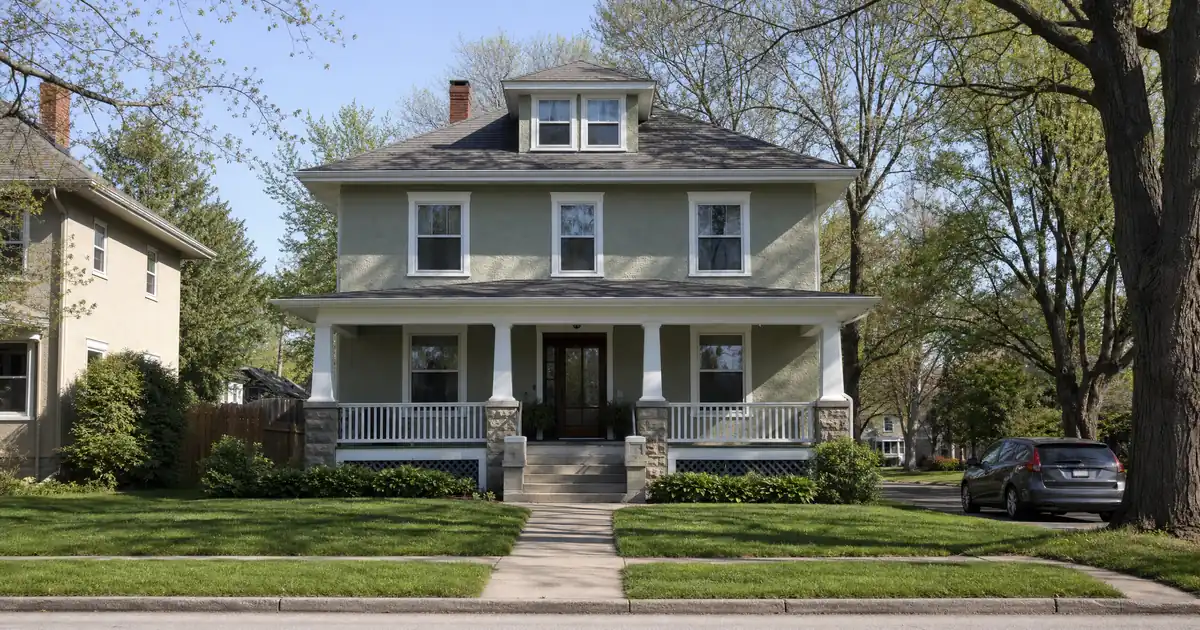
This article explains how local banks willing to refinance investment property compare to DSCR portfolio lending for rental property owners. The Quick Read: A “local bank willing to refinance an investment property” almost always means portfolio lending. That’s when a bank keeps your loan on its own books instead of selling it to a secondary-market buyer. This structure gives the bank real discretion on income documentation, property type, and entity vesting. But it also means the bank’s appetite is capped by its own balance sheet. That cap comes from federal commercial-real-estate concentration limits. Those limits can tighten with zero warning to you. DSCR refinancing solves a different problem entirely. It qualifies the property’s rental income against the payment. It uses standardized program parameters instead of one institution’s mood that quarter.
DSCR Calculator
Run the numbers in your market
Rate source: Freddie Mac 30-yr average via FRED® — Federal Reserve Bank of St. Louis · effective Jul 30, 2026
Prefilled with starting assumptions — enter your own rent or nightly figures, taxes, insurance, and HOA for a more accurate picture.
Program parameters update from Lendmire’s centralized guideline source. Taxes and insurance are editable estimates.
As of Jul 30, 2026 · General Freddie Mac market benchmark, not a Lendmire loan offer. Rent, nightly rate, occupancy, taxes, and insurance are editable estimates. Short-term rental figures are estimates only and vary significantly by season, property type, management approach, and local short-term-rental rules — confirm local regulations before relying on them. Qualifying income for short-term rentals varies by program — some use appraisal market rent, others use documented STR history or projections — and is confirmed in underwriting. Not a Loan Estimate, approval, or commitment to lend. Program availability and eligibility are subject to lender guidelines, credit approval, property review, and underwriting.
Here’s what matters most before you start calling banks:
- “Local bank” isn’t a loan product. It’s a lending model — portfolio lending. Its flexibility is bank-specific and time-specific, not a permanent trait.
- Portfolio underwriting frequently still runs on traditional personal-income documentation, even for a rental-property refinance. That can mean more paperwork, not less.
- Federal guidance on commercial real estate concentration — not your credit file — often decides whether a bank says yes this quarter.
- Seasoning rules, financed-property counts, and LLC vesting restrictions apply no matter how good your relationship with the loan officer is.
- DSCR refinancing qualifies primarily on the property’s rental income covering the payment, subject to lender guidelines. It’s a structurally different path than chasing bank appetite.
What “Local Bank” Actually Means — It’s Not a Program
There’s no federal charter for this. There’s no product name and no menu item called “local bank refinance.” What investors are describing is portfolio lending: a bank originates the loan and holds it on its own balance sheet, instead of selling it to a secondary-market investor. Because the loan never has to conform to a standardized rulebook, the bank underwrites to whatever its own board-approved credit policy allows.
That’s the whole source of the flexibility people associate with local banks. It’s also the whole limit on it.
“Local bank” has no fixed legal definition. Regulators size these institutions by total assets, and the thresholds don’t even agree with each other. The Federal Reserve Board and the Government Accountability Office use a threshold of under $10 billion, according to Wikipedia’s overview of community bank regulation.
And there are fewer of them every year. Mergers between unaffiliated banks were the main driver behind a drop in community banks. Their number fell from 6,802 institutions in 2012 to 4,750 by 2019, per the FDIC’s 2020 Community Banking Study. Fewer relationship-based lenders means fewer doors to knock on. That’s a structural headwind that has nothing to do with any individual investor’s credit or equity position.
How Portfolio Refinancing Actually Works
The mechanics run in a fairly consistent sequence. Each step is where a “willing” bank can quietly become unwilling.
Step one: the underwriting model itself. A portfolio loan follows the bank’s own internal credit policy, not a published investor rulebook. In practice, this usually means the bank looks at your global cash flow. That’s your personal income, your traditional personal-income documentation, your other real estate, and the subject property’s rent — all folded together. It’s not treated as the property’s own performance in isolation.
Step two: documentation. A rental-income refinance is built around lease agreements, a rent schedule, and an appraisal. Portfolio underwriting more often still wants traditional personal-income documentation, a personal financial statement, and a schedule of every other property you’ve financed. You get more relationship, but sometimes more paperwork too.
Step three: the appraisal. This part is actually consistent across lender types. For a single-unit rental, appraisers commonly use a comparable rent schedule. Two-to-four unit properties use a small residential income property report. Both forms document market rent. But as the appraisal-industry coverage on rent-schedule limitations makes plain, the appraiser isn’t required to assess income at all. That determination is the lender’s job, not the appraiser’s. This distinction matters whether you’re sitting across from a community banker or a DSCR underwriter.
Step four: balance-sheet exposure — the real decision-maker. The loan sits on the bank’s books. So its willingness is bounded by how much commercial real estate paper it can prudently hold. Regulators flag banks for heightened scrutiny once total commercial real estate lending crosses roughly 300% of total risk-based capital. They also flag banks once that portfolio has grown 50% or more over the trailing 36 months, according to the interagency guidance on commercial real estate concentrations jointly issued by federal banking regulators. Investment-property loans typically count inside that bucket. A bank that eagerly did your last refinance can tighten sharply the moment it nears these thresholds. And it won’t announce this to you or your broker.
Step five: whether consumer-protection rules even apply. DSCR loans and business-purpose bank loans are underwritten for non-owner-occupied investment properties. Because they’re business-purpose loans, they get reviewed differently than a standard owner-occupied mortgage. That classification question — occupation tie, income ratio, transaction size — applies the same way whether you’re sitting with a community banker or a non-QM lender.
Where Local-Bank Willingness Breaks Down
A few scenarios expose the gap between “flexible relationship banker” and “hard rule.” None of them bend for a good relationship.
Cash-out seasoning is a rule, not a favor. Investors who close on a property and try to cash-out refinance within a handful of months often assume a friendly local banker’s discretion can substitute for title seasoning. It can’t. Conventional-aligned standards commonly require several months of title ownership before cash-out proceeds are permitted. That clock doesn’t move because your loan officer likes you.
Financed-property counts cap relationship banking at scale. Some investors’ local banks route to conventional-style standards once their own portfolio capacity is full. For those investors, second-home and investment-property financing tops out around ten total financed properties for one borrower, per a breakdown of Fannie Mae’s multiple-financed-property guidelines. Past that point, “ask the local bank” stops being a workaround. A true portfolio product held entirely on the bank’s own books is the only path around that ceiling. And that portfolio capacity is finite, shaped by the same concentration limits described above.
LLC vesting is frequently the dealbreaker. Most conventional-aligned bank products want the property titled to an individual, not an entity. A local bank leaning on those standards often can’t accommodate an LLC-vested refinance without unwinding the entity first. Many investors won’t take that step, since it can erase the liability protection the LLC was formed to provide.
Short-term rentals sit in a gray zone. Rent-schedule appraisal forms are built to capture market rent for a real property. They explicitly exclude personal property and business income like short-term rental revenue from the value opinion, per the same appraisal-industry coverage cited above. That leaves the income treatment entirely up to the individual lender’s internal policy, whether it’s a bank or a DSCR shop.
Appetite can vanish for reasons that have nothing to do with your file. The concentration guidance keys off the bank’s aggregate portfolio. So your specific application can get declined or slow-walked simply because of what that bank has already booked this quarter. It has nothing to do with your credit, your equity, or your property.
The DSCR Alternative: A Different Set of Rules Entirely
DSCR refinancing sidesteps the local-bank appetite problem. It qualifies the deal on the property’s own numbers, run through standardized program parameters instead of one institution’s internal risk budget. Lendmire (NMLS# 2371349) arranges DSCR investor loans through a wholesale network of lenders, with DSCR programs available in 41 markets, including Washington, D.C.
Across that network, cash-out refinances typically top out around 75% loan-to-value. About six months of ownership seasoning is the common expectation. That’s a firmer, more predictable rule than waiting to find out where a given bank’s concentration limits sit. Purchase-money leverage on most files lands in the 75%-80% LTV range. Select high-leverage programs reach 85% for borrowers with roughly a 700-plus credit score, subject to lender guidelines.
Coverage is measured with the debt-service coverage ratio. That’s rent divided by the full monthly obligation, including principal, interest, taxes, insurance, and any HOA dues. On select programs, 1.00 is where qualification starts — a floor for those specific programs, never a universal standard. Clearing 1.00 means rent covers the payment on paper. It doesn’t mean the property is cash-flow positive once repairs, vacancy, management, and capital expenses come out of the picture. Stronger ratios open better leverage and pricing tiers.
Credit tiers run from a 620 floor in parts of the network up through the strongest leverage available around 700-plus. Most programs prefer somewhere around 660. Reserve requirements vary by lender, leverage, and loan size. They commonly run around six months of the full monthly obligation. Some conservative rate-term files under a certain balance waive this. Larger loans often step up toward nine months. Loan sizes on standard programs run up to roughly $3,000,000. The network generally holds to 30-year fixed structures above about $2,500,000. Extended 40-year terms and interest-only periods are available through select lenders for investors who want them.
None of this requires a personal-income conversation the way portfolio underwriting so often does. That’s the practical tradeoff: a DSCR refinance qualifies primarily on the property’s rental income covering the payment, subject to lender guidelines. Lendmire’s complete DSCR loans guide walks through the full mechanics in more depth.
A few honest limits deserve mention here too. Coverage below 1.00 is available through select lenders in the network. But it comes with adjusted leverage and terms. Never treat it as a like-for-like substitute for a strong ratio. And some property types simply don’t fit these programs at all. Manufactured homes (single- and double-wide), log homes, and barndominiums aren’t offered through the network’s DSCR programs. That’s true regardless of how strong the borrower’s file looks otherwise.
An investor working through this decision might have converted a primary residence into a rental. Now they want to refinance the resulting investment property. That path has its own occupancy and documentation wrinkles worth understanding before applying. Lendmire covers those in its piece on refinancing a primary residence into an investment property. Condo investors face a separate layer of project-approval questions. Those questions can complicate both bank portfolio loans and standardized programs alike, and Lendmire’s guide to refinancing a condo investment property addresses them. For investors specifically chasing leverage above the typical 75%-80% band, Lendmire’s breakdown of high-LTV investment property refinancing lays out where that ceiling can stretch and what it costs in other tradeoffs.
Files with heavy STR concentration follow a pattern worth knowing before you apply anywhere. DSCR files on short-term rentals often come in tight on long-term rent assumptions. But they clear comfortably once trailing twelve-month hosting income is factored in. The stronger files usually run both scenarios side by side rather than leaning on one number alone. That’s true whether the ultimate lender is a bank or a specialty non-QM shop.
Who Fits Local-Bank Portfolio Refinancing — and Who Doesn’t
| Factor | Local Bank Portfolio | DSCR / Non-QM | Conventional-Aligned Bank |
|---|---|---|---|
| Is reviewed on | Global cash flow, personal docs | Property rent vs. payment | Personal income + DTI |
| Property count limit | Bank’s own internal cap | No standardized cap | Roughly 10 financed properties |
| LLC/entity vesting | Case-by-case, often restricted | Program-dependent, often accepted | Typically individual only |
| Coverage measure | Bank policy, varies widely | DSCR ratio, 1.00 select-program floor | DTI-based |
| Capacity risk | Tied to bank’s CRE concentration | Standardized across network | Tied to agency guidelines |
The investor who fits local-bank portfolio refinancing best usually has one or two properties. They have strong personal income to document, and an existing deposit or lending relationship with that institution. Relationship banking is genuinely real. It can translate into flexibility on a first or second property that a rulebook lender won’t offer.
The investor who tends to hit a wall is scaling past a handful of properties. Or they’re holding title in an LLC for liability protection. Or they’re leaning entirely on the property’s own rent rather than personal income to qualify. That’s the profile DSCR programs were built around. It’s why an investor’s portfolio strategy — not their opinion of any one bank — usually decides which path fits.
For a broader look at how refinancing decisions play out across a multi-property investment strategy, Lendmire’s investment property refinance playbook covers the full decision tree beyond just the local-bank question.
Common Misconceptions Worth Correcting
“A local bank will always be more flexible than a standardized program.” Flexibility is bank-specific and time-specific. It’s tied to where that institution currently sits against its own concentration limits, not some inherent trait of being local. The same bank that said yes last year can tighten sharply this year with no change in your file at all.
“Portfolio loan” means “no rules.” It means the secondary-market investor’s rules don’t apply. The bank’s own board-approved credit policy still governs, shaped by the same federal safety-and-soundness framework every bank operates under.
Investors assume the appraisal form decides their qualifying income. It doesn’t. The rent schedule documents market rent. The lender — not the appraiser — makes the final call on how that income gets used in underwriting.
“Business purpose” gets treated as automatic. It isn’t a rubber stamp. It’s a genuine factual classification based on how the property relates to the borrower’s occupation, income, and the size of the transaction. It applies the same underlying logic whether the lender is a bank or a non-QM shop.
Tax treatment can depend on how refinance proceeds are used and how the property is held. Investors should keep clear records and speak with a qualified tax professional before relying on any deduction. This article is general information, not legal or tax advice. Consult a qualified attorney or CPA about your own situation before acting on any of it. Loan approval is never guaranteed, and nothing here is a commitment to lend. Every scenario described is subject to lender approval and borrower, property, and program guidelines.
Frequently Asked Questions
Can you refinance an investment property?
Yes — both portfolio-lending banks and DSCR lenders refinance non-owner-occupied rental properties, though they qualify the loan differently. A bank often wants traditional personal-income documentation. A DSCR refinance qualifies primarily on the property’s rental income covering the payment, subject to lender guidelines and property eligibility.
How soon can you refinance an investment property?
It depends on the loan type and the reason for refinancing. Cash-out refinances commonly require several months of title seasoning before the new loan can close. That clock generally applies whether the lender is a community bank following conventional-aligned standards or a DSCR program. Rate-and-term refinances sometimes move on a shorter timeline depending on the program and lender.
How to refinance investment property?
Start by deciding whether you’re qualifying on personal income (a portfolio bank route) or on the property’s own rent (a DSCR route). That choice determines the documentation you’ll gather. From there, expect an appraisal using a standardized rent-schedule form, a review of your entity structure if the property is LLC-held, and underwriting against either the bank’s internal policy or the DSCR program’s leverage and coverage guidelines.
Do local banks have different requirements than DSCR lenders for investment property refinancing?
Generally, yes. A portfolio bank frequently wants traditional personal-income documentation, a financial statement, and a schedule of your other financed properties, since it isn’t bound to a standardized income rule. A DSCR lender instead centers the file on the property’s lease or market-rent figure against the monthly obligation, with less emphasis on personal income documentation.
What happens if a local bank won’t refinance my rental property?
A decline from one bank often reflects that institution’s own commercial real estate concentration limits or internal policy at that moment. It doesn’t necessarily mean your file is weak. Investors in that position frequently move to a standardized DSCR program instead. There, qualification runs on the property’s rental income and program guidelines rather than one bank’s current balance-sheet appetite.
If you’re weighing a local-bank refinance against a DSCR alternative and want to see how the numbers actually work, Lendmire can help you compare options based on the property’s rental income, your credit profile, available leverage, and your broader investment goals. Reach the team at 828-256-2183 or request a quote.
About Lendmire
Lendmire is a non-QM mortgage brokerage (NMLS# 2371349) arranging DSCR investor loans in 41 markets, including Washington, D.C., through wholesale and investor-lending channels. DSCR loans are evaluated by the lender on rental income rather than personal income, subject to lender guidelines. That makes it a fit for LLC-owned portfolios, self-employed investors, and operators scaling beyond conventional loan caps. Lendmire has been recognized as a Scotsman Guide Top Mortgage Workplace in 2025 and 2026.
Get Started
Ready to find the right loan for you?
In about 30 seconds you can review financing options available for your investment property. No commitment required.
Informational only. Not a Loan Estimate, approval, or commitment to lend. Program availability and eligibility are subject to lender guidelines, credit approval, property review, and underwriting.
References
1. FDIC 2020 Community Banking Study Press Release
2. McKissock Learning — Form 1007 and Its Impact on Short-Term Rental Appraisals
3. Interagency Guidance on Concentrations in Commercial Real Estate Lending — Federal Reserve
4. Homebuyer.com — Fannie Mae Multiple Financed Properties Guidelines
This article is part of Lendmire’s DSCR loan program — full qualification details, guidelines, and scenarios live on the program page.
Related reading: Banks That Refinance Investment Properties · Best Refinance Banks For Investment Property · Best Refinance For Investment Property
Brandon Miller
Founder & CEO, Mortgage Loan Originator, Lendmire LLC
- Mortgage Loan Originator · NMLS# 1129696 · Verify on NMLS Consumer Access
- North Carolina Real Estate Broker · License# 343312 · Verify on NCREC
- North Carolina Insurance Producer · License# 19053198 · Property, Casualty, Life, Health · Verify on NAIC SBS
- Lendmire LLC · Firm NMLS# 2371349 · Verify firm licensure
Disclosure information. Lendmire is a state-licensed mortgage brokerage under NMLS# 2371349. Lendmire is not a depository institution, direct lender, or financial advisor — all loans referenced are placed through wholesale lender partners and are subject to each lender's underwriting standards. This article is provided for general informational purposes and is not a commitment to lend, nor does it constitute financial, legal, or tax advice. Loan programs, terms, rates, and qualification standards change without notice and depend on borrower profile, property type, and the state in which the subject property is located. Equal Housing Opportunity provider. NMLS Consumer Access: nmlsconsumeraccess.org.