
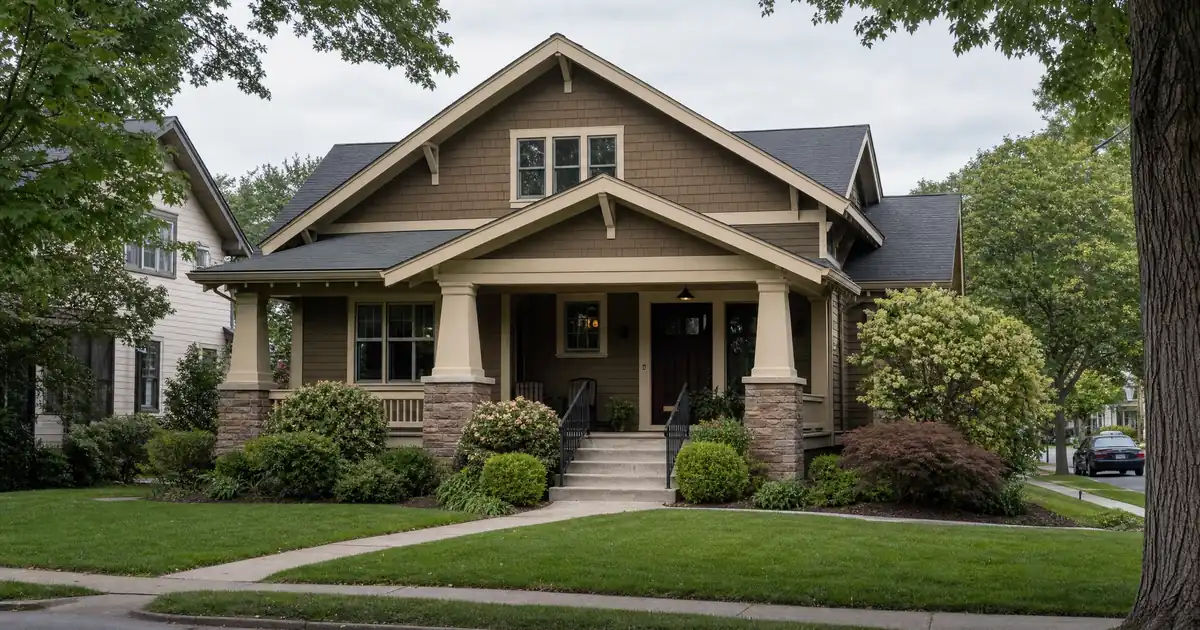
Understanding the cost to refinance an investment property mortgage helps landlords plan before they commit to a new loan. Refinancing a rental costs money. You’ll pay for an appraisal, title work, underwriting, and origination. Together these usually add up to a few points of the loan amount. There’s no fixed national fee schedule, though — not like the one for conventional owner-occupied loans. On a DSCR loan, the individual lender sets these costs. A regulator doesn’t set them. That’s because DSCR loans are business-purpose loans, and they get reviewed under different rules. So what actually drives your cost? Four things: whether you’re doing cash-out or rate-and-term, your credit tier, how much leverage you’re pulling, and whether the note carries a prepayment penalty.
DSCR Calculator
Run the numbers in your market
Rate source: Freddie Mac 30-yr average via FRED® — Federal Reserve Bank of St. Louis · effective Jul 30, 2026
Prefilled with starting assumptions — enter your own rent or nightly figures, taxes, insurance, and HOA for a more accurate picture.
Program parameters update from Lendmire’s centralized guideline source. Taxes and insurance are editable estimates.
As of Jul 30, 2026 · General Freddie Mac market benchmark, not a Lendmire loan offer. Rent, nightly rate, occupancy, taxes, and insurance are editable estimates. Short-term rental figures are estimates only and vary significantly by season, property type, management approach, and local short-term-rental rules — confirm local regulations before relying on them. Qualifying income for short-term rentals varies by program — some use appraisal market rent, others use documented STR history or projections — and is confirmed in underwriting. Not a Loan Estimate, approval, or commitment to lend. Program availability and eligibility are subject to lender guidelines, credit approval, property review, and underwriting.
Most investors expect one clean percentage. There isn’t one. Once you understand why, you can actually budget for the real number.
Key Terms Defined
DSCR (debt service coverage ratio) — Take the property’s monthly rent. Divide it by the monthly mortgage payment. That payment includes principal, interest, taxes, insurance, and any HOA dues — together called PITIA. A ratio of 1.00 means the rent exactly covers the payment.
Rate-and-term refinance — You replace your existing loan with a new one on different terms. No cash comes out.
Cash-out refinance — Your new loan is bigger than what you owe on the old one. You pocket the difference in cash.
Business-purpose loan — This is a loan for an investment or business activity, not personal use. DSCR loans fall into this bucket. That’s why lenders review them differently than a mortgage on your primary home.
Prepayment penalty — Pay off the loan early — through a sale or a refinance — inside a set window, and you owe a fee. Lenders often structure it as a step-down percentage that shrinks over the first several years.
Seasoning — This is the minimum time a lender wants you to own the property, or hold the current loan, before it will even consider a refinance. It matters most for cash-out timing.
Why There’s No Fixed Percentage for a DSCR Refinance
Ask about “typical refinance cost” for an investment property and you’ll get a vague answer. That’s not because lenders are dodging the question. It comes down to how the loan gets classified. DSCR loans are reviewed as non-owner-occupied, business-purpose loans. That means they sit outside the consumer-mortgage rulebook — the one that caps fees on an owner-occupied refinance. This is a real legal difference, not a marketing spin. It’s also why two DSCR lenders can quote very different closing-cost stacks for the exact same property.
Conventional owner-occupied refinances work under federal rules. Those rules cap total points and fees. They also restrict when a prepayment penalty can even exist. DSCR loans don’t work under that ceiling. That doesn’t mean they’re unregulated or risky. It means the lender’s own term sheet sets the ceiling — not a federal fee cap. Across select lenders in Lendmire’s wholesale network, you’ll see this play out as real differences in origination points, underwriting fees, and whether a prepayment penalty applies at all.
Here’s the practical takeaway: shopping a DSCR refinance means shopping the whole fee stack. Don’t just compare headline pricing. Two quotes can look similar on the surface and still carry very different total costs once you add up origination, underwriting, and any penalty payoff.
What Actually Makes Up the Cost
Appraisal. A DSCR refinance needs an appraisal that backs up two things: the property’s value and its market rent. Value alone isn’t enough. For a single-unit rental, that usually means a rent-comparable exhibit. Appraisers model it on the industry-standard Single-Family Comparable Rent Schedule (Fannie Mae Form 1007). That form pulls in three or more comparable rentals, adjusted for condition and location. For 2-4 unit properties, appraisers typically use the equivalent small-income-property format — similar to Fannie Mae Form 1025. DSCR programs don’t have to follow Fannie Mae’s guide. But most lenders in the network still want a rent exhibit that looks functionally the same before they’ll size the loan.
Title work. Refinancing means you need a fresh lender’s title policy. Why? The old lender’s policy ends the moment that loan gets paid off. According to title-cost data compiled by ValuePenguin, a new lender’s policy on a refinance runs closer to 0.5% of the loan balance. Compare that to a purchase, where the combined lender-and-owner policy costs 0.5%-1%. Here’s some good news for repeat refinancers: you don’t need to repurchase your existing owner’s policy. It stays valid as long as you own the property. Many title companies also offer a discounted “reissue rate” on the new lender’s policy if a recent owner’s policy already exists.
Origination and underwriting fees. This is where you’ll see the widest swings between lenders. Why? No federal points-and-fees cap applies to a business-purpose loan the way it does on a qualified mortgage. Some lenders in the network build these fees into a slightly higher rate. Others charge them upfront and price the rate more aggressively. Neither approach is wrong. But it means comparing two quotes on rate alone tells you almost nothing about total cost.
Recording fees and transfer taxes. The county or state where the property sits sets these fees. The loan program doesn’t change them. A DSCR refinance and a conventional refinance closing in the same county pay identical recording costs.
Prepayment penalty, if the note has one. Does your current loan carry a step-down penalty? If you’re still inside that window, refinancing means paying it off as part of the transaction. Think about why you have that penalty in the first place: accepting a longer penalty period is often what got you more favorable pricing on that loan. Refinance early, and you give up that trade.
Want the full walkthrough of how DSCR underwriting works end to end? Lendmire’s complete DSCR loans guide covers the mechanics in more depth.
Rate-and-Term vs. Cash-Out: Different Cost Pictures
Why are you refinancing? That question splits the cost conversation into two very different paths. A rate-and-term refinance — no cash out, just replacing the existing loan — is generally the cleaner, less costly move. The lender isn’t taking on extra exposure. A cash-out refinance is different. The new loan exceeds your current payoff, and you pocket the difference. Across the network, lenders treat this as materially higher risk. And that shows up in the numbers.
Cash-out refinances on investment property typically cap around 75% loan-to-value across most of the wholesale network. That’s a tighter ceiling than purchase leverage, which commonly runs 75%-80%. Select high-leverage programs even reach 85% for borrowers around a 700+ credit score. Why the gap? Pulling equity out increases the lender’s risk on day one. The leverage cap is the main tool for managing that risk.
Seasoning matters more on cash-out too. Most programs in the network want around six months of ownership before they’ll consider pulling equity out. Shorter hold periods generally don’t clear that bar. Weighing whether to pull cash now or wait? Read through Should I Refinance My Investment Property? for the decision framework behind this question.
How DSCR Changes the Qualification Math (Not Just the Cost)
DSCR loans qualify mainly on one thing: does the property’s rental income cover the payment, subject to lender guidelines? Your personal income documents and traditional employment history take a back seat. That’s the whole point of the structure. It’s also why the fee treatment above applies — a loan underwritten on property income, rather than your personal debt-to-income, falls into the business-purpose category.
Here’s where investors sometimes get confused. Clearing a 1.00 DSCR ratio means rent covers the mortgage payment. It does not mean the property makes you money every month. Repairs, vacancy, property management, utilities, and capital expenses all sit outside that ratio. A property clearing 1.05 on paper can still run negative some months once real operating costs hit the ledger. Plan around that distinction — not around the ratio alone.
A 1.00 ratio acts as a floor on select programs in the network. It’s never a universal standard. Plenty of files clear well above it, and stronger coverage generally opens the door to better pricing and more leverage. Credit matters here too. Some parts of the network go as low as a 620 floor, but most programs prefer something closer to 660. A 700+ score typically unlocks the highest-leverage tiers. Then there are reserves — the liquid funds you have left over after closing. These commonly run around six months of PITIA, stepping up toward nine months on loans above roughly $1.5 million. Some conservative rate-and-term deals at modest leverage under $1.5 million skip the reserve requirement entirely. None of these numbers are guarantees. They’re typical ranges, and every file gets underwritten on its own.
One more structural point worth flagging: DSCR loans are business-purpose transactions. That means they’re exempt from the TRID disclosure framework that governs consumer mortgages. No three-business-day Loan Estimate timeline applies the way it would on an owner-occupied refinance. This isn’t a gap in your protections — it’s just a different regulatory lane, built into the classification.
Short-Term Rentals: A Different Appraisal, A Different Cost Path
Does the property you’re refinancing operate as a short-term rental? Then the appraisal gets more involved. That shows up in both cost and the timeline of underwriting — not just the leverage cap. Standard rent-schedule appraisals assume monthly leases. You can’t just take nightly income, multiply by 30, and call it a defensible monthly figure. Non-QM lenders financing STRs typically lean on third-party booking-platform data instead. That’s a different, often more involved appraisal scope than a standard long-term rental refinance.
On the program side, STR refinances in the network generally cap around 70% LTV. Cash-out also caps around 70%. Add a 640+ credit expectation, roughly twelve months of hosting history, and a 1.00 coverage floor. One more thing: short-term rental rules vary by city, county, HOA, and property type. Confirm local rules before relying on projected rental income in any refinance scenario.
Where the General Rule Breaks: Named Edge Cases
State doesn’t change leverage. Own a rental in Connecticut, Florida, Illinois, New Jersey, or New York? Purchase transactions there follow the same 80% LTV ceiling common elsewhere (85% by exception). Deals in those states also follow the standard $3 million loan-size maximum. Plan your refinance math around the program’s standard caps, which apply in every state.
Larger down payment doesn’t override everything. Put more equity into the deal, and you’ll lower the payment. That can lift your DSCR ratio too. But it doesn’t erase a leverage cap, a credit floor, a reserve requirement, or a property-eligibility restriction. The strongest files clear two separate tests: enough equity relative to value, and enough rental income relative to payment. One doesn’t substitute for the other. Final terms depend on lender guidelines, property type, leverage, and your complete credit picture.
Loan size shifts the term structure. Standard DSCR loans in the network typically run from the low six figures up to $3 million. Above roughly $2.5 million, the network generally holds to 30-year fixed structures. Extended-term or interest-only options, available on smaller balances, drop off the table. Know this before you assume every structure is available at every loan size.
Some property types aren’t offered at all. Manufactured homes — single- or double-wide — log homes, and barndominiums fall outside these DSCR programs entirely. That’s not “harder to finance.” It’s not offered, period. If your refinance target is one of these property types, a DSCR path isn’t the route.
Reissue title discounts aren’t automatic. Whether you qualify for a reduced title premium on refinance depends on the title company and how recently the owner’s policy was issued. Ask the closing agent directly. Don’t assume a standard discount applies everywhere.
Did your rental start out as your primary residence before you moved out? Then the refinance conversation looks a little different on the qualification side. Read through Refinance Primary Residence to Investment Property before you assume the numbers translate directly.
Lendmire (NMLS# 2371349) arranges DSCR refinances for investors through select lenders across a 41-market wholesale footprint spanning 40 states and Washington, D.C. Lendmire can walk you through where a specific property lands on leverage, coverage, and reserves. Investors can also review Investment Property Refinance: The Complete Investor’s Playbook for a fuller walkthrough of the process.
Tax treatment of refinance costs can depend on how you use the funds and how you hold the property. Keep clear records, and speak with a qualified tax professional before relying on any deduction.
Loan approval is never guaranteed, and nothing here is a commitment to lend. Every scenario is subject to lender approval and to borrower, property, and program guidelines, which can change. This article is general information, not financial, legal, or tax advice.
Frequently Asked Questions
Can you refinance an investment property loan?
Yes — both rate-and-term and cash-out refinances are common on rental property, whether the current loan is conventional or DSCR. The lender reviews the new loan against current leverage caps, your credit profile, and — on a DSCR loan — the property’s rental income relative to the payment, subject to lender guidelines.
Can you refinance an investment property?
Yes, as long as the file clears the leverage, credit, and coverage guidelines for the program you’re using. Cash-out transactions generally face a tighter LTV ceiling — around 75% across most of the network — than a straight rate-and-term refinance. There’s also a seasoning expectation before the equity becomes available.
How to refinance investment property?
The process starts with an appraisal that backs up both value and market rent. Next, underwriting reviews the property’s rental income against the proposed payment (for a DSCR loan) or your personal financials (for a conventional loan). From there it moves through title work and closing, much like any mortgage refinance. Lenders assemble fees for appraisal, title, and origination loan by loan.
How soon can you refinance an investment property?
For a cash-out refinance, most programs in the network expect around six months of ownership before considering the transaction. Shorter hold periods typically don’t clear that seasoning bar. A rate-and-term refinance doesn’t pull equity out, so it generally faces less seasoning pressure — though it still depends on the specific lender and loan history.
Does a bigger down payment strengthen my refinance file?
It can improve your DSCR ratio and reduce your monthly payment, which may support a stronger file. But it doesn’t override a leverage cap, credit floor, or reserve requirement on its own. Lenders still check two separate things: enough equity in the deal, and enough rental income covering the payment. These specifics are subject to lender guidelines and a full review of property, leverage, and credit.
About Lendmire
Lendmire (NMLS# 2371349) is a mortgage brokerage built around DSCR investor lending, with programs available in 41 markets, including Washington, D.C. DSCR lenders commonly look at rental-income coverage instead of personal income paperwork. That makes this a practical fit for LLC-owned and multi-property investors. Terms vary by lender, property, leverage, and program. Scotsman Guide named Lendmire a Top Mortgage Workplace in both 2025 and 2026.
Get Started
Ready to find the right loan for you?
In about 30 seconds you can review financing options available for your investment property. No commitment required.
Informational only. Not a Loan Estimate, approval, or commitment to lend. Program availability and eligibility are subject to lender guidelines, credit approval, property review, and underwriting.
References
1. Fannie Mae — Single-Family Comparable Rent Schedule, Form 1007
2. Fannie Mae — Small Residential Income Property Appraisal Report, Form 1025
3. ValuePenguin — Cost of Title Insurance
This article is part of Lendmire’s DSCR loan program — full qualification details, guidelines, and scenarios live on the program page.
Related reading: I Need to Refinance My Investment Property · Rate-and-term Investment Refinance Complete Guide · DSCR Loans Under 75K Explained
Brandon Miller
Founder & CEO, Mortgage Loan Originator, Lendmire LLC
- Mortgage Loan Originator · NMLS# 1129696 · Verify on NMLS Consumer Access
- North Carolina Real Estate Broker · License# 343312 · Verify on NCREC
- North Carolina Insurance Producer · License# 19053198 · Property, Casualty, Life, Health · Verify on NAIC SBS
- Lendmire LLC · Firm NMLS# 2371349 · Verify firm licensure
Disclosures. The information presented in this article is general market commentary, not financial, legal, or tax advice. Lendmire is a mortgage brokerage (NMLS# 2371349) — not a direct lender or depository institution — and loan placement is subject to lender underwriting. Nothing in this content represents a commitment to lend. Loan terms, pricing, and program availability vary based on borrower qualifications, property characteristics, and state of subject property, and are subject to change at any time. Lendmire complies with Equal Housing Opportunity requirements. Consumer access: nmlsconsumeraccess.org.