
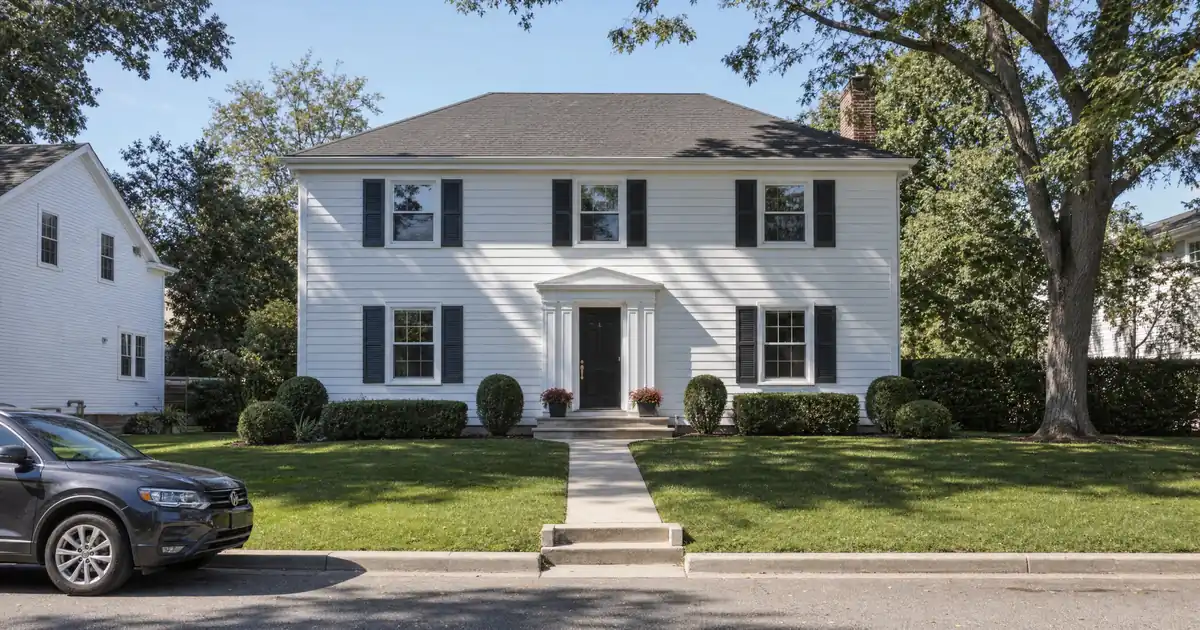
Single Family Home As A First Rental Property — The Quick Read: A single-family home is usually the simplest first rental for a new investor. You get one tenant and one lease. Financing runs on the property’s own rental income, not your paycheck. DSCR loans compare that rental income to the monthly housing payment. A coverage ratio at or above roughly 1.00 is where many programs start looking at a file. But there’s a tradeoff: concentration. One vacant unit means the rental income stops completely until you re-lease it. A duplex or fourplex spreads that risk across multiple doors instead. Whether this tradeoff makes sense depends on your capital, your risk tolerance, and how hands-on you want to be.
Key Takeaways
- Single-family rentals put one tenant under one lease. This makes management simpler, but it puts all the rental income at risk during any vacancy.
- DSCR loans qualify the deal on the property’s rent-to-payment ratio. They don’t rely on the borrower’s traditional personal-income documentation or pay stubs.
- Purchase leverage on most files runs 75%-80% loan-to-value (LTV). Select high-leverage programs reach 85% for stronger credit profiles.
- Small, individual owners — not institutions — hold the overwhelming majority of single-family rental housing nationally.
- Short-term rental plans, manufactured homes, log homes, and barndominiums fall outside the standard single-family DSCR model.
What Counts as a Single-Family Rental?
A single-family rental is a standalone home leased to one tenant or household. That’s different from a duplex, triplex, or small multifamily building, which houses several separate rental units on one lot. It’s also different from a condo, which adds HOA rules and a shared building on top of the loan.
DSCR Calculator
Run the numbers in your market
Rate source: Freddie Mac 30-yr average via FRED® — Federal Reserve Bank of St. Louis · effective Aug 13, 2026
Prefilled with local estimates — enter your own rent or nightly figures, taxes, insurance, and HOA for a more accurate picture.
Program parameters update from Lendmire’s centralized guideline source. Taxes and insurance are editable estimates.
As of Aug 13, 2026 · General Freddie Mac market benchmark, not a Lendmire loan offer. Rent, nightly rate, occupancy, taxes, and insurance are editable estimates. Short-term rental figures are estimates only and vary significantly by season, property type, management approach, and local short-term-rental rules — confirm local regulations before relying on them. Qualifying income for short-term rentals varies by program — some use appraisal market rent, others use documented STR history or projections — and is confirmed in underwriting. Not a Loan Estimate, approval, or commitment to lend. Program availability and eligibility are subject to lender guidelines, credit approval, property review, and underwriting.
The appraisal itself reflects that difference. For a single-family investment property, the appraiser typically completes a standard 1004 appraisal alongside Fannie Mae’s Form 1007, the Single-Family Comparable Rent Schedule. The industry uses this form to set market rent, even when the property sits vacant at closing. That form doesn’t apply to duplexes or four-unit buildings. Those use a different rent-and-income schedule entirely. It’s a small mechanical detail, but it explains why single-family purchases move through underwriting differently than small multifamily deals.
Why First-Timers Gravitate to Single-Family Homes
One lease, one tenant, one property to walk through before closing. That’s the whole appeal. A single-family rental doesn’t ask a first-time landlord to learn shared-wall maintenance, common-area insurance splits, or multi-unit lease staggering on day one.
There’s also a resale argument that matters more than most new investors expect. A single-family home draws both owner-occupant buyers and investors when it eventually sells. A small multifamily property mostly draws investors only. That broader buyer pool tends to support easier eventual refinance appraisals and a cleaner exit down the road.
The data backs up that this isn’t a fringe strategy. Individual, small-scale owners — not institutional buyers — dominate this asset class by a wide margin. Single-property landlords alone control roughly 69.5% of all investor-owned single-family rentals nationally, according to BatchData’s Q4 2025 InvestorPulse report. A separate fact-check found large institutional investors own only about 2% of the national single-family rental stock, per Government Accountability Office figures cited in PolitiFact’s analysis. A first-time buyer financing one single-family rental isn’t an outlier chasing scraps behind Wall Street. That buyer is the statistically typical investor in this market.
Single-Family vs. Duplex vs. Small Multifamily
| Factor | Single-Family | Duplex/Triplex | Small Multifamily (4-9 units) |
|---|---|---|---|
| Tenants per property | One | Two to three | Four or more |
| Vacancy impact | Full income stop | Partial cushion | Spread across units |
| Typical resale buyer pool | Owner-occupants + investors | Mostly investors | Investors only |
| Day-to-day management | Lowest complexity | Moderate | Highest |
| Purchase leverage (DSCR) | Typically 75%-80% LTV | Program-dependent, similar range | Program-dependent, similar range |
Multifamily properties often produce more total rent per dollar invested. But they also demand more hands-on oversight and, on most files, larger reserve requirements. A single-family home trades some of that efficiency for simplicity. That’s a fair trade for a first deal, but not necessarily the right one for every investor’s goals.
The Real Risk: One Tenant, One Point of Failure
Here’s the tradeoff nobody skips past on a single-family file: vacancy hits harder. A three-month vacancy in a 10-unit building works out to roughly a 2.5% annual vacancy rate. The same three months on a single-family rental is closer to a 25% annual vacancy rate, according to a comparison from Baselane. There’s no partial cushion. The whole property is either producing rent or it isn’t.
That’s exactly why reserve requirements and DSCR cushion above 1.00 matter more, proportionally, on a single-tenant property than on a multi-unit asset. Nationally, rental vacancy sat at 7.3% in the second quarter. That’s not statistically different from the prior year’s 7.0%, per the Census Bureau’s Housing Vacancy Survey. This is useful backdrop, though local vacancy on any one property is what actually drives the file. These specifics are subject to lender guidelines and a full review of property, leverage, and credit.
How the Loan Actually Gets Underwritten
DSCR stands for debt-service coverage ratio. It measures the property’s monthly rent against its full monthly housing payment, expressed as a single number. Clearing 1.00 means the rent covers the payment. Anything below that means the rent falls short on paper. Across the wholesale network Lendmire works with, 1.00 is where a number of programs start looking seriously at a file. That’s a floor for specific programs, not a universal standard, and stronger ratios generally open better pricing and leverage.
On a purchase, that rent figure usually comes from the appraiser’s Form 1007 opinion rather than an existing lease, since the home is frequently vacant or owner-occupied at the time of sale. What’s missing compared to a conventional owner-occupant mortgage is personal income documentation. That means qualification runs on the property’s income instead of the borrower’s traditional personal-income documentation, subject to lender guidelines.
DSCR loans are designed for non-owner-occupied investment properties. Because they’re business-purpose investor loans, they’re reviewed differently from a standard owner-occupied mortgage. Anyone wanting the full mechanics of how this qualification model works can walk through Lendmire’s complete DSCR loans guide.
One clarification worth making plainly: clearing 1.00 is not the same thing as positive cash flow. The ratio only measures rent against the housing payment. It doesn’t account for repairs, vacancy reserves, property management fees, utilities, or capital expenditures. A file that clears 1.00x on paper can still run tight in practice once those costs land.
Two Paths to Your First Rental
Most first-time landlords land on one of two routes: buying a new single-family home specifically as a rental, or converting a home they already own. Both routes end up in the same DSCR underwriting model once the property is non-owner-occupied. The starting logistics differ, though.
Buying new means shopping the property as an investment from day one. You look at comparable rents, appraisal-based income, and financing built around the deal from the start. Converting an existing home usually means you already know the neighborhood and the property’s condition. But you’ll need to work through occupancy timing, insurance changes, and whether the current loan needs to be refinanced into an investment-property structure. Anyone weighing that decision might find it useful to look at how buying a rental property before a first home compares, or whether a first home can double as a rental down the line.
For a buyer who hasn’t purchased a primary residence yet and wants to start with an investment property instead, the question of buying a rental property as a first-time buyer comes up constantly. The short answer: a DSCR loan doesn’t require prior homeownership at all, since it’s reviewed on the property, not the buyer’s housing history.
What Lenders Look For on a Single-Family DSCR File
Credit, leverage, and reserves move together on these files. None of them override the others. A 620 credit floor exists in parts of the wholesale network, but most programs want somewhere around 660. Crossing 700 tends to unlock the strongest leverage tiers, commonly the difference between 80% and 85% purchase LTV.
Cash-out refinances on a single-family rental generally cap around 75% LTV across the network. Roughly six months of ownership seasoning is expected before that refinance can happen. Reserve requirements vary by lender, leverage, and loan size. Six months of PITIA (principal, interest, taxes, insurance, and any association dues) is a common benchmark on conservative files, stepping up toward nine months on loans above $1,500,000. Loan sizes on standard single-family DSCR programs generally run up to $3,000,000, with smaller balances routed through select lenders in the network.
A larger down payment lowers the monthly obligation and can lift the coverage ratio. But it never overrides a credit floor, a reserve requirement, or a property-eligibility rule. The strongest files clear both the equity test and the rental-coverage test at once. On the lower-coverage end, sub-1.00 structures do exist through select lenders in the network, though leverage and terms adjust accordingly. Qualification stays subject to lender guidelines and current program terms. Lendmire (NMLS# 2371349) arranges these DSCR investor loans across 40 states plus Washington, D.C. — through its wholesale lending relationships, and can walk a first-time buyer through where a specific file lands. Investors can call 828-256-2183 or request a quote to compare structures. A closer look at what documentation these files actually require is in Lendmire’s guide on DSCR loans for first-time rental property buyers.
Property Strategies That Don’t Fit This Model
Short-term rentals are underwritten at a lower leverage ceiling than standard rentals on the same program, with each ratio running a tier below its conventional counterpart, and both purchases and refinances use a 1.00 coverage floor, though select lenders will go below that threshold at reduced leverage. It wasn’t built to translate nightly Airbnb income into a monthly figure, and appraisers can’t simply multiply a nightly rate by 30 to get there, per McKissock Learning’s appraisal guidance. Short-term rentals qualify at a 1.00 coverage threshold on purchase and refinance at reduced maximum leverage, and require a 12-month income history or market data report at most lenders.
A few property types are also flatly outside the standard model, no matter how strong the rental numbers look. Manufactured homes (single- and double-wide), log homes, and barndominiums are not offered through this network’s DSCR programs. That’s not a “harder to finance” situation. It’s a not-offered situation, and it’s worth knowing before you fall in love with a listing.
Key Terms Defined
DSCR (debt-service coverage ratio) — the property’s monthly rent divided by its full monthly housing payment; a ratio above 1.00 means rent covers the payment.
LTV (loan-to-value) — the percentage of the purchase price financed by the loan; the rest comes from the down payment.
PITIA — principal, interest, taxes, insurance, and association dues where applicable; together they make up the full monthly housing obligation used in the DSCR calculation.
Seasoning — the waiting period a lender wants between buying a property and refinancing it, commonly around six months on cash-out files.
Business-purpose loan — financing for a non-owner-occupied investment property, reviewed under different rules than a loan for a primary residence.
Form 1007 — the appraisal form used to estimate a single-family property’s market rent, typically completed alongside the standard property appraisal.
Who This Strategy Fits — and Who It Doesn’t
A single-family rental tends to suit an investor who wants a manageable learning curve, values a broad resale buyer pool, or already owns a home that could convert into the first rental. It also suits someone who prioritizes simplicity over squeezing maximum yield out of every dollar of capital.
It fits less well for an investor chasing the highest possible cash-on-cash return per dollar deployed. It also fits less well for someone comfortable trading more management complexity for the vacancy cushion a multi-unit property provides. An investor whose available inventory is mostly condos with heavy HOA restrictions may also find a duplex or small multifamily property a cleaner underwriting path than fighting condo approval requirements on a single-family DSCR file. None of this is a verdict. It’s a framework for weighing capital, risk tolerance, and how much day-to-day management appeals to a first-time landlord.
Tax treatment can depend on how the funds are used and how the property is held. Investors should keep clear records and speak with a qualified tax professional before relying on any deduction.
This article is general information, not legal or tax advice. Investors should consult a qualified attorney or CPA about their own situation before making a financing or ownership decision.
Loan approval is never guaranteed, and nothing here is a commitment to lend. Every scenario described here is subject to lender approval and to borrower, property, and program guidelines that can change.
Frequently Asked Questions
Does a single-family rental need an existing lease to qualify for a DSCR loan?
No. Most purchase files use the appraiser’s Form 1007 opinion of market rent rather than a signed lease, since the home is often vacant or owner-occupied at closing. Once the property has a tenant in place, that lease can factor into the file as well, subject to lender review.
Does clearing a 1.00 coverage ratio mean the property has positive cash flow?
Not necessarily. The DSCR ratio only compares rent to the housing payment. It doesn’t subtract repairs, vacancy, property management, utilities, or capital expenses. So a file that clears 1.00x on paper can still run tight once those real-world costs hit.
Can I convert my current home into my first rental property?
Yes. That’s one of two common paths first-time landlords take, alongside buying a new investment property outright. The financing usually shifts to an investment-property structure once the home is no longer owner-occupied. Insurance and occupancy timing need attention along the way.
What happens if my single-family rental can’t clear a 1.00 coverage ratio?
Sub-1.00 structures are available through select lenders in the network, though leverage and terms adjust to reflect the lower coverage. Qualification in that scenario stays subject to lender guidelines, credit profile, and property review. It isn’t a guaranteed path, but it’s not automatically off the table either.
Is a duplex a better first rental than a single-family home?
It depends on what you’re optimizing for. A duplex can offer more rent per dollar invested and some vacancy cushion since it has more than one unit. A single-family home offers a simpler lease structure and a broader resale buyer pool. Neither is universally “better” — they solve different problems.
About Lendmire
Lendmire, NMLS# 2371349, is a mortgage brokerage focused on investor financing. It arranges DSCR loans in 40 states plus Washington, D.C. — 41 markets total. Qualification is based on the property’s income rather than personal income documentation, subject to lender guidelines. That makes it a fit for LLC-held rentals and scaling portfolios. Scotsman Guide named Lendmire a Top Mortgage Workplace in both 2025 and 2026.
Get Started
Ready to find the right loan for you?
In about 30 seconds you can review financing options available for your home or investment property. No commitment required.
Informational only. Not a Loan Estimate, approval, or commitment to lend. Program availability and eligibility are subject to lender guidelines, credit approval, property review, and underwriting.
References
1. Fannie Mae — Form 1007, Single-Family Comparable Rent Schedule
2. BatchData — Q4 2025 InvestorPulse Report
3. PolitiFact — Fact-check on institutional ownership of single-family rentals
4. Baselane — Multifamily vs. Single-Family Investing
5. U.S. Census Bureau — Housing Vacancy Survey
6. McKissock Learning — Form 1007’s Impact on Short-Term Rental Appraisals
This article is part of Lendmire’s DSCR loan program — full qualification details, guidelines, and scenarios live on the program page.
Related reading: Complete Guide For A DSCR Loan On 2-4 Unit Properties · Buying A Duplex Or Triplex As A First Investment · DSCR Loan Complete Guide
Brandon Miller
Founder & CEO, Mortgage Loan Originator, Lendmire LLC
- Mortgage Loan Originator · NMLS# 1129696 · Verify on NMLS Consumer Access
- North Carolina Real Estate Broker · License# 343312 · Verify on NCREC
- North Carolina Insurance Producer · License# 19053198 · Property, Casualty, Life, Health · Verify on NAIC SBS
- Lendmire LLC · Firm NMLS# 2371349 · Verify firm licensure
Required disclosures. Lendmire (NMLS# 2371349) operates as a licensed mortgage broker, not a direct lender or depository. The discussion in this article is general in nature and should not be relied upon as financial, legal, or tax advice — every investment scenario is unique and should be reviewed by a qualified professional. Any loan inquiry is subject to lender underwriting, and this article is not a commitment to lend or a guarantee of approval. Mortgage rates, loan terms, and program guidelines vary by borrower, property, and state, and may change without notice. Equal Housing Opportunity. Verify licensure at NMLS Consumer Access.