
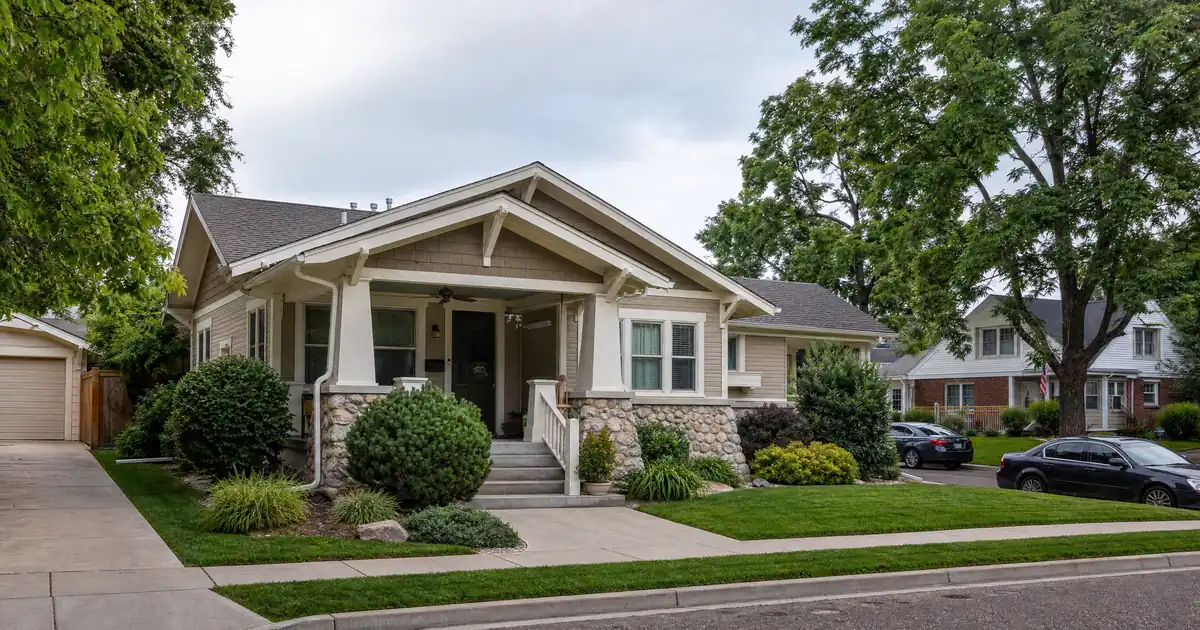
Is Buying A Rental Before Your First Home A Good Idea — The Quick Read: Yes, for many buyers. No law or lending rule says you must buy a primary residence first. Buying a rental before your first home does not erase your first-time-homebuyer status under HUD’s rules, either. Here’s the catch: investment-property financing needs a bigger down payment than an owner-occupied loan. And that rental will show up in your debt-to-income math when you apply for a home later. Whether this is a good idea depends on what you want more — cash flow now, or a paid-down primary residence later.
There’s no universal right answer here. This is a capital-allocation decision wearing a lifestyle question’s clothes. The honest framing — echoed in practitioner discussion on outlets like BiggerPockets — comes down to what you’re optimizing for: net worth growth or cash flow. Below is the mechanical reality of how financing and qualification actually treat this sequencing. Not the theoretical version.
Key Terms Defined
Principal residence (owner-occupied property): the home a borrower actually lives in as their main address. This is what triggers owner-occupant loan programs and low down payment options.
Business-purpose loan: a mortgage made for investment or income-producing use, not personal living. This is the category DSCR loans fall into. It’s why they’re underwritten differently than a home loan.
DSCR (debt service coverage ratio): the ratio of a property’s rental income to its full monthly debt obligation (principal, interest, taxes, insurance, and any HOA dues). A ratio above 1.00 means the rent covers that obligation on paper.
Debt-to-income ratio (DTI): the underwriting math a lender runs on an owner-occupant mortgage application. It compares a borrower’s monthly debts — including any existing rental mortgage — against gross income.
First-time homebuyer status: a definition set by HUD. It’s generally tied to not having owned a principal residence in the prior three years. An investment property does not, by itself, disturb this test.
Does Buying a Rental First Actually Cost You First-Time-Buyer Status?
No. The federal test behind first-time-homebuyer programs is anchored to principal-residence ownership, not investment-property ownership. A straight rental purchase doesn’t start or reset that clock.
Under 24 CFR 93.2, HUD defines a first-time homebuyer as someone who hasn’t owned a home during the three years before purchasing a home with program assistance. The key phrase is “owned a home” in the principal-residence sense. A legal explainer of the parallel rule at 24 CFR 92.2 confirms this: the test asks whether the borrower or spouse “owned a principal residence during the three-year period” (LegalClarity). That same source notes automatic carve-outs for displaced homemakers and single parents, no matter their ownership history.
That’s the piece most first-time buyers get wrong. They assume any prior ownership disqualifies them from down-payment-assistance programs, FHA’s owner-occupant terms, or other first-time-buyer perks. It doesn’t — as long as the property they owned wasn’t the home they lived in. A rental held elsewhere doesn’t touch that status.
The Real Cost: Down Payment, Not Disqualification
The real friction here isn’t eligibility. It’s capital. Investment-property financing simply needs more money down than owner-occupied financing. That gap is the single biggest reason buyers hesitate to flip the traditional order.
A major bank spells this out in its own consumer guidance: the minimum down payment on a conventional second-home loan usually runs around 10%. An investment property typically needs around 25% (Chase). Trade press citing risk-management commentary widens that gap even further, placing investment-property down payments at 15-25%, against 3-15% for primary or second homes. Buying the rental first means fronting that larger down payment before you ever touch the low-down-payment programs built for owner-occupants.
Across the wholesale network Lendmire works with, that same pattern shows up on DSCR investor loans specifically. Most files land at 75%-80% loan-to-value, meaning 20%-25% down. That standard envelope applies to borrowers who already own a primary residence. For a borrower who doesn’t yet own one, select lenders in the network offer a dedicated renter-to-investor path instead — generally 700+ credit, a 70% CLTV ceiling, a 1.15 coverage floor, and loan amounts to $1,000,000, subject to lender guidelines. Select high-leverage programs reach 85% LTV for borrowers with roughly a 700+ credit score. No version of investment financing mirrors a 3% or 5% owner-occupant down payment. That’s the honest trade-off — and it’s the one competitor content tends to gloss over.
How Rental Financing Actually Gets Qualified
This is where the mechanics genuinely split from a home loan. It’s worth understanding before you assume the rental purchase works the same way.
DSCR loans are built for non-owner-occupied investment properties. Because they are business-purpose investor loans, lenders review them differently than a standard owner-occupied mortgage. Instead of pulling W-2s, personal-income paperwork, and personal debt-to-income ratios, a DSCR file qualifies mainly on whether property-level rental income covers the payment, subject to lender guidelines. The property’s own cash flow does the talking.
Across the network, 1.00 coverage is where select programs start — a floor for specific programs, never a universal standard. Stronger ratios open better pricing tiers and higher leverage. Coverage below 1.00 is available through select lenders in the network, but leverage and terms adjust accordingly. It’s not the same product on the same terms.A no-ratio structure, where the coverage calculation is skipped entirely, is offered through select lenders in the network — it generally requires the borrower to already own a primary residence, and leverage and terms adjust accordingly, subject to lender guidelines.
Here’s one thing worth being precise about: clearing 1.00 on a DSCR file is not the same as positive cash flow. The ratio just compares rent to the full monthly obligation — principal, interest, taxes, insurance, and HOA if it applies. Repairs, vacancy stretches, property management fees, utilities, and capital expenditures all sit outside that calculation. A property that clears 1.10 on paper can still run a thin month if the water heater fails. Investors weighing “rental first” should budget for that gap separately. Don’t assume the coverage ratio tells the whole cash-flow story.
For anyone underwriting rental income on a 1-4 unit property — no matter the loan type — the standard documentation runs through the Single-Family Comparable Rent Schedule (Form 1007) for one-unit properties, or the Small Residential Income Property Appraisal Report (Form 1025) for two-to-four-unit properties, per Fannie Mae’s Selling Guide. These forms exist so any lender — agency or non-agency — gets a comparable-based opinion of market rent, rather than just relying on a lease.
Does the Rental Hurt You When You Go to Buy Your Primary Home Later?
It can go either way. Documentation is what decides it. Once an investor already owns a rental and later applies for an owner-occupied mortgage, underwriters fold that rental’s mortgage payment into the debt-to-income calculation. But rental income can offset it, as long as it’s properly documented.
As one investment-focused blog puts it, both a primary residence and any investment properties owned get included in DTI. Rental income can contribute to the income side of that ratio (New Western) — typically only with a lease and rental history on file, and often at a discounted percentage of gross rent rather than dollar-for-dollar. In plain terms: a rental bought first and managed cleanly, with leases and filed rental history in place, becomes an asset on the later application. A rental with spotty documentation becomes a liability that eats into your qualifying power for the home you actually want to live in.
This is also where the strongest files separate from the marginal ones. A rental that clears its coverage ratio comfortably, and carries a documented lease history, helps the borrower on both ends. It services itself, and it doesn’t drag down the DTI math on the next application. A rental that barely clears 1.00 and has thin rental documentation can create friction on the very next loan. Both equity and coverage matter here. A bigger down payment lowers the payment and can lift the DSCR — but it never substitutes for a documented lease or clean rental history when the next lender runs the numbers.
House Hacking: The Third Path Nobody Explains Well
Buying a 2-4 unit property, living in one unit, and renting the others out is a genuinely different transaction than a straight rental-first purchase. The two aren’t interchangeable.
A DSCR loan, by design, requires the borrower to certify the property is non-owner-occupied and business-purpose. If the actual plan is to occupy one unit, that’s an owner-occupied loan category — FHA, VA, or conventional financing — not a DSCR file. It’s a legitimate middle path between “rental first” and “primary home first.” But it runs through a completely different qualification track: occupancy rules, owner-occupant down payment minimums, and personal-income underwriting instead of property-cash-flow underwriting. Investors considering it should treat it as its own decision, not a DSCR variant.
Buying Rental First vs. Buying Primary Home First
| Factor | Rental Property First | Primary Home First |
|---|---|---|
| Typical down payment | 20%-25% (DSCR); up to 85% LTV on select high-leverage programs | Often 3%-15% on owner-occupant programs |
| Review basis | Property rental income (DSCR), subject to lender guidelines | Personal income, credit, and DTI |
| First-time-buyer status | Preserved — HUD’s test is principal-residence based | Used at time of purchase |
| Effect on future loan | Rental payment counts in future DTI; rental income can offset it if documented | N/A — this is the “future loan” |
| Flexibility | Location decisions stay decoupled from where you live | Locks housing location to the purchase |
| Tax treatment | Varies by structure and use — consult a qualified tax professional | Varies by structure and use — consult a qualified tax professional |
Why More Buyers Are Sequencing This Way
The traditional order — primary home, then rental — isn’t the only path first-time buyers choose anymore. Market data shows why. First-time buyers now make up just 21% of the market, the lowest share since the National Association of REALTORS® began tracking in 1981 — down from a consistent 40% before 2008. NAR’s own research points to a trend of first-time buyers becoming investors first, specifically because they can’t find an affordable primary residence in their local market. They treat a rental purchase as a way to start building housing equity while they wait (NAR Economists’ Outlook).
Trade press citing research from property manager Mynd found that 43% of adults under 40 are considering becoming “rentvestors” — buying an investment property while renting their own housing, specifically to build the capital needed for their eventual primary home (Benzinga). That’s not a fringe strategy anymore. It’s close to half of a generation treating rental ownership as the on-ramp rather than the reward.
Files across markets where this “rental first” pattern shows up most often tend to share one trait. The buyer already has a documented income source outside the property. They’re using the rental purely to build equity and rental history, not to solve a cash-flow problem they can’t otherwise cover. Lenders reviewing these files generally want to see the rent stand on its own on the coverage ratio. They don’t want to see a borrower counting on personal income to prop up a property that doesn’t clear 1.00.
What About Taxes?
Tax treatment varies by how the property is held and used, and by each investor’s circumstances. Consult a qualified tax professional before relying on any deduction or exclusion (Nolo).
Making the Call
The strongest case for buying a rental first fits an investor who wants to keep housing decisions flexible, already has the larger down payment a DSCR file requires, and is comfortable managing tenant documentation that will matter again on the next loan application. The strongest case for the traditional order — primary home first — fits a buyer who wants the lower entry cost of an owner-occupant program and isn’t ready to carry the reserve requirements and coverage-ratio discipline a rental purchase demands. Final terms depend on lender guidelines, property type, leverage, and the borrower’s complete credit picture.
Neither path is objectively correct. It’s worth reading through related coverage on whether buying a rental before a first home fits your situation and on how young professionals are approaching a first rental purchase before deciding. Both dig into the lifestyle side of this decision that pure financing mechanics don’t capture. And for buyers who assume their first property has to be the home they live in, it’s worth understanding why that assumption isn’t actually a rule.
Loan approval is never guaranteed, and nothing here is a commitment to lend. Every scenario described here is subject to lender approval and to borrower, property, and program guidelines that vary by file. This article is general information, not financial, legal, or tax advice.
If you’re weighing a rental purchase against buying your first home and want to see how the numbers actually run, Lendmire can help compare DSCR loan options based on the property’s income, your credit profile, available leverage, and your broader investor goals.
Frequently Asked Questions
Is it allowed by banks for a first-time buyer to get financing for an investment property?
Yes. No rule bars someone who has never owned a home from financing a rental property. DSCR and other non-QM investment loans qualify the deal based on the property’s rental income, not the borrower’s homeownership history. So a first-time buyer with no prior mortgage can still close on a rental, subject to credit, reserves, and program guidelines.
How much should I save before buying an investment property?
Plan on the larger down payment investment financing requires — commonly 20%-25% on most DSCR programs — plus closing costs and reserves. Reserves typically run around six months of PITIA and can step up toward nine months on larger loan amounts. Reserve requirements vary by lender, leverage, and loan size, so the exact target depends on the specific file.
How do you qualify for a DSCR loan on a first rental purchase?
Qualification runs mainly on the property. The lender compares documented market rent — supported by Form 1007 or Form 1025 — against the full monthly obligation of principal, interest, taxes, insurance, and any HOA dues. Credit profile, reserves, and leverage still determine which programs are available. And 1.00 coverage is a floor on select programs, not a universal standard.
Should I pay off other debt before buying a rental?
It depends on how that debt affects the property’s coverage ratio and your broader qualification picture on the file. A DSCR loan gets underwritten mainly on the property’s rental income against its payment. But credit profile and reserves still factor into which programs and leverage tiers are available. So cleaning up other obligations can open stronger pricing and higher leverage tiers.
Does owning a rental affect qualifying for a mortgage on my future primary home?
Yes. It factors into the debt-to-income calculation lenders run on that future application. The rental’s mortgage payment counts as a debt, but documented rental income and lease history can offset it — often at a discounted percentage of gross rent rather than dollar-for-dollar. That’s why clean documentation on the rental matters well beyond the loan that financed it.
About Lendmire
Lendmire (NMLS# 2371349) is a non-QM DSCR mortgage broker. It arranges investor financing through select lenders across its wholesale network, spanning 41 markets including Washington, D.C. Loan sizes on standard programs generally run up to $3,000,000. Loans above roughly $2,500,000 typically get structured as 30-year fixed rather than adjustable. Credit requirements vary by program: a 620 floor exists in parts of the network, most programs want around 660, and 700+ unlocks the strongest leverage tiers. Reserve requirements vary by lender, leverage, and loan size — commonly landing around six months of PITIA. Some conservative rate-and-term files under $1,500,000 see reserves waived. Loans above that threshold typically step up to around nine months. Scotsman Guide named Lendmire a Top Mortgage Workplace in both 2025 and 2026.
For readers weighing this decision against buying a home to live in versus renting one out, Lendmire’s complete DSCR loans guide walks through the underwriting mechanics in more depth.
Get Started
Ready to find the right loan for you?
In about 30 seconds you can review financing options available for your home or investment property. No commitment required.
Informational only. Not a Loan Estimate, approval, or commitment to lend. Program availability and eligibility are subject to lender guidelines, credit approval, property review, and underwriting.
References
1. BiggerPockets — Rookie Podcast
2. eCFR — 24 CFR 93.2 Definitions
3. LegalClarity — First-Time Home Buyer Definition
4. Chase — Second Home Down Payments Guide
5. Fannie Mae Selling Guide — Rental Income
6. New Western — How Rental Property Affects DTI Ratio
7. NAR — First-Time Home Buyer Share Falls to Historic Low
8. NAR Economists’ Outlook — First-Time Buyer Data
9. Benzinga — Rentvestor Trend Coverage
10. Nolo — The $250,000/$500,000 Home Sale Tax Exclusion
This article is part of Lendmire’s DSCR loan program — full qualification details, guidelines, and scenarios live on the program page.
Related reading: Should I Buy A Rental Property Before My First Home? · When Is a Cash Out Refinance a Good Idea? · FHA Cash Out Refinance Bad?
Brandon Miller
Founder & CEO, Mortgage Loan Originator, Lendmire LLC
- Mortgage Loan Originator · NMLS# 1129696 · Verify on NMLS Consumer Access
- North Carolina Real Estate Broker · License# 343312 · Verify on NCREC
- North Carolina Insurance Producer · License# 19053198 · Property, Casualty, Life, Health · Verify on NAIC SBS
- Lendmire LLC · Firm NMLS# 2371349 · Verify firm licensure
Required disclosures. Lendmire (NMLS# 2371349) operates as a licensed mortgage broker, not a direct lender or depository. The discussion in this article is general in nature and should not be relied upon as financial, legal, or tax advice — every investment scenario is unique and should be reviewed by a qualified professional. Any loan inquiry is subject to lender underwriting, and this article is not a commitment to lend or a guarantee of approval. Mortgage rates, loan terms, and program guidelines vary by borrower, property, and state, and may change without notice. Equal Housing Opportunity. Verify licensure at NMLS Consumer Access.