
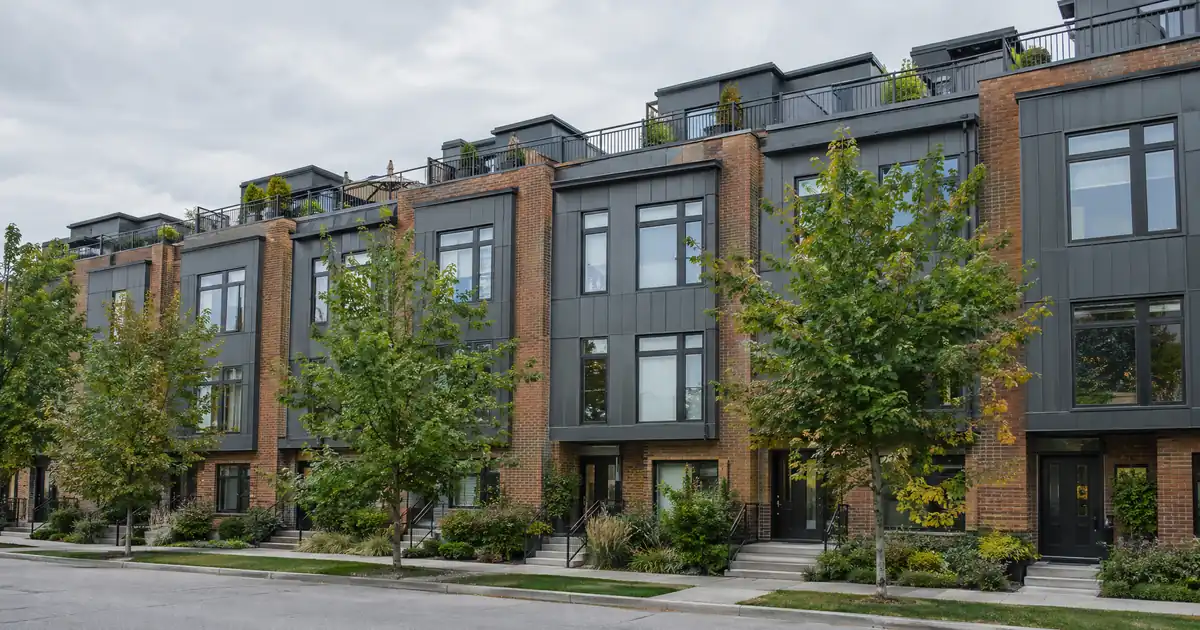
The Quick Read: A condotel (short for “condo hotel,” sometimes called a contel) is a unit you own like a condo. But it runs like a hotel room. It has a front desk, housekeeping, and a rental-pool program. That program books the unit as a short-term rental whenever the owner isn’t using it. Fannie Mae, Freddie Mac, FHA, and VA guidelines exclude most condotel projects outright. That pushes financing into the non-QM/DSCR space. A DSCR loan looks mainly at the property’s rental income, not the borrower’s personal-income paperwork, subject to lender guidelines.
Key Terms Defined
- Condotel (condo-hotel / contel): a unit you own inside a building run under hotel-style management. Think a rental desk, professional housekeeping, and usually a mandatory or opt-in rental-pool program.
- Rental pool: an arrangement where a management company books units and splits the income with owners, under the project’s operating agreement.
- HO-6 policy: the unit owner’s own insurance policy. It covers the unit’s interior, contents, liability, and additional living expenses (State Farm).
- Master (association) policy: the HOA’s building-wide policy. It covers the structure and common areas — not the unit’s interior or the owner’s belongings (Progressive).
- DSCR (debt-service coverage ratio): monthly rent divided by the monthly PITIA — principal, interest, taxes, insurance, and HOA dues. It shows whether a property’s income covers its own payment.
How Condotel Ownership Actually Works
A condotel unit is deeded and titled just like a regular condo. The owner holds real property — not a fractional interest, not a right-to-use contract. So what makes it a condotel? It isn’t the deed. It’s the operating agreement layered on top of it.
DSCR Calculator
Run the numbers in your market
Rate is an editable market assumption — the live benchmark loads when available.
Prefilled with starting assumptions — enter your own rent or nightly figures, taxes, insurance, and HOA for a more accurate picture.
Program parameters update from Lendmire’s centralized guideline source. Taxes and insurance are editable estimates.
Fallback assumption · General Freddie Mac market benchmark, not a Lendmire loan offer. Rent, nightly rate, occupancy, taxes, and insurance are editable estimates. Short-term rental figures are estimates only and vary significantly by season, property type, management approach, and local short-term-rental rules — confirm local regulations before relying on them. Qualifying income for short-term rentals varies by program — some use appraisal market rent, others use documented STR history or projections — and is confirmed in underwriting. Not a Loan Estimate, approval, or commitment to lend. Program availability and eligibility are subject to lender guidelines, credit approval, property review, and underwriting.
Every condotel project runs some version of the same setup. A rental-pool or rental-management agreement lets a professional operator book and service the unit as hotel inventory. There’s a front desk or registration function. Housekeeping cleans between stays. And the owner splits revenue with the management company. Some projects require rental-pool participation as a condition of ownership. Others make it optional, but keep the front desk and short-term-rental setup running anyway.
Classification also happens at the project level, not the unit level. Fannie Mae’s project-review process checks whether a building is professionally managed by hotel or resort companies that book short-term rentals for owners. That operating pattern is the trigger — not the marketing name on the building (Fannie Mae). So a property marketed as a “resort residence” with a mandatory rental desk gets treated the same as one that calls itself a condotel outright.
Why Fannie Mae, Freddie Mac, FHA, and VA Won’t Touch Most Condotels
Legally, a condotel is a condominium. But every agency-backed loan program treats it like a hotel or commercial property. That mismatch is what pushes financing outside conventional channels.
Fannie Mae’s own FAQ says projects with hotel-style operations are “in most cases … Ineligible.” There’s a narrow exception for buildings that use a resort management company for services that stop short of booking short-term rentals (Fannie Mae). Fannie’s public Condo Status Finder data backs this up. Only a small share of reviewed projects carry an “ineligible” status, and condotel features and short-term rentals are named as recurring reasons a project lands there (Fannie Mae Condo Status Finder).
HUD doesn’t leave much room for doubt either. Its condo approval guidance lists condotel projects under a dedicated ineligible-project category. “Condominium Hotel or ‘Condotels'” appears by name in the agency’s own list of what FHA will not insure (HUD). VA guidelines follow similar logic from a different angle. Project-stability reviews disfavor low owner-occupancy ratios, and a building built around hotel-style guest turnover rarely clears that bar.
DSCR loans are built for non-owner-occupied investment properties. Because they’re business-purpose investor loans, they get reviewed differently than a standard owner-occupied mortgage. That’s exactly why a condotel — shut out of agency lending — still has a real financing path once it’s underwritten this way. That’s where a DSCR loan comes in. It qualifies the property based on its own rental income, not the borrower’s personal-income paperwork, subject to lender guidelines.
Condotel vs. Condo vs. Timeshare vs. Hotel
| Factor | Condotel | Standard Condo | Timeshare | Hotel Room |
|---|---|---|---|---|
| Ownership | Individually deeded unit | Individually deeded unit | Fractional/right-to-use share | Owned by hotel company |
| Personal-use limits | Capped by rental-pool rules | None | Fixed weeks/points per year | N/A — pay per stay |
| Income potential | Rental-pool or self-managed rent | Long/short-term rent, if allowed | Little to none | N/A |
| Financing eligibility | DSCR/non-QM typical; agency-excluded | Agency-eligible in most cases | Rarely mortgaged | Not individually financed |
| Resale liquidity | Thinner buyer pool | Standard resale market | Often illiquid | N/A |
Condotel vs. Timeshare: The Distinction Buyers Miss
A condotel is not a timeshare, even though resort marketing often puts them side by side. A timeshare buyer holds a right-to-use interest or a fractional share tied to specific weeks or a points system. There’s no full deed, no unrestricted resale, and no direct income potential when the buyer isn’t using it. A condotel buyer holds a full, individually deeded unit with normal title. That owner can sell it, will it, or borrow against it like any other piece of real property. The constraint is the rental-pool agreement layered on top — not the ownership structure itself. That’s also why a DSCR lender can underwrite a condotel as investment real estate, but not a timeshare.
The Appraisal and Insurance Layers on a Condotel File
Two things get checked harder on a condotel file than on a standard investment-condo file: the appraisal’s project review and the insurance stack.
Appraisers use the same standardized report formats the industry has used for decades. An individual condo unit typically gets appraised on the report format built for condo projects, plus a project addendum covering the HOA, reserves, and how the building operates. Because a condotel’s operating pattern is the whole issue, that project section carries more weight than it would on a regular condo appraisal. Both appraisers and underwriters read it closely for rental-desk language, mandatory-participation clauses, and management-contract terms.
Insurance is a separate checkpoint. A condotel owner typically needs an HO-6 policy that covers the unit’s interior, contents, liability, and additional living expenses. This sits alongside the building’s master policy, which covers the structure and common areas but not the unit’s interior or the owner’s belongings (State Farm; Progressive). Master policies aren’t all the same. Some stop coverage at the drywall. Some add original fixtures. The broadest versions extend to most built-in features inside the unit. On a condotel, the master policy usually needs to cover hotel-style exposures too, like guest liability and higher unit turnover. That’s why underwriters pull the master certificate and read it more closely than they would on a plain residential condo.
Financing a Condotel Through a DSCR Loan
Agency programs are effectively closed to condotels. So the practical path runs through a DSCR loan. Lendmire, a mortgage broker (NMLS# 2371349) arranging DSCR investor loans through select lenders across 41 markets including Washington, D.C., places this property type into the network’s wholesale channel more often than into any agency-adjacent program. Investors can start with Lendmire’s complete DSCR loans guide for the full mechanics of how these loans qualify a property rather than a paycheck.
Most condotels function like short-term rentals in practice. Nightly or weekly bookings run through the rental desk, and lenders in the network generally underwrite them that way. On a purchase, leverage on a short-term-rental-style condotel typically tops out around 75% LTV. Lenders generally look for a 640+ credit score, about 12 months of hosting or rental-pool history, and a DSCR floor around 1.00 on the purchase transaction. Refinancing a condotel already in the rental pool typically caps closer to 70% LTV, with its own 1.00 DSCR floor evaluated separately from the purchase-side number — the two aren’t interchangeable. A cash-out refinance follows that same roughly 70% ceiling. Most files also expect around six months of seasoning before an owner can pull out equity.
If a condotel’s rental history runs thin, or income swings seasonally enough to pull the ratio under 1.00, that isn’t an automatic decline. Select lenders in the network offer coverage-below-1.00 structures, with leverage and terms adjusted to match. A no-ratio path also exists through select lenders, generally for borrowers who already own a primary residence. Both are real options. Neither is universal, and both come with tradeoffs in leverage or pricing set file by file.
On the credit and reserve side, the standard program floor is a 620 score, and the strongest leverage tiers open up closer to 700+. Reserve requirements vary by lender, leverage, and loan size. A conservative rate-term file at modest leverage under $1,500,000 sometimes sees reserves waived entirely, while larger loans generally step up to something closer to nine months of PITIA. Loan sizes on condotel files run through the same range as other DSCR investment purchases, generally up to $3,000,000 on most programs.
DSCR loans are business-purpose loans. That means they fall outside TRID disclosure requirements — there’s no Loan Estimate or three-business-day rescission clock the way there would be on an owner-occupied mortgage. A bigger down payment helps a condotel file two ways at once: it lowers the monthly obligation and can lift the property’s coverage ratio. It doesn’t waive the credit floor. It doesn’t override a leverage cap. And it doesn’t make an otherwise-ineligible project eligible. The strongest condotel files clear both tests: enough equity in the deal, and rental income that actually covers the payment. The general leverage and credit-tier framework underneath all of this is the baseline most files are measured against before the condotel-specific layers get added on top.
A condotel unit only earns money when the front desk actually books it. So local rules matter too. Short-term rental rules can vary by city, county, HOA, and property type. Investors should confirm local rules before relying on projected rental income.
Pros and Cons of Owning a Condotel
Pros:
- Turnkey short-term rental income without self-managing bookings, cleaning, or guest turnover — the on-site management company runs day-to-day operations.
- Personal-use access to a resort-style property, subject to the project’s rental-pool rules, alongside rental income when the owner isn’t there.
- Resort amenities — pools, concierge, housekeeping — bundled into the HOA structure rather than something the owner builds or staffs separately.
Cons:
- Income is seasonal and occupancy-dependent, not a fixed rent check — revenue can swing hard between peak and off-peak periods.
- The management company’s revenue share and mandatory HOA/rental-pool fees eat into net income before an owner sees a dollar.
- Personal use is often capped by the rental-pool agreement, so the owner doesn’t get unrestricted access to their own unit.
- Financing is narrower — excluded from agency programs, dependent on DSCR/non-QM lenders, and typically carries lower leverage than a standard long-term-rental condo.
- Resale liquidity is thinner; the buyer pool shrinks because so few loan programs support the property type.
Is a Condotel Worth It? A Quick Decision Checklist
A condotel makes sense for an investor who wants resort-style personal use blended with hands-off rental income. It also helps if that investor is comfortable underwriting the deal on rental coverage rather than fixed lease income. It’s a weaker fit for anyone who needs steady month-to-month cash flow, or who wants the most resale liquidity later on.
Before making an offer, pull:
1. The HOA/rental-pool agreement — mandatory or optional participation, revenue-split percentage, and any personal-use blackout periods.
2. The master insurance certificate — what tier of coverage it carries, and whether it addresses hotel-style guest liability.
3. At least 12 months of trailing rental-pool statements — the occupancy and revenue history a lender will want to see anyway.
4. Any pending litigation disclosures on the HOA — a common reason Fannie’s own data shows projects landing in ineligible status (Fannie Mae Condo Status Finder).
If a reader is buying or refinancing a condotel and wants to see how the numbers work, Lendmire can help compare DSCR loan options based on the property’s income, credit profile, leverage, and investor goals. Reach Lendmire at 828-256-2183 or through a pricing quote request.
Loan approval is never guaranteed, and nothing above is a commitment to lend. Every scenario described here is subject to lender approval and the borrower’s, property’s, and program’s underwriting guidelines, which change by lender and by file. This article is general information, not financial, legal, or tax advice. Tax treatment can depend on how the property is used and how title is held, so investors should keep clear records and speak with a qualified tax professional before relying on any deduction.
Frequently Asked Questions
Can you get a conventional loan on a condotel?
Almost never. Fannie Mae, Freddie Mac, FHA, and VA guidelines exclude most condotel projects by definition. The operating characteristics — rental desk, hotel-style management, short-term rentals — are the disqualifying trigger, not the unit’s legal form (Fannie Mae; HUD). Financing almost always runs through a DSCR or non-QM lender that reviews the property’s own rental income instead of delivering the loan to an agency.
Is a condotel a good investment?
It depends on what the buyer wants out of it. A condotel can produce hands-off rental income and resort access in one package. But income is seasonal, management fees cut into the net, and resale liquidity is thinner than on a standard condo. Weigh those tradeoffs rather than assuming resort-market appreciation alone carries the deal.
Can you live in a condotel full-time?
Usually not, without running into the rental-pool agreement’s personal-use limits. Most condotel HOA and management agreements are written around transient hotel-style occupancy, not full-time residency. Mandatory rental-pool participation in particular tends to cap how many nights an owner can occupy the unit.
Does DSCR financing treat a condotel differently from a regular short-term rental condo?
Largely no. Most lenders in the network underwrite a condotel against the same short-term-rental framework used for any nightly-rental property. They just add extra review of the HOA rental-pool agreement and master insurance policy on top of the standard DSCR cash-flow analysis.
What credit score is needed to finance a condotel?
The standard program floor is a 620 score, though short-term-rental programs generally want 640 or better, and the strongest leverage — including higher-LTV tiers — generally opens up closer to 700 or better. Exact requirements vary by lender, loan size, and property review.
About Lendmire
Lendmire is a non-QM mortgage brokerage (NMLS# 2371349) arranging DSCR investor loans in 41 markets, including Washington, D.C., through wholesale and investor-lending channels. Lenders evaluate DSCR loans based on rental income rather than personal income, subject to lender guidelines. That makes them a fit for LLC-owned portfolios, self-employed investors, and operators scaling beyond conventional loan caps. Lendmire has been recognized as a Scotsman Guide Top Mortgage Workplace in 2025 and 2026.
Get Started
Ready to find the right loan for you?
In about 30 seconds you can review financing options available for your investment property. No commitment required.
Informational only. Not a Loan Estimate, approval, or commitment to lend. Program availability and eligibility are subject to lender guidelines, credit approval, property review, and underwriting.
References
1. State Farm — What Is HO-6 Insurance
3. Fannie Mae Selling Guide FAQ — Condo Project Standards
This article is part of Lendmire’s DSCR loan program — full qualification details, guidelines, and scenarios live on the program page.
Related reading: Are Condotels Eligible For DSCR Loans? · How Lenders Assess Condotels For A Luxury DSCR Loan? · How Investors Finance Condos And Condotels With A DSCR Loan?
Brandon Miller
Founder & CEO, Mortgage Loan Originator, Lendmire LLC
- Mortgage Loan Originator · NMLS# 1129696 · Verify on NMLS Consumer Access
- North Carolina Real Estate Broker · License# 343312 · Verify on NCREC
- North Carolina Insurance Producer · License# 19053198 · Property, Casualty, Life, Health · Verify on NAIC SBS
- Lendmire LLC · Firm NMLS# 2371349 · Verify firm licensure
Required disclosures. Lendmire (NMLS# 2371349) operates as a licensed mortgage broker, not a direct lender or depository. The discussion in this article is general in nature and should not be relied upon as financial, legal, or tax advice — every investment scenario is unique and should be reviewed by a qualified professional. Any loan inquiry is subject to lender underwriting, and this article is not a commitment to lend or a guarantee of approval. Mortgage rates, loan terms, and program guidelines vary by borrower, property, and state, and may change without notice. Equal Housing Opportunity. Verify licensure at NMLS Consumer Access.