
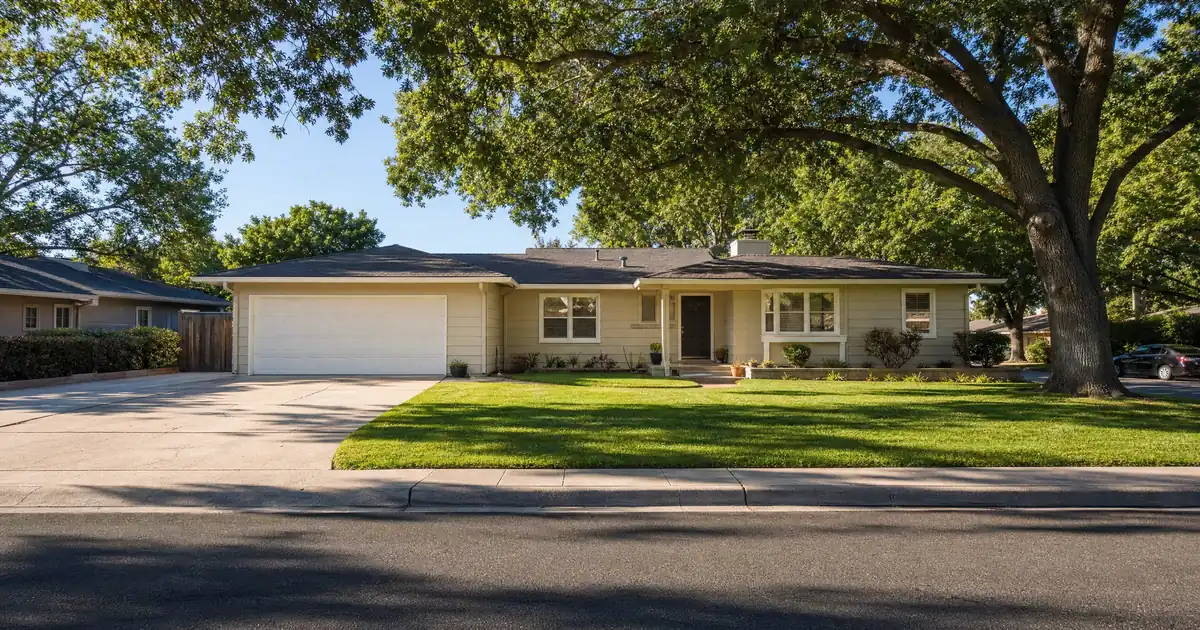
The Quick Read: A vacation rental mortgage isn’t one specific loan product — it’s shorthand for whichever financing path matches how the property will actually be used. If the owner occupies it part of the year and controls the booking calendar, it’s usually a conventional second-home loan. If it’s bought mainly to generate short-term rental income, it typically becomes a DSCR investment loan, qualified on the property’s rental income rather than the borrower’s traditional personal-income documentation or W-2s.
That distinction — occupancy versus income generation — decides almost everything else about the file: the down payment, the paperwork, the appraisal form, and whether the property can even be titled in an LLC.
Short-Term Rental Calculator
Run the STR numbers in your market
Rate is an editable market assumption — the live benchmark loads when available.
Prefilled with starting assumptions — enter your nightly rate, occupancy, taxes, and insurance for a more accurate picture.
Short-term rental income is documented with a 12-month history or a market data report. Program parameters update from Lendmire’s centralized guideline source.
Fallback assumption · General Freddie Mac market benchmark, not a Lendmire loan offer. Nightly rate, occupancy, taxes, and insurance are editable estimates. Qualifying income for short-term rentals varies by program — some use appraisal market rent, others use documented STR history or projections — and is confirmed in underwriting. Not a Loan Estimate, approval, or commitment to lend. Program availability and eligibility are subject to lender guidelines, credit approval, property review, and underwriting.
Vacation Home, Vacation Rental, or Investment Property?
The labels sound interchangeable but they map to different underwriting lanes. A “vacation home” under agency guidelines requires the borrower to occupy the property for part of the year and to keep exclusive control over it — no management company can run the booking calendar, and it can’t be operated as a full-time rental (Fannie Mae Selling Guide). A “vacation rental” — the more common scenario when someone searches this exact term — is a property purchased primarily to produce short-term rental income on Airbnb, VRBO, or a similar platform, with little or no personal use. That’s the DSCR lane.
| Path | Owner occupancy | What drives lender review | Typical purchase leverage |
|---|---|---|---|
| Second home (conventional) | Required, part of year | Borrower’s income and credit | Agency guidelines apply, not DSCR |
| Vacation rental (STR DSCR) | Not required | Property’s short-term rental income | Up to 75% LTV on the strongest files |
| Long-term rental (DSCR) | Not required | Property’s lease income | Up to 80% LTV on many files |
Key Terms Defined
DSCR (Debt-Service Coverage Ratio) — the property’s monthly rental income divided by its full monthly housing payment (principal, interest, taxes, insurance, and any HOA dues, together called PITIA). A ratio of 1.00 means the rent matches the payment exactly.
PITIA — the full monthly obligation a lender measures rent against: principal, interest, taxes, insurance, and association dues, if any.
Business-purpose loan — a mortgage made to acquire or refinance a property that generates income rather than one occupied by the borrower as a primary or part-time personal residence. DSCR loans fall into this category.
Trailing-12 (T12) — twelve consecutive months of documented rental payouts, often pulled from Airbnb, VRBO, or property-manager statements, used to establish income history on a short-term rental.
Seasoning — the amount of time a borrower has owned or operated a property before a lender will consider a cash-out refinance against it.
How a DSCR Loan Qualifies a Vacation Rental
A DSCR loan compares the property’s rent against its full monthly payment — it does not touch the borrower’s personal income, employment history, or debt-to-income ratio. That’s the entire mechanism, and it’s why a self-employed investor or someone with several existing rentals can often qualify on a vacation rental deal that would be a tough fit for a conventional debt-to-income calculation.
The catch is how that rent gets documented for a short-term property. A standard agency rent schedule — the Form 1007 used on long-term-lease investment properties — isn’t built for this. As appraisal-industry guidance puts it, the form “precludes information about other services related to the property, vacancy rates, and business expenses,” which is exactly the data a short-term rental needs. Appraisers instead lean on market-based platforms like AirDNA to estimate achievable nightly income (McKissock). Across the wholesale network, files typically get built one of three ways: an appraiser’s short-term rental income opinion, a trailing 12-month statement of actual platform payouts, or a market rent projection pulled from booking-platform data.
Clearing 1.00 on that ratio is not the same thing as positive cash flow. DSCR only measures rent against PITIA — it says nothing about repairs, vacancy weeks between guests, cleaning and management fees, or utilities, all of which sit outside the calculation entirely. A file that clears 1.15x on paper can still run tight once those real costs are counted.
On purchase transactions, most lenders in the network want coverage at or above 1.00, though that’s a floor at select programs rather than a fixed rule across every lender. Refinance transactions carry that same 1.00 benchmark on most files, evaluated separately from the purchase side rather than as one blended number. For borrowers whose projections land under that mark, some lenders will still work the file — usually by pulling back leverage or adjusting pricing to offset the added risk. No-ratio qualification also exists in the network, but it’s generally limited to select lenders and to borrowers who already own a primary residence; it isn’t attached to a specific coverage number the way a sub-1.00 program is.
Purchase leverage on a short-term rental generally tops out around 75% LTV on the strongest files, with cash-out refinances capped closer to 70%. Most lenders want to see a credit score of 640 or better and roughly 12 months of landlord or host experience before treating projected STR income as reliable. Loan sizes across the network commonly run up to $3,000,000 on standard programs, with smaller balances routed through select lenders rather than treated as a program floor.
For a full walkthrough of how the ratio itself is built, Lendmire’s complete DSCR loans guide breaks down the calculation and the documentation lenders typically request.
What Lenders Want to See on a Vacation Rental File
Beyond the coverage ratio, several practical details shape whether a file clears the network’s guidelines cleanly:
- Credit and reserves. A 700+ score generally unlocks the best leverage; reserve requirements vary by lender, loan size, and leverage, but commonly land around six months of PITIA, sometimes stepping up on larger balances or when multiple financed properties are involved.
- Host history. About 12 months of documented short-term rental activity — either at this property or a comparable one the borrower already operates — is the common expectation for using projected STR income.
- Insurance type. Standard homeowners and long-term landlord policies are frequently written for tenants on 12-month leases, not paying overnight guests, so confirming a policy actually covers short-term rental use before closing avoids a coverage gap that can stall funding even after the loan is otherwise approved (Proper Insurance).
- Property type. Manufactured homes — single- and double-wide — log homes, and barndominiums fall outside these DSCR programs entirely, regardless of how strong the projected rental numbers look.
- Titling. Many investors close these loans in an LLC; program eligibility for entity-titled properties varies by lender.
Lendmire’s own guide to vacation rental property loans walks through how these pieces typically fit together on a purchase file.
An experienced DSCR broker sees the same pattern repeat across vacation rental files regardless of location: the coverage ratio on paper often looks fine, but the file stalls on the insurance line or the rent-documentation method — a T12 that’s too thin, or an appraiser defaulting to a rent schedule that was never designed for nightly rentals in the first place. Catching that mismatch before submission, rather than after underwriting flags it, is usually what separates a smooth file from a stalled one.
Can a Second-Home Loan Cover a Vacation Rental Instead?
Sometimes, but only if the rental activity stays secondary to personal use. Agency guidelines allow occasional short-term rental income on a second home as long as that income isn’t used to qualify the borrower and the borrower still keeps control of the property — no management agreement that runs the booking calendar, and no arrangement that functions as a full-time rental (Fannie Mae Selling Guide). In practice, the line between a second home and an investment property is drawn based on how the property is used and who controls its occupancy.
The moment a property is booked heavily enough — or managed by a third party controlling occupancy — most lenders reclassify it as an investment property, and that reclassification changes pricing, reserve expectations, and how the file gets qualified. This is why most true vacation-rental purchases, where the plan from day one is nightly bookings and meaningful income, end up in the DSCR lane rather than trying to stretch second-home terms.
The Two “14-Day” Rules Investors Mix Up
These are genuinely different rules measuring different things, and confusing them is one of the most common mistakes among investors and even newer loan originators.
The tax-side rule comes from the IRS: rent a dwelling for fewer than 15 days in a year, and none of that income has to be reported, and no rental expenses get deducted either (IRS Topic No. 415). That’s a reporting threshold, not a mortgage rule.
Separately, a property’s expected occupancy also factors into whether a loan is classified as business-purpose. DSCR loans are designed for non-owner-occupied investment properties, so they’re reviewed differently from a standard owner-occupied mortgage from the start — that classification is about the loan, not about how many rental nights trigger a tax filing. Treating the tax threshold and the loan-classification concept as the same rule leads investors to misjudge which financing lane actually fits their plan.
Refinancing or Pulling Equity From a Vacation Rental
Cash-out refinances on short-term rentals generally cap around 70% LTV across the network, with roughly six months of seasoning as the common expectation before a lender will consider it. Investors who’d rather not touch the primary mortgage sometimes look at an investment-property HELOC instead — those lines are capped at $500,000 total across the network, with no higher tier available above that regardless of the property’s value.
For investors weighing whether pulling equity out now makes sense, Lendmire’s guidance on “When It Makes Sense to Refinance a Rental Property” and its rental mortgage refinance cash-out calculator are useful starting points before requesting a formal quote.
National short-term rental demand gives some context for why lenders keep refinance leverage a notch below purchase leverage: AirDNA projects occupancy averaging 57.4% in the coming year, modestly above the pre-pandemic average, with demand and RevPAR both forecast to grow (AirDNA / PR Newswire). That’s a healthy backdrop, but it’s still income tied to nightly turnover rather than a signed 12-month lease, and lenders price that volatility into the numbers.
Frequently Asked Questions
Is a vacation rental mortgage the same thing as a second-home loan?
No. A second-home loan requires the borrower to occupy the property part of the year and keep control over it, while a vacation rental mortgage — usually a DSCR loan — is built around the property’s rental income and doesn’t require any owner occupancy. Which one applies depends on how the property is actually used, not on what the listing calls it.
Can projected Airbnb income be used to qualify, or does it need a rental history?
Both paths exist, but most lenders in the network want to see roughly 12 months of documented hosting history before leaning heavily on projected income. Without that history, some lenders will still consider market-based projections from platforms like AirDNA, subject to the file’s overall strength and lender guidelines.
Does a vacation rental mortgage require good personal credit if it is reviewed on rental income?
Yes — DSCR loans skip income and employment documentation, but credit still matters. Most programs look for a 640 or higher score on short-term rental files; lower scores may still qualify through select lenders but typically come with reduced leverage.
Can a vacation rental be titled in an LLC?
Often, yes, subject to lender program eligibility. Many investors close short-term rental DSCR loans in an entity for liability and portfolio-management reasons, though specific documentation requirements vary by lender and loan program.
What happens if local short-term rental rules change after closing?
Short-term rental rules can vary by city, county, HOA, and property type, and they can shift over time, so investors should confirm current local rules before relying on projected rental income for any purchase or refinance decision.
Investors focused on short-term rentals can review DSCR loans for Airbnb and short-term rentals.
About Lendmire
Lendmire (NMLS# 2371349) is a mortgage broker that arranges DSCR investor financing through select lenders in its wholesale network, spanning 41 markets including Washington, D.C. Loan approval is never guaranteed, and nothing here is a commitment to lend — every scenario is subject to lender approval and to borrower, property, and program guidelines. This article is general information, not financial, legal, or tax advice, and tax treatment can depend on how funds are used and how a property is held, so investors should keep clear records and consult a qualified tax professional before relying on any deduction. Scotsman Guide named Lendmire a Top Mortgage Workplace in both 2025 and 2026.
Investors comparing purchase or refinance scenarios can reach Lendmire at 828-256-2183 or request a pricing quote to see how a specific property’s rental income lines up against DSCR program guidelines.
Get Started
Ready to find the right loan for you?
In about 30 seconds you can review financing options available for your investment property. No commitment required.
Informational only. Not a Loan Estimate, approval, or commitment to lend. Program availability and eligibility are subject to lender guidelines, credit approval, property review, and underwriting.
References
1. Fannie Mae Selling Guide — Occupancy Types (B2-1.1-01)
2. McKissock Learning — Form 1007 and Its Impact on Short-Term Rental Appraisals
3. Proper Insurance — Short-Term Rental Insurance Guide
4. AirDNA / PR Newswire — 2026 U.S. Short-Term Rental Outlook
This article is part of Lendmire’s short-term rental loan program — full qualification details, guidelines, and scenarios live on the program page.
Related reading: What Is A Business-purpose Loan On A Vacation Rental Property? · Why A Self-employed Borrower’s Vacation Rental Is A Business-purpose Loan? · Can Booking Deposits Count As Reserves On A Vacation Rental DSCR Loan?
Brandon Miller
Founder & CEO, Mortgage Loan Originator, Lendmire LLC
- Mortgage Loan Originator · NMLS# 1129696 · Verify on NMLS Consumer Access
- North Carolina Real Estate Broker · License# 343312 · Verify on NCREC
- North Carolina Insurance Producer · License# 19053198 · Property, Casualty, Life, Health · Verify on NAIC SBS
- Lendmire LLC · Firm NMLS# 2371349 · Verify firm licensure
Disclosure information. Lendmire is a state-licensed mortgage brokerage under NMLS# 2371349. Lendmire is not a depository institution, direct lender, or financial advisor — all loans referenced are placed through wholesale lender partners and are subject to each lender's underwriting standards. This article is provided for general informational purposes and is not a commitment to lend, nor does it constitute financial, legal, or tax advice. Loan programs, terms, rates, and qualification standards change without notice and depend on borrower profile, property type, and the state in which the subject property is located. Equal Housing Opportunity provider. NMLS Consumer Access: nmlsconsumeraccess.org.