
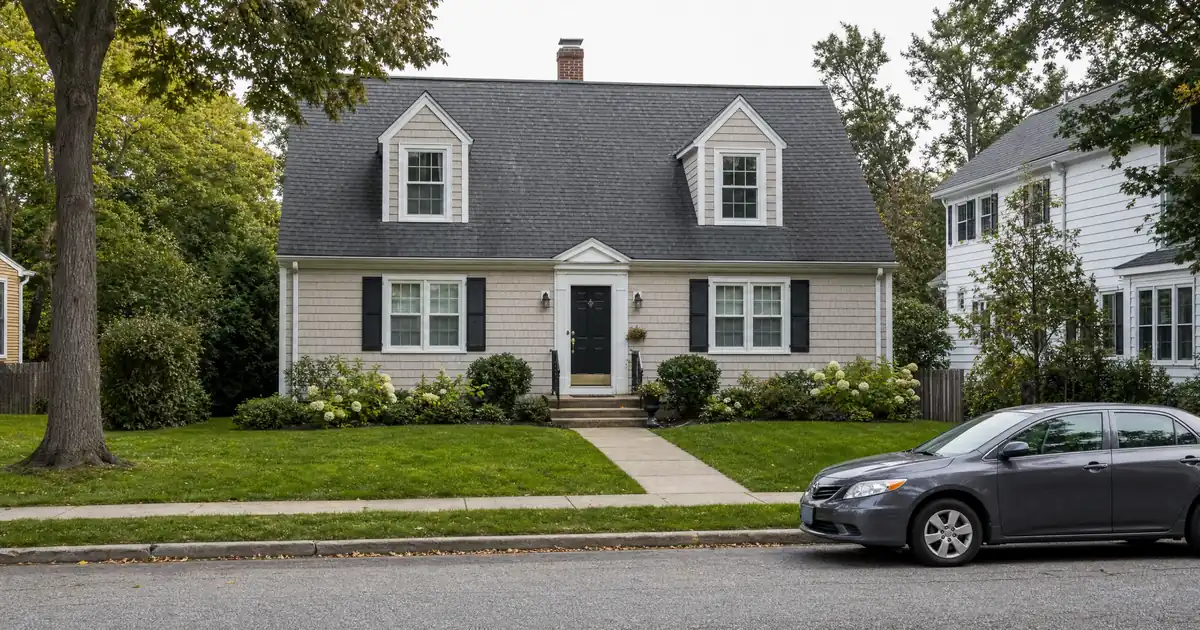
The Quick Read: No, not the way most people picture it. FHA loans require you to live in the property as your primary residence, and separately, FHA rules ban renting any part of the home for stays under 30 days — so nightly Airbnb bookings violate the loan even after you’ve moved in and met the occupancy clock. There’s a narrow exception for long-term (30-day-plus) rental of a spare room or extra unit. If the goal is a real short-term rental business, a non-owner-occupied DSCR loan is the more direct path.
FHA loans exist to help people buy a home to live in — not to buy a rental property with government-backed low-down-payment terms. Two separate rules enforce that, and they don’t expire the way people assume.
The Two Rules That Actually Block It
FHA’s occupancy requirement says you have to move into the home within 60 days of closing and live there for at least a year. Separately, a transient-use ban prohibits renting any living space in the home for less than 30 days, at any point the loan is active — not just during that first year.
These are two different problems, and clearing one doesn’t clear the other. The occupancy rule is about your intent when you bought the house. The transient-use rule is about how you’re allowed to use the property, period, for as long as the FHA loan exists. People conflate them constantly, which is why the “just wait 12 months” advice keeps circulating even though it’s wrong.
Here’s the language that actually governs this. The FHA’s Single Family Housing Policy Handbook 4000.1 — the rulebook HUD uses to run the program — spells out the occupancy requirement directly, and separate guidance makes clear that FHA loans are not available for bed-and-breakfast operations, condo hotels, vacation homes, timeshares, or similar transient uses. Airbnb-style nightly rental falls squarely into that category.
For certain property types, this isn’t just a policy — it’s a signed contract. On a one-unit home with an accessory dwelling unit, a 2-4 unit property, or a single-family home that’s one of five or more dwellings you own within a two-block radius, the lender is required to collect Form HUD-92561, the Borrower’s Contract with Respect to Hotel and Transient Use of Property. You sign an actual agreement with HUD promising not to use the property for hotel or transient purposes. That’s a legal document tied to the mortgage, not an informal guideline a loan officer mentions in passing.
What FHA Actually Allows You to Rent
FHA does permit one kind of rental: long-term leasing of space you’re not using yourself, on terms of 30 days or more. Rent out a spare bedroom to a long-term tenant, or rent one unit of a duplex you’re living in — both are fine, and in some cases that rental income can even help you qualify for the mortgage in the first place.
What it doesn’t allow is turning that same space into a nightly listing. A room rented on a normal month-to-month lease is compliant. The same room booked through a short-term rental platform for a long weekend is not — even though it’s the identical physical space, in the identical house, under the identical loan.
Does the 12-Month Occupancy Period Change Anything?
No. Satisfying the one-year occupancy requirement ends your obligation to treat the home as your primary residence — it does not end the transient-use ban. That prohibition is tied to the loan itself, not to a calendar.
This is the single most common misconception in this space, and it’s easy to see why. People assume FHA rules work like a lock-in period: live there a year, then the house is yours to use however you want. But the sub-30-day rental ban isn’t a temporary condition of the loan — it’s baked into the loan for as long as it’s outstanding. If you want to legally run an Airbnb out of a property you bought with FHA financing, you need to refinance into a different loan type first. There’s no waiting period that makes it okay to keep the FHA loan and start hosting.
What About House Hacking a Duplex or Fourplex?
This is where the popular advice breaks down. The strategy sounds clean: buy a 2-4 unit property with FHA, live in one unit, Airbnb the rest to cover the payment. The problem is Form HUD-92561 attaches to the property as a whole, not just to the units you’re not occupying.
If your loan is on a 2-4 unit dwelling, that transient-use covenant covers the entire building — including the units you’re renting out, not just the one you live in. Plenty of investor forums repeat the house-hacking-with-Airbnb version of this strategy as if it’s settled, and it simply isn’t consistent with what the borrower actually signs at closing. Anyone considering this route should get direct written confirmation from their FHA lender on what the covenant does and doesn’t cover for that specific property before assuming the non-occupied units are fair game for nightly rental. For a deeper look at how FHA house-hacking compares to a straight investment purchase, see this breakdown of FHA house hacking, Airbnb, and DSCR purchases.
There’s a separate underwriting hurdle on 3-4 unit FHA purchases worth knowing about, too. HUD applies a self-sufficiency test on those property sizes — the appraiser’s rent estimate, discounted by 25%, has to cover the projected FHA payment for the deal to qualify at all. That test doesn’t apply to duplexes or single-unit homes, but on a triplex or fourplex it’s a real gate you clear before Airbnb rules even become relevant.
What Happens If You Do It Anyway?
Certifying occupancy falsely, or running a transient rental in violation of the note, exposes you to real consequences — not just a stern letter. Most cases get handled civilly, but the legal exposure is genuine, and it’s worth taking seriously before betting a strategy on not getting caught.
Occupancy fraud — misrepresenting how you intend to use a property to get FHA’s low-down-payment terms — can lead to fines, an accelerated loan, or in more serious cases, federal charges. Making false statements on a mortgage application can be treated as bank fraud under federal law, carrying penalties as severe as a $1 million fine and up to 30 years in prison in extreme cases, according to Bay Property Management Group’s overview of occupancy fraud. In practice, most situations resolve short of that — the more common outcome is the lender calling the loan due, raising costs, or pursuing foreclosure. None of these outcomes is one you want to gamble a rental strategy on.
How VA and USDA Loans Compare
VA loans loosen up once the occupancy requirement is met, while USDA loans are stricter than FHA across the board — they prohibit any income-producing use of the property, short-term or long-term, with no path around it while the loan is active. FHA sits in the middle: more flexible than USDA on long-term rental of unused space, but its ban on sub-30-day stays never lifts on its own.
If you’re weighing FHA specifically against a straight rental-property loan, this comparison of DSCR loans versus FHA loans for rental property walks through where each one actually fits.
Why the Path Usually Ends at DSCR
DSCR loans qualify on the property’s rental income instead of your personal income documentation, and they’re built from the ground up for non-owner-occupied real estate. That removes the occupancy clock and the transient-use covenant entirely — there’s no HUD-92561 to sign, no 60-day move-in requirement, no year of certified primary residence.
Two people with identical goals — buy a house, rent it nightly for income — end up in very different loans depending on how they frame the purchase. One tries to force it through an owner-occupant program not designed for that use. The other buys it as a business-purpose investment from day one and skips the conflict entirely. A complete DSCR loans guide covers the mechanics in full if you want the deeper walkthrough.
A DSCR loan is a business-purpose, non-owner-occupied loan reviewed on the deal’s leverage and the property’s income — not your personal debt-to-income ratio. Because it’s business-purpose, it’s exempt from the consumer mortgage disclosure timelines that apply to a standard owner-occupied purchase. Some investors ask whether they can still live in a property financed this way — generally no, since these are structured around investment use, and the nuance of living in a home bought with a DSCR loan is a topic of its own.
How Lenders Actually Qualify STR Income
DSCR lenders treat short-term rental income differently than long-term lease income, and it’s worth understanding before assuming a nightly-rate projection will fully qualify a deal. The standard appraisal rent-schedule form (Form 1007) was built for monthly market rent — it would be incorrect for an appraiser to take a nightly rate and multiply it by 30 to manufacture a monthly figure. Form 1007 covers a single-unit rental and produces one market-rent number; Form 1025 covers 2-4 unit properties and rolls per-unit rents into a total alongside the appraiser’s value opinion.
Instead, many STR-focused DSCR programs qualify income through AirDNA-based revenue projections, historical platform earnings, the standard rent schedule, or an operating income statement, depending on the specific program and property. If you’re looking specifically at Airbnb-style financing, Lendmire’s guide to DSCR loans for Airbnb properties lays out how that qualification works in more detail.
On the strongest short-term rental files across the network Lendmire works with, purchase leverage runs up to 75% loan-to-value, with cash-out refinances capped closer to 70%. Most STR programs expect around a 640 credit score and roughly 12 months of hosting or landlord experience, and a 1.00 coverage ratio is typically the starting floor on both purchase and refinance transactions — a floor for select programs, not a universal minimum, and stronger coverage generally opens better leverage and pricing. Loan sizes on standard programs run up to roughly $3,000,000, with smaller-balance deals routed through specific lenders in the network rather than treated as the standard offering.
Converting a Former FHA Home Into an Airbnb
If you already own the property under FHA and want to eventually refinance into a DSCR loan and start hosting, seasoning matters. Most DSCR lenders want to see roughly 6 to 12 months of ownership and operating history before allowing a cash-out refinance, giving the property time to establish an actual income track record instead of a projected one. Purchase-money DSCR loans, by contrast, typically carry no seasoning requirement since there’s no equity being pulled out — this only comes into play on a refinance where you’re extracting cash. For more on how that equity-pull process works generally, this guide on pulling equity from a rental property is a useful reference point.
Across STR files, one pattern shows up repeatedly: the properties with the tightest coverage on projected long-term rent often clear comfortably once actual trailing twelve-month Airbnb income gets factored in. Investors converting an FHA-financed home into a hosted property should keep clean records from day one — platform payout history and occupancy data end up doing a lot of the underwriting heavy lifting later.
Short-term rental rules can also vary by city, county, HOA, and property type, so confirming local rules before relying on projected rental income matters regardless of which loan you use.
Key Terms Defined
Occupancy requirement: the FHA rule requiring the borrower to move into the property within 60 days of closing and live there as a primary residence for at least a year.
Transient use: renting a living space for stays of less than 30 days — the category FHA prohibits regardless of how long you’ve owned the home.
DSCR (debt-service coverage ratio): a ratio comparing a property’s rental income to its monthly mortgage payment (principal, interest, taxes, insurance, and HOA dues, where applicable) — a ratio at or above 1.00 means the rent covers that payment.
Non-owner-occupied loan: a mortgage structured for an investment property the borrower does not live in, underwritten around the property’s income rather than the borrower’s personal income.
Seasoning: the length of time a lender wants a borrower to own and operate a property before allowing a cash-out refinance against it.
Frequently Asked Questions
Can I Airbnb just one room in my FHA home while I live there full-time?
No. FHA’s carve-out for renting unused space only applies to stays of 30 days or more, so a spare-room nightly listing violates the same transient-use rule that blocks renting the whole house. Living in the rest of the home doesn’t create an exception for that one room.
If I buy a fourplex with FHA and live in one unit, can I Airbnb the other three?
Generally no. The transient-use contract tied to FHA loans on 2-4 unit properties covers the building as a whole, not just the units you don’t occupy. Long-term leasing of those other units is fine; nightly rental of them typically is not, and confirming this in writing with your specific lender is worth doing before assuming otherwise.
Once I’ve lived in the house for a year, can I switch it to Airbnb?
No — the one-year clock satisfies the occupancy-intent requirement, but the separate ban on rentals under 30 days doesn’t expire with it. That restriction stays attached to the FHA loan itself for as long as it’s outstanding, and the practical way around it is refinancing into a different loan type.
Is running an Airbnb on an FHA property actually illegal, or just against lender rules?
It’s a violation of the loan agreement you signed, not a criminal act by itself — but misrepresenting your intended use to get FHA’s terms can expose you to occupancy fraud claims, which carry real civil and, in serious cases, federal exposure. Most situations get resolved through the lender calling the loan due rather than criminal prosecution, but the risk is not zero.
What’s the fastest way to legally run a short-term rental if FHA won’t allow it?
Refinancing into a DSCR loan, or buying the property outright with one, sidesteps the occupancy and transient-use restrictions entirely since DSCR loans are built for non-owner-occupied investment property. Qualification runs primarily on the property’s projected or trailing rental income covering the payment, subject to lender guidelines, rather than on personal income documentation or occupancy intent.
Investors weighing this path can call Lendmire at 828-256-2183 or request a quote to see how DSCR leverage, coverage, and credit requirements line up with a specific property.
Investors focused on short-term rentals can review DSCR loans for Airbnb and short-term rentals.
About Lendmire
Lendmire (NMLS# 2371349) is a mortgage broker arranging DSCR investment property financing through select lenders across a wholesale network spanning 41 markets, including Washington, D.C. Lendmire doesn’t fund, underwrite, or approve loans directly — it structures files and places them with the lenders whose guidelines fit the property and the investor’s goals. Scotsman Guide named Lendmire a Top Mortgage Workplace in both 2025 and 2026.
Tax treatment can depend on how the funds are used and how the property is held; investors should keep clear records and speak with a qualified tax professional before relying on any deduction.
No loan approval is ever guaranteed, and nothing here is a commitment to lend. Every scenario described here is subject to lender approval and to borrower, property, and program guidelines, which can change. This article is general information only — not financial, legal, or tax advice.
Get Started
Ready to find the right loan for you?
In about 30 seconds you can review financing options available for your investment property. No commitment required.
Informational only. Not a Loan Estimate, approval, or commitment to lend. Program availability and eligibility are subject to lender guidelines, credit approval, property review, and underwriting.
References
1. HUD — Single Family Housing Policy Handbook 4000.1
2. HUD — Form HUD-92561, Borrower’s Contract with Respect to Hotel and Transient Use of Property
3. Bay Property Management Group — What Is Occupancy Fraud?
This article is part of Lendmire’s short-term rental loan program — full qualification details, guidelines, and scenarios live on the program page.
Related reading: Can You Do A Cash Out With A USDA Refinance? · Can I Get An FHA Loan In A Condo That Allows Short Term Rentals? · Best To Refinance Home To Buy Investment Property Or Finance Investor Property
Brandon Miller
Founder & CEO, Mortgage Loan Originator, Lendmire LLC
- Mortgage Loan Originator · NMLS# 1129696 · Verify on NMLS Consumer Access
- North Carolina Real Estate Broker · License# 343312 · Verify on NCREC
- North Carolina Insurance Producer · License# 19053198 · Property, Casualty, Life, Health · Verify on NAIC SBS
- Lendmire LLC · Firm NMLS# 2371349 · Verify firm licensure
Legal disclosures. Lendmire (NMLS# 2371349) is a state-licensed mortgage brokerage that arranges financing through wholesale lender relationships. Lendmire is not a direct lender, depository institution, or registered financial advisor. The discussion above is general informational content about real estate financing — it is not financial, legal, or tax advice, and readers should consult licensed professionals for guidance on their individual circumstances. Loan inquiries are subject to lender underwriting; this article does not represent a commitment to lend. Loan terms, rates, and qualification standards vary by borrower, property, and state, and are subject to change at any time. Equal Housing Opportunity. NMLS Consumer Access: nmlsconsumeraccess.org.