
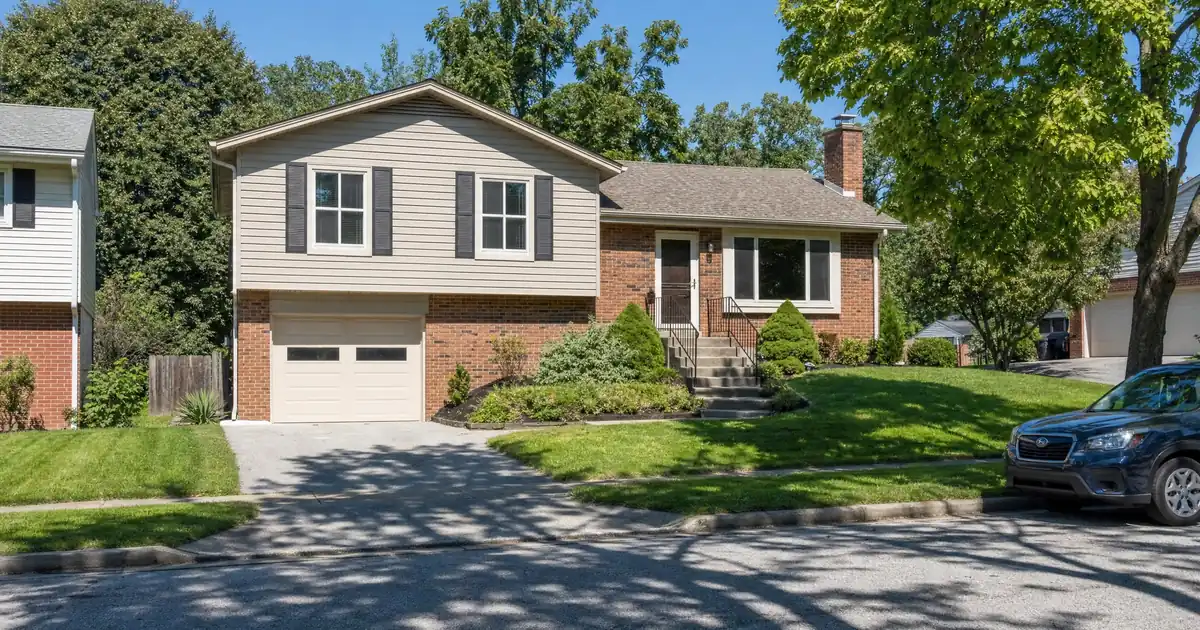
The Quick Read: This is a two-loan play, not one. First, a short-term hard money loan funds the purchase and the renovation. This loan is priced against the after-repair value, not the property’s current condition. Once the unit is finished and furnished, and it has a booking history, the investor refinances. They move out of hard money and into a long-term DSCR loan. That loan is sized on the property’s rental income. The whole strategy comes down to timing. The hard money loan has a maturity date. The property needs to prove it earns enough to qualify for the DSCR exit before that date hits.
What this loan actually costs to carry in your market.
Hard money is sized against the project and priced by time. Enter the deal and see how much the program will lend, the cash required at closing, the carry while you hold it, and what is left at the exit.
Leverage tiers on the current program: up to 85% of project cost with fewer than two completed projects, 90% with two or more, 93% with five or more — every tier capped at 75% of after-repair value. Loan amounts up to $5,000,000, larger by exception; terms of 6 to 18 months, interest-only, no prepayment penalty. The rehab portion funds in draws against completed work, not at closing.
Program parameters shown update from Lendmire’s centralized guideline source. Rate, points, and months are editable assumptions, not quoted terms.
Cost cap sets the loan · positive spread
Illustrative estimate only — not a quote, Loan Estimate, approval, or commitment to lend. Rate, points, and months are editable assumptions. Hard money is business-purpose financing for real estate investors, not a consumer mortgage. Leverage on the current program tops out at 93% of project cost for investors with a documented track record, capped at 75% of after-repair value, with rehab funding up to 100% of the documented budget released in draws; actual terms vary by lender, borrower experience, property, and exit. Lendmire is a mortgage broker, not a lender.
Key takeaways:
- Bridge and fix-and-flip terms on the current program run 6 to 18 months, interest-only, with no prepayment penalty.
- Renovation funds are usually released in draws tied to completed work, not handed over as a lump sum.
- A standard landlord policy generally won’t cover an active renovation — a temporary builder’s risk policy is the practical fix.
- The DSCR refinance exit qualifies the property’s income, not the borrower’s — and short-term rental (STR) income is scored differently than a standard lease.
- Local STR rules can shift between the day the hard money loan closes and the day the refinance is supposed to happen — that’s the single biggest risk unique to this exit versus a plain long-term-rental refinance.
The Two-Loan Structure That Actually Makes This Play Work
No single loan product is called “an Airbnb renovation loan.” Instead, investors use a sequencing strategy. First, they acquire and renovate with hard money. Then they exit into permanent financing once the property is stabilized and renting.
Hard money lenders in Lendmire’s wholesale network look at the deal’s numbers first. They check current value, purchase price, repair budget, and projected ARV. They generally don’t rely on a borrower’s traditional income paperwork or debt-to-income ratio. Across the wholesale network Lendmire places files through, fix-and-flip leverage on the current program runs up to 93% of project cost for investors with five or more completed projects and up to 90% with two or more, with every tier capped at 75% of after-repair value; bridge purchases without rehab run up to 80% of purchase price, and cash-out or refinance files top out at 65% of value. The top of that range is reserved for experienced investors. On top of that, lenders can finance up to 100% of the rehab budget — that’s a rehab-cost figure, not a purchase-price multiplier. There is no true 100% purchase-LTV program in this space. Think of it instead as strong acquisition leverage plus separate rehab funding. Both pieces vary by lender, property, and the investor’s track record. Loan sizes on the current program run up to $5,000,000, with larger amounts considered by exception. Terms are short by design — 6 to 18 months on the current program, interest-only, with no prepayment penalty — and investors who need longer runway refinance into a DSCR loan once the property qualifies.
This whole strategy only pays off with a working exit. That’s what turns a bridge loan into a repeatable play instead of a one-time gamble. The property gets renovated, rented, and refinanced into permanent debt. That frees up the investor’s capital for the next deal.
Step by Step: Purchase to Stabilized Airbnb
1. Underwrite the deal on four numbers. Look at current value, purchase price, repair budget, and ARV. A hard money file that clears comfortably on these four points is far easier to place. A file that’s tight on rehab costs relative to the finished value is much harder.
2. Close and fund the purchase. The first disbursement covers the purchase. The renovation budget is usually held back separately, in an escrow account, rather than paid out at closing.
3. Draw against completed work. Renovation funds get released in stages, as work gets verified. A standard rehab usually moves through several draw phases. Heavier scopes or multi-unit conversions need more phases. Investors commonly front the contractor costs first. They get reimbursed from the escrowed budget after each phase gets signed off. This cash-flow detail catches first-time renovators off guard more often than the loan terms themselves.
4. Renovate to guest-ready spec, not just code-minimum. An Airbnb has to compete on guest appeal. That means layout, finishes, furnishings, smart locks, and amenities that drive occupancy and rate. This is a different renovation scope than a bare rent-ready long-term unit. Furnishing and staging costs typically get budgeted here too, right alongside the construction line items.
5. List and build a booking history. The property needs to actually operate as an Airbnb, with real income data behind it. Only then can a refinance lender size a loan against that performance.
6. Refinance out of hard money into DSCR financing. This is a full new transaction. It needs a new application, a new appraisal, and a new underwriting decision. It is not a modification of the existing hard money note. And the hard money loan’s maturity clock doesn’t stop just because lease-up is slow.
For a broader look at how the second half of this sequence works, Lendmire’s complete DSCR loans guide walks through property-income qualification in more depth.
The Insurance Gap Nobody Budgets For
Standard landlord insurance usually excludes losses during active renovation. That means investors typically need a separate builder’s risk policy for the construction period. Once work wraps, the property transitions back to a landlord policy. This gap matters more than most first-time renovators expect. Here’s why: vacancy itself can trip a coverage clause. Many policies suspend certain protections once a property sits vacant past a set window. That window lines up uncomfortably well with how long a mid-sized rehab can actually take.
Files that come through Lendmire’s network with an STR renovation exit tend to stumble in the same spot. Builder’s risk coverage lapses right around the point where the renovation runs longer than planned. That leaves the property thinly covered in the exact weeks before the refinance appraisal gets ordered. Lenders that see a clean, continuous insurance file tend to move the refinance through without friction. A visible coverage gap almost always gets flagged. Then it has to get resolved before underwriting can proceed. Investors planning a renovation timeline should treat insurance continuity as its own line item — not an afterthought behind the contractor’s schedule.
The Refinance Exit: How Airbnb Income Actually Gets Scored
A DSCR loan qualifies the property, not the borrower. The payment gets measured against rental income, not personal income paperwork, subject to lender guidelines. That’s what makes it the natural exit for a hard-money-funded Airbnb conversion. There’s no W-2 or tax-return hurdle standing between the investor and the refinance. But there is a rent-qualification hurdle — and it’s stricter than most investors expect.
For short-term rental income, underwriting typically uses the lower of two figures. One is the trailing 12-month average of actual STR income. The other is the comparable market rent an appraiser pulls, using Fannie Mae’s Form 1007 (single-family) or Form 1025 (two-to-four-unit) rent schedules. DSCR lenders borrowed this naming convention for consistency, even though these loans are non-agency, business-purpose products sold through entirely separate channels. Scotsman Guide describes this “lower of the two” rule directly. It’s one of the most important variables in this whole strategy. A strong AirDNA projection, or even a great trailing-twelve-month host statement, doesn’t override a lower appraised long-term market rent. The Fannie Mae Selling Guide describes how those rent schedules work.
Across the network, purchases on qualifying short-term rentals typically top out near 75% LTV. Lenders generally want a credit profile around 640 or better, plus roughly 12 months of hosting history behind the file. Refinances on STR properties generally run leverage closer to 70%. Lenders evaluate that refinance on its own merits at the time it happens — they don’t blend it with the purchase terms. Most programs also apply a coverage floor near 1.00 on that refinance transaction. That’s a select-program floor, and it’s independent of whatever floor applied at purchase.
Not every property type clears this path. Manufactured homes, log homes, and barndominiums generally aren’t offered under DSCR programs in this network — no matter how well they might otherwise perform as a rental. Sometimes a property doesn’t clear the standard coverage threshold. Say the trailing STR income looks strong, but the appraiser’s comparable rent comes in low. In that case, sub-1.00 coverage structures are available through select lenders in the network, with leverage and terms adjusted accordingly. Investors working through this exact stall point sometimes look at Lendmire’s coverage on refinancing a hard money loan after a BRRRR strategy for a closer look at that transition.
Hard Money vs. DSCR vs. Conventional vs. HELOC for This Play
| Option | Underwriting Basis | Typical Leverage | Best Fit Phase |
|---|---|---|---|
| Hard money | Property value & exit plan | Up to 93% of project cost for investors with 5+ completed projects (90% at 2+), capped at 75% of after-repair value | Purchase & renovation |
| DSCR | Property rental income | Typically 75-80% purchase; ~70% on STR refi | Stabilized, income-producing |
| Conventional | Borrower income & credit | Typically 75-80% LTV | Turnkey rentals, W-2 borrowers |
| Investment HELOC | Existing equity & credit | Capped near $500,000 total | Tapping equity already in hand |
Conventional financing tends to work better than DSCR in specific cases. That’s when the borrower has strong traditional employment income, the property is already rent-ready, and there’s no renovation phase to bridge at all. DSCR gives you more flexibility on income documentation. But that flexibility usually costs something, whether in leverage or credit-score requirements, compared to a clean conventional file. Lendmire’s DSCR vs. conventional comparison breaks that tradeoff down further.
A Modeled Example (Not a Quote)
Here’s a modeled scenario, not a live pricing quote. An investor finds a distressed single-family property listed at $210,000. The renovation scope includes kitchen, bathrooms, flooring, and a furniture and smart-lock package for STR readiness. That runs $65,000, bringing the total project cost to $275,000. A third-party opinion supports an ARV near $340,000. At a modeled leverage tier reserved for stronger, more experienced files, hard money could fund the large majority of that $275,000 project cost. Investor equity covers the remainder. The exact split depends on credit, experience, and the specific lender’s guidelines — and it’s never guaranteed.
Once renovated and listed, the property needs roughly 12 months of documented booking history. Only then will a lender lean on trailing STR income for the refinance. Suppose the appraiser’s comparable-rent figure ends up higher than the trailing STR average. Even then, the lower figure — the STR history — could still govern. If the resulting DSCR lands in the high-1.0x to low-1.2x range, the refinance is likely to structure cleanly at standard STR leverage. Below 1.00, sub-1.00 programs are available through select lenders, with leverage and terms adjusted. Clearing 1.00 coverage isn’t the same as positive cash flow. Repairs, vacancy, management fees, utilities, and capital reserves all sit outside that ratio. A file that clears 1.00 can still lose money in practice if those costs aren’t planned for separately.
What Can Go Wrong
Hard money terms are short by design. Lease-up doesn’t always keep pace with that clock. Bridge and fix-and-flip terms on the current program run 6 to 18 months, interest-only, with no prepayment penalty. A maturing hard money loan against an unstabilized property can force an extension, a sale, or a scramble, depending on the lender and the specifics of the file.
Local STR rules move faster than most renovation timelines. Ordinance activity tracked by AirROI shows multiple jurisdictions adopting permit caps, buffer-distance rules, and registration fines within a single stretch of weeks. This pattern shows STR legality isn’t a fixed condition. An investor can’t assume it holds steady across a purchase-to-refinance timeline. Survey data cited by Casiola backs this up. It shows how widespread this concern has become among property managers. A large share expect regulation to limit their targets, and nearly half already operate under strict permitting rules.
Program acceptance of STR income also isn’t uniform. Some DSCR programs won’t use short-term rental income at all. They restrict qualification to a traditional long-term lease comparable. A property can run a profitable Airbnb business and still fail to qualify under a particular lender’s guidelines. Condo and small multifamily structures can also fall outside STR-specific qualification, even when they’d be fine under a standard long-term DSCR loan. None of this is universal — it varies lender to lender. That’s exactly why confirming program terms before renovation begins, not after, matters.
Tax treatment can depend on how the funds are used and how the property is held. This is not legal or tax advice. Investors should keep clear records and speak with a qualified tax professional before relying on any deduction tied to this strategy.
Who This Fits — and Who It Doesn’t
This sequence tends to fit a specific kind of investor. They already have renovation and STR-operating experience. They have capital available to bridge the gap between contractor invoices and draw reimbursements. And they’re buying in a market where STR rules are relatively stable. It fits less well for a first-time renovator stretching to hit the top of the leverage range. It also fits poorly for anyone betting the entire exit plan on a jurisdiction’s current STR rules holding steady for a year or more.
None of this is legal or tax advice. Program terms, leverage, and eligibility vary by lender, borrower profile, and property. Anyone weighing this strategy against their own numbers should talk to a qualified attorney or CPA about their specific situation before committing capital.
Key Terms Defined
ARV (after-repair value): The projected value of a property once renovation is complete — the figure hard money leverage is typically measured against, rather than the current, pre-renovation value.
LTC (loan-to-cost): The share of total project cost — purchase plus renovation — a hard money lender is willing to finance.
DSCR (debt-service coverage ratio): Rental income divided by the property’s monthly debt obligation (principal, interest, taxes, insurance, and HOA dues where applicable) — a ratio at or above 1.00 means the rent covers that payment, not that the property is cash-flow positive after other expenses.
Draw schedule: The staged release of renovation funds tied to verified, completed phases of work, rather than a single lump-sum disbursement at closing.
Builder’s risk insurance: A temporary policy covering a property during active construction or major renovation, filling the gap left by standard landlord insurance, which generally excludes losses during that period.
Seasoning: The minimum hold period a lender requires before a cash-out refinance is permitted — the exact window is lender-specific and should be confirmed directly at application.
Frequently Asked Questions
Can I live in the property while it’s being renovated with a hard money loan?
These are business-purpose loans for non-owner-occupied investment property. The structure assumes the property is held as a rental, not a residence. If living on-site during renovation is part of the plan, that changes the loan’s classification. Discuss it directly with the lender before closing.
What happens if the STR license or permit takes longer to get than the hard money loan term?
This is one of the more common stall points in this strategy — a maturing bridge loan against a property that isn’t yet legally operating as an Airbnb. Options at that point typically include extending the hard money term where the lender allows it, refinancing into a standard long-term-rental DSCR loan instead of an STR-specific one, or, in some cases, a no-ratio structure available only through select lenders, generally for borrowers who already own a primary residence.
Do I need proof of Airbnb income before the DSCR refinance, or can projected income count?
Most programs want documented performance, not a projection. Lenders commonly want around 12 months of hosting history before leaning on trailing STR income. A projected AirDNA figure alone generally isn’t enough to qualify the refinance on its own.
Can hard money cover furniture and staging costs, not just construction?
Furnishing and STR-readiness costs are often bundled into the renovation budget alongside the construction scope. This is subject to how the specific lender defines eligible rehab costs — it varies by program and should be scoped out with the lender before the budget is finalized.
What if the appraisal comes in lower than my trailing Airbnb income history?
Underwriting typically uses the lower of the two figures: trailing STR income or the appraiser’s comparable market rent. A strong hosting history doesn’t override a conservative appraisal. If the resulting coverage lands below a program’s standard floor, sub-1.00 structures are available through select lenders, with leverage and terms adjusted accordingly.
This article is for general informational purposes only and is not financial, legal, or tax advice. Loan approval is never guaranteed; all scenarios described are subject to lender approval and applicable borrower, property, and program guidelines.
The exit plan matters as much as the purchase price on short-term financing — see refinancing out of a hard money loan with a DSCR loan.
Many investors treat hard money as the acquisition tool and plan the exit up front — see refinancing out of a hard money loan with a DSCR loan.
About Lendmire
Lendmire (NMLS# 2371349) is a mortgage broker. It arranges financing — including hard money and DSCR loans — through select lenders in its wholesale network. DSCR programs are available in 41 markets, including Washington, D.C. Nothing here is a commitment to lend. Every scenario is subject to lender approval and borrower, property, and program guidelines. Investors comparing this play against a straight hard money cash-out refinance — or evaluating a distressed property picked up at auction as the acquisition source — can reach Lendmire at 828-256-2183 or request a quote to see how the numbers structure for their specific property and goals.
Scotsman Guide’s Top Mortgage Workplace list for 2026 documents Lendmire’s recognition.
Get Started
Ready to find the right loan for you?
In about 30 seconds you can review financing options available for your investment property. No commitment required.
Informational only. Not a Loan Estimate, approval, or commitment to lend. Program availability and eligibility are subject to lender guidelines, credit approval, property review, and underwriting.
References
1. Scotsman Guide — Invest in Your Future
2. Fannie Mae Selling Guide — Rental Income (B3-3.8-01)
3. AirROI — Second-Tier City STR Ordinance Wave
4. Casiola — STR Regulations and Property Manager Sentiment
This article is part of Lendmire’s hard money loan program — full qualification details, guidelines, and scenarios live on the program page.
Related reading: How Long Do You Have to Pay Off a Hard Money Loan? · Can I Refinance A Hard Money Loan? · Hard Money Lenders In Nashville TN
Brandon Miller
Founder & CEO, Mortgage Loan Originator, Lendmire LLC
- Mortgage Loan Originator · NMLS# 1129696 · Verify on NMLS Consumer Access
- North Carolina Real Estate Broker · License# 343312 · Verify on NCREC
- North Carolina Insurance Producer · License# 19053198 · Property, Casualty, Life, Health · Verify on NAIC SBS
- Lendmire LLC · Firm NMLS# 2371349 · Verify firm licensure
Disclosure information. Lendmire is a state-licensed mortgage brokerage under NMLS# 2371349. Lendmire is not a depository institution, direct lender, or financial advisor — all loans referenced are placed through wholesale lender partners and are subject to each lender's underwriting standards. This article is provided for general informational purposes and is not a commitment to lend, nor does it constitute financial, legal, or tax advice. Loan programs, terms, rates, and qualification standards change without notice and depend on borrower profile, property type, and the state in which the subject property is located. Equal Housing Opportunity provider. NMLS Consumer Access: nmlsconsumeraccess.org.