
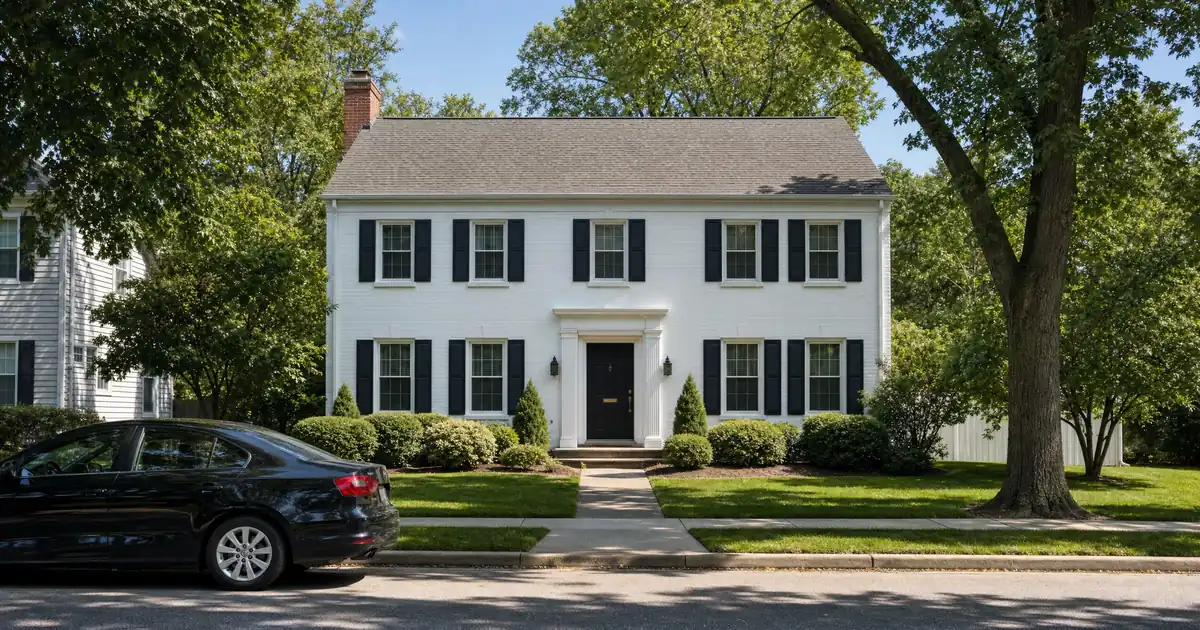
The Quick Read: A ground-up construction loan funds the actual build — land prep, framing, finishes — through staged draws tied to inspected progress, not through the property’s future rental income. It is a separate product from a DSCR loan, which is why so many investors get confused mid-project. Once the property is finished and holds a certificate of occupancy, the standard path is a refinance into a permanent DSCR loan sized to the vacation rental’s projected income. Get the sequencing wrong and you can end up with a finished house and no confirmed exit loan.
Key Takeaways
- A ground-up construction loan and a DSCR loan are two different products, usually bridged by a refinance once the build is done.
- Construction funds release in stages (“draws”) tied to inspected progress, not as one lump sum at closing.
- The permanent DSCR takeout loan underwrites the finished property’s projected rental income — not the builder’s credit or the construction budget.
- Brand-new vacation rentals have zero platform booking history, so the takeout DSCR relies on market rent data or short-term rental projections instead of trailing income.
- Property type matters: manufactured homes, log homes, and barndominiums are not offered on the DSCR side of this network, regardless of how strong the build’s projected rental income looks.
What Is a Ground-Up Construction Loan for a Vacation Rental?
A ground-up construction loan is short-term, interest-only financing that pays a builder in stages to build a house from a vacant lot or a teardown. It is not a mortgage on a finished, income-producing property — it is financing for a project that doesn’t exist yet.
Short-Term Rental Calculator
Run the STR numbers in your market
Rate is an editable market assumption — the live benchmark loads when available.
Prefilled with starting assumptions — enter your nightly rate, occupancy, taxes, and insurance for a more accurate picture.
Short-term rental income is documented with a 12-month history or a market data report. Program parameters update from Lendmire’s centralized guideline source.
Fallback assumption · General Freddie Mac market benchmark, not a Lendmire loan offer. Nightly rate, occupancy, taxes, and insurance are editable estimates. Qualifying income for short-term rentals varies by program — some use appraisal market rent, others use documented STR history or projections — and is confirmed in underwriting. Not a Loan Estimate, approval, or commitment to lend. Program availability and eligibility are subject to lender guidelines, credit approval, property review, and underwriting.
That distinction matters because it changes what the lender is actually underwriting. During construction, the lender is looking at the builder’s track record, the plans, the permits, and the budget. There’s no rent to evaluate yet, because there’s no finished house to rent. Once the property is done — walls up, systems inspected, certificate of occupancy issued — the financing conversation flips entirely. At that point a lender in Lendmire’s wholesale network is underwriting the property’s projected short-term rental income, not the construction project.
That second step is where a DSCR loan comes in. DSCR stands for debt-service coverage ratio — it’s a simple comparison of the property’s rental income against its full monthly housing payment (principal, interest, taxes, insurance, and any association dues). If a lender in the network is quoting a DSCR of 1.00x, that means the projected rent is expected to roughly match the payment. Lendmire’s complete DSCR loans guide walks through how that ratio gets calculated across property types, and it’s worth reading before shopping construction lenders — because the DSCR number at the back end of the project is what actually determines whether the build pencils.
Key Terms Defined
Draw schedule — the payment plan a construction lender uses to release loan funds in stages, tied to inspected construction milestones instead of one lump sum at closing.
DSCR (debt-service coverage ratio) — a comparison of a property’s monthly rental income to its full monthly housing payment, used to qualify investment-property loans on the property’s income instead of the borrower’s personal income.
As-completed appraisal — a valuation that estimates what a property will be worth once construction finishes, based on plans, specifications, and comparable sales, rather than its current as-is condition.
Two-time close — a construction financing structure where the construction loan and the permanent loan are two separate closings, giving more flexibility on the permanent loan’s terms but adding a second round of underwriting and closing costs.
Seasoning — the waiting period a lender wants between a property event (often purchase or completion) and a later refinance, before it will lend against today’s appraised value instead of the original cost basis.
Business-purpose loan — a loan made to an investor for a non-owner-occupied property held for income or profit, rather than for a personal residence.
Construction Loan vs. DSCR Takeout vs. Fix-and-Flip vs. HELOC
Investors building a vacation rental usually land on one of four financing paths, and they solve different problems. Here’s how they stack up:
| Financing Type | Best Use Case | Term Length | Income Documentation | Typical Exit |
|---|---|---|---|---|
| Ground-Up Construction | Building on vacant land or a teardown | Short-term, interest-only during build | Builder budget, plans, permits — not rental income | Refinance into permanent DSCR loan |
| DSCR Loan | Finished, rent-ready vacation rental | Long-term, amortizing (30-year fixed spine) | Property’s projected or actual rental income | Hold, sell, or later cash-out refinance |
| Fix-and-Flip | Acquiring and renovating an existing structure | Short-term, interest-only | Renovation budget and as-completed value | Sale or refinance into DSCR |
| Investor HELOC | Pulling equity from an existing rental to fund a build | Revolving line, capped at $500,000 total | Existing property equity and income | Paid down or refinanced |
The construction loan and the DSCR loan aren’t competitors — they’re sequential. A HELOC on an existing rental is sometimes used to fund the land purchase or a down payment on the construction loan itself, since the network doesn’t offer any investment-property equity line above the $500,000 cap.
How the Draw Schedule and Build Phase Actually Work
Nobody hands a builder the full loan amount on day one. Construction lenders release money in pieces, tied to verified progress, so the lender’s exposure never runs ahead of what’s actually been built.
A common structure splits a construction loan into roughly five draws, each released at a further 20% of completion — foundation, framing, mechanicals, finishes, and final walkthrough — with a third-party inspector confirming progress before each draw goes out, per PropertyMetrics. That’s an illustrative example of how draw mechanics work generally, not a fixed schedule every lender in Lendmire’s network follows — actual draw counts and trigger points vary by lender and project size.
During the build, borrowers typically pay interest only on funds actually disbursed, not on the full committed loan amount — so the payment obligation grows as draws go out, rather than starting at the full loan balance on day one. Budgeting the build itself is its own exercise. Nationally, NAHB’s most recent Cost of Constructing a Home survey put average single-family construction cost at $428,215, or about $162 per square foot — the highest in the survey’s history — with construction now making up 64.4% of the average new-home price, up from 60.8% two years earlier. Those are national averages, not a promise about what any specific build will cost, and land, permitting, and finish level all move the number.
Closing structure matters too. A two-time close involves separate closings for the construction loan and the permanent loan, which means underwriting twice — more paperwork, but more flexibility to shop the permanent DSCR terms once the build is finished rather than locking them in before ground is even broken.
Qualifying: What Lenders Actually Want to See
Getting approved for the construction side and the takeout side involves two different qualification checklists, and treating them as one is where investors get tripped up.
On the construction side, lenders in the network typically want a builder with demonstrated experience, a detailed budget or schedule of values, permits in hand, and builder’s risk insurance in place before the first draw goes out — separate from the landlord or short-term rental policy that takes over once the property is finished and rented. Reserve expectations vary by lender, leverage, and loan size; conservative files at modest leverage under $1.5 million sometimes see reserves waived entirely, while larger loans commonly step up to something closer to nine months of the full housing payment held in reserve.
On the permanent side, once the property is done, most short-term rental DSCR programs in Lendmire’s network want a credit score around 640 or better, roughly 12 months of landlord or hosting experience, and a projected coverage ratio at or above 1.00x at purchase. Credit floors elsewhere in the broader DSCR network run lower — some programs go as low as 620, with 660 being a common working minimum — but short-term rental takeout financing tends to sit at the higher end because the income itself carries more variability than a signed long-term lease. Terms vary by lender guidelines, property type, leverage, credit profile, and full file review.
Lendmire (NMLS# 2371349) arranges these files through select lenders across 40 states plus Washington, D.C. — and part of the value of working through a broker on a construction-to-DSCR file is comparing which lenders in that network will actually quote both sides of the deal, since not every construction lender offers a permanent takeout, and not every DSCR mortgage broker wants to touch a file that started as new construction.
Converting to Permanent Financing: How the Takeout DSCR Gets Underwritten
Once the certificate of occupancy is issued, the draw schedule and interest-only payments go away, replaced by a standard amortizing DSCR loan sized to the property’s projected rental income. DSCR loans are designed for non-owner-occupied investment properties. Because they are business-purpose investor loans, they get reviewed differently than a standard owner-occupied mortgage — no personal income documentation, no W-2s pulled apart line by line, qualification runs primarily on whether the property’s rental income covers the payment, subject to lender guidelines.
The wrinkle for a brand-new vacation rental: it has zero booking history on Airbnb or VRBO, because it didn’t exist as a rental until last month. Fannie Mae’s own appraiser guidance acknowledges that its standard rent-schedule form wasn’t built with short-term rentals in mind — the guide is silent on whether nightly-rental income should even count the same way a signed annual lease does. That’s exactly why the non-QM world built parallel documentation paths: a market rental analysis, comparable short-term rental data pulled from platforms like AirDNA, or in some cases a fallback to the more conservative long-term rent figure if the lender wants the more cautious number.
Most STR DSCR takeout programs cap purchase leverage around 75% LTV. On the refinance side — which is exactly what a construction-to-permanent conversion is — leverage typically tops out lower, around 70% LTV, with the projected coverage ratio still expected at 1.00x or better. Those are two different ceilings for two different transaction types, and conflating them is a common mistake investors make when pricing a project before it’s finished. Seasoning on that refinance side commonly runs around six months — and for a ground-up build, that clock generally starts at completion or certificate of occupancy, not at the original land closing.
What Happens If the Projected Rent Doesn’t Clear 1.00x?
New construction adds real uncertainty to a projected DSCR, and sometimes the completed property’s numbers land below a 1.00x coverage ratio on paper. That’s not automatically a dead end. Coverage below 1.00x is available through select lenders in the network, with leverage and terms adjusted to offset the thinner margin. No-ratio qualification — where the lender doesn’t size the loan to a coverage number at all — is also available, but only through select lenders, generally for borrowers who already own a primary residence. Neither path is universal, and both usually mean giving something back in leverage, credit depth, or reserves.
This is also where a DSCR loan differs from a conventional mortgage in a way that matters specifically for new construction: conventional lending won’t touch a property based on projected short-term rental income at all, while the DSCR world was largely built around exactly that scenario.
Where the General Rule Breaks: Edge Cases
No operating history is the defining problem, not an exception. Every ground-up vacation rental starts with zero trailing income by definition. Most programs lean on a market-rate rental analysis or platform-comparable data, often haircut to a conservative percentage of the projected gross, rather than treating the projection like verified income. That haircut methodology is the single biggest reason two lenders can look at the same finished house and land on materially different DSCR numbers.
Property type can end the conversation before the DSCR math even matters. Manufactured homes — single- or double-wide — log homes, and barndominiums are not offered under DSCR programs in this network, no matter how strong the projected short-term rental income looks on paper. Investors drawn to barndominium-style builds for their lower cost per square foot need to know this before they design around a financing plan that doesn’t exist here.
Regulatory risk sits inside the financing timeline, not just the operating timeline. Short-term rental rules can vary by city, county, HOA, and property type, and they can shift between groundbreaking and completion. An investor budgeting a build around projected nightly rates should confirm local rules before relying on that income to qualify, since a lender’s takeout DSCR calculation can’t price a rule change that hasn’t happened yet.
Loan size shapes structure at both ends. Standard programs in the network run up to roughly $3 million; above $2.5 million, the network generally holds to 30-year fixed structures on the permanent side rather than shorter or adjustable terms. Extended-term options — 40-year amortization, interest-only periods, and adjustable-rate structures — exist through select lenders for investors who want them, though they’re not universal across every lender quoting a file.
Market timing colors the pro forma, even if it doesn’t drive underwriting directly. AirDNA’s 2026 outlook projects occupancy averaging 57.4%, slightly above the pre-pandemic average, with demand and available listings both projected to grow modestly and RevPAR up around 2.9%. That’s national context for the pro forma an investor and appraiser will build — not a guarantee for any specific market or property.
Running the Numbers: A Worked Example
Picture an investor with a lot that, combined with the construction budget, runs roughly $520,000 in total project cost. The as-completed appraisal — based on plans and comparable finished short-term rentals in the area — comes back around $680,000. Once the certificate of occupancy is issued and the property converts to a permanent DSCR loan, the file is quoted at 70% LTV on the refinance side, with the market rental analysis projecting income that produces a coverage ratio in the neighborhood of 1.05x to 1.10x after the lender’s standard haircut. Exact terms depend on the lender’s guidelines, property type, leverage, and a full review of the borrower’s file.
That’s a workable file on paper — modeled assumptions, not sourced market data for any particular property — but it only works if two things line up at once: enough as-completed equity to support that leverage, and enough projected rental coverage to clear the lender’s floor. Clearing 1.00x on paper isn’t the same as positive cash flow, either — DSCR only measures rent against the housing payment, not against repairs, vacancy stretches, management fees, utilities, or furnishing costs, all of which sit outside the ratio entirely. Larger down payments and lower leverage can lift the DSCR number, but they don’t override a thin credit file, a property type the network doesn’t touch, or a builder with no track record.
Across the construction-to-STR files that come through a wholesale network like this one, a recurring pattern shows up: the file with tight-but-clearing long-term rent numbers and a strong trailing twelve-month platform track record usually underwrites cleaner than the file leaning entirely on an optimistic AirDNA projection with no comparable history at all — even when the raw projected dollar figures look similar side by side.
Tax treatment can depend on how the funds are used and how the property is held; investors should keep clear records and speak with a qualified tax professional before relying on any deduction tied to construction or rental costs.
For investors scaling past one build, cash-out refinancing an existing finished vacation rental to fund the next lot is a common move, and DSCR refinancing for vacation rentals is one way that equity-pull structure works once a property is seasoned. Higher-value builds — think large custom homes designed for premium nightly rates — sometimes route through luxury short-term rental financing instead of standard STR guidelines, given the different comparable pool those properties draw from. And for investors building in the U.S. without a domestic income history, Lendmire also arranges DSCR financing for foreign nationals who buy U.S. rentals, which follows a related but distinct documentation path.
Loan approval is never guaranteed, and nothing here is a commitment to lend. Every scenario described here is subject to lender approval and to borrower, property, and program guidelines, which change and get underwritten individually per file. This article is general information, not financial, legal, or tax advice.
Frequently Asked Questions
Is there a construction loan specifically built for Airbnb or vacation rental projects?
Not as a single labeled product — construction lenders fund the build based on the budget, plans, and builder, regardless of the intended end use. The vacation-rental-specific underwriting happens later, at the permanent DSCR takeout stage, when the lender evaluates the finished property’s projected short-term rental income.
Can projected Airbnb income be used to qualify for the construction loan itself?
Generally, no. During the build, the lender is underwriting the builder’s experience, the budget, and the plans — there’s no finished property yet to generate rental income. Projected rental income becomes relevant once the property is complete and the deal works into a DSCR-based permanent loan.
Do I need a certificate of occupancy before refinancing into a DSCR loan?
Yes, in most cases. A DSCR takeout loan is sized to a finished, income-producing property, and lenders typically want completion documentation — occupancy approval, final appraisal, insurance, and often some evidence of projected or actual rent — before permanent financing closes.
Can I build a barndominium or log home as a vacation rental with this type of financing?
No — manufactured homes, log homes, and barndominiums are not offered under DSCR programs in this network, regardless of the projected rental income the finished property might generate. That’s a property-type limitation, not a coverage-ratio issue, so it applies even to strong-looking files.
What credit score do I need for the permanent DSCR takeout on a new-build vacation rental?
Most short-term rental DSCR programs in the network look for a credit score around 640 or better, along with roughly 12 months of landlord or hosting experience. Scores below that threshold can sometimes still work through other property types in the broader DSCR network, but STR takeout financing tends to sit at the higher end of the credit spectrum. Every figure here varies by lender and program — guidelines, property type, leverage, and credit profile all apply.
If you’re planning a ground-up vacation rental build and want to see how the construction-to-DSCR sequence might work for your project, Lendmire can help compare options based on the build budget, projected rental income, credit profile, and leverage — reach Lendmire at 828-256-2183 or request a quote to start mapping out both sides of the loan.
This article is for general informational purposes only and does not constitute financial, legal, or tax advice. Program terms, leverage limits, and eligibility guidelines described here reflect select lenders within Lendmire’s wholesale network, are subject to change, and are not a commitment to lend. Every loan scenario is evaluated individually and remains subject to borrower, property, and program underwriting.
Investors focused on short-term rentals can review DSCR loans for Airbnb and short-term rentals.
About Lendmire
Lendmire (NMLS# 2371349) is a mortgage brokerage built around DSCR investor lending, with programs available in 41 markets, including Washington, D.C. DSCR lenders commonly evaluate rental-income coverage instead of personal income paperwork — a practical fit for LLC-owned and multi-property investors. Terms vary by lender, property, leverage, and program. Scotsman Guide named Lendmire a Top Mortgage Workplace in both 2025 and 2026.
Get Started
Ready to find the right loan for you?
In about 30 seconds you can review financing options available for your investment property. No commitment required.
Informational only. Not a Loan Estimate, approval, or commitment to lend. Program availability and eligibility are subject to lender guidelines, credit approval, property review, and underwriting.
References
1. PropertyMetrics — Construction Draw Schedule
2. NAHB — Cost of Constructing a Home in 2024
3. NAHB Blog — Cost of Construction Survey 2024
4. Fannie Mae Appraiser Update, June 2024
5. AirDNA / PRNewswire — 2026 Midyear Outlook
This article is part of Lendmire’s hard money loan program — full qualification details, guidelines, and scenarios live on the program page.
Related reading: New Construction Hard Money · Does A Newly Built Vacation Rental Qualify For A Jumbo DSCR Loan? · Construction Hard Money
Brandon Miller
Founder & CEO, Mortgage Loan Originator, Lendmire LLC
- Mortgage Loan Originator · NMLS# 1129696 · Verify on NMLS Consumer Access
- North Carolina Real Estate Broker · License# 343312 · Verify on NCREC
- North Carolina Insurance Producer · License# 19053198 · Property, Casualty, Life, Health · Verify on NAIC SBS
- Lendmire LLC · Firm NMLS# 2371349 · Verify firm licensure
Required disclosures. Lendmire (NMLS# 2371349) operates as a licensed mortgage broker, not a direct lender or depository. The discussion in this article is general in nature and should not be relied upon as financial, legal, or tax advice — every investment scenario is unique and should be reviewed by a qualified professional. Any loan inquiry is subject to lender underwriting, and this article is not a commitment to lend or a guarantee of approval. Mortgage rates, loan terms, and program guidelines vary by borrower, property, and state, and may change without notice. Equal Housing Opportunity. Verify licensure at NMLS Consumer Access.