
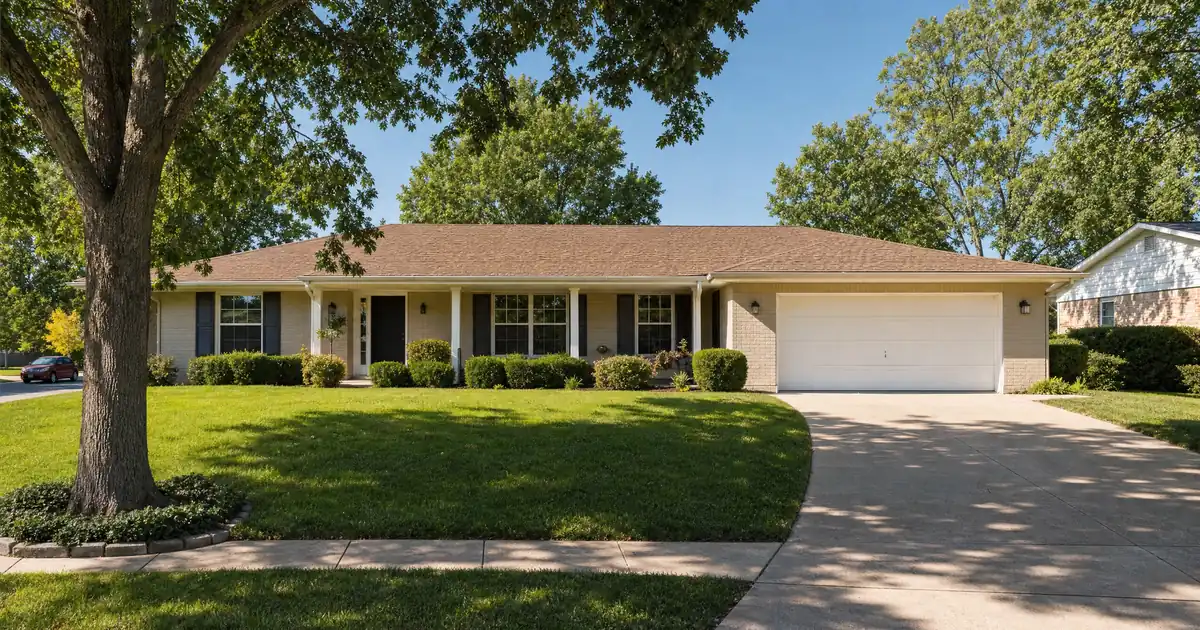
The Quick Read: Risk on a cash-out refinance comes down to two numbers pulling against each other: how much loan-to-value you’re adding, and whether the property’s rent still covers the new payment. On an investment-property cash-out refinance, leverage generally tops out around 75% LTV, lenders typically want about six months of ownership seasoning behind the deal, and coverage at or above a 1.00 debt-service-coverage ratio is where the strongest pricing starts on many programs. Pull too much equity, let coverage slip below that line, or skip the seasoning clock, and the deal works from routine to elevated risk — though elevated risk isn’t the same thing as dead on arrival.
Here’s what matters most before diving into the mechanics:
- Risk isn’t one formula. It’s five variables stacked together: loan-to-value, coverage ratio, credit tier, seasoning, and reserves.
- On rental properties, cash-out leverage runs lower than purchase leverage — usually capped around 75% LTV, versus 80% or higher on a purchase.
- A DSCR of 1.00 means rent covers the payment. It does not mean the property is cash-flow positive once repairs, vacancy, and management get factored in.
- Seasoning — the minimum hold time before a lender will use today’s value instead of the purchase price — typically runs about six months.
- Loan structure (interest-only, 40-year terms, adjustable rate) changes the coverage ratio’s math without changing anything about the property itself.
What “Risk” Actually Means on a Cash-Out Refinance
A cash-out refinance sends new money to the borrower on top of paying off the existing loan. A rate-and-term refinance just re-papers the balance. That distinction is the first thing underwriting checks, because sending cash out changes who’s on the hook for more debt against the same collateral — and it’s why cash-out transactions get capped and priced more conservatively than a purchase or a straight rate-and-term deal on the identical property.
DSCR loans are designed for non-owner-occupied investment properties. Because they’re business-purpose investor loans, they get reviewed differently than a standard owner-occupied mortgage — qualification runs primarily on the property’s rental income covering the payment, subject to lender guidelines, rather than personal income documentation. That’s the entire premise behind the debt-service-coverage ratio, and it’s also why “risk” on a DSCR cash-out deal isn’t measured the way a bank measures risk on a W-2 borrower’s refinance.
For a full walkthrough of how the ratio itself gets built, Lendmire’s complete DSCR loans guide breaks down the coverage math from the ground up. This piece focuses specifically on how that math turns into a risk read once cash is leaving the closing table.
Key Terms Defined
DSCR (debt-service-coverage ratio) — qualifying monthly rent divided by the full monthly housing obligation. A ratio of 1.00 means rent exactly covers that obligation; above 1.00 means there’s cushion.
LTV (loan-to-value) — the new loan balance expressed as a percentage of the property’s appraised value. Higher LTV means less equity cushion left in the deal.
PITIA — principal, interest, taxes, insurance, and association dues where applicable. This is the “payment” side of the DSCR calculation.
Seasoning — the minimum length of time a lender wants an investor to have owned a property before it will lend against today’s appraised value instead of the original purchase price.
Cash-out refinance vs. rate-and-term — a cash-out refinance pays off the old loan and hands the borrower additional funds; a rate-and-term (or “limited cash-out”) refinance mainly just replaces the old loan with a new one at a different structure.
Reserves — liquid funds a borrower has to show, measured in months of future PITIA, held as a cushion against vacancy or repair costs.
Prepayment penalty — a fee charged if the loan is paid off or refinanced before a set number of years, usually shrinking each year until it disappears.
The Core Risk Formula: Leverage Plus Coverage
The lender’s actual risk question is simple: does this loan have enough equity cushion, and does the property’s own income cover the payment? Those are two separate tests, and a deal has to clear both — a strong down payment doesn’t erase a thin coverage ratio, and a strong coverage ratio doesn’t erase a leverage cap.
LTV is the loan balance divided by the appraised value. On a cash-out refinance, most programs in Lendmire’s wholesale network hold that ceiling around 75% — meaningfully lower than the 80%-85% leverage some purchase programs allow, because pulling equity out is a structurally different risk than acquiring the asset in the first place.
Coverage is rent used for lender review divided by PITIA. Picture a rental appraised at $400,000, refinanced at a leverage level comfortably below the network’s 75% LTV ceiling, with a modeled coverage ratio landing around 1.15x — comfortably above the 1.00 floor that many programs use as a baseline. Push that same property to a payout closer to the leverage ceiling without first checking whether rent actually supports it, and the modeled ratio can slide toward 1.00 or below, moving the file from routine pricing into a more conservative review lane. That’s the whole risk calculation in miniature: leverage up, coverage down, risk up. Final terms depend on lender guidelines, property type, leverage, and the borrower’s complete credit picture.
For the mechanics of turning an appraised value and a payoff balance into an actual proceeds number, Lendmire’s guide on how to calculate a cash-out refinance walks through that math step by step, and a companion piece covers how much cash you can actually take out once the LTV ceiling and payoff are known.
Step-by-Step: How Underwriting Actually Treats the File
Step 1 — Classify the transaction. Every file gets sorted into rate-and-term or cash-out before anything else happens. This single decision sets the leverage ceiling and turns on the seasoning clock for the rest of underwriting.
Step 2 — Order the appraisal and rent determination. An appraiser establishes both market value and market rent. On one-unit rentals, that rent figure typically gets documented on the Single-Family Comparable Rent Schedule, Form 1007, while two-to-four-unit properties use the equivalent small-income-property form. These forms originate in the agency world, but DSCR lenders across the non-QM space widely use the identical format as their rent-verification standard — one of the few places agency and DSCR underwriting mechanically overlap.
Step 3 — Calculate the coverage ratio. Rent from step two divided by the projected PITIA on the new loan amount. This is the core “does the collateral pay for itself” test.
Step 4 — Set the leverage. The requested loan amount against the appraised value determines LTV, and that number gets checked against the program ceiling — around 75% on most cash-out files in Lendmire’s network, occasionally lower in overlay states.
Step 5 — Check seasoning. About six months of ownership, measured from title recording, is the common expectation before a lender will use current value instead of purchase price on a cash-out deal. Files that haven’t hit that mark generally get evaluated differently, or wait.
Step 6 — Layer credit, reserves, and structure. Credit tier moves both pricing and available leverage — most programs in the network want a score somewhere around 660, a 620 floor exists on parts of the network, and a 700-plus score tends to unlock the strongest leverage tiers. Reserves, usually around six months of PITIA and stepping up toward nine months on loans above $1,500,000, absorb the shock of a vacant month or an unexpected repair. None of these are single national numbers — they’re overlays that shift file by file.
Federal research backs up why this whole sequence exists in the first place. The Consumer Financial Protection Bureau’s Office of Research found that cash-out refinances contributed to the 2008 financial crisis, and separately noted that cash-out activity became more common relative to non-cash-out refinancing during periods when rates were rising sharply — precisely the environment where the new loan carries more long-run risk. That’s the empirical basis for treating cash-out as the higher-scrutiny transaction across the mortgage industry, non-QM included.
Stress-Testing the Deal
A single LTV and a single DSCR number only describe the deal as it looks today. The more useful risk read comes from asking what happens if one input moves.
| Scenario | Effect on LTV | Effect on Coverage Ratio |
|---|---|---|
| Appraisal comes in below expectation | Rises — same loan request against a lower value | Unchanged, but less room to size the loan |
| Rent comes in below projection | Unchanged | Falls — payment stays fixed, income shrinks |
| Credit tier drops before closing | Unchanged directly, but caps available leverage | Unchanged, but pricing tier shifts |
| A vacancy hits shortly after closing | Unchanged | Falls to zero on that unit until re-leased |
The last row is the one investors underestimate most. DSCR measures rent against payment at a point in time — it says nothing about what happens the month a tenant leaves. That’s precisely why reserve requirements exist as a separate layer from the coverage ratio itself, not a substitute for it. These specifics are subject to lender guidelines and a full review of property, leverage, and credit.
Across the deals Lendmire’s network sees, the files that run into trouble almost never fail on DSCR alone — they fail on the combination of tight coverage, minimal reserves, and leverage pushed to the ceiling all at once. A file with one weak input and two strong ones usually still prices reasonably; a file with two weak inputs stacked together is where lenders start asking for more equity down or more cushion in the bank before they’ll move forward.
Where the General Rule Breaks
Vacant properties. No lease means no anchor for the income side of the ratio — the entire coverage number rests on the appraiser’s market-rent opinion. If that figure lands lower than an investor expected, the calculated risk profile shifts before the loan is even priced.
Interest-only and 40-year structures. An interest-only period lowers the payment used in the coverage math, which mechanically raises the calculated DSCR without the property’s actual cash flow changing at all. Select lenders in Lendmire’s network offer interest-only periods and extended 40-year terms specifically because they let a thinner-margin deal clear coverage — but that ratio boost disappears the moment the loan converts to full amortization, and the payment jumps at that point.
Prepayment penalties. These change the risk of exiting early, not the risk of qualifying. A declining penalty that shrinks each year the loan is held doesn’t show up anywhere in the monthly DSCR math, but it directly affects the cost of a sale or refinance inside that window — worth knowing before assuming today’s ratio tells the whole story.
Seasoning versus a cash purchase. An investor who bought with cash faces a different calculus than one who’s owned the property under financing for six months — lenders in the network review these case by case rather than applying one blanket rule.
Property-type tiering. Small multifamily, condos, and mixed-use properties commonly sit in a more conservative leverage tier than single-family rentals, even on an identical borrower profile. Some property types don’t get financed under DSCR programs at all — manufactured homes (single- and double-wide), log homes, and barndominiums fall outside the network’s guidelines entirely, regardless of coverage or credit.
Sub-1.00 coverage. A ratio below 1.00 isn’t automatically disqualifying. It’s available through select lenders in Lendmire’s network, but leverage and terms get adjusted to reflect the added risk — lower LTV, different pricing, or stronger reserves are the usual trade. A no-ratio structure, where the property’s income isn’t the qualifying factor at all, exists only through select lenders and is generally reserved for borrowers who already own a primary residence.
Short-term rentals. STR cash-out sits at its own leverage tier through select lenders in the network — around 70% LTV on refinances, with purchase leverage running higher at up to 75%. Those programs typically want a 640-plus score and roughly 12 months of hosting history, and some treat a 1.00 coverage ratio as a program-specific floor on the refinance side rather than a universal standard across the network. Treat STR purchase and STR refinance as two different ceilings, not one blended number, and confirm the exact figure with the individual lender before assuming it applies across the board.
Commercial-scale DSCR is a different universe. Worth flagging so it doesn’t get confused: in one recent CMBS issuance analysis, multifamily properties carried a loan-to-value weighted average of 68.4% and a debt-service-coverage ratio as low as 1.33x, per Scotsman Guide. That’s institutional apartment-building underwriting at a completely different scale than the 1-4 unit residential DSCR programs most rental-property investors use — applying commercial benchmarks to a single-family cash-out file is a common and costly mix-up.
Structures That Change the Risk Picture
The spine of most DSCR cash-out financing is a 30-year fixed loan, and that structure is where most files land. Select lenders in the network also offer 40-year amortization and interest-only periods for investors chasing a stronger modeled coverage ratio, and adjustable-rate structures exist for those who want them. Loan sizes on standard cash-out programs generally run up to $3,000,000, with smaller balances routed through select lenders that specialize in that segment; above $2,500,000, the network generally holds to 30-year fixed structures rather than the more exotic options.
State overlays matter too. In Connecticut, Florida, Illinois, and New Jersey, purchase leverage generally caps closer to 75% LTV, and overlay-state deals often top out around $2,000,000 regardless of how strong the file otherwise looks. That’s a program-level reality, not a market prediction — it applies to the file’s structure no matter where in those states the property sits.
For investors who want equity access without refinancing the whole first mortgage, an investment-property HELOC is worth knowing about as an alternative — though those lines cap at $500,000 total across the network, with no tier available above that ceiling. A HELOC carries a different risk profile entirely: it’s a draw-based line rather than a fixed lump sum, and Lendmire’s page on pulling equity from a rental property without a full refinance covers that comparison directly. For a side-by-side on how DSCR loans differ from a conventional loan structurally, Lendmire’s guide comparing DSCR and conventional loans is the deeper resource.
Common Mistakes Investors Make When Sizing This Risk
The single most common error is treating a DSCR at or above 1.00 as “positive cash flow.” It isn’t. The ratio only compares rent to PITIA — repairs, vacancy, management fees, and capital expenditures sit entirely outside that math. A property clearing 1.15x on paper can still lose money in practice if those other costs run high.
The second is assuming purchase leverage caps carry over to a cash-out refinance on the same property. They don’t — cash-out leverage is consistently the more conservative number in the network, and stacking a purchase-level LTV assumption onto a refinance request is a fast way to get surprised by the actual number a lender comes back with.
The third is ignoring the reserve step-up. A file under $1,500,000 with modest leverage might see a lighter reserve requirement; push the loan size or leverage higher and that reserve expectation typically climbs toward nine months of PITIA. Sizing a deal without accounting for that shift is a frequent gap between what an investor expects and what underwriting requests.
Tax treatment is worth a brief mention here too, since it factors into how investors think about proceeds: it can depend on how the funds are used and how the property is held, and investors should keep clear records and speak with a qualified tax professional before relying on any deduction.
What the Decision Actually Looks Like
Before pulling equity, run through this in order: check today’s appraised-value LTV against the roughly 75% ceiling, model the coverage ratio using current market rent (not a hopeful number), confirm the property has cleared six months of seasoning, check where credit tier lands relative to the 620/660/700-plus breakpoints, and confirm reserves on hand match what the loan size and leverage will likely require. Lendmire’s breakdown of how lenders actually calculate DSCR on a cash-out refinance walks through that ratio build in more depth than space allows here.
If those numbers hold up with some cushion, the deal is a routine file. If one or two are thin, that’s not necessarily a dead end — it’s a conversation about adjusting leverage, structure, or reserves to bring the risk back in line. Lendmire, a mortgage broker (NMLS# 2371349), arranges DSCR investor loans across 40 states plus Washington, D.C. — and works through a network of lenders that price sub-1.00 and higher-leverage scenarios differently depending on the file, subject to lender program eligibility on any deal structured through an LLC.
If you’re weighing a cash-out refinance on a rental and want to see how the LTV, coverage ratio, and reserve numbers actually stack up for a specific property, Lendmire can help compare options against the property’s income, the borrower’s credit profile, and the leverage being requested. Reach the team at 828-256-2183 or start with a pricing quote request.
No loan approval is ever guaranteed, and nothing here is a commitment to lend. Every scenario described here is subject to lender approval and to borrower, property, and program guidelines that can change without notice. This article is general information only, not financial, legal, or tax advice, and review details are subject to lender overlays.
Frequently Asked Questions
What LTV can I get on a cash-out refinance for a rental property?
Most programs in Lendmire’s network cap cash-out leverage around 75% LTV on investment properties, lower than typical purchase leverage. The exact ceiling depends on credit tier, property type, and whether the state carries its own overlay — Connecticut, Florida, Illinois, and New Jersey commonly run tighter caps regardless of the file’s other strengths.
Is a DSCR of 1.00 considered risky?
A 1.00 ratio means rent exactly covers PITIA with no cushion, which many lenders treat as the minimum baseline rather than a comfortable margin. It’s not automatically “risky” in the sense of being denied, but it typically means less flexibility on pricing or leverage compared to a file clearing 1.20x or higher, and it leaves zero room for a rent dip or a repair bill.
How does seasoning affect cash-out refinance risk?
Seasoning determines whether a lender will use today’s appraised value or the original purchase price when sizing the loan. Most programs want about six months of ownership before they’ll lend against current value on a cash-out request — skip that window and the loan amount may get tied to the lower, older number instead.
Can I do a cash-out refinance with less than 1.00 DSCR?
Sub-1.00 coverage is available through select lenders in Lendmire’s network, but leverage and pricing adjust to reflect the added risk. Expect a lower LTV ceiling or stronger reserves in exchange for coverage that falls short of the 1.00 baseline — it’s a different structure, not an automatic decline.
Does an interest-only structure make a cash-out refinance riskier?
It changes the risk profile rather than eliminating it. Interest-only lowers the payment used in the coverage calculation, which raises the modeled DSCR, but the payment increases once the loan converts to full amortization — a shift that can strain cash flow years down the line if it isn’t planned for in advance.
For how equity extraction works on an investment property, see cash-out refinance on an investment property.
About Lendmire
A DSCR-focused mortgage broker, Lendmire (NMLS# 2371349) places investor financing across 41 markets — 40 states plus Washington, D.C. — with DSCR eligibility generally reviewed by the lender on property cash flow instead of tax returns, subject to lender guidelines. Scotsman Guide named Lendmire a Top Mortgage Workplace in 2025 and 2026.
A deeper walk-through of investment-property equity extraction lives in cash-out refinance on an investment property.
Scotsman Guide’s Top Mortgage Workplace list for 2025 documents Lendmire’s recognition.
Get Started
Ready to find the right loan for you?
In about 30 seconds you can review financing options available for your investment property. No commitment required.
Informational only. Not a Loan Estimate, approval, or commitment to lend. Program availability and eligibility are subject to lender guidelines, credit approval, property review, and underwriting.
References
1. Fannie Mae Selling Guide — B3-3.8-01, Rental Income
2. Scotsman Guide — CMBS Issuance Passes $76 Billion in the First Seven Months of 2026
This article is part of Lendmire’s investment property cash-out refinance program — full qualification details, guidelines, and scenarios live on the program page.
Related reading: 30 Year Mortgage Refinance Investment Property · How To Calculate Cash Out Refinance · DSCR Cash Out Refinance
Brandon Miller
Founder & CEO, Mortgage Loan Originator, Lendmire LLC
- Mortgage Loan Originator · NMLS# 1129696 · Verify on NMLS Consumer Access
- North Carolina Real Estate Broker · License# 343312 · Verify on NCREC
- North Carolina Insurance Producer · License# 19053198 · Property, Casualty, Life, Health · Verify on NAIC SBS
- Lendmire LLC · Firm NMLS# 2371349 · Verify firm licensure
Important disclosures. Lendmire (NMLS# 2371349) is a licensed mortgage brokerage. Lendmire is not a direct lender, depository institution, or financial advisor. All loan inquiries are subject to lender underwriting; this article does not constitute a commitment to lend. Rates, terms, and program guidelines are subject to change without notice and vary by borrower profile, property type, and state. Information in this article is general in nature and is not financial, legal, or tax advice. Equal Housing Opportunity. NMLS Consumer Access: nmlsconsumeraccess.org.