
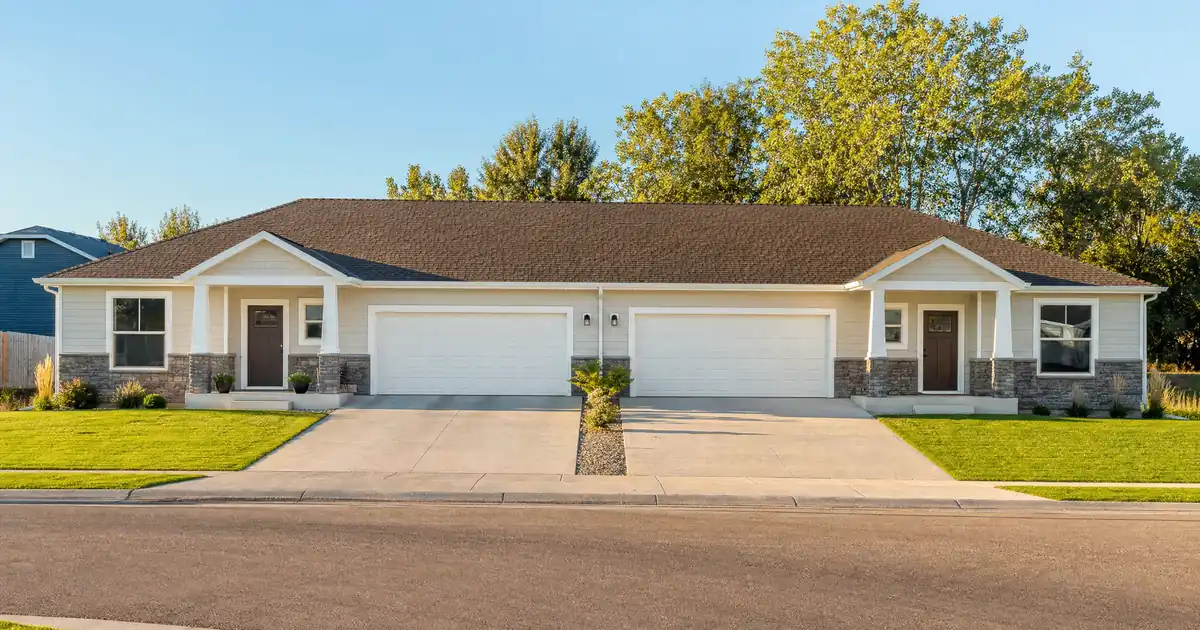
The Quick Read: Yes — the answer just depends on where you sleep. Buy the duplex purely as a rental and Airbnb one or both units, and it’s a business-purpose loan qualified on the property’s rental income. Move into one side yourself, and the deal shifts to owner-occupied financing, where only the other unit’s rent typically counts toward your file.
Key Terms Defined
DSCR (debt-service coverage ratio): the number that compares a property’s rent to its full monthly housing payment; a ratio above 1.00 means the rent covers the payment on paper.
Short-Term Rental Calculator
Run the STR numbers in your market
Rate source: Freddie Mac 30-yr average via FRED® — Federal Reserve Bank of St. Louis · effective Aug 20, 2026
Prefilled with starting assumptions — enter your nightly rate, occupancy, taxes, and insurance for a more accurate picture.
Short-term rental income is documented with a 12-month history or a market data report. Program parameters update from Lendmire’s centralized guideline source.
As of Aug 20, 2026 · General Freddie Mac market benchmark, not a Lendmire loan offer. Nightly rate, occupancy, taxes, and insurance are editable estimates. Qualifying income for short-term rentals varies by program — some use appraisal market rent, others use documented STR history or projections — and is confirmed in underwriting. Not a Loan Estimate, approval, or commitment to lend. Program availability and eligibility are subject to lender guidelines, credit approval, property review, and underwriting.
LTV (loan-to-value): the percentage of a property’s price or appraised value a loan covers; the rest comes from a down payment or existing equity.
Business-purpose loan: financing for a property the borrower doesn’t intend to occupy; DSCR loans fall into this category and are underwritten around the property’s income rather than the borrower’s paycheck.
Owner-occupied: living in the home as a primary residence; it opens different loan programs and changes how a lender treats rental income from the rest of the property.
Form 1025: the standard appraisal report for 2-4 unit residential properties, used to value both the building and its rental income.
Seasoning: the waiting period a lender wants between buying — or refinancing — a property and pulling cash back out of it.
Two Very Different Duplexes, Two Very Different Loans
A duplex with Airbnb on one side splits into exactly two financing stories, and almost every question an investor has traces back to which one applies.
Story one: you buy the duplex as a pure investment. You don’t live in either unit. One side runs on a normal lease, the other runs nightly on Airbnb, or both sides run nightly. Doesn’t matter. This is a rental property, full stop, and it finances like one.
Story two: you buy the duplex to live in. You occupy one unit as your primary residence and Airbnb the other. This is house hacking, and it opens a different set of loan programs — often with better leverage — because a lender is financing a home you live in, not a pure rental.
The property is identical either way. The financing, the appraisal, and the ongoing rules are not.
If You Plan to Live in One Unit
Living in one side of the duplex opens owner-occupied financing — conventional, FHA, or VA — which typically comes with a lower down payment than a pure investment purchase. The appraiser still uses Form 1025, the standard 2-4 unit income appraisal, to estimate what the other unit rents for. That figure can help you qualify, but it’s a long-term monthly rent estimate — not a nightly Airbnb projection.
Here’s the catch: an owner-occupied loan program isn’t built to underwrite nightly income on the unit you don’t occupy. Some programs will credit a portion of that projected rent toward your file; others won’t touch Airbnb income until you’ve built a hosting track record. That’s a program-by-program call, not a blanket rule.
This path also doesn’t require you to have owned a home before — worth clearing up, since it’s a common misconception covered in Lendmire’s piece on whether you need to own a home to buy an Airbnb. First-time buyers house-hack duplexes constantly; the occupancy commitment is what unlocks the financing, not a prior mortgage.
If your real plan is to live in the duplex for a year, then move out and convert both sides to short-term rentals, that’s a legitimate strategy — but it’s also exactly the kind of occupancy shift a lender’s affidavit doesn’t anticipate. Loan programs care what you intend at closing, not what you might do eighteen months later. Investors weighing that pivot are usually better off asking directly before they buy, rather than backing into it after.
If You Plan to Rent Both Sides
Skip the house-hack and buy the duplex as a straight rental, and the deal works to a DSCR loan — qualified primarily on the property’s rental income covering the payment, subject to lender guidelines, rather than your traditional personal-income documentation. DSCR loans are designed for non-owner-occupied investment properties. Because they’re business-purpose investor loans, they’re reviewed differently from a standard owner-occupied mortgage — federal lending rules treat non-owner-occupied rental financing as a business purpose regardless of unit count, which is exactly why this loan category exists (Consumer Financial Protection Bureau).
A duplex where one side leases long-term and the other runs nightly gets underwritten on a blended basis: combine both units’ income, then measure it against the full monthly payment. Across the wholesale network Lendmire (NMLS# 2371349) works through in 40 states plus Washington, D.C. — this kind of mixed-income duplex is one of the more favorable coverage scenarios in the file stack. Two income streams instead of one usually means less exposure if either side sits vacant for a stretch.
Documenting the Airbnb side is the part that trips people up. Appraisers don’t have a form built for nightly income. The standard rent schedule used on small residential income properties, Form 1007, was built around monthly comparable rentals, not hotel-style nightly bookings. So lenders lean on a mix of documented rental history, projected market rent, appraisal data, or third-party short-term rental data to translate nightly income into something a coverage calculation can use. Which mix a given lender accepts varies — some want a full trailing twelve months of platform statements, others will underwrite off a market-rent projection with no hosting history yet, provided the rest of the file is strong.
For a full walkthrough of how these loans actually qualify, Lendmire’s complete DSCR loans guide covers the mechanics in depth.
The Numbers Lenders Actually Use
On a duplex with real Airbnb income, most lenders in the network want a 640-plus credit score, roughly a year of hosting history, and a coverage ratio at or above 1.00 — a floor some programs use as a starting point, not a universal rule. Purchase leverage on a short-term rental duplex typically tops out around 75% loan-to-value; refinance and cash-out transactions cap lower, generally around 70%.
A duplex with no short-term income at all — both units on standard leases — often qualifies for higher leverage, sometimes reaching into the 80-85% range on the strongest files, because lease-based rent is easier to document and doesn’t carry the calendar volatility of nightly bookings.
| Scenario | Typical Purchase LTV | Typical Credit | Host History Needed |
|---|---|---|---|
| Both units, long-term lease | Up to ~80-85% on strong files | 660-700+ | None |
| One unit leased, one Airbnb | Up to ~75% | 700+ | ~12 months |
| Both units, Airbnb | Up to ~75% | 700+ | ~12 months |
Reserve requirements move with leverage, loan size, and transaction type — commonly around six months of the housing payment held in reserve, sometimes waived on conservative refinances under roughly $1.5 million, and often stepping up toward nine months on larger balances. Loan sizes on these files commonly run from the low six figures into the low seven figures, with standard programs reaching up to $3 million and select lenders handling smaller balances outside that range.
If the blended rent doesn’t quite clear 1.00 — say a strong Airbnb side is offset by a soft long-term lease next door — that’s not automatically a dead end. Select lenders in the network still work with coverage below 1.00, just with adjusted leverage and pricing to compensate for the thinner cushion.
Zoning and Permits: Why Living There Still Matters
Financing eligibility is only half of what actually lets you run Airbnb out of a duplex. Cities regularly license owner-occupied and non-owner-occupied short-term rentals under different rules, and the owner-occupied side is almost always the easier permit to land.
Nashville’s ordinance is a clean illustration: a two-family property only qualifies for an owner-occupied short-term rental permit if the owner actually lives in one of the two units, and ownership of the two sides can’t be split between different people (City of Nashville). Colorado Springs draws its owner-occupied line at 185 days of physical occupancy per year, and its non-owner-occupied permits are blocked outright in single-family zoning districts for newer applications. Corpus Christi caps non-owner-occupied rentals geographically, limiting them to 15% of a given block face on a first-come basis.
None of this is universal — ordinances vary by city, county, and sometimes by HOA, and they change without much warning. The pattern that does hold up nationally: owner-occupied hosts usually get a lighter, cheaper permit tier, while a pure investment duplex running Airbnb on both sides draws more scrutiny and, in some markets, a real cap on how many units can qualify at all. Short-term rental rules can vary by city, county, HOA, and property type, so investors should confirm local rules before relying on projected rental income.
Three Ways to Run the Duplex
Running both units on standard leases gives the steadiest income and the least management work — and usually the easiest path to higher purchase leverage. Running both units on Airbnb usually produces the highest income ceiling, but it comes with the most vacancy risk, the most day-to-day management, and the tightest financing terms. Splitting the difference — one side leased, one side nightly — sits in the middle: less upside than full Airbnb, less volatility than full lease, with coverage math that benefits from two different income sources instead of one.
| Configuration | Income Ceiling | Vacancy Risk | Management Load | Financing Terms |
|---|---|---|---|---|
| Both units, long-term lease | Lowest | Lowest | Lightest | Best leverage |
| One leased, one Airbnb | Middle | Middle | Moderate | Standard DSCR terms |
| Both units, Airbnb | Highest | Highest | Heaviest | Tightest LTV, highest credit bar |
None of these is objectively better — it’s a tradeoff between ceiling and cushion. An investor chasing the highest leverage and the least hands-on work usually leans toward the all-lease configuration. An investor chasing yield, and comfortable running a booking calendar, leans toward the mixed or full-Airbnb setup. The honest middle-ground argument: mixed configuration often wins on risk-adjusted terms even though full Airbnb wins on raw income potential — a tradeoff worth sizing before you fall for the bigger number.
Before You Close: A Due Diligence Checklist
Confirm these before you sign anything, not after:
- Legal unit count. Verify the county actually records the property as a legal duplex, not a single-family home with an unpermitted conversion. This affects both financing and Airbnb permitting.
- Utility separation. Check whether each unit has its own meters for electric, gas, and water. Shared utilities complicate landlord-tenant billing and short-term rental cost tracking alike.
- Local STR ordinance. Look up the specific city and county rules on owner-occupied versus non-owner-occupied permits, caps, and licensing fees before assuming Airbnb is even allowed.
- HOA restrictions. Many HOAs and condo-style duplex associations ban or heavily restrict short-term rentals regardless of what the city allows.
- Shared structural elements. Note shared walls, entrances, driveways, or yards. These drive the coexistence issues below.
- Insurance posture. Confirm with a carrier, before closing, that the policy you’re planning to use actually covers short-term rental activity.
Tenants, Guests, and the Shared Wall
A long-term tenant and a rotating cast of Airbnb guests sharing one building creates friction that neither loan paperwork nor zoning code addresses. Noise, parking, shared entrances, and trash pickup are the recurring complaints in mixed-use duplexes — and they land on the landlord to solve, not the platform.
Practical fixes that actually hold up: separate, clearly marked entrances where the layout allows it; a house-rules document for the Airbnb side with quiet hours that match the tenant’s expectations; and a dedicated parking assignment so guests aren’t circling the tenant’s spot. On the listing itself, disclose that the property is a shared, two-unit building with a neighboring occupant. Guests who book expecting a standalone home and find a shared duplex leave the reviews that sink a listing.
Insurance and Taxes, in Brief
Standard homeowners insurance generally excludes business activity, and short-term renting counts as business activity — the moment a paying guest checks in, coverage gaps can open on any claim tied to that stay (Proper Insurance). On a two-unit building, that exposure doesn’t stay contained to one side. Running Airbnb on one unit can touch the coverage picture for the whole structure, including a shared or master policy, which is why a dedicated landlord or short-term rental policy is worth pricing before you list. Tax treatment can depend on how the funds are used and how the property is held; investors should keep clear records and speak with a qualified tax professional before relying on any deduction.
Talk Through Your Numbers Before You Offer
If you’re buying or refinancing a rental property and want to see how the numbers work, Lendmire can help compare DSCR loan options based on the property’s income, credit profile, leverage, and investor goals. Reach the team at 828-256-2183 or request a quote to run a specific duplex scenario before you write an offer.
Nothing here is a commitment to lend, and loan approval is never guaranteed. Every scenario described is general information, not financial, legal, or tax advice, and actual terms depend on lender approval along with the specific borrower, property, and program guidelines in place at the time of application.
Frequently Asked Questions
Do I have to tell Airbnb guests that a tenant lives on the other side of the duplex?
Not disclosing it isn’t illegal, but it’s a fast way to collect bad reviews. Guests booking what they think is a private home and discovering a shared duplex wall tend to complain about noise and privacy even when nothing actually went wrong. Listing the property honestly as a shared, two-unit building — and setting expectations about a neighboring occupant — protects both the booking calendar and the review score.
Can a first-time investor buy a duplex and Airbnb one side without owning a home first?
Yes, on both the owner-occupied and pure-investment paths. Prior homeownership isn’t a requirement for a business-purpose DSCR loan, since qualification runs on the property’s projected income rather than the borrower’s mortgage history.
Which loan carries more risk: owner-occupied house hacking or a straight DSCR purchase?
Owner-occupied financing usually offers better leverage, but it ties your living situation to the property and to an occupancy certification signed at closing. A DSCR purchase carries a higher down payment expectation and a credit bar built around the property’s income, but it doesn’t require you to live anywhere near the Airbnb side. Neither is inherently riskier — they trade different exposures.
Does running Airbnb on one side of a duplex affect the mortgage on the whole building?
It can, particularly on the insurance side. A standard homeowners or landlord policy written before Airbnb activity started may not extend to short-term guest stays, and that gap can touch the building’s overall coverage picture, not just the unit being rented nightly. Getting the policy re-priced or endorsed for short-term use before listing avoids a coverage surprise later.
Once the duplex is stabilized, can I refinance and pull cash out to buy another property?
Potentially, subject to seasoning and equity requirements. Cash-out refinancing on a short-term rental duplex generally caps lower than a purchase loan, and lenders typically want several months of seasoning plus a documented income history before approving. Investors scaling this way often use a DSCR cash-out refinance to fund the next purchase.
Investors focused on short-term rentals can review DSCR loans for Airbnb and short-term rentals.
About Lendmire
Lendmire (NMLS# 2371349), a non-QM mortgage broker serving investors in 41 markets including Washington, D.C., helps structure DSCR scenarios commonly evaluated around a property’s rental income rather than personal income paperwork, subject to lender guidelines. A Scotsman Guide Top Mortgage Workplace in 2025 and 2026, Lendmire places loans through wholesale investor lenders and is not a direct lender.
Get Started
Ready to find the right loan for you?
In about 30 seconds you can review financing options available for your investment property. No commitment required.
Informational only. Not a Loan Estimate, approval, or commitment to lend. Program availability and eligibility are subject to lender guidelines, credit approval, property review, and underwriting.
References
1. Barnes Walker Legal Glossary — Form 1025
2. Consumer Financial Protection Bureau — Regulation Z Interpretations
3. McKissock — Form 1007 and Its Impact on Short-Term Rental Appraisals
4. City of Nashville — Short-Term Rental Permit Types
5. Proper Insurance — Short-Term Rental Insurance
This article is part of Lendmire’s short-term rental loan program — full qualification details, guidelines, and scenarios live on the program page.
Related reading: Can I Live in a Home Bought With a DSCR Loan? · Can You Refinance An Investment Duplex? · Is An Airbnb Considered An Investment Property?
Brandon Miller
Founder & CEO, Mortgage Loan Originator, Lendmire LLC
- Mortgage Loan Originator · NMLS# 1129696 · Verify on NMLS Consumer Access
- North Carolina Real Estate Broker · License# 343312 · Verify on NCREC
- North Carolina Insurance Producer · License# 19053198 · Property, Casualty, Life, Health · Verify on NAIC SBS
- Lendmire LLC · Firm NMLS# 2371349 · Verify firm licensure
Compliance and disclosures. Lendmire (NMLS# 2371349) is a licensed mortgage broker and is not a direct lender, depository institution, financial advisor, or tax professional. Content in this article is general market analysis and educational information — not financial, legal, or tax advice for any specific situation. Lendmire does not guarantee loan approval; every transaction is subject to underwriting by the funding lender. Mortgage pricing and loan program guidelines are subject to change at any time without notice and vary by borrower characteristics, property type, and state regulations. Lendmire complies with Equal Housing Opportunity. Licensure verification: NMLS Consumer Access.