
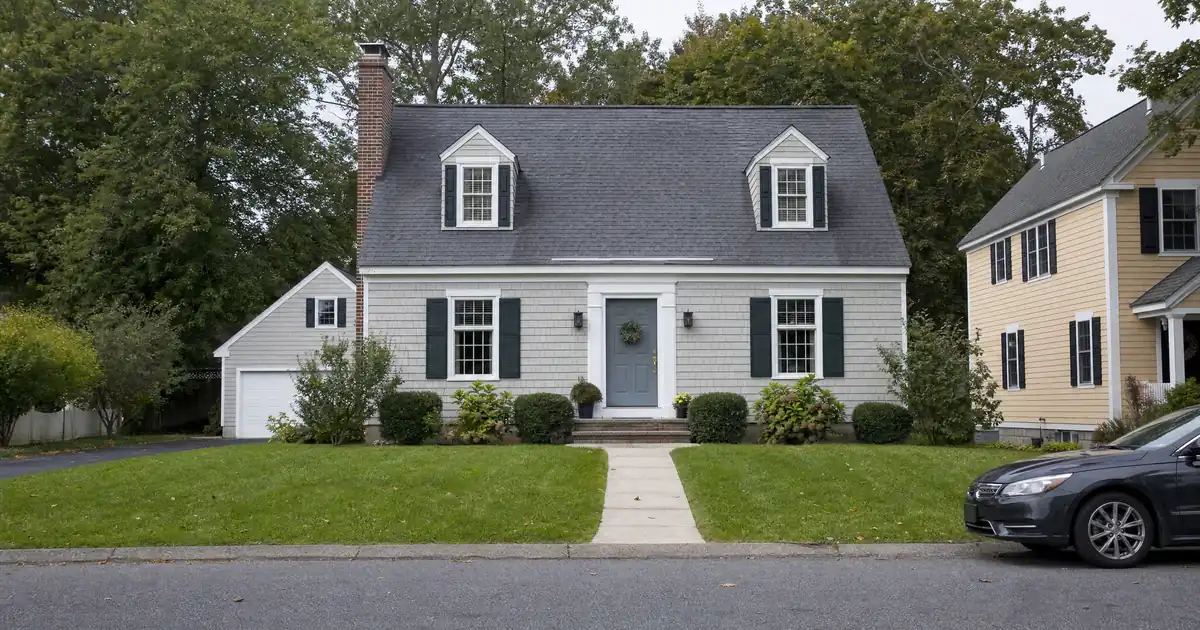
The Quick Read: Yes. Once you use a property for paying short-term guests instead of living in it yourself, it generally reads as an investment property. Mortgage lenders and insurers see it as a non-owner-occupied, income-producing asset. That’s the same broad category as a traditional rental. The label gets fuzzy around personal use. A lightly hosted second home and a full-time Airbnb sit on opposite ends of the same spectrum. The line between them depends on occupancy, not the platform.
Key Terms Defined
Investment property — a property the owner doesn’t live in. The owner holds it mainly to earn rental income or build long-term value.
Short-Term Rental Calculator
Run the STR numbers in your market
Rate source: Freddie Mac 30-yr average via FRED® — Federal Reserve Bank of St. Louis · effective Aug 20, 2026
Prefilled with starting assumptions — enter your nightly rate, occupancy, taxes, and insurance for a more accurate picture.
Short-term rental income is documented with a 12-month history or a market data report. Program parameters update from Lendmire’s centralized guideline source.
As of Aug 20, 2026 · General Freddie Mac market benchmark, not a Lendmire loan offer. Nightly rate, occupancy, taxes, and insurance are editable estimates. Qualifying income for short-term rentals varies by program — some use appraisal market rent, others use documented STR history or projections — and is confirmed in underwriting. Not a Loan Estimate, approval, or commitment to lend. Program availability and eligibility are subject to lender guidelines, credit approval, property review, and underwriting.
Second home — a property the owner uses personally for a good part of the year. The owner keeps it available for their own enjoyment, with only light, non-contractual rental activity on top.
Non-owner-occupied — this is the occupancy status a lender gives a property when the borrower doesn’t live there as their main home.
Business-purpose loan — financing for an income-producing property, not personal housing. This type of loan sits outside standard consumer-mortgage disclosure rules.
DSCR (Debt Service Coverage Ratio) — a ratio that compares a property’s rental income to its full monthly housing cost (principal, interest, taxes, insurance, and HOA dues where they apply). Lenders use it to qualify investment-property loans based on the property’s income, not the borrower’s personal income.
Occupancy classification — the category a lender gives a property: primary residence, second home, or investment property. The lender decides based on how the property will actually be used, and this choice drives which loan program applies.
How Lenders Actually Classify an Airbnb
Lenders don’t care which app hosts the reservation. They look at two things: how much the owner personally lives there, and how much of the year the property earns guest revenue. If nobody lives there and it’s booked most weeks of the year, it reads as an investment property. The listing platform doesn’t matter.
This is the same logic behind DSCR lending in general. The collateral produces income and nobody lives in it, so the lender reviews the loan based on what the property earns. The lender skips the usual personal-income paperwork. Lendmire’s complete DSCR loans guide walks through that income-based underwriting model in full. Here’s the short version: a lender pulls a rental income estimate, weighs it against the proposed payment, and comes up with a coverage ratio instead of a debt-to-income number.
Paperwork looks different for a short-term rental than for a long-term lease. There’s no twelve-month lease to hand over. Instead, a lender wants some mix of past booking history, a market-rate rental projection, or an appraiser’s income analysis. What won’t work is taking a nightly rate and multiplying it by thirty. That shortcut ignores furniture costs, guest services, vacancy, and other operating costs baked into short-term rental income. A real STR income analysis looks nothing like that simple math trick.
Second Home, Personal Residence, or Dedicated Rental?
The occupancy spectrum has three real stops. Each one lands in a different financing category. Here’s how they typically break down:
| Category | Occupancy | Rental Frequency | Financing Category |
|---|---|---|---|
| Primary residence, occasional host | Lived in most weeks of the year | A few weeks a year | Owner-occupied mortgage |
| Second home, light hosting | Personal use over much of the year | Occasional, no rental pool | Second-home financing |
| Dedicated Airbnb rental | Rarely or never occupied by owner | Booked most of the year | Investment-property / DSCR financing |
Most of the confusion sits in the middle row. A second home can legally host short-term guests without losing its second-home status. But there are limits. Fannie Mae’s Selling Guide defines an investment property simply as one “owned but not occupied by the borrower.” Its rules on second homes clearly rule out one setup: a management company or rental pool that controls the calendar or shares revenue with the owner. Cross that line — heavy booking volume, a co-host running the calendar, revenue shared with a management company — and the property acts like an investment property in every way that matters. It doesn’t matter what the original loan paperwork says.
Why the “Business-Purpose” Label Matters
DSCR loans are built for non-owner-occupied investment properties. They are business-purpose investor loans, so lenders review them differently than a standard owner-occupied mortgage.
Federal consumer-lending rules draw a similar line. If an owner uses a property for less than 14 days a year, lenders generally treat it as business-purpose real estate instead of a personal residence. This comes from legal commentary on the Consumer Financial Protection Bureau’s occupancy standard (Doss Law). This is the same threshold logic that separates a lightly hosted second home from a full investment property. Occupancy decides the category — not the listing.
What Happens If a Second Home Turns Into a Full-Time Airbnb
Picture an owner who buys a lake house as a second home. They personally use it four to six weeks a year. They list it on Airbnb the rest of the year through a co-host who runs the booking calendar. The deed still says “second home.” But the pattern tells a different story: heavy rental volume, limited personal use, and a management setup that hands over calendar control. Lenders treat this exact profile as an investment property, no matter what the original loan was built around.
Here’s the practical risk. An existing second-home mortgage doesn’t get flagged automatically the day booking volume picks up. But the gap between actual use and stated occupancy is a real risk if it surfaces later — during a refinance, an insurance claim, or a loan review. If you plan to turn a lightly used second home into a full-time Airbnb, refinancing into an investment-property loan up front is usually the smarter move. Don’t wait and hope nobody looks closer. A similar gray zone shows up for investors who live in one unit of a small multi-unit property and Airbnb the rest. The same occupancy logic applies — just unit by unit.
HOA, Condo, and City Rules Can Override Everything Else
A property can qualify fully for an investment-property loan and still be illegal to rent on Airbnb. HOA bylaws, condo covenants, and city ordinances work separately from how a lender classifies the property. Any one of them can shut the door even after the financing gets approved.
Condo and HOA governing documents — often called CC&Rs — can ban short-term rentals outright or restrict them heavily. These rules get enforced separately from local zoning law. The association can fine violators or place a lien on the property, according to Nolo’s legal encyclopedia. City rules add another layer. Permitting, registration, and licensing requirements can change block by block in some cities. They often don’t match what a lender or appraiser assumes about rental income. Short-term rental rules can vary by city, county, HOA, and property type. Investors should check local rules before counting on projected rental income to qualify for financing.
Insurance Sees It as a Business, Too
Standard homeowners policies — and even standard landlord policies — usually exclude paid short-term guest use. Insurers treat it as a business activity. That means the classification question doesn’t stop at the mortgage. The moment a paying guest checks in, a standard homeowners policy often becomes void for any claim tied to that stay. Short-term hosting counts as a business activity, not ordinary residential use (SageSure). Coverage rules vary by carrier. If you convert a second home into a full-time Airbnb, plan to shop for a dedicated short-term rental policy. Don’t assume your existing landlord policy will carry over.
Financing an Airbnb as an Investment Property
Once a property reads as a dedicated Airbnb investment, the financing conversation changes. It shifts from personal income to property income — and DSCR loans are built exactly for that. Lendmire (NMLS# 2371349) arranges these loans through select lenders in its wholesale network. DSCR programs are available in 41 markets, including Washington, D.C.
Across that network, short-term rental files use leaner leverage and tighter paperwork than a standard long-term-rental DSCR loan. On the strongest files, purchase transactions typically reach up to 75% loan-to-value. Cash-out and rate-term refinances on an already-running Airbnb usually top out closer to 70% LTV. That’s a lower ceiling than a purchase, and it reflects the extra risk lenders price into refinancing a property that’s already operating. Credit standards run higher too. Most programs want a credit score around 640 or better for a short-term rental file. Lenders generally want to see about 12 months of hosting or landlord history before they’ll lean heavily on past booking income.
Lenders review purchase and refinance files separately rather than blending them into one standard. Purchase files typically need rental income to clear somewhere around a 1.00x coverage ratio against the full monthly cost. Refinance files get measured against a similar 1.00x benchmark. But the evidence behind that ratio often looks different between the two — actual past revenue versus an appraiser’s projection. Clearing 1.00x doesn’t mean the deal makes money, either. DSCR only measures rent against the housing payment. It says nothing about repairs, empty weeks, cleaning and management fees, or major expenses. All of that sits outside the ratio entirely.
If your numbers fall short of that floor, sub-1.00 coverage is still available through select lenders in the network. These usually come with adjusted leverage and terms to offset the weaker ratio. No-ratio qualification exists too, on a more limited basis. It’s generally reserved for borrowers who already own a primary residence, through select lenders only. Loan sizes on standard programs run up to roughly $3,000,000. Smaller-balance files get routed through select lenders in the network instead of following a standard minimum. Not every property type qualifies. Manufactured homes (single- and double-wide), log homes, and barndominiums fall outside these DSCR programs entirely — no matter how strong the rental income looks.
Many investors also title Airbnb properties inside an LLC to separate liability. DSCR programs generally work with LLC-titled borrowers, subject to lender program eligibility. If you’re weighing whether to buy your first Airbnb outright or pull equity from an existing rental to fund it, Lendmire’s piece on financing a first Airbnb investment and its companion piece on buying an Airbnb as a first investment property both cover that decision in more depth. Some investors sitting on equity in an existing rental ask about a HELOC on investment property as an alternative to a cash-out refinance — it’s worth comparing that option against a full investment-property refinance strategy before deciding which tool fits. If you’re weighing DSCR against a conventional loan for an Airbnb purchase, you can compare the two structures directly through Lendmire’s DSCR vs. conventional breakdown.
A Quick Self-Check: Which Category Fits Your Airbnb?
Run through these questions before assuming a lender or the IRS will see the property the way it feels to you:
- How many nights a year does the owner personally stay in the property? Under roughly two weeks points toward investment property; several months a year points toward second home.
- Does a co-host, property manager, or rental pool control the booking calendar, or does the owner control it directly?
- Is any part of the property’s income being used to qualify for the mortgage payment?
- Would the property still cash flow, or come close, if it sat vacant for a stretch of the year?
- Does the HOA or city allow the level of short-term rental activity actually happening on the property?
Tax treatment can depend on how you use the property and how you hold it. Keep clear records and talk to a qualified tax professional before relying on any deduction. The mortgage classification and the tax classification follow different rulebooks, and they don’t always land in the same place.
Where Investors Get the Classification Wrong
A common mistake is assuming the Airbnb label decides everything. It doesn’t. A lightly hosted second home and a full-time Airbnb can sit on the same street with the same square footage. Yet they can land in completely different financing, insurance, and tax categories. The difference comes down to usage, not the sign on the door.
The second common mistake is treating a coverage ratio above 1.00 as proof the deal makes money. It’s not — it’s a payment test, not a profitability test. Clearing that ratio only means the projected rent covers principal, interest, taxes, insurance, and HOA dues. It says nothing about cleaning fees, platform commissions, furniture replacement, or the weeks the calendar sits empty between guests. Run both numbers before you commit capital. Don’t just check the one a lender cares about.
If you’re buying or refinancing a short-term rental and want to see how the property’s actual booking income lines up against a coverage ratio, Lendmire can help. The team can compare DSCR loan options against the property’s income, credit profile, leverage, and your investment goals. Reach the team at 828-256-2183 or start a quote directly.
Loan approval is never guaranteed, and nothing here is a commitment to lend. Every scenario described here depends on lender approval and on the specific borrower’s, property’s, and program’s guidelines, which can change. This article gives general information only. It isn’t financial, legal, or tax advice.
Frequently Asked Questions
Does occasional Airbnb hosting turn my primary residence into an investment property?
Not usually. If you live in the property most of the year and only host guests occasionally — a few weeks here and there — it generally still counts as a primary residence for mortgage purposes. As your personal time there drops and rental activity becomes the main use, the classification shifts toward investment property.
Can I get a DSCR loan on a property I’m already renting out on Airbnb?
Yes, through a refinance. Short-term rental refinances through select lenders in Lendmire’s network typically top out around 70% loan-to-value. They generally want a credit score near 640 and roughly 12 months of hosting history to support the income used in underwriting.
What happens if my second home turns into a full-time short-term rental?
The occupancy math changes even if the mortgage paperwork doesn’t update on its own. Once personal use drops and a co-host or rental pool controls most of the calendar, the property functions as an investment property in practice. Refinancing into investment-property or DSCR financing is usually the cleaner path, rather than leaving a second-home loan in place against heavy rental activity.
Do manufactured homes, log homes, or barndominiums qualify for Airbnb DSCR financing?
No. These property types fall outside DSCR programs available through Lendmire’s wholesale lending network, no matter how strong the projected rental income looks. If you’re considering one of these property types for a short-term rental, plan on a different financing path entirely.
How much hosting history do I need before refinancing an Airbnb with a DSCR loan?
Most programs in the network want to see roughly 12 months of hosting or landlord experience before leaning on past booking revenue for a refinance. Newer hosts without that track record may still have options, but those usually involve more conservative leverage or extra income documentation.
Program availability, loan terms, and eligibility depend on lender guidelines, credit approval, property review, and full underwriting. This article is educational. It is not a loan offer or a commitment to lend.
Investors focused on short-term rentals can review DSCR loans for Airbnb and short-term rentals.
About Lendmire
Lendmire, NMLS# 2371349, is a mortgage brokerage focused on investor financing. It arranges DSCR loans in 40 states plus Washington, D.C. — 41 markets total. Qualification rests on the property’s income rather than personal income documentation, subject to lender guidelines. That makes it a fit for LLC-held rentals and investors scaling their portfolios. Scotsman Guide named Lendmire a Top Mortgage Workplace in both 2025 and 2026.
Get Started
Ready to find the right loan for you?
In about 30 seconds you can review financing options available for your investment property. No commitment required.
Informational only. Not a Loan Estimate, approval, or commitment to lend. Program availability and eligibility are subject to lender guidelines, credit approval, property review, and underwriting.
References
1. Fannie Mae Selling Guide — Occupancy Types
2. Consumer Financial Protection Bureau — Regulation Z, 12 CFR 1026.3
3. Doss Law — Business Purpose Exemption Simplified
4. Nolo — Legal Restrictions on Renting Your Home on Airbnb and Other Rental Services
5. SageSure — Short-Term Rental Insurance: What Hosts Need to Know
This article is part of Lendmire’s short-term rental loan program — full qualification details, guidelines, and scenarios live on the program page.
Related reading: Can You Refinance An Airbnb Property? · How Much Rental Income Does An Airbnb Need To Qualify? · Second Home Vs Investment Property Classification For A Vacation Rental
Brandon Miller
Founder & CEO, Mortgage Loan Originator, Lendmire LLC
- Mortgage Loan Originator · NMLS# 1129696 · Verify on NMLS Consumer Access
- North Carolina Real Estate Broker · License# 343312 · Verify on NCREC
- North Carolina Insurance Producer · License# 19053198 · Property, Casualty, Life, Health · Verify on NAIC SBS
- Lendmire LLC · Firm NMLS# 2371349 · Verify firm licensure
Disclosure information. Lendmire is a state-licensed mortgage brokerage under NMLS# 2371349. Lendmire is not a depository institution, direct lender, or financial advisor — all loans referenced are placed through wholesale lender partners and are subject to each lender's underwriting standards. This article is provided for general informational purposes and is not a commitment to lend, nor does it constitute financial, legal, or tax advice. Loan programs, terms, rates, and qualification standards change without notice and depend on borrower profile, property type, and the state in which the subject property is located. Equal Housing Opportunity provider. NMLS Consumer Access: nmlsconsumeraccess.org.