
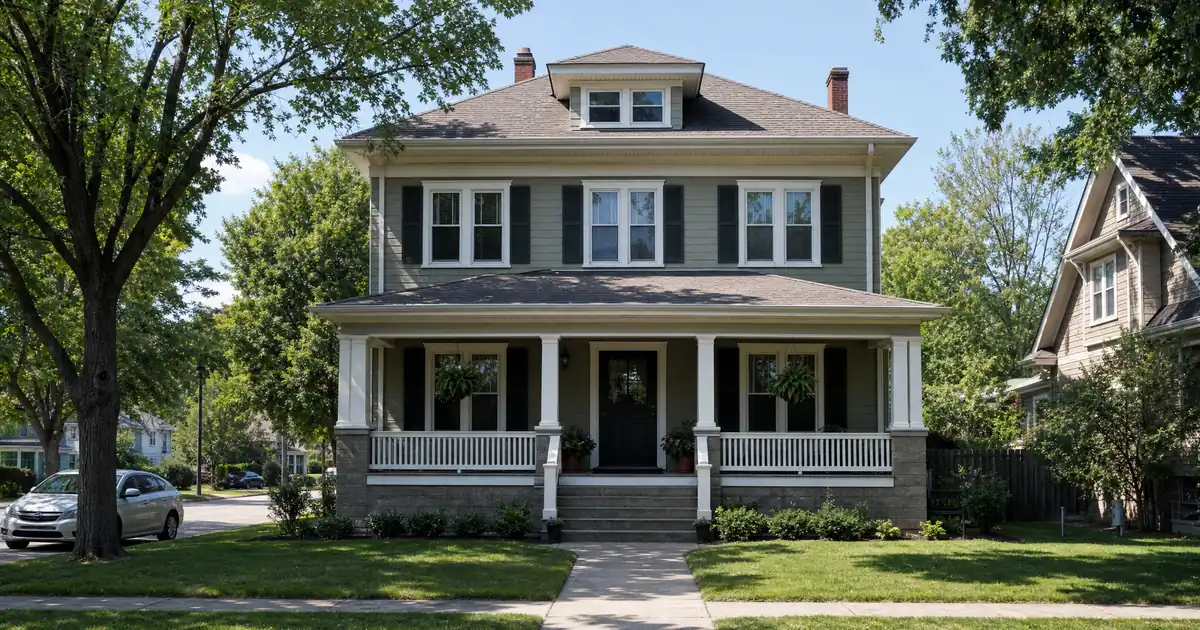
The Quick Read: On most DSCR loan programs, an Airbnb’s rental income needs to come close to covering its full monthly housing payment. Select programs set the floor around a 1.00 coverage ratio. Stronger properties clear that ratio with room to spare. They unlock better leverage and pricing. Properties that fall short still have paths forward through select lenders, just with adjusted terms. None of this runs through the borrower’s traditional personal-income documentation. It runs through the property’s income instead.
That’s the short version. Below is the mechanics — how lenders actually build that income number, what happens when a listing has zero booking history, and where the math falls apart if you don’t build it conservatively.
Short-Term Rental Calculator
Run the STR numbers in your market
Rate is an editable market assumption — the live benchmark loads when available.
Prefilled with starting assumptions — enter your nightly rate, occupancy, taxes, and insurance for a more accurate picture.
Short-term rental income is documented with a 12-month history or a market data report. Program parameters update from Lendmire’s centralized guideline source.
Fallback assumption · General Freddie Mac market benchmark, not a Lendmire loan offer. Nightly rate, occupancy, taxes, and insurance are editable estimates. Qualifying income for short-term rentals varies by program — some use appraisal market rent, others use documented STR history or projections — and is confirmed in underwriting. Not a Loan Estimate, approval, or commitment to lend. Program availability and eligibility are subject to lender guidelines, credit approval, property review, and underwriting.
DSCR loans are built for non-owner-occupied investment properties. They’re business-purpose investor loans, so they get reviewed differently than a standard owner-occupied mortgage. Underwriting looks at what the property earns, not what the borrower reports on a W-2.
Key Terms Defined
DSCR (debt-service coverage ratio): Divide a property’s monthly rental income by its total monthly housing payment. That gives you the DSCR. A ratio of 1.00 means rent exactly covers the payment. Above 1.00 means there’s cushion.
PITIA: This is the full monthly housing obligation. It includes principal, interest, taxes, insurance, and any association dues. This number is the denominator in every coverage-ratio calculation.
LTV (loan-to-value): This is the loan amount shown as a percentage of the property’s value or purchase price. Lower LTV means more equity in the deal.
Non-QM loan: This is a loan that skips the standardized “qualified mortgage” rules built around personal income and debt-to-income limits. DSCR loans fall under non-QM. That’s exactly why they can qualify off the property instead of the borrower.
Seasoning: This is the waiting period a lender wants between two events. Often it’s the time between buying a property and refinancing it, or between listing an Airbnb and using its actual earnings history to qualify.
Reserves: This is cash left in the bank after closing, measured in months of PITIA. Lenders want this cushion in case bookings slow for a stretch.
What Ratio Does An Airbnb Actually Need To Clear?
Short answer: enough coverage to satisfy whatever floor the program sets. For short-term rentals, purchase transactions typically look for coverage around 1.00 through lenders that specialize in this property type. Refinance transactions on an Airbnb typically look for a similar floor, also around 1.00, through those same specialized lenders. But purchase and refinance get evaluated on their own terms. They’re not treated as one blended standard.
A 1.00 ratio means qualifying income equals the full monthly payment. Clear more than that — a ratio comfortably above 1.00 — and the file usually gets easier. You’ll likely see better leverage, fewer conditions, and sometimes less cash required at closing. Come in under 1.00, and the file doesn’t automatically die. It just moves into a different lane, covered further down.
One clarification worth making early: a 1.00 coverage ratio is not the same as positive cash flow. DSCR only weighs rental income against PITIA. It says nothing about repairs, vacancy stretches, management fees, utilities, or capital expenses. All of that sits outside the ratio and still comes out of the owner’s pocket every month. A property can clear 1.00 on paper and still bleed cash the first slow season.
For a full walkthrough of how the ratio gets built and applied across property types, Lendmire’s complete DSCR loans guide covers the calculation in more depth.
How Do Lenders Get To That Income Number?
Three sources feed the qualifying-income figure: documented platform history, a third-party market-data projection, or an appraiser’s short-term-rental-specific rent analysis. Which one applies depends almost entirely on how long the property has been operating.
| Documentation Type | When It’s Used | How Conservative the Number Runs |
|---|---|---|
| Platform booking history | Property has 12+ months hosting | Most reliable — actual trailing income |
| Third-party market projection (e.g., AirDNA) | New or unlisted property | Discounted before use — see below |
| Appraiser STR rent analysis | Appraisal-based programs | Supplements or replaces standard rent schedule |
For an established listing, the lender wants the actual deposit or platform-reported history, usually trailing twelve months. For a property that hasn’t hosted a single guest, the file leans on a market-data tool instead. AirDNA’s Rentalizer is the tool referenced most often in these files. It searches comparable listings within roughly a 10-mile radius. It matches on bedroom count, bathroom count, and guest capacity. Then it builds a weighted average from those comps’ historical performance.
That projected figure includes cleaning fees. It excludes host fees, other platform charges, and occupancy taxes. This distinction matters when you’re reconciling the tool’s output against what a lender treats as net qualifying income.
Where a program still calls for a full appraisal, the appraiser typically works from the same rent-schedule forms used across residential lending. That’s Form 1007 for single-family properties and Form 1025 for two-to-four-unit properties, per Fannie Mae’s Selling Guide. Those forms exist to price a long-term lease. Neither one was built with nightly rentals in mind. That’s exactly why most STR appraisals need a supplemental analysis layered on top of the standard rent schedule. The base form leaves out vacancy rates and operating expenses — the very things that actually drive an Airbnb’s real performance.
What If The Listing Has No Booking History Yet?
A brand-new Airbnb gets reviewed on a projection, not statements. The file leans on third-party market data or an appraiser’s STR-specific rent opinion instead of trailing income. This covers most purchase transactions, since the buyer hasn’t hosted anyone yet in a property they don’t own.
The staging generally runs like this:
- Zero to three months of hosting: treated the same as no history at all. The projection or appraisal analysis carries the full weight.
- Three to six months: early actual data can supplement the projection, but most programs still lean on the projected figure since the sample is thin.
- Six to twelve months: actual booking history starts carrying more weight, especially if it tracks close to the original projection.
- Twelve months and beyond: the property has real trailing history. Most STR-specific DSCR programs expect roughly this much operating history before treating a listing as fully seasoned on its own performance.
That twelve-month benchmark shows up again on the refinance side. A cash-out refinance on an Airbnb generally wants that operating track record in hand before pulling equity based on the property’s own earnings.
Why Lenders Discount The AirDNA Number
Practitioners never take a market-data projection at face value. The accepted move is underwriting to roughly 60-75% of what the tool projects. Why? Because independent testing has found these figures run 15-30% high compared to actual first-year performance. That’s not a knock on the tool itself. AirDNA data is widely accepted across lending and investment circles as a legitimate starting estimate. It’s just that — a starting estimate, built on comparable-property data, not a guarantee tied to one specific address.
New hosts tend to underperform a fresh listing’s projected number in year one. A brand-new listing has zero reviews. It has no search-ranking history on the platform. And it lacks the repeat-guest momentum a seasoned listing builds. The projection models comparable performance. It can’t model the ramp-up period every new listing goes through.
This is where a lot of first-time Airbnb buyers get surprised. They run an address through a free online calculator. They see a healthy top-line number. And they assume that’s the figure a lender will use. It usually isn’t. The number that clears underwriting is a haircut version of that projection — sometimes a meaningful one. The stronger move on a first Airbnb purchase is underwriting to the conservative end of that 60-75% range rather than the optimistic end. The cushion costs little upfront and avoids an ugly surprise if year one runs soft.
Gross Income Or Net Income — Which One Actually Counts?
Most DSCR programs qualify off gross rental income, not net income after operating expenses. But “gross” here still means the tool’s revenue output net of host fees and taxes, not the raw total a guest pays. That distinction trips people up constantly.
| What Gets Counted | What Doesn’t |
|---|---|
| Nightly rate revenue + cleaning fees collected | Host or platform service fees |
| Weighted-average comp performance | Occupancy or lodging taxes |
| Documented deposits (established listings) | Furniture, fixtures, and equipment value |
| Appraiser’s real-property rent opinion | Business income tied to personal-property use |
That last row matters more than people expect. Under standard appraisal rules, personal property like furniture and equipment gets excluded from the value analysis entirely. An appraiser assessing a furnished short-term rental is valuing the real estate, not the furniture package. They can’t fold “business income” from the operation into the property’s value.
What Happens If The Airbnb Falls Short?
Coverage below the standard floor doesn’t automatically kill the deal. Sub-1.00 coverage is available through select lenders in the network, with leverage and terms adjusted to compensate. That usually means a lower LTV, a larger equity contribution, or both. In exchange, a lender will accept a property whose income doesn’t fully cover its payment on paper.
There’s also a separate structure worth knowing: no-ratio qualification. It’s available only through select lenders and generally reserved for borrowers who already own a primary residence. A no-ratio file skips the coverage test almost entirely. But it’s a narrower path with its own conditions — not something built for a first-time investor buying a first rental.
Neither of these is a consolation prize. They’re genuine structures that exist because rental income doesn’t always land where a spreadsheet predicts, especially on a property with no track record. But both trade something for the flexibility — usually leverage, sometimes credit-profile requirements, always case-by-case underwriting.
Why Not Just Use A Conventional Mortgage?
Because conventional, agency-backed financing generally doesn’t have a mechanism for treating nightly-rate income as rent at all. Fannie Mae’s own guidance acknowledges the gap. The Selling Guide is silent on whether short-term rental income counts as rental income in the first place. That’s because STRs run on a nightly, hotel-like basis rather than the monthly lease structure conventional underwriting is built around.
In practice, that pushes conventional underwriting back toward a long-term market-rent opinion. That’s the same rent schedule used for a traditional lease, not the platform’s actual nightly performance. It also means the borrower’s personal debt-to-income ratio still governs how much they can qualify for. That caps how many properties one person can carry, regardless of how well any single Airbnb performs.
DSCR financing sidesteps both problems. It qualifies primarily on property-level rental income covering the payment, subject to lender guidelines. It doesn’t rely on the borrower’s W-2s, traditional personal-income documentation, or personal debt load. Take a self-employed investor whose traditional personal-income documentation shows a modest number after write-offs, but who’s actually generating far more in real cash flow. For that investor, this difference alone often makes DSCR the only workable route. Lendmire has covered how self-employed income gets evaluated and how a rental purchase can qualify without traditional employment income in more depth elsewhere.
Beyond The Ratio: What Else Lenders Check
Coverage is one input, not the whole file. Across a wholesale network of DSCR lenders, several STR-specific parameters tend to move alongside the ratio:
- Credit score: most STR-specific programs want a score around 640, which sits within the 620-660 range that shows up on some standard long-term-rental DSCR files.
- Purchase leverage: up to roughly 75% LTV on the strongest STR files — meaning a down payment in the 25% range on a purchase, higher on weaker files.
- Refinance and cash-out leverage: generally capped closer to 70% LTV on STR properties, tighter than purchase leverage.
- Hosting experience: most programs want something close to twelve months of host or landlord experience, either on this property or a prior one.
- Reserves: these vary by lender, loan size, and leverage, but commonly land around six months of PITIA, sometimes stepping up on larger loan amounts.
- Loan size: STR-specific DSCR loans generally run up to roughly $3 million on standard programs, with smaller balances routed through select lenders in the network.
A larger down payment helps the ratio. Less leverage means a smaller payment, which raises coverage. But it doesn’t erase a credit floor or a documentation requirement. The strongest files clear both tests at once: enough equity in the deal and enough rental income covering the payment. These figures reflect typical guidelines across select lenders in Lendmire’s wholesale network. They can shift by lender, loan size, and file specifics — worth confirming current parameters before relying on them for a purchase decision.
Worth flagging plainly: certain property types don’t run through these programs at all, no matter how strong the projected income looks. Manufactured homes, log homes, and barndominiums fall outside standard DSCR-STR eligibility across the network. That’s a property-type limitation, not something the income number can fix.
Lendmire arranges DSCR loans on short-term rentals through select lenders across a wholesale network spanning 40 states plus Washington, D.C. Its role is placing the file with a lender whose guidelines fit the property and the borrower’s profile. It doesn’t underwrite or fund the loan directly (NMLS# 2371349).
An observation from working these files across markets: the properties that clear underwriting cleanest almost always come in with a printed AirDNA or comparable-tool report already attached, rather than a screenshot pulled after the fact. Lenders want to see the methodology, not just the headline number. A downloadable projection report showing the comp set and confidence score moves through review more smoothly than a bare figure typed into an application.
Common Mistakes Investors Make On This Number
Treating the projection tool’s top-line figure as the coverage figure. It’s a starting input, not a final answer. Expect it to get discounted before it ever reaches the DSCR formula.
Assuming any lender will treat Airbnb income like a signed lease. Nightly-rate income swings by season in a way a twelve-month lease never does. Lenders scrutinize it more closely for exactly that reason — not less.
Assuming the math overrides local rules. A property can clear every coverage threshold on paper and still be unable to legally operate as a short-term rental. Short-term rental rules can vary by city, county, HOA, and property type. Confirming local rules before relying on projected rental income matters.
Assuming Form 1007 automatically supports Airbnb income. It’s a long-term rent tool. Most STR files need a supplemental market-data projection or appraiser analysis layered on top, since the base form wasn’t built to capture nightly performance.
Assuming DSCR loans still check personal income as a backstop. Generally, they don’t. Qualification runs primarily on the property’s income covering the payment, subject to lender guidelines. It’s not a parallel check against the borrower’s traditional income documentation. Readers curious how appraisers arrive at that projected figure in the first place can learn more about what projected rental income actually means on an appraisal.
If the investor in question is buying, refinancing, or pulling cash out of an existing rental, run the coverage math with a conservative income input first. Do this before falling for a listing’s top-line projection — it saves a lot of wasted time later in the process. Investors weighing a purchase or refinance and wanting to see how the numbers line up can reach Lendmire at 828-256-2183 or request a quote directly. The team can walk through how leverage, credit profile, and projected income fit together for a specific property.
Loan approval is never guaranteed, and nothing here is a commitment to lend. Every scenario described here is subject to lender approval and to the borrower’s, property’s, and program’s specific guidelines, which can change. This article is general information, not financial, legal, or tax advice — tax treatment can depend on how loan proceeds are used and how a property is held, so investors should keep clear records and speak with a qualified tax professional before relying on any deduction.
Frequently Asked Questions
Does a brand-new Airbnb with zero bookings ever qualify for financing?
Yes — new listings typically qualify off a third-party market projection or an appraiser’s short-term-rental-specific rent analysis rather than actual statements, since there’s no trailing income to document yet. The projected figure gets discounted before it’s used in the coverage calculation, which is standard practice across the space, not a red flag on the file.
Is the AirDNA number the exact figure a lender will use?
Rarely as-is. Most files apply a conservative haircut to the projection, often landing around 60-75% of the tool’s raw output, because independent testing has found these projections run high relative to actual first-year performance, particularly for new listings without an established review history.
Can a self-employed investor use Airbnb income to qualify even with modest conventional personal-income paperwork?
Generally yes, because DSCR programs qualify primarily on the property’s rental income rather than the borrower’s tax-return net income. That’s the core appeal for investors whose returns show reduced income after depreciation and write-offs but who are actually generating strong real cash flow from the property.
What happens if the Airbnb’s projected income doesn’t cover the full payment?
The file isn’t automatically dead. Coverage below the standard floor is available through select lenders in the network, typically with adjusted leverage or a larger down payment to offset the weaker ratio. A separate no-ratio structure also exists through select lenders, generally for borrowers who already own a primary residence.
Do local short-term rental restrictions affect the qualifying income figure?
They can, indirectly. A permit cap, occupancy limit, or zoning restriction can shrink how much a property realistically earns, which flows straight into whatever projection or appraisal supports the loan file. Short-term rental rules vary by city, county, HOA, and property type, so confirming local rules before relying on any projected income is worth doing before an offer goes in.
Investors focused on short-term rentals can review DSCR loans for Airbnb and short-term rentals.
About Lendmire
As a non-QM mortgage broker (NMLS# 2371349), Lendmire facilitates DSCR investor loans across 41 markets, including Washington, D.C. DSCR eligibility is generally reviewed around property-level rental income instead of personal income documentation, subject to lender guidelines, serving LLC-structured portfolios and self-employed borrowers who don’t fit conventional boxes. Lendmire is a two-time Scotsman Guide Top Mortgage Workplace (2025, 2026).
Get Started
Ready to find the right loan for you?
In about 30 seconds you can review financing options available for your investment property. No commitment required.
Informational only. Not a Loan Estimate, approval, or commitment to lend. Program availability and eligibility are subject to lender guidelines, credit approval, property review, and underwriting.
References
1. AirDNA Help Center — Rentalizer Revenue Calculator
2. Fannie Mae Selling Guide — Rental Income
3. McKissock Learning — Form 1007 and Its Impact on Short-Term Rental Appraisals
4. VaultSTR — AirDNA Rentalizer Accuracy
5. Fannie Mae Appraiser Update, June 2024
This article is part of Lendmire’s short-term rental loan program — full qualification details, guidelines, and scenarios live on the program page.
Related reading: How To Finance A New Short-term Rental With No Booking History · Can A New Vacation Rental DSCR Loan Close Without Booking History? · How Much Does An Airbnb Property Cost To Finance?
Brandon Miller
Founder & CEO, Mortgage Loan Originator, Lendmire LLC
- Mortgage Loan Originator · NMLS# 1129696 · Verify on NMLS Consumer Access
- North Carolina Real Estate Broker · License# 343312 · Verify on NCREC
- North Carolina Insurance Producer · License# 19053198 · Property, Casualty, Life, Health · Verify on NAIC SBS
- Lendmire LLC · Firm NMLS# 2371349 · Verify firm licensure
Compliance and disclosures. Lendmire (NMLS# 2371349) is a licensed mortgage broker and is not a direct lender, depository institution, financial advisor, or tax professional. Content in this article is general market analysis and educational information — not financial, legal, or tax advice for any specific situation. Lendmire does not guarantee loan approval; every transaction is subject to underwriting by the funding lender. Mortgage pricing and loan program guidelines are subject to change at any time without notice and vary by borrower characteristics, property type, and state regulations. Lendmire complies with Equal Housing Opportunity. Licensure verification: NMLS Consumer Access.