
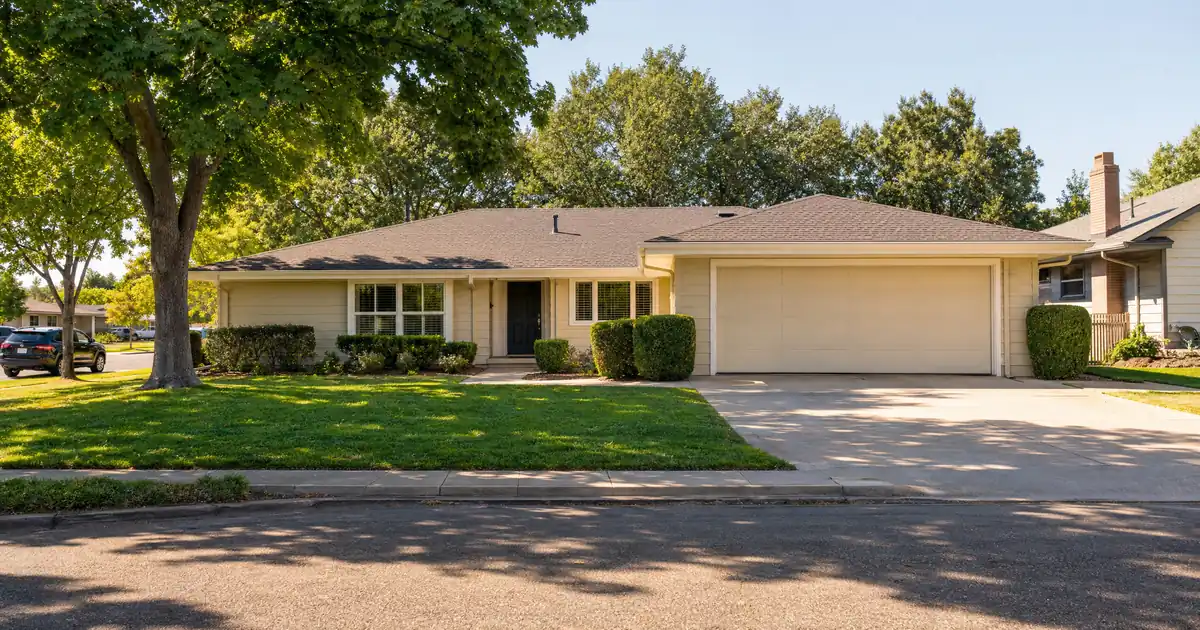
The Quick Read: There’s no set calendar for a DSCR short term rental loan. Consumer mortgages have strict timing rules. Business-purpose investor loans don’t work that way. What actually controls the process is how the file gets built. Three things matter most: the appraisal method used to document nightly-rate income, how clean the title comes back, and whether your paperwork is complete before underwriting starts reviewing it. A file with a cooperative appraiser and organized paperwork moves through fewer stalls. A file that hits an appraisal or title snag does not.
That honest answer is also the more useful one. Investors often go looking for one specific number online. Then their own file doesn’t match it, and they end up disappointed. Here’s why: that number was never a rule. It was one lender’s experience on one type of property. What follows is the real mechanics. You’ll see what determines the path a short-term rental (STR) loan takes. You’ll see where STR files differ from standard long-term-rental DSCR files. And you’ll see what you control versus what you don’t.
Short-Term Rental Calculator
Run the STR numbers in your market
Rate is an editable market assumption — the live benchmark loads when available.
Prefilled with starting assumptions — enter your nightly rate, occupancy, taxes, and insurance for a more accurate picture.
Short-term rental income is documented with a 12-month history or a market data report. Program parameters update from Lendmire’s centralized guideline source.
Fallback assumption · General Freddie Mac market benchmark, not a Lendmire loan offer. Nightly rate, occupancy, taxes, and insurance are editable estimates. Qualifying income for short-term rentals varies by program — some use appraisal market rent, others use documented STR history or projections — and is confirmed in underwriting. Not a Loan Estimate, approval, or commitment to lend. Program availability and eligibility are subject to lender guidelines, credit approval, property review, and underwriting.
Key Terms Defined
A few terms come up constantly in this conversation. Mixing them up is where a lot of investor confusion starts.
DSCR (Debt Service Coverage Ratio): This compares the property’s monthly rental income to its monthly debt payment. It’s shown as a ratio, like 1.15x, not a dollar figure.
PITIA: This stands for principal, interest, taxes, insurance, and association dues (when they apply). It’s the full monthly payment used in the coverage calculation.
Business-purpose loan: This is a loan for an investment or income property, not a home you live in. That puts it outside certain consumer-mortgage disclosure rules.
LTV (Loan-to-Value): This is the share of the purchase price or appraised value you’re financing, shown as a percentage. It’s the flip side of your down payment.
Seasoning: This is the minimum time you must own a property before a lender will consider a cash-out refinance on it.
Form 1007 / Form 1025: These are the standard rent-schedule appraisal forms. They were built to verify long-term rental income. They apply very differently to short-term rentals, which you’ll see later.
Why There’s No Universal Answer
There’s no fixed number here, and that’s not the industry being evasive. It’s structural. Buyers of an owner-occupied home go through a mandated consumer disclosure process. That process has specific timing rules built in. DSCR loans on non-owner-occupied investment property work differently. They’re treated as business-purpose credit. Generally, they sit outside that consumer framework — even when the property is titled to an LLC, subject to lender program eligibility. That doesn’t mean the file skips steps. It just means a consumer-protection clock isn’t running the show. Underwriting mechanics are. That’s why timelines vary from file to file.
Here’s the honest trade-off. Removing personal income documentation removes a lot of hassle. No W-2s. No tax transcripts. No employment verification loop. That cuts out one whole category of back-and-forth that slows conventional underwriting. But it doesn’t remove the appraisal. It doesn’t remove the title search. And it doesn’t remove the review of your entity and insurance documents. Those three things are where an STR file actually lives or dies. And they behave differently depending on the property.
How an STR File Differs From a Standard Rental File
The core difference isn’t the underwriting model. It’s the income basis and what has to be documented to support it. A conventional loan reviews the borrower. A long-term-rental DSCR loan reviews the lease. A short-term-rental DSCR loan reviews platform income instead — there’s no lease at all. That changes what the appraiser and underwriter are actually working from.
| Loan Type | Income Basis | Primary Review Point |
|---|---|---|
| STR DSCR | Property cash flow / platform income history | Appraisal method for nightly-rate income |
| Long-term rental DSCR | Property cash flow / signed lease | Standard rent-schedule appraisal |
| Conventional investment | Borrower income (W-2s, traditional personal-income documentation) | Personal income and employment verification |
| Bridge / hard money | Asset value and exit strategy | Title clearance and payoff verification |
That appraisal line for STR deserves its own explanation. It’s the single biggest structural difference between an STR file and everything else on this table.
The STR Appraisal Problem
Form 1007 is the standard rent-schedule appraisal form used across DSCR long-term-rental underwriting. It wasn’t built for nightly-rate income, and it can’t legitimately support it. Per Fannie Mae’s Selling Guide, Form 1007 covers one-unit properties. Form 1025 covers two-to-four-unit properties. Both were designed to estimate a long-term monthly market rent. Neither was designed to blend an average of nightly bookings across a seasonal calendar. Class Valuation’s appraisal-industry commentary is direct about this. The form cannot be stretched to reflect short-term rental income. Appraisers asked to force it that way are expected to decline the assignment instead of distorting the form.
Here’s what that means in practice. An STR file usually needs one of two things. Either an appraiser willing to produce a market-based income analysis outside the standard rent schedule, or a lender that leans on third-party platform data instead — occupancy and rate history from booking platforms. This can supplement or fully replace the 1007/1025 process. McKissock’s continuing-education coverage echoes this point about how the industry has adapted around the gap. Some investors assume their STR purchase will move through the exact same appraisal process as a standard rental. That assumption is the most common source of unexpected friction. It’s not a delay caused by the lender. It’s a documentation-method mismatch. And it has to get resolved before underwriting can even start comparing rent to payment.
This is also where property type quietly changes everything else on the file.
| Property Type | Appraisal Basis | Typical Friction Point |
|---|---|---|
| Single-family long-term rental | Form 1007 rent schedule | Standard comps, usually straightforward |
| Condo / HOA | Form 1007 plus HOA project review | Certification and questionnaire collection |
| Short-term rental | Market analysis / platform income data | Appraiser method and STR income support |
| Rural or resort-market property | Limited comparable sales | Appraiser availability and specialization |
A lot of STR inventory sits in vacation and resort markets. Those markets skew toward that last row and the STR row at the same time. That’s a compounding factor. Plan for it — don’t panic over it.
The File, Stage by Stage
Every STR DSCR file moves through the same general sequence. What varies is how much friction shows up at each step.
1. Application and file setup. You submit entity documents (if applicable), credit authorization, and a purchase contract or existing-property information. An incomplete LLC operating agreement or missing signature page creates the earliest stall here — and the easiest one to avoid.
2. Appraisal ordering and rent verification. For a long-term rental, this follows the standard 1007/1025 process. For an STR, the appraiser needs briefing on methodology. Platform income history — occupancy, average nightly rate, trailing revenue — gets pulled together here to support the file.
3. Underwriting review of the coverage ratio. The lender compares your documented rental income against the full monthly payment. This shows whether the file clears the program’s coverage floor. That floor is typically 1.00x on most STR purchase programs in Lendmire’s wholesale network. Stronger ratios open better leverage and pricing tiers.
4. Title and entity review. Title work runs in parallel with the appraisal, but it can independently stall a file. The American Land Title Association has documented industry-wide bottlenecks. These involve undiscovered HOA liens, incomplete vesting information, and manual curative work. None of it is specific to DSCR lending. But all of it matters when a file has entity ownership or an HOA involved.
5. Insurance review. STR properties typically need a short-term-rental or landlord policy — not a standard homeowners policy. A mismatched policy type submitted late in the file causes extra review. This one’s easy to avoid.
6. Clear-to-close conditions and funding. Final conditions get satisfied — updated insurance binder, entity documents, reserve verification — and the deal works toward closing.
Reserves aren’t a fixed number across the network. They vary by leverage, loan size, and transaction type. Most files land around six months of PITIA. Some conservative rate-term refinances under a certain loan size see reserves waived. Larger loans step up toward nine months. None of that is universal. It’s file-specific, subject to lender guidelines.
Documentation That Keeps a File Moving Without Stalls
Most friction on an STR file is preventable. Here’s what actually gets requested, ranked by how often it trips investors up:
- Entity documents (operating agreement, EIN, certificate of good standing) if the property is titled to an LLC — subject to lender program eligibility
- Twelve months of platform income history (occupancy, nightly rate, gross revenue) when available, per Lendmire’s guide to what counts as short-term rental income
- A short-term-rental or landlord insurance quote, not a standard homeowners quote
- Two months of bank statements showing reserves in a business or personal account
- A clear purchase contract or, for a refinance, a current mortgage statement
- HOA questionnaire and master insurance certificate, if the property is a condo
One property-type note is worth flagging before you get attached to a listing. Manufactured homes, log homes, and barndominiums fall outside DSCR programs in the network entirely. It doesn’t matter how clean your documentation is. This is an eligibility issue, not a paperwork issue. Confirm it before an appraisal ever gets ordered.
DSCR files on STR properties in vacation and resort markets tend to follow a recognizable pattern across the network. Coverage often comes in tight on a conservative long-term-rent estimate. Then it clears comfortably once trailing platform income gets documented. The stronger files pull both numbers up front. That means a projected long-term rent from the appraiser and a trailing twelve-month platform statement. This gives underwriting both scenarios to review, instead of requesting the second one mid-file.
Common Friction Points and How to Avoid Them
| Friction Point | Why It Happens | How to Avoid It |
|---|---|---|
| Low rent-schedule estimate | Appraiser unfamiliar with STR income methodology | Provide trailing platform income data up front |
| Wrong insurance policy type | Standard homeowners quote submitted instead of landlord/STR policy | Order a short-term-rental-specific quote before underwriting review |
| Missing entity paperwork | LLC operating agreement or EIN letter not submitted with application | Gather entity documents before applying |
| HOA documentation lag | Condo questionnaire or certification not requested early | Request HOA docs the day the contract is signed |
| Reserve shortfall discovered late | Reserve requirement not confirmed against actual loan size and leverage | Confirm reserve expectations at the file’s leverage tier before submitting |
A Worked Example
Let’s run the numbers on a hypothetical case. Say you’re buying a duplex priced near $540,000. You plan to run it as a short-term rental at 75% purchase leverage — the ceiling for most STR purchase programs in the network. Using a modeled long-term-rent estimate alone, coverage comes in just under 1.00x. That’s a borderline result. Now layer in trailing platform income as the qualifying basis instead. Modeled coverage moves to roughly 1.15x-1.20x. That’s comfortably above the program’s purchase floor.
That gap shows exactly why the appraisal method matters more than almost anything else on an STR file. The property didn’t change. The income basis used to qualify it did. Files that document both scenarios from the start avoid a mid-process scramble to prove the stronger number.
Say you’re coming off a bridge or hard-money loan on the same property. Refinancing into a DSCR structure generally requires around six months of ownership seasoning. It also caps cash-out leverage at 70% LTV in most of the network’s STR refinance programs. That’s a meaningfully different structure than the purchase-side math above.
Seasonal and Listing-Setup Realities STR Buyers Should Plan For
Here’s one thing almost nobody writing about STR financing addresses. The loan closing and the property being rent-ready are two separate milestones. A newly purchased STR usually needs furnishing, photography, and platform listing setup before it can earn a dime. Depending on the jurisdiction, it may also need a local permit or registration. It has to hit these marks before it can generate the income the file was underwritten on. Short-term rental rules can vary by city, county, HOA, and property type. Confirm local requirements before you assume a property can be listed the moment the loan funds. A common planning gap: booking a purchase around peak season without accounting for listing setup time. That gap has nothing to do with the lender. It’s on the investor’s own launch checklist.
Self-Assessment: Is Your File Ready?
Before submitting, check the following:
- Entity documents complete and signed, if buying through an LLC
- Twelve months of platform income history gathered, if refinancing an existing STR
- Short-term-rental or landlord insurance quote in hand, not a standard homeowners quote
- Reserves verified against the specific loan size and leverage tier being requested
- Credit profile reviewed — most STR purchase programs in the network want at least a 640 score, with select high-leverage tiers requiring it as a floor rather than a target
- Property type confirmed eligible (manufactured, log, and barndominium structures are excluded network-wide)
A file that clears every item on that list before submission is the file least likely to hit an avoidable stall later.
If you’re still deciding whether DSCR is the right structure for a rental purchase, start with Lendmire’s complete DSCR loans guide. If you’re comparing STR income against a long-term-lease strategy, Lendmire’s breakdown of how short-term rental cash flow compares with long-term rental cash flow is worth reading before locking in a business plan. For a broader primer on how these loans are structured in the first place, Lendmire’s explainer on short-term rental loans covers the basics.
Lendmire (NMLS# 2371349) is a multi-state mortgage broker. It arranges DSCR investor loans across 40 states plus Washington, D.C. — through its wholesale lender network. Lendmire doesn’t fund or underwrite loans directly. It structures files and places them with lenders in that network, based on the property’s income, your credit profile, and the leverage and program fit for the deal. Qualification runs primarily on the property’s rental income covering the payment, subject to lender guidelines, credit approval, and property review. Nothing here is ever guaranteed, and every parameter discussed reflects typical ranges rather than a fixed universal rule. Call 828-256-2183 or request a quote directly to see how a specific property and credit profile line up against current program guidelines.
If you’re buying or refinancing a short-term rental and want to see how the numbers work before committing to a property, Lendmire can help compare DSCR loan options based on the property’s income, your credit profile, leverage, and your goals for the deal.
Tax treatment can depend on how loan proceeds are used and how the property is held. Keep clear records and speak with a qualified tax professional before relying on any deduction.
Nothing here is a commitment to lend, and no loan outcome is guaranteed. All scenarios described are subject to lender approval and to borrower, property, and program guidelines, which vary by lender and can change. This article is general information only and is not financial, legal, or tax advice.
Frequently Asked Questions
Is there a standard closing timeline for a short-term rental loan?
No single number applies across lenders or property types. Business-purpose loans aren’t bound by the consumer-mortgage disclosure timing rules that apply to owner-occupied purchases. Each file’s path depends on its own appraisal method, title clearance, and documentation completeness — not a fixed regulatory schedule.
Why does a short-term rental appraisal work differently than a long-term rental appraisal?
The standard rent-schedule form used across most DSCR long-term-rental files was built to estimate monthly market rent, not nightly-rate income. Appraisal-industry guidance says it shouldn’t get stretched to cover short-term rental cash flow. STR files typically need an appraiser producing a separate market-based income analysis, or a lender supplementing the file with platform occupancy and rate data instead.
Can every lender in the network offer sub-1.00 coverage or no-ratio structures for an STR property?
Not universally. Coverage below 1.00 is available through select lenders in the network, generally with adjusted leverage and terms. No-ratio qualification is available only through select lenders, typically for borrowers who already own a primary residence. Neither path applies across every program, and both get reviewed on a file-by-file basis.
Does a cash-out refinance on an existing STR property follow the same rules as a purchase?
No. Purchase leverage on most STR programs in the network tops out around 75% LTV. Cash-out and rate-term refinances generally cap around 70% LTV, and typically expect roughly six months of ownership seasoning before the refinance gets considered.
What’s the single most avoidable cause of friction on an STR file?
Submitting a standard homeowners insurance quote instead of a short-term-rental or landlord policy. Failing to gather entity documents before applying, when the property is titled to an LLC, is the other big one. Both are documentation issues you control entirely before the file is ever submitted.
Investors focused on short-term rentals can review DSCR loans for Airbnb and short-term rentals.
About Lendmire
Lendmire, NMLS# 2371349, is a non-QM mortgage broker serving real estate investors in 41 markets, including Washington, D.C., through DSCR investor loan programs. Qualification is generally reviewed around the subject property’s rental income, not your W-2 history. That’s a practical fit for LLC-titled portfolios and self-employed investors. All scenarios remain subject to lender review and program guidelines. Lendmire has earned two consecutive Scotsman Guide Top Mortgage Workplace recognitions (2025, 2026).
Get Started
Ready to find the right loan for you?
In about 30 seconds you can review financing options available for your investment property. No commitment required.
Informational only. Not a Loan Estimate, approval, or commitment to lend. Program availability and eligibility are subject to lender guidelines, credit approval, property review, and underwriting.
References
1. Fannie Mae Selling Guide — B3-3.1-08, Rental Income
2. Class Valuation — Why Form 1007 Can’t Be Used for Short-Term Rentals
3. McKissock Learning — Form 1007 and Its Impact on Short-Term Rental Appraisals
4. American Land Title Association — Chokepoints in Title Workflow
This article is part of Lendmire’s short-term rental loan program — full qualification details, guidelines, and scenarios live on the program page.
Related reading: DSCR Loan How Long It Takes · Do HOA Dues Count Against The Rent On A Short-term Rental DSCR Loan? · No-Ratio DSCR Loan How Long It Takes
Brandon Miller
Founder & CEO, Mortgage Loan Originator, Lendmire LLC
- Mortgage Loan Originator · NMLS# 1129696 · Verify on NMLS Consumer Access
- North Carolina Real Estate Broker · License# 343312 · Verify on NCREC
- North Carolina Insurance Producer · License# 19053198 · Property, Casualty, Life, Health · Verify on NAIC SBS
- Lendmire LLC · Firm NMLS# 2371349 · Verify firm licensure
Compliance and disclosures. Lendmire (NMLS# 2371349) is a licensed mortgage broker and is not a direct lender, depository institution, financial advisor, or tax professional. Content in this article is general market analysis and educational information — not financial, legal, or tax advice for any specific situation. Lendmire does not guarantee loan approval; every transaction is subject to underwriting by the funding lender. Mortgage pricing and loan program guidelines are subject to change at any time without notice and vary by borrower characteristics, property type, and state regulations. Lendmire complies with Equal Housing Opportunity. Licensure verification: NMLS Consumer Access.