
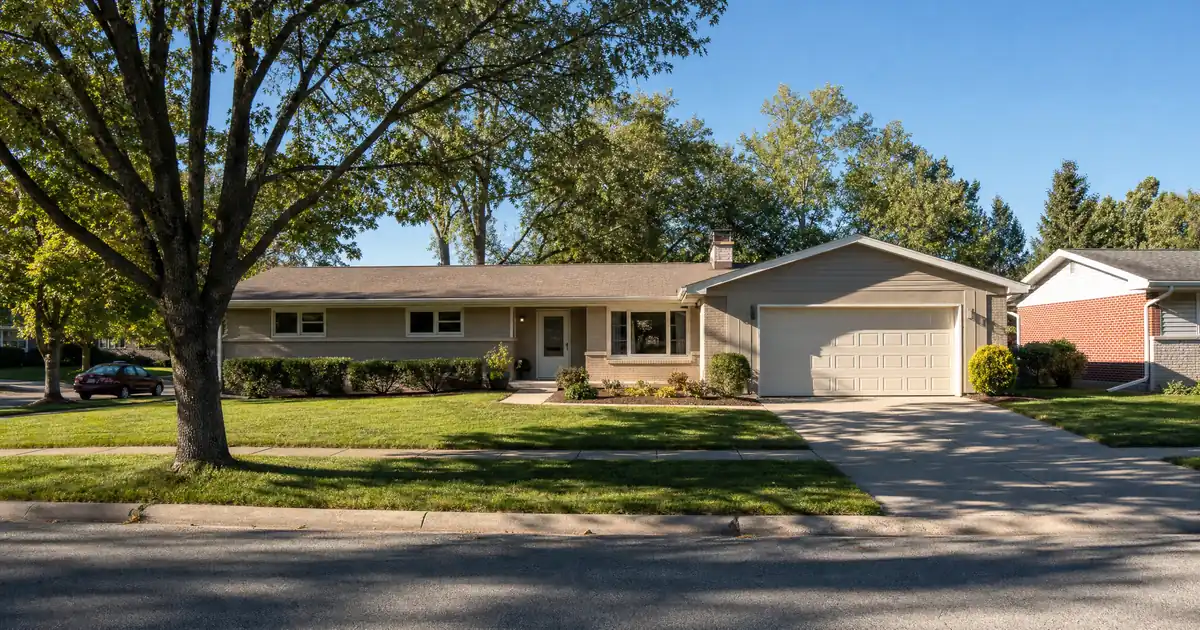
The Quick Read: Yes. Investment properties can be refinanced for rate-and-term or cash-out purposes, through either a conventional agency loan or a DSCR loan underwritten on the property’s rental income. The mechanics differ sharply from a primary-residence refinance — expect stricter loan-to-value caps, seasoning clocks that vary by loan type, and documentation requirements built around rent, not a paycheck. Which channel fits depends on how the property is titled, how long it’s been owned, and whether personal income documentation exists to support the file.
Investors ask this question for a handful of reasons: pulling equity to fund the next purchase, dropping into a fixed-rate structure after an ARM, consolidating higher-cost debt, or simply lowering the monthly obligation on a property that’s appreciated. All of those are legitimate refinance motivations. The answer to “can I” is almost always yes. The real question is “on what terms, how soon, and through which loan type” — and that’s where most investors get tripped up.
DSCR Calculator
Run the numbers in your market
Rate source: Freddie Mac 30-yr average via FRED® — Federal Reserve Bank of St. Louis · effective Aug 20, 2026
Prefilled with starting assumptions — enter your own rent or nightly figures, taxes, insurance, and HOA for a more accurate picture.
Program parameters update from Lendmire’s centralized guideline source. Taxes and insurance are editable estimates.
As of Aug 20, 2026 · General Freddie Mac market benchmark, not a Lendmire loan offer. Rent, nightly rate, occupancy, taxes, and insurance are editable estimates. Short-term rental figures are estimates only and vary significantly by season, property type, management approach, and local short-term-rental rules — confirm local regulations before relying on them. Qualifying income for short-term rentals varies by program — some use appraisal market rent, others use documented STR history or projections — and is confirmed in underwriting. Not a Loan Estimate, approval, or commitment to lend. Program availability and eligibility are subject to lender guidelines, credit approval, property review, and underwriting.
Rate-and-Term vs. Cash-Out vs. DSCR: The Structural Differences
A rate-and-term refinance replaces the existing note without pulling equity out. A cash-out refinance issues a larger loan and returns the difference in cash at closing. DSCR is a separate axis entirely — it’s a qualification method, not a refinance type, and it can be used for either rate-and-term or cash-out transactions.
| Factor | Rate-and-Term | Cash-Out | Cash-Out (DSCR) |
|---|---|---|---|
| Reviewed on | Personal income/DTI | Personal income/DTI | Property’s rent vs. payment |
| Typical LTV ceiling | Higher, program-dependent | Often lower than purchase LTV | Around 75% on most files |
| Seasoning | Usually minimal | 6-12 months per agency rules | Roughly 6 months, on most files |
| Documentation | Traditional personal-income documentation, W-2s, paystubs | Traditional personal-income documentation, W-2s, paystubs | Lease or rent estimate, entity docs if LLC-titled |
The conventional column reflects the agency framework — Fannie Mae and Freddie Mac guidelines built for owner-income underwriting. The DSCR column reflects what select lenders in Lendmire’s wholesale network actually run, and it’s the column that matters most to full-time investors, because it never asks for a tax return to prove the deal.
How Conventional Refinance Rules Work
Conventional cash-out refinances on investment property run on two separate seasoning tests that get confused constantly. One measures how long the borrower has been on title; the other measures how old the mortgage being paid off is.
Under Fannie Mae’s Selling Guide, at least one borrower generally must have been on title to the property for six months before the new loan’s disbursement date. There are exceptions — inherited property, property awarded through divorce or legal separation, the delayed-financing exception for cash buyers, and property that was held in an LLC majority-owned or controlled by the borrower (the LLC’s holding period counts toward the six months). Freddie Mac runs a parallel six-month title rule under its own Seller Guide.
Separately, Fannie Mae’s SEL-2023-01 announcement added a 12-month loan-age clock: the first-lien mortgage being paid off in a cash-out refinance must be at least 12 months old, measured note-date to note-date. Freddie Mac added an equivalent 12-month rule via Bulletin 2022-25. Neither 12-month rule applies to subordinate liens being paid off in the same transaction, or to a special-purpose cash-out used to buy out a co-owner under a legal agreement.
These two clocks — title seasoning and loan-age seasoning — can independently delay a deal even when the other one is satisfied. That’s the single most common timing mistake investors make on the agency side: they check one clock, confirm it’s clear, and assume they’re good to go.
Rental income used to qualify on the conventional side gets documented through standardized appraisal forms — a Single-Family Comparable Rent Schedule (Form 1007) for one-unit properties, or a Small Residential Income Property Appraisal Report (Form 1025) for two-to-four-unit properties, per Fannie Mae’s rental income guidelines. On a refinance specifically, that rent-schedule data gets combined with lease agreements or traditional personal-income documentation — not a purchase contract, since there isn’t one.
Where DSCR Fits — and Why Most Investors End Up There
DSCR refinancing bases lender review on the property’s own cash flow instead of the borrower’s traditional income documentation, W-2s, or DTI. That single difference is why investors with multiple financed properties, self-employment income, or complicated returns often move through DSCR files where an agency loan would stall on paperwork.
Across Lendmire’s wholesale network of DSCR lenders (NMLS# 2371349), cash-out refinances on investment property typically top out around 75% loan-to-value, with roughly six months of seasoning expected on most files. That’s a materially shorter and simpler clock than the conventional side’s dual title/loan-age tests — DSCR programs are business-purpose loans, never sold to Fannie Mae or Freddie Mac, so the agency Selling Guide rules simply don’t govern them. Each program in the network sets its own seasoning and documentation standard.
DSCR loans are designed for non-owner-occupied investment properties. Because they are business-purpose investor loans, they are reviewed differently from a standard owner-occupied mortgage — no conventional personal-income paperwork, no W-2 stack, no DTI calculation. Qualification runs primarily on the property’s rental income covering the monthly payment, subject to lender guidelines.
A 1.00 coverage ratio — rent divided by the full monthly obligation of principal, interest, taxes, insurance, and any HOA dues — is where select programs in the network start. It’s a floor for specific programs, not a universal standard, and it’s not the same thing as positive cash flow. DSCR only compares rent to the housing payment; it says nothing about repairs, vacancy, property management, utilities, or capital expenditures sitting outside that math. A file clearing 1.00 can still be a break-even or negative-cash-flow property once real operating costs are layered in.
Stronger ratios open better pricing and leverage. Files running 620 credit sit at the network’s floor; most programs want something closer to 660, and a 700+ score tends to unlock the strongest leverage tiers — including select high-leverage purchase programs reaching 85% LTV. On the cash-out side specifically, 75% is the ceiling across most of the network regardless of credit tier, since cash-out and purchase leverage are governed by different caps.
Coverage below 1.00 isn’t automatically a dead end, either. It’s available through select lenders in the network, though leverage and terms adjust to compensate. No-ratio structures — qualifying without a rent-to-payment test at all — also exist, but generally only through select lenders and generally for borrowers who already own a primary residence. Neither path is universal; both depend on the specific program and file.
How Soon Can You Refinance an Investment Property?
There’s no single answer — it depends on the loan type and whether cash is coming out. Rate-and-term refinances typically don’t carry meaningful seasoning restrictions since no equity is being extracted. Cash-out refinances do, and the clock differs by channel.
On the conventional side, a cash-out refinance generally requires the borrower to have been on title for six months and the existing mortgage to be at least 12 months old — two separate tests, both discussed above. On the DSCR side, most programs in Lendmire’s network expect around six months of ownership seasoning before a cash-out refinance, without the dual-clock complexity of the agency framework.
The delayed-financing exception matters here for cash buyers. An investor who buys a property outright, without a mortgage, can often refinance and pull equity sooner than the standard seasoning clock would otherwise allow. Fannie Mae still treats this as a cash-out refinance for LTV and pricing purposes — the exception waives the title-seasoning wait, not the cash-out classification itself.
This timing gap has real consequences for BRRRR-style investors. The whole strategy depends on recycling capital: buy, renovate, refinance, repeat. If a property is renovated and cash-flowing well ahead of the seasoning clock clearing, the capital stays trapped until the clock runs out — regardless of how strong the rent or the appraisal comes in. Understanding which clock applies, and confirming it early, is often the difference between a smooth refinance and a stalled one.
DSCR loans usually carry prepayment structures — commonly a three-year window — that most agency products don’t, per Scotsman Guide’s coverage of the non-QM sector. Investors planning to refinance out of a DSCR loan into another product within the first few years should factor that into the decision, since it can affect the economics of an early refinance.
What Lenders Actually Look At on a DSCR Refinance File
Coverage ratio, leverage, credit tier, and reserves interact — no single number decides the file alone. Loan sizes across most of the network run from roughly $100,000 up through $3,000,000 on standard programs; above $2,500,000, the network generally holds to 30-year fixed structures rather than shorter or adjustable terms.
Reserve requirements vary by lender, leverage, and loan size. A conservative rate-and-term file at modest leverage under $1,500,000 can sometimes see reserves waived entirely. Above that threshold, expectations commonly step up toward nine months of PITIA, with six months being a typical middle ground on most other files. None of this is universal — it’s a range shaped by the specific program and the specific file.
A larger down payment (or, on a refinance, more retained equity) lowers the monthly obligation and can lift the coverage ratio — but it never overrides a leverage cap, a credit floor, reserve requirements, or property eligibility rules. The strongest files clear two separate tests at once: enough equity to satisfy the LTV cap, and enough rent to satisfy the coverage requirement. A property with plenty of equity but thin rent can still get stuck on the DSCR side; a property with strong rent but not enough equity can still get stuck on the LTV side. Final terms depend on lender guidelines, property type, leverage, and the borrower’s complete credit picture.
State overlays exist, too. Purchases in Connecticut, Florida, Illinois, and New Jersey generally cap near 75% LTV, and overlay-state deals commonly cap around $2,000,000 in loan size regardless of the property’s value.
Short-term rentals run their own separate rules — never a blended figure covering both purchase and refinance. Purchases on STR properties top out around 75% LTV with roughly a 1.00 coverage floor; refinances run closer to 70% LTV, also generally expecting around a 1.00 floor. Most programs also expect a 640+ credit score and roughly 12 months of hosting history before an STR refinance gets serious consideration. Short-term rental rules can vary by city, county, HOA, and property type, so investors should confirm local rules before relying on projected rental income.
Not every property type is eligible. Manufactured homes — both single- and double-wide — along with log homes and barndominiums, fall outside DSCR programs across the network. That’s a hard line, not a “harder to finance” gray area.
Edge Cases That Change the Answer
LLC-held title doesn’t reset the clock. If a property was acquired and titled in an LLC majority-owned or controlled by the borrower, the LLC’s holding period counts toward the six-month title-seasoning requirement on the conventional side. Investors who title properties in an entity from day one, for liability reasons, don’t lose seasoning credit for doing so.
Inherited or legally-awarded property skips title seasoning entirely. Property acquired through inheritance, or awarded through divorce or dissolution of a domestic partnership, gets a full carve-out from the six-month title test under Fannie Mae’s guidelines — ownership is treated as running from the transfer date.
Co-owner buyouts skip the 12-month loan-age rule. Both Fannie Mae and Freddie Mac exempt special-purpose cash-out transactions used to buy out a co-owner’s equity under a legal agreement from their respective 12-month seasoning requirements.
Short-term rental income doesn’t flow through the standard rent-schedule form. Standard appraisal forms like Form 1007 were built around long-term lease income. Appraisers using that form must exclude personal property (furniture, fixtures, equipment) from the value and cannot include nightly-rate business income as part of the property’s value, per McKissock Learning’s appraisal-industry analysis. STR income qualification runs through separate lender-specific policy instead.
A large down payment or fast equity build doesn’t shortcut any of this. Seasoning clocks measure time, not equity — a property purchased well below market or renovated quickly still has to clear the applicable waiting period on agency-eligible loans regardless of how much equity sits in it.
Practitioner Notes From the DSCR Side
Files that come in clean on a DSCR cash-out refinance almost always have three things sorted before submission: a current lease or a defensible market-rent estimate, clean entity documents if the property is LLC-titled, and a realistic read on the property’s actual coverage ratio before anyone runs numbers formally. The files that stall are usually the ones where the borrower assumed the rent would support a certain leverage level and the appraisal’s rent conclusion came in lower than expected — at that point the deal either needs more equity retained, a lower loan amount, or a program with more flexibility on ratio. Reserve requirements also catch people off guard on larger loans; a file that would have sailed through with six months of reserves at a lower balance can suddenly need closer to nine months once it crosses into higher loan-amount territory.
If the goal is understanding the full DSCR picture before deciding which refinance path to pursue, Lendmire’s complete DSCR loans guide walks through qualification mechanics in more depth. For investors specifically weighing whether refinancing makes sense right now, the investment property refinance overview covers adjacent angles worth reading alongside this one. Investors coming off an FHA-financed property that’s since converted to a rental should also look at the specific rules around refinancing an FHA loan on an investment property, since occupancy history changes the picture.
Tax treatment can depend on how the funds are used and how the property is held; investors should keep clear records and speak with a qualified tax professional before relying on any deduction.
Loan approval is never guaranteed, and nothing here is a commitment to lend. Every scenario described here is subject to lender approval and to borrower, property, and program guidelines that can change without notice. This article is general information, not financial, legal, or tax advice.
Investors weighing a refinance and unsure which channel fits their file can reach Lendmire at 828-256-2183 or request a quote directly through Lendmire’s mortgage quote form. If you are buying or refinancing a rental property and want to see how the numbers work, Lendmire can help compare DSCR loan options based on the property’s income, credit profile, leverage, and investor goals — arranged through select lenders across its 41-market DSCR footprint, including Washington, D.C.
Key Terms Defined
Rate-and-term refinance — replacing an existing mortgage with a new one without taking any equity out in cash.
Cash-out refinance — replacing an existing mortgage with a larger loan and receiving the difference in cash at closing.
DSCR (debt-service coverage ratio) — a ratio comparing a property’s monthly rental income to its full monthly housing payment (principal, interest, taxes, insurance, and HOA dues), used to review a loan on the property’s cash flow instead of the borrower’s personal income.
Seasoning — a required waiting period before certain refinance transactions are eligible, measured either by time on title or by the age of the existing mortgage, depending on the rule.
Delayed financing exception — a carve-out that lets a cash buyer refinance and pull equity out sooner than the standard seasoning period would otherwise allow.
Business-purpose loan — a loan made to a property held for investment or business use rather than as a personal residence, generally reviewed under different rules than a standard consumer mortgage.
Frequently Asked Questions
Can I do a cash-out refinance on a rental property I’ve owned for less than a year?
It depends on the loan type. On the conventional side, agency rules generally require the existing mortgage to be at least 12 months old and the borrower to have been on title for at least six months, unless an exception like delayed financing, inheritance, or a legal award applies. On the DSCR side, most programs in Lendmire’s wholesale network expect roughly six months of ownership seasoning, without the conventional side’s dual-clock complexity.
Does refinancing an investment property held in an LLC reset the seasoning clock?
No. Under Fannie Mae’s guidelines, if the property was previously held in an LLC majority-owned or controlled by the borrower, the LLC’s holding period counts toward the six-month title-seasoning requirement rather than restarting it. This matters for investors who title properties in an entity from the outset for liability reasons.
Do I need to show standard personal-income documentation to refinance a rental property?
Not necessarily — it depends on the loan type. Conventional refinances generally require standard income documentation, such as W-2s. DSCR refinances qualify primarily on the property’s rental income covering the payment, subject to lender guidelines, which is why many investors with self-employment income or multiple financed properties move through the DSCR channel instead.
What happens if the appraisal’s rent estimate comes in lower than expected?
The coverage ratio drops, which can affect available leverage or pricing on the file. Depending on the program, options include retaining more equity to lower the loan amount, exploring a program that allows coverage below 1.00 with adjusted leverage and terms, or revisiting the deal with updated lease documentation if a stronger, verifiable rent exists.
Is a short-term rental refinanced the same way as a long-term rental?
No. Short-term rental refinances typically run around a 70% loan-to-value ceiling with roughly a 1.00 coverage floor, and most programs expect a 640+ credit score plus around 12 months of hosting history. Standard rent-schedule appraisal forms exclude nightly-rate business income from the property’s value, so STR income qualification runs through separate lender-specific policy rather than the standard rent form used for long-term rentals.
About Lendmire
Lendmire — NMLS# 2371349 — is a DSCR and non-QM mortgage brokerage with investor loan programs in 41 markets, including Washington, D.C. DSCR eligibility is commonly reviewed by the lender on property-level rent rather than personal income documentation, subject to lender guidelines, and the brokerage helps arrange financing for LLC-owned portfolios beyond conventional financed-property limits. Recognized by Scotsman Guide as a Top Mortgage Workplace in 2025 and 2026.
Get Started
Ready to find the right loan for you?
In about 30 seconds you can review financing options available for your investment property. No commitment required.
Informational only. Not a Loan Estimate, approval, or commitment to lend. Program availability and eligibility are subject to lender guidelines, credit approval, property review, and underwriting.
References
1. Fannie Mae Selling Guide, B2-1.3-03 — Cash-Out Refinance Transactions
2. DocMagic — Freddie Mac Seasoning Requirement Notice
3. Black, Mann & Graham LLP — Fannie Mae 12-Month Seasoning Requirement
4. Black, Mann & Graham LLP — Freddie Mac Seasoning Requirement
5. Fannie Mae Selling Guide, B3-3.8-01 — Rental Income
6. Scotsman Guide — Non-QM Delinquencies Rise, But Sector Looks Stable
7. McKissock Learning — Form 1007 & Its Impact on Short-Term Rental Appraisals
This article is part of Lendmire’s DSCR loan program — full qualification details, guidelines, and scenarios live on the program page.
Related reading: Can I Refinance A Rental Home? · Can I Refinance My Rental Property? · Best Bank For Refinance The Mortgage Investment Property
Brandon Miller
Founder & CEO, Mortgage Loan Originator, Lendmire LLC
- Mortgage Loan Originator · NMLS# 1129696 · Verify on NMLS Consumer Access
- North Carolina Real Estate Broker · License# 343312 · Verify on NCREC
- North Carolina Insurance Producer · License# 19053198 · Property, Casualty, Life, Health · Verify on NAIC SBS
- Lendmire LLC · Firm NMLS# 2371349 · Verify firm licensure
Legal disclosures. Lendmire (NMLS# 2371349) is a state-licensed mortgage brokerage that arranges financing through wholesale lender relationships. Lendmire is not a direct lender, depository institution, or registered financial advisor. The discussion above is general informational content about real estate financing — it is not financial, legal, or tax advice, and readers should consult licensed professionals for guidance on their individual circumstances. Loan inquiries are subject to lender underwriting; this article does not represent a commitment to lend. Loan terms, rates, and qualification standards vary by borrower, property, and state, and are subject to change at any time. Equal Housing Opportunity. NMLS Consumer Access: nmlsconsumeraccess.org.