
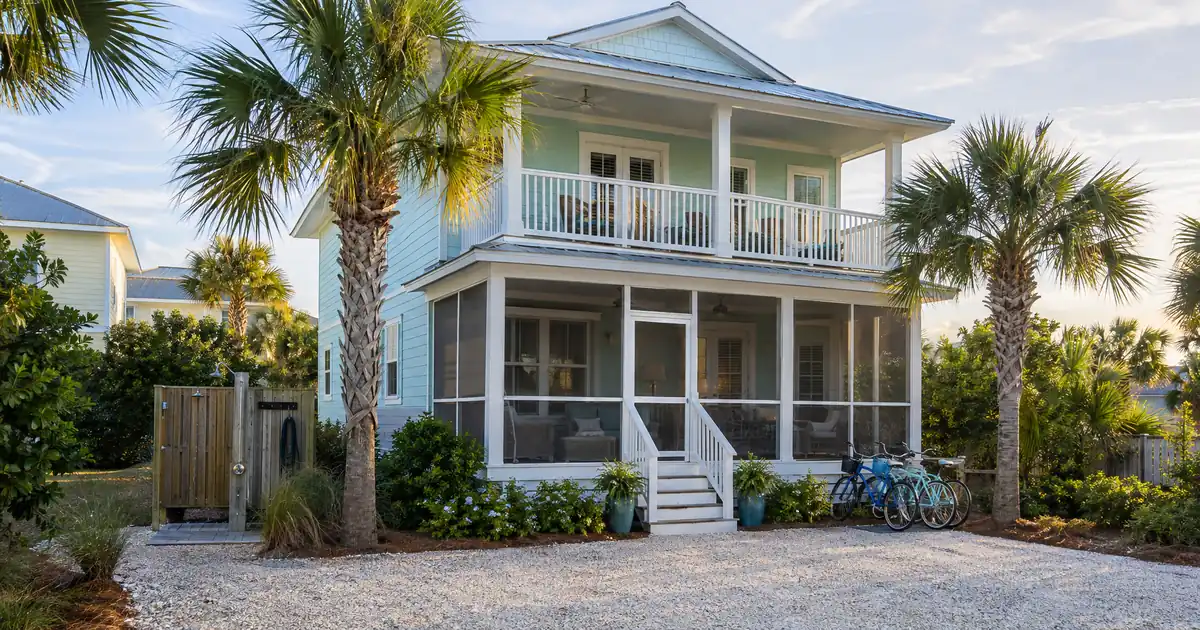
The Quick Read: Yes, an LLC can usually be the borrower on a DSCR Airbnb cash-out, because most DSCR programs in Lendmire’s wholesale network accept entity borrowers: the LLC signs the note and mortgage and stays on title, while an individual signs a separate personal guaranty, so the loan is not non-recourse.
- Cash-out leverage on short-term-rental collateral tops out at 70% LTV, and the borrower typically needs a 640+ credit score and about 12 months of hosting history.
- The coverage floor on an STR refinance is 1.00 on select programs, subject to lender guidelines.
- Close the new loan in the LLC’s name from day one. Deeding a mortgaged property into an LLC first can trigger the old lender’s due-on-sale clause.
- Clearing 1.00 coverage does not mean the Airbnb cash flows.
Most investors ask this question after the property is already running. The Airbnb is booked, the equity has built up, and the owner wants cash for the next deal. The real question is how the paperwork has to line up so the LLC can borrow cleanly. That is what this piece covers.
DSCR Cash-Out Calculator
Run the cash-out numbers in your market
Rate source: Freddie Mac 30-yr average via FRED® — Federal Reserve Bank of St. Louis · effective Oct 8, 2026
Prefilled with starting assumptions — enter your property’s value, balance, taxes, and insurance for a more accurate picture.
Program parameters update from Lendmire’s centralized guideline source. Taxes and insurance are editable estimates.
As of Oct 8, 2026 · General Freddie Mac market benchmark, not a Lendmire loan offer. Property value, balance, taxes, and insurance are editable estimates. Maximum loan-to-value varies by lender, program, property type, and seasoning. Not a Loan Estimate, approval, or commitment to lend. Program availability and eligibility are subject to lender guidelines, credit approval, property review, and underwriting.
Key Terms Defined
You will see these terms throughout, so here they are once.
- DSCR (debt service coverage ratio): the property’s rental income divided by its monthly obligation. A result of 1.00 means income equals the obligation.
- PITIA: principal, interest, taxes, insurance, and any association dues. It is the full monthly obligation DSCR is measured against.
- LTV (loan-to-value): the loan balance as a percentage of the property’s appraised value.
- Guarantor: the person who signs a separate promise to repay if the LLC does not.
- Recourse: the lender’s ability to go after a guarantor personally if the collateral does not cover the debt.
- Vesting: how title is held, meaning the exact legal name that owns the property.
- Seasoning: the waiting period a lender wants between owning a property (or an earlier loan) and a new cash-out.
- Business-purpose loan: credit taken for an investment or commercial reason rather than for personal, family, or household use.
How Does an LLC Borrow on an Airbnb Cash-Out?
The LLC applies, signs the note and the mortgage, and keeps title. A person backs it with a guaranty. That is the whole structure.
The sequence usually runs like this:
1. Confirm the program takes entity borrowers. A few lenders lend only to individuals, so ask before you pay for an appraisal.
2. Assemble the entity package. Expect the articles of organization, the operating agreement, the EIN letter, and a good-standing certificate. The lender also wants proof that the signer can bind the LLC.
3. Make the names match. The note, title, and insurance policy must agree. If the LLC is not the named insured, coverage can gap.
4. Order the appraisal. It includes a market rent schedule. The form is a 1007 for a single-family home and a 1025 for a two-to-four-unit property. For an Airbnb, the short-term income method replaces or adds to that long-term rent figure.
5. Pay off and fund. The new loan pays off the old mortgage and the closing costs. The remainder goes to the borrower, which means the LLC’s account.
6. Leave title alone. If the LLC already owns the property, no deed is recorded before or after closing.
Qualification runs primarily on property-level rental income covering the payment, subject to lender guidelines. Your traditional personal-income documentation is not the center of the file. Conventional loans, by contrast, generally want a person on the note. That difference is why investors with several rentals end up here.
Who Signs What: Borrower, Guarantor, and Title
Three roles sit on every entity file, and people blur them constantly.
The borrower is the LLC. It signs the note, and the lender’s lien attaches to the property. The title holder is also the LLC, in the exact name that appears on the deed. The guarantor is a human being who signs a separate guaranty.
A single-member owner signs twice, in two capacities: once as the LLC’s authorized signer and once as an individual guarantor. It feels redundant. It is not, because each signature creates a different obligation.
Multi-member LLCs get more varied treatment. Some programs want every owner above a set ownership percentage to guarantee. Others accept a single guarantor. Ask early, because it changes who needs to pull credit and sign.
Does the LLC Make the Loan Non-Recourse?
No. This is the most common misunderstanding on these files.
The LLC does separate property-level liability from your personal assets. If a guest is hurt at the Airbnb, the claim generally aims at the entity. But the guaranty is a promise from you personally. In a default, the lender can look to the guarantor.
Two practical results follow. First, a guaranteed debt generally has to be disclosed on your later loan applications. Second, the LLC protects you from the property’s operating risk, not from the loan itself. (Insurance and sound operations still carry most of that weight.)
Which Title Path Are You On?
Your starting point decides the sequence. Here is the quick map.
| Starting point | What to do | What to watch |
|---|---|---|
| Already in the LLC | LLC refinances as borrower | Names match everywhere |
| Personal name, mortgage | Ask lender about vesting at closing | Due-on-sale if deeded first |
| Personal name, paid off | Confirm program’s vesting options | Title insurance on any deed |
| Trust-held | Revocable often workable | Irrevocable and land trusts are harder |
The riskiest row is the second one. It deserves its own section.
Why Not Deed It In First?
Because the existing mortgage probably has a due-on-sale clause, and a deed into an LLC can trip it.
Federal law makes those clauses enforceable. The exceptions are in the statute itself, and 12 U.S.C. § 1701j-3 at Cornell’s Legal Information Institute lists them. They cover specific transfers on residential property with fewer than five units, including certain transfers into a trust where the borrower stays a beneficiary. A transfer into an LLC is not on that list.
So the practical rule is simple. Either close the new DSCR loan in the LLC’s name from the start, or get the current lender’s written approval before you record any deed. Not a text message. Written.
You will also see online claims that a land-trust step solves the problem. Treat that as an attorney question, not a forum answer. Deeding out and back also creates title-insurance headaches you can avoid.
Seasoning and Timing When an LLC Is Involved
About six months of ownership is the common cash-out expectation across the network. For an Airbnb, the lender also wants a hosting track record, typically about 12 months.
Does moving title into the LLC reset the clock? It depends on the lender and program. Some count the owner’s prior period of ownership, and others look at when the entity took title. That is one more reason to ask before any deed, not after. If the LLC has held the property from the beginning, the question never comes up.
Making the Airbnb and the LLC Line Up
Airbnb files fail on small mismatches. The income has to trace to the borrowing entity.
| Item | What the lender wants |
|---|---|
| Borrower | LLC, exact legal name |
| Title | Same LLC name |
| Insurance | LLC as named insured, STR coverage |
| Booking account | Host account tied to the LLC if possible |
| Deposits | Payouts landing in an LLC account |
| Permits and licenses | In place and in the right name |
Disclosures sometimes list the personal name on an LLC-owned file. The usual fix is to correct the application and title commitment to the entity before anything else moves.
Short-term rental rules can vary by city, county, HOA, and property type, so investors should confirm local rules before relying on projected rental income.
On income, the common methods are the 12-month platform or bank history, a third-party projection, and a fallback to the appraiser’s long-term market rent. Lenders weigh these differently, and many underwrite STR income more conservatively than long-term rent. Documented history is the cleanest of the three.
Is the Airbnb Really an Investment Property?
Your own use matters. A DSCR loan is a business-purpose investor loan, and it only fits a true investment property.
Federal rules treat credit to buy, improve, or maintain a non-owner-occupied rental as business purpose, as the CFPB’s Regulation Z commentary explains. The Airbnb wrinkle is the 14-day line. If the owner expects to occupy the property for more than 14 days in the coming year, it cannot be treated as non-owner-occupied for that rule. A reproduction of the commentary uses a beach house the owner enjoys for a month as its example.
A true investment Airbnb is different from a personal vacation home you rent out between your own stays. A signed business-purpose form does not settle the question alone. The facts do.
DSCR vs. conventional financing
There are two common ways to finance an investment property, and they qualify you differently — here’s how investors weigh them.
Why investors choose it
- Qualifies on the property’s rental income — no personal tax returns, W-2s, or pay stubs needed to document income.
- No personal debt-to-income ceiling to clear, so existing mortgages and obligations don’t cap your borrowing the same way.
- Can be closed in an LLC, keeping the property inside a business entity.
- Built for scaling — not held to the limit on number of financed properties that conventional financing applies.
- Underwriting centers on the deal: generally qualifies when the rent covers the payment, a 1.00x coverage ratio being a common baseline (confirmed in underwriting).
- Designed specifically for investment property, including long-term and, where the program allows, short-term rentals.
Where it’s strong
- Often the lowest ongoing financing cost for a buyer who fully qualifies on personal income — a fit for a first property or a cost-first purchase.
Trade-offs for investors
- Requires full personal income documentation and must fit within a debt-to-income limit — salary, existing debts, and other mortgages all count.
- Typically held in your personal name rather than a business entity.
- Caps how many financed properties you can carry, which can become a ceiling as a portfolio grows.
- Evaluates you as a borrower as much as the property, which usually means more paperwork.
How investors usually choose: a first or single property often optimizes for the lowest financing cost; portfolio builders often optimize for leverage, vesting in an LLC, and scaling past conventional caps. The right answer depends on your goals, the property, and current guidelines — both paths run through select lenders in Lendmire’s wholesale network, with eligibility and terms confirmed in underwriting.
Entity Paperwork, Trusts, and Odd Structures
Beyond the basics above, expect these questions:
- Out-of-state LLCs: if the LLC was formed in one state and the property sits in another, the lender may ask about foreign registration.
- Layered or series structures: these take more review, and acceptance varies by program.
- Trusts: revocable trusts are often workable with extra paperwork. Irrevocable, land, and blind trusts are harder.
- Resolutions: a signing resolution proves the person at the table can bind the LLC.
An LLC is not required, either. DSCR loans can close in a personal name, though entity vesting is common among investors who want liability separation. Advice online varies because lenders and programs vary.
Where the Cash-Out Proceeds Go
The proceeds go to the LLC’s account. Keep them there.
Moving cash out to a personal account, then back for repairs or the next down payment, blurs the line between you and the entity. That is the commingling problem. Use the LLC account for LLC business and document anything else.
Tax treatment can depend on how the funds are used and how the property is held; investors should keep clear records and speak with a qualified tax professional before relying on any deduction.
Coverage Is Not Cash Flow
A DSCR compares rent to PITIA and nothing else. Repairs, vacancy, management, utilities, and capital expenses sit outside the calculation.
So a ratio just over 1.00 can still be a property that loses money in a slow season. That is especially true for an Airbnb, where income swings month to month. The strongest files in Lendmire’s wholesale network clear two tests: enough equity and enough rental coverage. A bigger cushion on both is worth more than squeezing under a ceiling.
Here is a pattern that shows up on STR files across lenders. The long-term rent from the appraisal produces a thin ratio, while the trailing 12 months of host income clears comfortably. Running both versions before choosing a program saves a lot of backtracking.
When Another Structure Fits Better
Skip the LLC route in a few cases. If the lender does not accept entities, the loan may need to close in a personal name. If the property is mortgaged and the lender will not approve a transfer, keep title where it is.
The same goes for a cash-out you could handle with a home equity line. Investment-property HELOC lines cap at $500,000 total.
If the coverage ratio lands below 1.00, that is not automatically a dead end. Sub-1.00 coverage is available through select lenders in the network, with leverage and terms adjusted. Eligibility still depends on credit approval, property review, and lender guidelines.
A Worked Example
Run the numbers on a single-member LLC that owns one operating Airbnb. The inputs below are modeled assumptions, not market data.
Assume the owner has a 720 credit score and 14 months of platform and bank history. The appraisal supports the value, and the income documentation produces coverage around 1.2x. The owner asks for the maximum cash-out leverage on short-term-rental collateral, which is 70% LTV. A standard long-term rental cash-out would sit around 75% instead. Each figure is subject to lender guidelines and a complete review of property type, leverage, and credit.
The LLC applies as borrower and stays on title. The owner signs as authorized signer and again as guarantor. Insurance names the LLC. After the payoff, the remainder lands in the LLC’s bank account.
Now change one input: coverage drops to 0.95x on the documented income. The deal works to a select-lender path with leverage and terms adjusted, rather than the standard route. Reserves also matter here. They commonly run around six months of PITIA but vary by lender, leverage, loan size, and transaction type.
Standard programs reach up to $3,000,000. Smaller balances route through select lenders in the network.
What to Ask Your Lender Before You Apply
- Does this program accept an LLC as borrower on an STR cash-out?
- How many guarantors, and at what ownership percentage?
- How do you count seasoning if title moves into the LLC?
- Which STR income methods do you accept?
- What reserves apply at my leverage and loan size?
- Which documents prove the signer’s authority?
Next Step
If you are buying or refinancing a rental property and want to see how the numbers work, Lendmire can help you compare DSCR loan options based on the property income, credit profile, leverage, and investor goals. Lendmire is a broker that arranges financing through select lenders in its wholesale network across 41 markets, including Washington, D.C. The complete DSCR loans guide covers the basics.
None of this is legal or tax advice. Entity, title, and due-on-sale questions depend on your documents and your state, so talk to a qualified attorney or CPA about your own situation before you act.
Frequently Asked Questions
Do I have to put my Airbnb in an LLC to get a DSCR cash-out?
No. Many DSCR programs allow a personal-name closing. Entity vesting is common among investors who want liability separation, but it is a choice, and it depends on the program.
Can I apply before the LLC exists?
Some programs allow a to-be-formed entity, and others want the LLC already in place with its documents. Ask before you apply. If the property is already mortgaged, forming the LLC does not mean you should deed the property into it.
Who has to sign the guaranty if the LLC has two owners?
It varies by program. Some want every owner above a set percentage, and others accept one guarantor. Settle it before the appraisal is ordered.
Does a DSCR cash-out on an Airbnb need hosting history?
Typically, yes. STR collateral usually expects about 12 months of hosting experience, plus a 640+ credit score. Lenders may weigh platform history, bank deposits, or projections differently.
Can the cash-out money go to my personal account?
It is cleaner to land it in the LLC’s account. Moving it back and forth blurs the separation the LLC is meant to provide, so talk to your CPA about how to handle it.
Investors focused on short-term rentals can review DSCR loans for Airbnb and short-term rentals.
For the mechanics of pulling equity out of a rental property, see Lendmire’s guide to cash-out refinance on an investment property.
About Lendmire
A non-QM mortgage broker (NMLS# 2371349), Lendmire arranges DSCR financing for real estate investors in 41 markets — 40 states plus Washington, D.C. Because deals are underwritten primarily on property cash flow rather than personal income documentation, the structure suits self-employed buyers and entity-owned portfolios. Lendmire places loans through wholesale investor lenders; it is not a direct lender. Scotsman Guide named Lendmire a Top Mortgage Workplace in both 2025 and 2026.
Get Started
Ready to find the right loan for you?
In about 30 seconds you can review financing options available for your investment property. No commitment required.
Informational only. Not a Loan Estimate, approval, or commitment to lend. Program availability and eligibility are subject to lender guidelines, credit approval, property review, and underwriting.
References
1. Cornell LII – 12 U.S.C. § 1701j-3
2. CFPB – Regulation Z § 1026.3 and commentary
3. BankersOnline – Regulation Z 1026.3 reproduction
This article is part of Lendmire’s investment property cash-out refinance program — full qualification details, guidelines, and scenarios live on the program page.
Related reading: Do All DSCR Cash-Out Loans Carry an Early Exit Fee? · How to Cash-Out Refinance a 2–4 Unit Rental From Start to Close · How to Document a Cash Purchase for Delayed Financing on a Duplex
Brandon Miller
Founder & CEO, Mortgage Loan Originator, Lendmire LLC
- Mortgage Loan Originator · NMLS# 1129696 · Verify on NMLS Consumer Access
- North Carolina Real Estate Broker · License# 343312 · Verify on NCREC
- North Carolina Insurance Producer · License# 19053198 · Property, Casualty, Life, Health · Verify on NAIC SBS
- Lendmire LLC · Firm NMLS# 2371349 · Verify firm licensure
Compliance and disclosures. Lendmire (NMLS# 2371349) is a licensed mortgage broker and is not a direct lender, depository institution, financial advisor, or tax professional. Content in this article is general market analysis and educational information — not financial, legal, or tax advice for any specific situation. Lendmire does not guarantee loan approval; every transaction is subject to underwriting by the funding lender. Mortgage pricing and loan program guidelines are subject to change at any time without notice and vary by borrower characteristics, property type, and state regulations. Lendmire complies with Equal Housing Opportunity. Licensure verification: NMLS Consumer Access.