
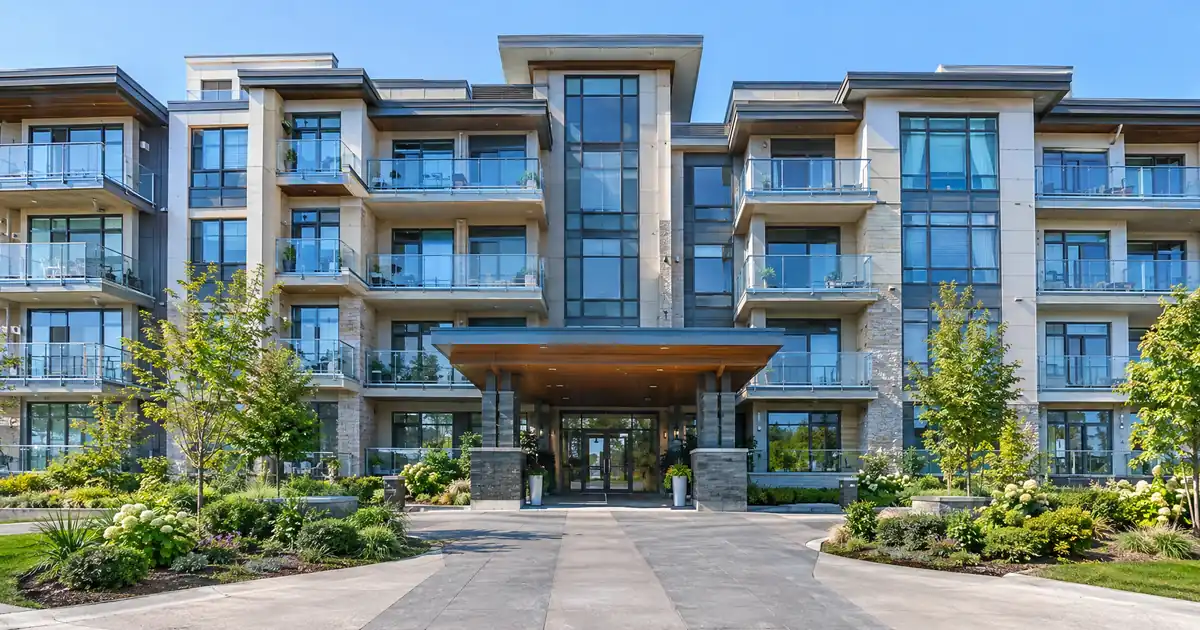
The Quick Read: Usually yes, when the unit is a true condo rather than a condotel, title sits in your name or a revocable trust, your credit and equity clear the investment-line minimums, and both the HOA and the city allow short-term rentals, though every file is reviewed individually subject to lender guidelines. Airbnb use alone does not disqualify a condo. The four gates above decide the outcome.
- Property type: condos, including non-warrantable ones, are eligible. Condotels are not.
- Title: an individual or a revocable living trust only. An LLC cannot hold title.
- Borrower strength: a 700 minimum credit score, up to 70% combined loan-to-value, and a debt-to-income ratio up to 50%.
- Line size: $25,000 to $500,000 on an investment property.
- Building rules: a city permit does not override an HOA ban.
Key Terms Defined
HELOC: a home equity line of credit, an open line you draw on as needed against the equity in a property.
CLTV (combined loan-to-value): your first mortgage plus the new line, divided by the property’s value.
Condotel: a condo building run like a hotel, with transient occupancy and hotel-style services.
Non-warrantable condo: a condo project that misses the standard project tests, often because of high investor concentration or pending litigation.
CC&Rs: the recorded covenants, conditions and restrictions that bind every owner in the building.
Automated valuation: a computer-generated value estimate that replaces a traditional appraisal.
DSCR loan: an investor loan that checks whether a property’s rent covers its monthly housing payment.
How large a line the equity supports.
An equity line is sized by combined loan-to-value, occupancy, and credit — not by rental coverage. Switch the occupancy or the credit band and the ceiling moves with it.
Investment-property lines require a 700 minimum credit score; second-home lines start at a 640 minimum and primary-residence lines at 600, and the combined-LTV ceiling steps down as the credit band drops on primary-residence and second-home lines and holds on investment-property lines; the line cap steps down on primary-residence lines and holds at every tier on investment-property and second-home lines.
A debt-to-income ratio above 45% requires 680+ credit. Profiles under 640 are limited to single-family homes. At least 75% of the approved line is drawn at closing. Ceilings, floors, and caps update from Lendmire’s centralized guideline source.
Line estimate
Illustrative estimate only — not a quote, Loan Estimate, approval, or commitment to lend. The rate is an editable assumption; equity-line pricing is variable through both the draw and repayment periods and never converts to fixed. Occupancy and credit drive the ceiling together: an investment property tops out at 70% combined LTV (minimum credit 700, line cap $500,000); a second home tops out at 90% combined LTV (minimum credit 640, line cap $500,000), with the ceiling stepping down as the credit band drops (the cap holds at every tier); a primary residence tops out at 90% combined LTV (minimum credit 600), and its $750,000 maximum line is available only at 75% combined LTV or below with a 700-or-better credit profile (720 on the longer-runway program) and a full appraisal. Lines above $500,000 require a full appraisal. Credit, debt-to-income, property type, and full underwriting review all affect the final line.
Why Airbnb Use Does Not Automatically Disqualify the Condo
An investment-property HELOC is underwritten mostly on you, not on the listing. The lender looks at credit, equity, debt-to-income and the paperwork on your other properties. Your Airbnb income can help the file, but the property does not have to earn its way through a rent-versus-payment test.
That is the main difference from a DSCR loan, which qualifies primarily on property-level rental income covering the payment, subject to lender guidelines. A HELOC leans on your whole financial picture instead. A busy listing with heavy write-offs on your tax return can look thin on paper, and that can hurt your ratios.
Short-term rental rules can vary by city, county, HOA, and property type, so investors should confirm local rules before relying on projected rental income. That caution matters more for condos than for houses. A condo adds a second rule-maker, the association, and the lender cares about it because a banned rental use can wreck the income and the resale value at once.
Availability is narrower than most investors expect. Lendmire brokers these lines through select wholesale partners and is never the lender. The home equity line product is currently arranged in 16 full-service states, which is fewer than the 41-market DSCR footprint.
Gate One: Is It a True Condo or a Condotel?
Across the wholesale network, a true condo qualifies and a condotel does not. Non-warrantable condos are eligible too, which surprises many owners. The line between the two types is how the building operates, not how many guests you host.
| Property | Eligible for an investment HELOC? |
|---|---|
| Standard condo | Yes |
| Non-warrantable condo | Yes |
| Condotel | Not offered |
| Co-op | Not offered |
| Mixed-use or commercial | Not offered |
Condotel status is the quiet trap. According to one practitioner guide on CC&Rs, a building with enough short-term rentals and hotel-like features can be classed as a condotel. Your unit may have been a standard condo when you bought it and drift into the wrong category as more neighbors list theirs.
Check the declaration for transient-occupancy wording, front-desk or rental-pool services, and any language treating the building as a hotel. If the building looks like a hotel, expect trouble. Ask the lender’s loan officer early, before you pay for anything.
Gate Two: Title Has to Sit in the Right Name
On this network, title must be held by you personally or by a revocable living trust. LLCs, corporations, partnerships, and irrevocable, blind or land trusts cannot hold title. Many Airbnb investors put their condo in an LLC for liability reasons, so this is where files stall.
You have two practical options. First, change the vesting back to your name or a revocable trust, which is a decision to make with your attorney. Second, skip the HELOC and use a DSCR cash-out refinance, where entity ownership is often workable, subject to lender program eligibility. Lendmire’s piece Can an LLC-Held Airbnb Get an Investment Property HELOC? walks through that choice in more detail.
Gate Three: Credit, Equity and Debt Ratios
The investment line has a hard floor of 700 on credit. Scores of 700 and 720 both reach the same ceiling, 70% CLTV, so a higher score buys eligibility rather than extra leverage. Below 700, an investment-property line is off the table.
Here is how the main numbers line up on an investment property:
| Item | Investment line |
|---|---|
| Minimum credit | 700 |
| Maximum CLTV | 70% |
| Line size | $25,000 to $500,000 |
| Debt-to-income | Up to 50% |
| Structure | 5-year draw, 25-year repayment |
A few details sit behind that table. Pricing floats and never converts to fixed. At least 75% of the line is drawn at closing. Debt-to-income is calculated on the interest-only payment at the maximum draw, so a large line can squeeze your ratio even if you never plan to draw it all.
Because the line caps at $500,000, the valuation is almost always automated, and many files close with no traditional appraisal, though a lender can ask for a secondary valuation. Several limits apply to portfolio investors. You can hold up to three lines, and an owner of more than 15 financed properties is not eligible. In some states, a property listed for sale within the past 60 days is ineligible too. Programs change, and every file is underwritten individually.
Gate Four: The HOA and the City Both Have a Vote
The city and the HOA are separate gatekeepers, and the unit needs approval from both.
A city permit does not cancel an HOA prohibition, per airroi’s glossary on HOA restrictions. If your CC&Rs bar short-term rentals, the Airbnb income is not available to you. The same source notes that boards can adopt new restrictions by resolution and begin enforcing them at any time, and that unpaid HOA fines can become liens that block a sale or refinance.
Why would a HELOC lender care about any of that? A lien from unpaid fines threatens the lender’s position. A banned rental use can force you onto long-term tenants, and your payment ratios may not survive that change.
Read three things before you apply:
1. The declaration and bylaws, for minimum lease terms, rental caps and hotel-like wording.
2. Any board resolutions adopted after the declaration was recorded.
3. Your account with the association, to confirm no fines or assessments are outstanding.
How the Airbnb Income Gets Documented
Airbnb income has no lease behind it, so the paperwork stands in. A typical file includes:
- Filed traditional personal-income documentation with the rental schedule
- Platform payout reports for the property
- Bank statements showing the deposits
- Mortgage statements on every property you own
- Short-term-rental insurance
- Any management agreement
Match payout reports to the condo itself, since lenders look at each financed property. Gross bookings and net income are different numbers, and the return you filed is what a reviewer will read. A listing that sells out every weekend can still look modest after fees, cleaning, dues and write-offs.
Across the network, how much of that income helps a file depends on the lender and the borrower’s full picture. Treat it as supporting evidence, not a guarantee. The new-listing question deserves its own treatment, and Lendmire’s article Investment Property HELOC Rules for an Airbnb Under a Year Old covers it.
A Worked Example in Percentages
Take a condo whose value comes back from an automated valuation. Say your first mortgage sits at 50% of that value. The 70% ceiling leaves room for a line worth 20% of value. This is a modeled assumption, not a market figure.
Now change one input. If the first mortgage sits at 60% of value, only 10% of value is left. That slice might fall below the $25,000 minimum line, and then the condo can’t support a HELOC at all, no matter how strong the rest of the file looks.
The reverse problem shows up with big balances. A condo with lots of equity can still be capped at $500,000. The line size and the 70% ceiling both apply, and the smaller one wins.
What Happens After You Close
Once the line is open, the mechanics matter. The CFPB explains that a HELOC lets you borrow repeatedly against your equity, and that a lender can freeze the line if the home’s value drops significantly or your finances change.
On an investment line, you pay interest only during the five-year draw, then principal and interest over 25 years. The payment floats the whole time. Airbnb income is seasonal, and the debt service on this line is not. A slow winter plus a rising payment is the scenario to stress-test before drawing.
The strongest files we see use the line for a defined purpose, such as a down payment on the next rental, and keep a cash cushion for the off-season. The weaker ones draw the full line against a condo that barely cash flows after HOA dues.
HELOC or DSCR Cash-Out for an Airbnb Condo?
Which product fits depends on how you hold the property, how your tax return looks, and whether you want to keep your first mortgage.
| Situation | Better fit |
|---|---|
| Condo is titled personally or in a revocable trust | HELOC or DSCR |
| Condo is held in an LLC | DSCR cash-out |
| You want to keep your existing first mortgage | HELOC |
| Tax write-offs squeeze your debt-to-income | DSCR cash-out |
| You need more than $500,000 against the condo | DSCR cash-out |
A HELOC sits behind your first mortgage as a standalone line, while a DSCR cash-out replaces the first mortgage with a new term loan. If you hold a low-cost first mortgage, replacing it can be an expensive way to reach your equity. Cash-out refinances on standard rentals typically top out around 75% LTV across most of the network. On short-term-rental collateral, the ceiling drops to about 70% LTV, and a 640+ score and about 12 months of hosting history are the common expectations. Lenders in the network will also review coverage below 1.00 through select lenders, with leverage and terms adjusted.
For the bigger picture on how these loans work, see Lendmire’s complete DSCR loans guide.
Two caveats. First, clearing a coverage ratio is not the same as positive cash flow. DSCR compares rent to the monthly housing payment only. Repairs, vacancy, management, utilities, and HOA surprises sit outside the calculation. Second, a condo’s thin cash flow after dues is the reason many investors prefer a smaller draw.
Common Mistakes With Airbnb Condos
Assuming a city permit settles it. It does not. The HOA layer is separate, and owners are bound by the CC&Rs.
Ignoring condotel drift. A building that fills up with short-term rentals can change category over time.
Applying through an LLC. Fix the title first, or move to a DSCR path.
Skipping the HOA account check. Open fines can become liens.
Expecting a higher score to buy more leverage. On the investment line it only buys eligibility.
Using primary-residence numbers. Generic HELOC articles describe lines on owner-occupied homes. The investment line is a tighter product.
Tax treatment can depend on how the funds are used and how the property is held; investors should keep clear records and speak with a qualified tax professional before relying on any deduction.
Frequently Asked Questions
Can a condo used for Airbnb get an investment property HELOC?
Often yes. The unit must be a true condo or a non-warrantable condo, not a condotel. Title must sit with you or a revocable trust, and the file must clear the 700 credit floor and the 70% CLTV ceiling. Short-term rental use must also be allowed by both the HOA and the city.
Does a brand-new Airbnb listing disqualify me?
Not by itself, since the line underwrites you more than the listing. A thin hosting history simply gives you less income documentation to show. Lenders vary, and the file is reviewed individually.
Do HOA rules really matter for the loan?
Yes. A rental ban can erase the income, and unpaid fines can become liens. Read the declaration and any later board resolutions before you apply.
What if my condo is in an LLC?
An LLC cannot hold title on this line. You can change the vesting to your name or a revocable trust, or pursue a DSCR cash-out, subject to lender program eligibility.
What if I am declined?
Check which gate failed. If it was title or debt-to-income, a DSCR cash-out may fit better because it qualifies primarily on property-level rental income covering the payment. If it was the building, the product matters less than the rental rules.
Next Step
If you are considering a home equity line and want to see how the numbers work, Lendmire can help you compare HELOC options based on the property, the equity available, credit profile, combined leverage, and your goals. Building rules and condo type usually settle the answer, so start by reading your declaration. A condo that clears those two checks usually has a workable path.
About Lendmire
Lendmire is a mortgage brokerage (NMLS# 2371349) arranging home equity lines of credit — primary-residence, second-home and investment-property lines — through a wholesale lending network in its 16 full-service states. Eligibility is determined by the lender on each file. Scotsman Guide named Lendmire a Top Mortgage Workplace in both 2025 and 2026.
Get Started
Ready to find the right loan for you?
In about 30 seconds you can review financing options available for your home or investment property. No commitment required.
Informational only. Not a Loan Estimate, approval, or commitment to lend. Program availability and eligibility are subject to lender guidelines, credit approval, property review, and underwriting.
References
1. Governingdocs – CC&R and condotel risk
3. CFPB – What is a home equity line of credit (HELOC)?
This article is part of Lendmire’s investment property HELOC program — full qualification details, guidelines, and scenarios live on the program page.
Related reading: DSCR Cash-Out Documentation When a Lease Expires During Refinance · How to Clear a Solar Lien on Your First Rental Before a DSCR Cash-Out · How to Keep a Standing HELOC on a Rental to Fund the Next Deal
Brandon Miller
Founder & CEO, Mortgage Loan Originator, Lendmire LLC
- Mortgage Loan Originator · NMLS# 1129696 · Verify on NMLS Consumer Access
- North Carolina Real Estate Broker · License# 343312 · Verify on NCREC
- North Carolina Insurance Producer · License# 19053198 · Property, Casualty, Life, Health · Verify on NAIC SBS
- Lendmire LLC · Firm NMLS# 2371349 · Verify firm licensure
Legal disclosures. Lendmire (NMLS# 2371349) is a state-licensed mortgage brokerage that arranges financing through wholesale lender relationships. Lendmire is not a direct lender, depository institution, or registered financial advisor. The discussion above is general informational content about real estate financing — it is not financial, legal, or tax advice, and readers should consult licensed professionals for guidance on their individual circumstances. Loan inquiries are subject to lender underwriting; this article does not represent a commitment to lend. Loan terms, rates, and qualification standards vary by borrower, property, and state, and are subject to change at any time. Equal Housing Opportunity. NMLS Consumer Access: nmlsconsumeraccess.org.