
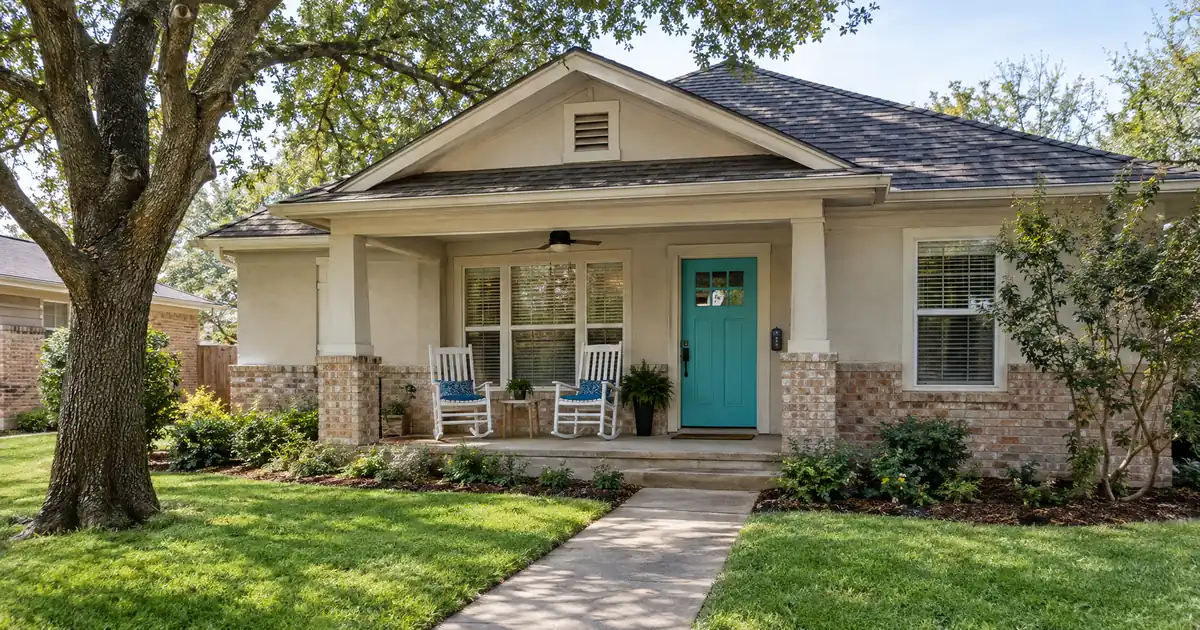
The Quick Read: The usual route is a cash-out refinance on the Airbnb itself, including a DSCR cash-out that qualifies primarily on property-level rental income covering the payment, subject to lender guidelines. A true investment Airbnb sits outside the Texas homestead rules that make home equity lending so restrictive. A HELOC on a rental is also narrow and rarely offered.
- A cash-out refinance replaces the first mortgage and pays you the difference.
- Across most of the wholesale network, cash-out tops out around 75% LTV on a standard rental and 70% on short-term-rental collateral.
- STR cash-out files typically want a 640+ score and about 12 months of hosting history.
- Clearing a coverage ratio is not the same as positive cash flow.
- Title matters: a property held in an LLC can’t take a HELOC, but a DSCR cash-out can work with entity vesting, subject to program terms.
Short-term rental rules can vary by city, county, HOA, and property type, so investors should confirm local rules before relying on projected rental income.
How large a line the equity supports in Texas.
An equity line is sized by combined loan-to-value, occupancy, and credit — not by rental coverage. Switch the occupancy or the credit band and the ceiling moves with it.
Investment-property lines require a 700 minimum credit score; second-home lines start at a 640 minimum and primary-residence lines at 600, and the combined-LTV ceiling steps down as the credit band drops on primary-residence and second-home lines and holds on investment-property lines; the line cap steps down on primary-residence lines and holds at every tier on investment-property and second-home lines.
A debt-to-income ratio above 45% requires 680+ credit. Profiles under 640 are limited to single-family homes. At least 75% of the approved line is drawn at closing. Ceilings, floors, and caps update from Lendmire’s centralized guideline source.
Line estimate
Illustrative estimate only — not a quote, Loan Estimate, approval, or commitment to lend. The rate is an editable assumption; equity-line pricing is variable through both the draw and repayment periods and never converts to fixed. Occupancy and credit drive the ceiling together: an investment property tops out at 70% combined LTV (minimum credit 700, line cap $500,000); a second home tops out at 90% combined LTV (minimum credit 640, line cap $500,000), with the ceiling stepping down as the credit band drops (the cap holds at every tier); a primary residence tops out at 80% combined LTV (minimum credit 600), and its $750,000 maximum line is available only at 75% combined LTV or below with a 700-or-better credit profile (720 on the longer-runway program) and a full appraisal. Lines above $500,000 require a full appraisal. Credit, debt-to-income, property type, and full underwriting review all affect the final line.
Why “Without a HELOC” Is a Real Question in Texas
Texas treats home equity borrowing differently from almost every other state. The Texas Attorney General’s office describes a “Texas Cash Out” loan as a home equity loan governed by Section 50(a)(6) of the state constitution, and notes that the section protects the homestead from forced sale for most debts (Texas Attorney General Opinion KP-0183). An earlier opinion adds that no lien on a homestead is valid unless it secures a debt the section lists (Texas Attorney General Opinion GA-0279).
A homestead is the family’s primary residence, per a Texas legal-education guide on homestead protections. A genuine investment Airbnb isn’t one. So the homestead equity regime generally doesn’t govern a loan against it. That is the key distinction, and lenders’ counsel and title companies decide where a borderline property lands.
Investors still hit a wall with HELOCs for a separate reason. NerdWallet says an investment-property HELOC is possible but not universally offered, and underwritten on the borrower’s credit, reserves, and debt-to-income ratio. It also lists a cash-out refinance as the main alternative.
For the Texas-specific rules, Lendmire’s piece Texas Rental HELOC vs Homestead Equity Rules That Apply goes deeper.
Key Terms Defined
- DSCR: the debt service coverage ratio, which divides a property’s monthly rent by its monthly payment.
- PITIA: principal, interest, taxes, insurance, and association dues, the full monthly obligation.
- Cash-out refinance: a new, larger first mortgage that pays off the old one and hands you the difference.
- LTV / CLTV: loan-to-value, or combined loan-to-value when more than one lien exists.
- Seasoning: how long you’ve owned or held a loan before a lender will refinance it.
- Vesting: how title is held, such as personal name, trust, or LLC.
- Homestead: the owner’s primary residence, which carries special protections in Texas.
What Are Your Options Besides a HELOC?
The table compares them.
| Factor | DSCR cash-out | Investment HELOC | Sell or partner |
|---|---|---|---|
| First mortgage | Replaced | Usually stays | Paid off |
| Underwritten on | Property income | Your credit, DTI | N/A |
| Title | LLC often workable | Personal or trust only | N/A |
| Size | About $100K to $3M | Up to $500K total | N/A |
| Main catch | Reprices whole balance | Narrow availability | Gives up asset |
Across most programs we place files with, an investment line is the narrower product. It runs to 70% CLTV, caps at $500,000, requires a 700 credit score, and can’t be held by an LLC. Some market surveys report higher ceilings for equity lines generally, but those describe the broader market, not this network. Availability of these lines is also limited to Lendmire’s 16 full-service states, which include Texas.
The complete DSCR loans guide covers the loan family in more detail.
How DSCR Cash-Out Underwriting Treats an Airbnb
Underwriting is property-first. The core test divides expected monthly rental income by the full monthly payment, including taxes, insurance, and any HOA dues. A lender then checks value, income evidence, credit, and reserves. Here is the sequence.
1. Pick the structure. A cash-out refinance replaces the first mortgage. A HELOC usually adds a second lien and leaves the first alone.
2. Prove the income. The strongest evidence is 12 or more months of host-dashboard or bank-deposit history. Without enough history, lenders may lean on market projections, often discounted. Some programs use the appraiser’s long-term rent instead, which can understate a strong STR.
3. Value the property. The appraisal sets the LTV. The usual rent forms are the 1007 rent schedule and the 1025 small-residential-income form.
4. Check title and vesting. The entity holding the property shapes which products are available.
5. Run the coverage ratio on the new payment. More cash out raises the payment and lowers coverage.
On STR files, most programs we work with allow cash-out to 70% LTV, expect a 640+ score, and want about 12 months of hosting history. Coverage of 1.00 is where select programs start, not a universal standard. A separate select-lender path goes below 1.00, with leverage and terms adjusted. Credit tiers generally run from a 620 floor in parts of the network to around 660 for most programs, with 700+ unlocking the strongest leverage.
Reserves vary by lender, leverage, and loan size. Around six months of PITIA is common, and loans above $2,500,000 generally hold to 30-year fixed structures.
What Does a Strong File Look Like?
Picture an investor holding a paid-down Airbnb in a Texas resort market, owned through an LLC. A HELOC is off the table because the entity can’t hold title on that product. A DSCR cash-out at 70% LTV on STR collateral may fit instead, subject to program eligibility, with the booking history from the platform dashboard supporting the income. The exact numbers vary by lender and program and follow a full review of property, leverage, and credit.
Now say the same investor wants to pull as much cash as possible. The payment rises, and coverage might drop from a comfortable 1.3x toward 1.0x. The file can still clear and leave thin real cash flow. DSCR compares rent to PITIA only. Repairs, vacancy, management, utilities, and capex sit outside the calculation.
The strongest files clear both tests: enough equity and enough rental coverage. A larger down payment on a purchase lowers the payment and can lift coverage, but it never erases leverage caps, credit floors, or reserve rules.
Where the General Rule Breaks
Not every Texas “Airbnb” is a clean investment property. Several edge cases change the answer.
- A lived-in property. If you live there and rent a room or an ADU, it may stay a homestead. A homestead-exemption guide notes that renting a room or ADU where you live does not by itself end the exemption. A homestead cash-out is a different loan, and its Texas ceiling is 80% combined LTV.
- A converted home. Once you move out and establish a new principal residence, homestead status is usually abandoned, though a Texas law-firm page cites case law that temporary renting alone may not change its character. Title companies look closely at these.
- A paid-off property in an LLC. A HELOC is generally unavailable, so a DSCR cash-out is often the only path. Cash from a refinance can also serve as reserves for later deals, which a HELOC line cannot.
- Ineligible property types. Manufactured homes, log homes, and barndominiums are not offered through the network’s DSCR programs.
- Prepayment terms. DSCR loans often carry early-payoff penalties for the first few years, which matters if you plan to sell.
The property-tax homestead exemption is a separate matter from lien status. Tax treatment can depend on how the funds are used and how the property is held; investors should keep clear records and speak with a qualified tax professional before relying on any deduction.
Common Misconceptions
“Texas caps everyone at 80%.” That cap applies to homestead equity loans, not to a true investment property, which follows ordinary investment-loan rules.
“A HELOC is the default way to tap rental equity.” It isn’t. Many banks don’t offer one on rentals, and the ones that do run full personal underwriting.
“A DSCR cash-out is no-documentation.” It is reviewed on documented income under the applicable program, subject to lender guidelines. The property still needs income evidence, an appraisal, clean title, and reserves.
“Airbnb income counts at 100%.” Most methods discount projections or apply a vacancy factor, and the size varies by program.
Costs, Risks, and When to Pass
A refinance usually costs more in closing costs than a line of credit, though NerdWallet notes that refinances typically price lower than HELOCs or home equity loans. The tradeoff is real: a cash-out reprices the entire balance, so an investor holding a very low first mortgage should think hard before replacing it.
Pass, or wait, in these situations:
- Coverage only clears at maximum leverage and the property has thin margins.
- The proceeds would fund a deal that doesn’t itself cover its payment.
- Local licensing for the STR is unsettled.
- Hosting history is under a year and the income would have to rest on projections.
Doing nothing is a legitimate answer. Extracted equity is debt, and seasonality can punish a thinly covered Airbnb.
For investors weighing the same decision on an entity-held rental, see Lendmire’s piece How to Access LLC Rental Equity Through Cash-Out Instead of a HELOC.
Frequently Asked Questions
Can a Texas Airbnb owner get a HELOC on the property?
Sometimes, but it’s uncommon. Investment-property lines exist in a narrow lane, run to 70% CLTV, cap at $500,000, and need a 700 credit score with personal or trust title. Many owners find a cash-out refinance more practical, particularly when the property sits in an LLC. Final terms depend on the lender’s guidelines, the property type, and the borrower’s complete credit picture.
Does the Texas homestead rule apply to my Airbnb?
Generally not, if the property is a genuine investment and not your primary residence. The home equity rules attach to the homestead. A lived-in or partly rented property is a gray area that title counsel resolves.
How do lenders count Airbnb income?
Programs differ. Documented 12-month history is the strongest evidence. Otherwise, market projections or long-term rent may apply, often with a discount. Qualification is subject to lender guidelines and property review.
Is the coverage ratio the same as cash flow?
No. It compares rent to the full monthly payment only. Repairs, vacancy, management, utilities, and capex fall outside it, so a passing ratio can still leave thin cash flow.
Can I cash out an Airbnb held in an LLC?
Often yes, through a DSCR cash-out, subject to lender program eligibility. Most HELOC products require personal or trust title, so an LLC owner may not have that option.
If you are considering tapping equity and want to see how the numbers work, Lendmire can help you compare cash-out and equity-line options based on the property, the equity available, credit profile, combined leverage, and your goals. Texas investors who verify their local STR rules and rental income history first generally face the fewest surprises at underwriting.
About Lendmire
As a mortgage broker (NMLS# 2371349), Lendmire helps homeowners and real estate investors in its 16 full-service states open home equity lines of credit arranged through wholesale lenders. Lendmire is never the lender; line amounts, ceilings and terms are set by the lender under its guidelines. Scotsman Guide named Lendmire a Top Mortgage Workplace in both 2025 and 2026.
Get Started
Ready to find the right loan for you?
In about 30 seconds you can review financing options available for your home or investment property. No commitment required.
Informational only. Not a Loan Estimate, approval, or commitment to lend. Program availability and eligibility are subject to lender guidelines, credit approval, property review, and underwriting.
References
1. Texas Attorney General Opinion KP-0183
2. Texas Attorney General Opinion GA-0279
3. Texas Legal Guide, Homestead Protections
4. NerdWallet, HELOC on an investment property
5. Neuhaus RE, Texas homestead exemption guide
This article is part of Lendmire’s home equity line of credit program — full qualification details, guidelines, and scenarios live on the program page.
Related reading: Can You Get a HELOC on a Texas Airbnb Investment Property? · Does a Texas Rental Property Qualify for an Investment HELOC? · How to Get a HELOC in Texas Under the Homestead Equity Rules
Brandon Miller
Founder & CEO, Mortgage Loan Originator, Lendmire LLC
- Mortgage Loan Originator · NMLS# 1129696 · Verify on NMLS Consumer Access
- North Carolina Real Estate Broker · License# 343312 · Verify on NCREC
- North Carolina Insurance Producer · License# 19053198 · Property, Casualty, Life, Health · Verify on NAIC SBS
- Lendmire LLC · Firm NMLS# 2371349 · Verify firm licensure
Disclosure information. Lendmire is a state-licensed mortgage brokerage under NMLS# 2371349. Lendmire is not a depository institution, direct lender, or financial advisor — all loans referenced are placed through wholesale lender partners and are subject to each lender's underwriting standards. This article is provided for general informational purposes and is not a commitment to lend, nor does it constitute financial, legal, or tax advice. Loan programs, terms, rates, and qualification standards change without notice and depend on borrower profile, property type, and the state in which the subject property is located. Equal Housing Opportunity provider. NMLS Consumer Access: nmlsconsumeraccess.org.