
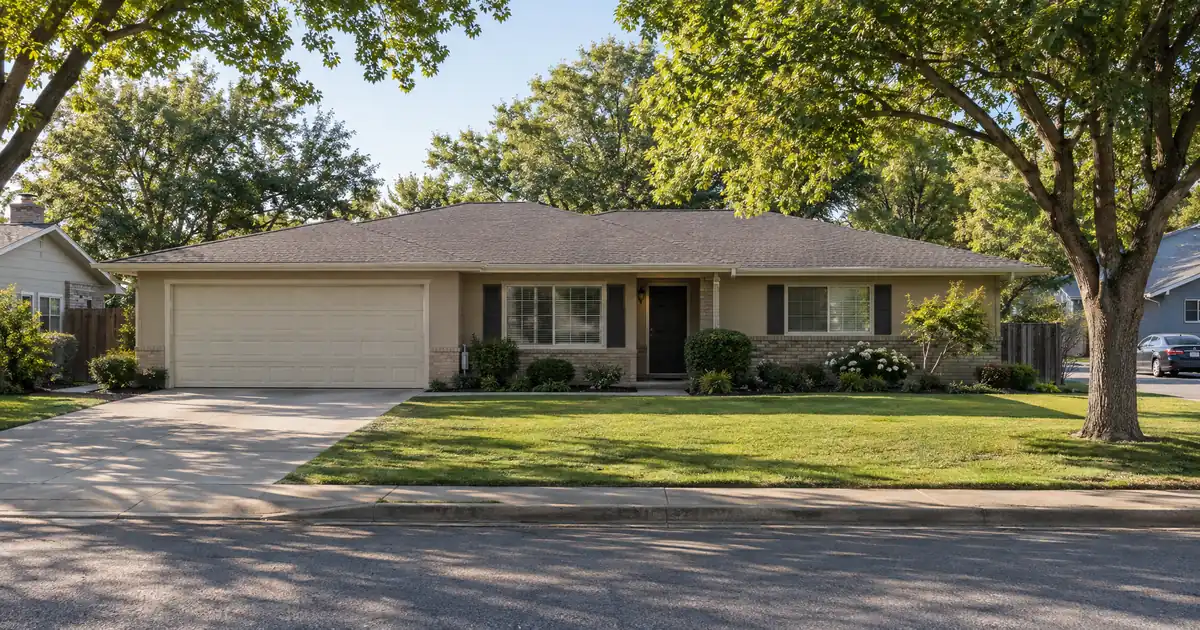
The Quick Read: A home with no mortgage can still carry a recorded lien, and a home equity line of credit (HELOC) is the usual culprit. Every lien must be paid and released before title passes. The proceeds you can use for your next purchase are what remains after that payoff.
- A paid-off mortgage does not mean a clear title. An open HELOC, even at a zero balance, is still a lien on the property.
- The payoff comes from a written payoff letter, not from the balance on your last statement.
- Paying a line to zero does not close it. You sign a closure authorization, and then the lender records a lien release.
- A released HELOC on the sold home does not enter a later DSCR calculation. A line on a different property stays outside the ratio but still affects your cash.
- Net proceeds, source-of-funds rules, and reserves decide how much you can put into the next deal.
What Does “Paid-Off” Actually Mean at a Sale?
A paid-off home is not automatically a free-and-clear home. Paid-off usually means the first mortgage is gone. Free and clear means no lien of any kind is recorded against the property.
How large a line the equity supports.
An equity line is sized by combined loan-to-value, occupancy, and credit — not by rental coverage. Switch the occupancy or the credit band and the ceiling moves with it.
Investment-property lines require a 700 minimum credit score; second-home lines start at a 640 minimum and primary-residence lines at 600, and the combined-LTV ceiling steps down as the credit band drops on primary-residence and second-home lines and holds on investment-property lines; the line cap steps down on primary-residence lines and holds at every tier on investment-property and second-home lines.
A debt-to-income ratio above 45% requires 680+ credit. Profiles under 640 are limited to single-family homes. At least 75% of the approved line is drawn at closing. Ceilings, floors, and caps update from Lendmire’s centralized guideline source.
Line estimate
Illustrative estimate only — not a quote, Loan Estimate, approval, or commitment to lend. The rate is an editable assumption; equity-line pricing is variable through both the draw and repayment periods and never converts to fixed. Occupancy and credit drive the ceiling together: an investment property tops out at 70% combined LTV (minimum credit 700, line cap $500,000); a second home tops out at 90% combined LTV (minimum credit 640, line cap $500,000), with the ceiling stepping down as the credit band drops (the cap holds at every tier); a primary residence tops out at 90% combined LTV (minimum credit 600), and its $750,000 maximum line is available only at 75% combined LTV or below with a 700-or-better credit profile (720 on the longer-runway program) and a full appraisal. Lines above $500,000 require a full appraisal. Credit, debt-to-income, property type, and full underwriting review all affect the final line.
The gap between the two is where sales get delayed. Many owners pay off the mortgage, forget the line they opened years earlier, and learn about it when the title search comes back. On that kind of property, the HELOC may be the only lien. It can also sit in first position.
The settlement agent is the title company, escrow company, or closing attorney, depending on the state. That agent searches title before closing and finds every recorded lien. A HELOC shows up there whether or not you have drawn on it in years.
Three questions decide how clean the sale will be:
1. Does the line still have a balance, even a small one?
2. Is the line formally closed, or just sitting at zero?
3. Will sale proceeds cover every lien plus selling costs?
Key Terms Defined
HELOC: A revolving line of credit secured by the home. You borrow, repay, and borrow again during the draw period.
Lien: A recorded legal claim against the property that must be cleared before ownership transfers.
Payoff letter: A written statement from the lender of the exact amount needed to clear the debt on a specific date, including interest and fees.
Per-diem interest: The daily interest that keeps adding to a payoff until the lender receives the funds.
Lien release (reconveyance): The recorded document showing the lien is gone. Some states use a different name for it.
Net proceeds: What you keep after the sale price covers every lien, fee, and selling cost.
DSCR (debt service coverage ratio): Monthly rent divided by the monthly principal, interest, taxes, insurance, and any HOA dues on the property being financed.
PITIA: Principal, interest, taxes, insurance, and association dues. It is the payment side of the DSCR ratio.
How the HELOC Payoff Works, Step by Step
The payoff runs through the settlement agent, but you control the timing of the steps that go wrong. Here is the sequence on a typical sale.
1. Title search. The settlement agent finds the recorded HELOC and any other liens, such as tax or contractor liens.
2. Written payoff request. The agent or the seller asks the HELOC servicer in writing for a payoff good through the expected closing date. The figure includes principal, interest through that date, and fees. If closing slips, per-diem interest keeps adding.
3. Freeze the line. An open line can still be drawn on, and every draw raises the payoff. Ask the servicer to freeze new draws once you have a contract.
4. Payoff at closing. Liens are paid in priority order, then selling costs. You receive the remainder.
5. Formal closure. You sign a closure or termination authorization. Without it, the account can stay open with the lien in place, and fees may continue.
6. Recorded release. After payoff, the lender sends a lien release to the county for recording. County recording can lag, so confirm it actually posts.
A buyer’s lender and title insurer expect the HELOC lien cleared at closing. That is why the payoff letter is the single most important document in the file.
Where the Rules Bend
The standard sequence holds for most sales, but several situations change what you need to do. This table covers the common ones.
| Situation | What happens | What to do |
|---|---|---|
| Zero balance, never drawn | Lien still recorded | Sign closure form, get release |
| Payoff done, release not recorded | Title still shows the lien | Follow up with the lender and county |
| Thin equity | Proceeds may not cover all liens | Bring cash or negotiate with lenders |
| HELOC on a different property | Not a lien on the home sold | Repay from proceeds or other funds |
| Business-purpose line on a rental | Timing may follow the note | Request payoff early, in writing |
| Home deeded to an LLC | Personal HELOC may conflict | Resolve vesting before listing |
Two of these deserve more explanation.
The zero-balance line. A zero payoff figure feels like good news. It is only half the job. The lien stays recorded until the line is formally closed and the release is recorded, and that applies to a line you never touched.
The business-purpose line. The federal payoff-statement deadline discussed below is a consumer-credit rule. Credit extended primarily for business purposes is generally outside it, so the note and state law may control timing. Do not plan around a seven-day promise on a line secured by a rental.
On the vesting row: HELOC programs through our wholesale partners generally require title held by the individual or a revocable living trust. An LLC cannot hold title on those lines. A DSCR cash-out refinance is the usual fix for a property already in an LLC, subject to program terms.
What the Law Says About Payoff Letters and Frozen Lines
Two federal rules matter to a seller with a HELOC, and both are narrower than people assume.
The first covers payoff statements. Under the CFPB’s payoff-statement rule, a servicer must give an accurate payoff figure within a reasonable time, and no later than seven business days after a written request. The rule reaches home equity lines on a dwelling. It also lets someone acting for the consumer make the request, which is why settlement agents can ask on your behalf. LegalClarity traces the same deadline to the federal statute behind it. Nolo covers the seven-day rule and its exceptions. The request must be in writing, so a phone call does not start the clock.
The second covers freezes. A lender cannot freeze or cut a line whenever it likes. The CFPB’s commentary on home equity plans says a creditor may reduce a limit or suspend draws only in listed circumstances. Reductions cannot drop the limit below the outstanding balance if that would force a higher payment, and suspensions are temporary. A pending sale is not on that list as such, but servicers commonly stop draws once they learn of one. Treat a freeze as common practice, not as a federal requirement.
The practical lesson is simple. Send the written request early, in the seller’s or agent’s name, and keep a copy.
Net Proceeds When There Is No Mortgage
With no first mortgage, net proceeds are easy to calculate. The HELOC payoff just sits at the top of the list.
Start with the sale price. Subtract the HELOC payoff from the payoff letter, which is principal plus accrued interest plus fees. Subtract any other recorded liens. Subtract agent commissions, transfer costs, and settlement charges. What remains is your net.
Three cases change the picture:
- Open line, no mortgage. The HELOC payoff is the only lien, so net proceeds are usually the highest share of the sale price you will see.
- Fully free and clear. Nothing comes off the top except selling costs.
- Thin equity. If proceeds fall short of liens plus costs, you bring cash to closing or negotiate before the sale. A lender will not release a lien it has not been paid on.
Build your net sheet from the payoff letter and update it if the closing date moves. The statement balance understates the real number, because it leaves out per-diem interest and fees. Many credit agreements also include an early-closure or cost-reimbursement clause if the line is closed within a set period after opening. Read yours before you list.
What It Means for Your Next DSCR Purchase
The sale matters to your next deal in three ways: how much you have for the down payment, whether the old line affects qualification, and where the money came from.
DSCR loans are designed for non-owner-occupied investment properties. Because they are business-purpose investor loans, they are reviewed differently from a standard owner-occupied mortgage. Across the wholesale network Lendmire works with, a DSCR file qualifies primarily on property-level rental income covering the payment, subject to lender guidelines. The complete DSCR loans guide covers the full qualification picture.
The old HELOC does not follow you. Once the line is paid, closed, and released, it is no longer debt. It does not enter any later coverage calculation. DSCR compares rent to the PITIA of the property being financed, nothing more.
A HELOC on a different property is different. It typically sits outside the DSCR ratio for the subject property. It still reduces your personal cash flow, and some lenders look at overall debt, so confirm before you draw.
Source of funds matters. DSCR underwriters trace where the down payment came from. Money from a sale is straightforward because the settlement statement documents it. A HELOC drawn shortly before a purchase is different. Borrowed funds may or may not count toward the down payment or reserves, depending on the program. Many files get stronger when the down payment comes from sale proceeds or savings rather than a fresh draw.
Here is what your proceeds need to meet on the other side.
- Leverage on a purchase. Most files land at 75% to 80% LTV on a purchase, which means 20% to 25% down. Select high-leverage programs reach 85% LTV on a purchase, which means 15% down, with roughly a 700 or better credit score.
- Coverage. A 1.00 ratio is where select programs start, and stronger ratios open better terms and leverage. A separate select-lender path takes coverage below 1.00, with leverage and terms adjusted.
- Credit. A 620 floor exists in parts of the network. Most programs want around 660, and 700 or better unlocks the strongest leverage tiers.
- Reserves. These vary by lender, leverage, loan size, and transaction type. Around six months of PITIA is common. Conservative rate-and-term files at modest leverage under $1,500,000 can see reserves waived, and larger loans typically step up to about nine months.
A bigger down payment lowers the payment and can lift the coverage ratio. It never erases leverage caps, credit floors, reserve rules, or property eligibility. The strongest files clear both tests: enough equity and enough rental coverage.
One caution about the number. Clearing 1.00 is not the same as positive cash flow. DSCR counts rent against PITIA only. Repairs, vacancy, management, utilities, and capital expenses all sit outside it.
Sell, or Refinance and Keep the Equity?
If the property is a rental you could keep, selling is not your only way to turn equity into cash. A DSCR cash-out refinance pays off the first mortgage and every other lien, including a HELOC, and hands you the difference. Cash-out tops out around 75% LTV on standard rentals across most of the network, and about six months of seasoning is the common expectation. Lenders generally treat a HELOC payoff in that refinance as cash-out, so test the scenario before you commit.
Selling clears the line, ends it, and means any new line is a fresh application.
If you plan to open a new home equity line instead, the network’s investment-property lines cap at 70% combined LTV and $500,000 total, with a 700 minimum credit score. Lines on primary residences and second homes follow different tiers, and the 90% combined LTV ceiling exists on a primary residence or a second home at 720 or better, up to a smaller line size. Availability for these lines is also narrower than the DSCR footprint, and every figure is subject to lender guidelines and full file review.
Tax treatment can depend on how the funds are used and how the property is held; investors should keep clear records and speak with a qualified tax professional before relying on any deduction.
Pre-Listing Checklist for a Home With a HELOC
Work backward from your target listing date and finish these steps before you accept an offer.
1. Pull your title report or ask a settlement agent to run a preliminary search for recorded liens.
2. Find every HELOC, including old ones you opened and forgot, and note the servicer.
3. Read the credit agreement for early-closure or cost-reimbursement clauses.
4. Stop drawing on the line the day you decide to sell.
5. Request a written payoff letter good through your expected closing date, and ask for a new one if that date moves.
6. Sign the closure authorization at or before closing so the account does not stay open.
7. Confirm the lien release is recorded after closing, and keep a copy for your records.
Step 7 is the one most sellers skip. A lien that stays on record can surface years later when you refinance or sell another property.
Frequently Asked Questions
Do I have to pay off a HELOC if I own the home with no mortgage?
Yes. The HELOC is a recorded lien, and title cannot pass to a buyer with it still attached. The settlement agent pays it from your proceeds at closing, ahead of what you receive. If proceeds do not cover it plus costs, you bring the difference.
Does a zero balance mean my HELOC is closed?
No. A zero balance only means you owe nothing today. The line stays open and the lien stays recorded until you sign a closure authorization and the lender records a release. Ask for both in writing.
Will an old HELOC count against me on a DSCR loan?
Not if it was on the home you sold and the release is recorded. A line on a different property normally sits outside the coverage ratio for the property being financed. It still affects your cash, and some lenders review overall debt, so disclose it up front.
Can I use a HELOC draw as my down payment on the next rental?
It depends on the program. DSCR underwriters trace the source of funds, and borrowed money may or may not count toward the down payment or reserves. Sale proceeds or savings are usually the cleaner source, and a draw taken just before a purchase invites questions.
Can the lender freeze my line once I list the home?
Often in practice, but not at will. Federal limits restrict when a creditor can freeze or reduce a line, and a freeze must be temporary. A servicer that learns of a pending sale commonly stops new draws, so assume it will and plan your cash accordingly.
Next Steps
If you are considering a home equity line and want to see how the numbers work, Lendmire can help you compare HELOC options based on the property, the equity available, credit profile, combined leverage, and your goals. Lendmire is a broker that arranges financing through select lenders in its wholesale network, with DSCR programs across 41 markets, including Washington, D.C. For a DSCR purchase after your sale, Lendmire can also show how your proceeds, leverage, and rental coverage fit together. You can reach the team at 828-256-2183 or request a quote.
About Lendmire
Lendmire — NMLS# 2371349 — is a mortgage broker that arranges home equity lines of credit in its 16 full-service states through wholesale lenders, on primary residences, second homes and investment properties. Every line is subject to the lender’s guidelines and full underwriting. Scotsman Guide named Lendmire a Top Mortgage Workplace in both 2025 and 2026.
Get Started
Ready to find the right loan for you?
In about 30 seconds you can review financing options available for your home or investment property. No commitment required.
Informational only. Not a Loan Estimate, approval, or commitment to lend. Program availability and eligibility are subject to lender guidelines, credit approval, property review, and underwriting.
References
1. CFPB – 12 CFR 1026.36 (payoff statements)
2. LegalClarity – payoff statement deadline
4. CFPB – Commentary to 1026.40 (home equity plans)
This article is part of Lendmire’s home equity line of credit program — full qualification details, guidelines, and scenarios live on the program page.
Related reading: HELOC Tiers for a First-Time Equity Borrower on a Primary Home · How a HELOC Funds Four Years of Tuition for a Parent Borrower · How Much Home a First-Lien HELOC Down Payment Supports After DTI
Brandon Miller
Founder & CEO, Mortgage Loan Originator, Lendmire LLC
- Mortgage Loan Originator · NMLS# 1129696 · Verify on NMLS Consumer Access
- North Carolina Real Estate Broker · License# 343312 · Verify on NCREC
- North Carolina Insurance Producer · License# 19053198 · Property, Casualty, Life, Health · Verify on NAIC SBS
- Lendmire LLC · Firm NMLS# 2371349 · Verify firm licensure
Legal disclosures. Lendmire (NMLS# 2371349) is a state-licensed mortgage brokerage that arranges financing through wholesale lender relationships. Lendmire is not a direct lender, depository institution, or registered financial advisor. The discussion above is general informational content about real estate financing — it is not financial, legal, or tax advice, and readers should consult licensed professionals for guidance on their individual circumstances. Loan inquiries are subject to lender underwriting; this article does not represent a commitment to lend. Loan terms, rates, and qualification standards vary by borrower, property, and state, and are subject to change at any time. Equal Housing Opportunity. NMLS Consumer Access: nmlsconsumeraccess.org.