
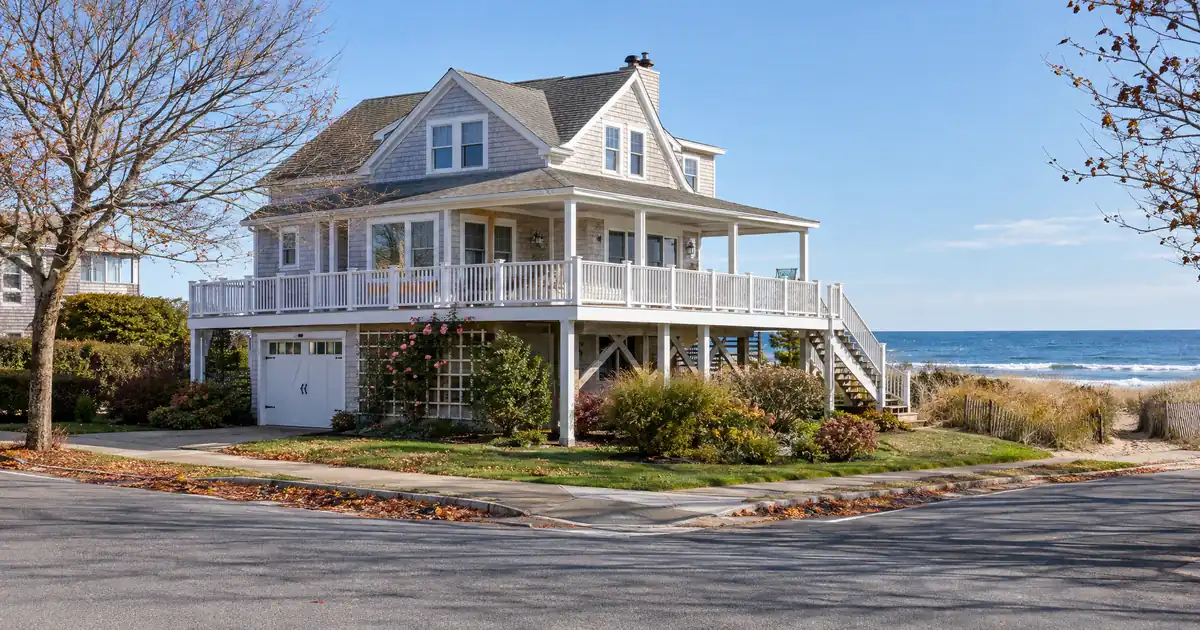
The Quick Read: On a brand-new short-term rental with no booking history, an AirDNA projection works as one input to the loan file, and the lender builds its own more conservative income figure from it, from the appraisal, or from long-term market rent, depending on the program. Here is what matters most:
- A new build has no trailing 12 months, so the projection stands in for history. It describes the neighbors’ performance, not the new house’s own record.
- Lenders typically discount a projection before they run the coverage ratio. The size of the discount varies by program.
- On short-term-rental collateral in the network, purchases typically go up to 75% LTV, with about 12 months of host experience expected and a 640 minimum score.
- Some programs will not accept a projection at all and fall back to long-term market rent.
- Clearing 1.00 on the ratio does not mean the house cash flows. Cleaning, vacancy, repairs, and management sit outside the calculation.
Key Terms Defined
Projection: an estimate of what a rental could earn, built from the performance of similar nearby rentals. AirDNA’s version is called Rentalizer.
Comp set: the group of nearby rentals the tool uses as a stand-in for your property.
DSCR (debt service coverage ratio): monthly rental income divided by the monthly housing payment, which covers principal, interest, taxes, insurance, and any HOA dues. Lenders call that payment PITIA.
LTV (loan-to-value): the loan amount as a percentage of the property’s value or price.
Hosting history: a record of actual bookings and revenue from the property or from your other rentals.
Haircut: the percentage a lender trims off a projected income figure before using it.
Where Does the Projection Sit in a New-Build File?
The projection replaces the operating history the file does not have. A new build has no bookings, no reviews, and no twelve months of statements. So the lender needs a substitute for income, and a market-data report is the most common one.
Here is the path a projection usually takes through the file:
1. The report is pulled for the specific address. The tool needs only an address and a property description, so a house with no listing history still gets a number.
2. The lender discounts it. Lenders typically trim projected income rather than take the headline figure at face value.
3. Income is divided by 12. The result is the monthly income figure.
4. That figure is run against PITIA. The formula is the same one used for any rental. Only the income source changes.
5. The ratio is checked against the program floor. On short-term-rental collateral, purchases start at a 1.00 coverage floor.
6. The appraisal and the report are compared. If they disagree, the lender’s own adopted number usually lands nearer the lower one.
7. Local rules are confirmed. Short-term rental rules can vary by city, county, HOA, and property type, so investors should confirm local rules before relying on projected rental income.
A projection is not an appraisal. It is a market-data estimate. Only an appraiser’s report speaks to the property’s value, and the two documents answer different questions.
Across the wholesale network Lendmire places files with, the lender’s haircut and fallback rules decide the outcome far more often than the raw projection does.
How Is a Projection Built for a House That Does Not Exist Yet?
It is built from the neighbors. AirDNA’s help documentation says the tool searches for comparable properties within a 10-mile radius. It selects them by proximity and by similar bedroom, bathroom, and guest-count setups. A weighted average of those properties’ historical performance becomes the estimate for your address.
The AirDNA calculator page adds that the weighting accounts for seasonality, demand, and revenue growth. It also says users can correct property details or hand-pick the comp set. The tool reports a Comp Set Strength score of Low, Medium, or High.
Two details matter for a new build.
First, the number reflects mature listings. Those neighbors have reviews, search ranking, and repeat guests. A brand-new listing starts with none of those. The tool does not model that ramp-up, which is a big reason lenders trim the figure.
Second, the revenue definition is narrower than most buyers assume. AirDNA’s revenue documentation says the figures include the nightly rate and cleaning fee. Airbnb host fees and other additional fees are not included.
The projection also does not know what the lender knows. It does not know your program’s leverage cap, your credit tier, or whether the property type is eligible. Manufactured homes, log homes, and barndominiums are not offered in these DSCR programs. A new build in one of those categories never gets as far as a projection discussion.
Projection Versus Appraisal on a New Build
A new-build file often carries two estimates at once, and they measure different things. The table shows how they compare.
| Factor | AirDNA projection | Appraisal rent analysis |
|---|---|---|
| What it is | Market-data estimate | Licensed appraiser’s opinion |
| Built from | Nearby rentals’ history | Comps plus property review |
| Form | Vendor report | 1007 or 1025 for long-term rent |
| Short-term income | Directly estimated | Narrative addendum, no standard form |
| Weak spot | Mismatched comps | Thin resale and rent comps |
Form 1007 covers one-unit properties and Form 1025 covers two-to-four-unit properties. Both were built to estimate long-term monthly market rent. Short-term income has no standard agency form, so appraisers typically report it as a going-concern analysis in a labeled addendum.
New construction makes both estimates softer. The tool has no listing history for the house. The appraiser may have few comparable sales or rentals in a brand-new subdivision.
When the two disagree, expect the lender to lean toward the lower, better-supported figure. Treat the projection as the optimistic end of a range and the appraisal as a check on it.
For more on how new construction changes the file on a higher-end short-term property, see Lendmire’s piece New Build vs Existing Rental on a Luxury Short-Term DSCR.
A Worked Example: One File, Four Income Assumptions
Run the numbers on a hypothetical new build. These are modeled assumptions for illustration, not market data and not any lender’s actual discount.
Say the borrower’s own model uses the raw projection and shows coverage of 1.30x against the full PITIA. The lender then credits only part of that income. This table shows what happens to the ratio.
| Income credited | Resulting coverage | Against a 1.00 floor |
|---|---|---|
| 100% of projection | 1.30x | Clears with room |
| 90% | 1.17x | Clears |
| 80% | 1.04x | Clears, barely |
| 70% | 0.91x | Falls short |
The same house, the same price, and the same loan flipped from comfortable to short. Nothing about the property changed. Only the lender’s view of the income did.
That is why a deal that “pencils” at the raw number can fail the file. Run your own version at a few credit levels before you make an offer.
Coverage under 1.00 is not always the end of the file. A few programs begin at 1.00. A separate path takes coverage below 1.00 through select lenders in the network, with leverage and terms adjusted. Eligibility depends on the lender, your credit profile, reserves, and the property.
The same logic applies to the down payment. A larger down payment lowers the monthly payment, which lifts the ratio. It does not erase the leverage cap, the credit floor, the reserve rules, or the property-type rules. The strongest files clear both tests, enough equity and enough rental coverage.
What Can Move Between Application and Closing?
The projection is a snapshot, and new builds take time to finish. Three things can shift while the file is open.
- The report can age out. Lenders generally want the report to be recent when the loan completes. A report pulled early in construction may need a refresh.
- The market can move. A refreshed report may show a different comp set, different seasonality weighting, or new supply nearby.
- Completion gates the loan. A purchase of a finished home is underwritten on the completed property. A house still under construction usually cannot finish the permanent loan until the property is complete and eligible for the appraisal.
When you refresh a report, check the Comp Set Strength score first. If it drops, the new number is built on a looser comparison, and the lender will notice.
How Accurate Is the Number?
It is a useful estimate and a poor promise. The tool errs in both directions, and nothing it produces is a forecast of your own results.
One BiggerPockets host compared AirDNA’s output with actual results. The BiggerPockets thread shows a projection of 67% occupancy against 76% actual. The average nightly rate also ran lower than actual. So the tool underestimated in that case. Another reply in the same thread pointed out that no platform can predict performance forward. That is a single anecdote, not a statistical result, but it makes the point.
Accuracy also depends on the level of the data. Market-level trends are generally steadier than a single-address estimate. A single address leans on a handful of comps. If your comp set is thin, the estimate leans on a few other houses.
New construction adds a mechanical bias toward optimism. The comps are mature listings with reviews and rankings, and the new house starts from zero.
The lender’s discount exists to absorb that bias. It is not a penalty. It is a stand-in for the ramp-up the projection leaves out.
Where the General Rule Breaks
Several cases change how a projection performs in a file.
- The comp set does not match the house. New builds often have finishes, layouts, or amenities that neighbors lack. A BiggerPockets reply noted that the tool pulls comps by numbers but cannot weigh non-number factors such as finishes or natural amenities. AirDNA’s analysis guide shows how much this matters. Its worked example refined the comp set for a mountain-view feature, and the projection dropped noticeably.
- The market is thin. A new subdivision or resort community may have few comparable rentals. Fewer comps means a looser estimate and a weaker comp-set score.
- The program will not take a projection. Some programs underwrite a no-history property on long-term market rent from an appraiser instead. After about 12 months of operating history, a refinance into a short-term-income program may then be possible, subject to lender guidelines.
- The house suits vacation demand better than long-term tenants. Long-term rent can look weak for a property designed around views, amenities, or location. The fallback ratio may then sit well below the projection-based ratio.
- The borrower is new to hosting. The network typically expects about 12 months of host experience on short-term-rental files. A first-time host buying a new build is the hardest profile, because neither the property nor the borrower has a record.
- Regulation changes the answer. AirDNA’s own guide says regulation is the one input you should always verify yourself.
Revenue is also not cash flow. Rentalizer’s default expenses are incomplete, and the ratio compares income only to PITIA. Utilities, supplies, cleaning labor, management, vacancy, and capex are all outside the calculation, so size those separately.
If the Projection Falls Short
When the credited income does not clear the floor, the options each involve a tradeoff. Eligibility for any of them is subject to lender guidelines, credit approval, and property review.
| Lever | What it does | Tradeoff |
|---|---|---|
| Larger down payment | Lowers the payment, lifts the ratio | More cash in the deal |
| Lower price | Same effect through a smaller loan | Fewer properties qualify |
| Refine the comp set | May tighten the projection | Must stay honest and defensible |
| Long-term rent path | Uses appraiser rent, not a projection | Income may be lower |
| Sub-1.00 path | Available through select lenders, terms adjusted | Leverage and terms adjust |
| Wait for history | Uses actual bookings after about 12 months | Carrying the property meanwhile |
The leverage side moves with the structure. On short-term-rental collateral, purchase leverage typically tops out at 75% LTV on the strongest files. Refinance and cash-out on short-term-rental collateral go up to 70%. Most programs want a score of 640 or higher on these files.
Standard rentals follow different tiers. That distinction matters if you are comparing a vacation property to a standard long-term rental.
A Pre-Application Checklist
Before you submit a new-build short-term file, work through these steps.
1. Self-underwrite at a discount. Run the ratio at several income-credit levels, as in the table above, and see where it stops clearing.
2. Review the comp set. Look at the Comp Set Strength score and ask whether each comp truly resembles your house.
3. Pull a second view. Do not rely on one address-level number. Compare the market-level trend and the appraiser’s rent estimate.
4. Plan your reserves. Reserves vary by lender, leverage, loan size, and transaction type, and they commonly run around 6 months of PITIA.
5. Ask what the program credits. Whether it takes a projection, a discounted projection, or long-term rent decides the file more than the report does.
Tax treatment can depend on how the funds are used and how the property is held. Investors should keep clear records and speak with a qualified tax professional before relying on any deduction.
For the full picture of how these loans are structured, the complete DSCR loans guide walks through leverage, credit tiers, and property eligibility. If you are weighing a new build against an existing home, Lendmire’s article New Build vs Existing Rental: DSCR for LLC Portfolios covers that comparison.
Frequently Asked Questions
Can a lender qualify me on an AirDNA projection alone?
Usually not on the raw number. Some programs accept a projection, but they typically discount it and often cross-check it against the appraisal. Others skip projections and use long-term market rent. The answer depends on the program, so ask which income basis it uses before you commit.
Does a new build get different treatment from an existing home?
Yes, in one respect. An existing home may have a booking record to underwrite on. A new build has none, so it leans on a projection, an appraisal, or long-term rent. The coverage floor and leverage tiers are the same, but the income is harder to prove.
What if the projection changes before the loan completes?
The lender works from the figures in its file. A refreshed report with a new comp set or lower strength score may change the income credited. That can move the ratio up or down. Run a cushion into your own numbers so a modest shift does not break the deal.
Is a high comp set score a guarantee the number is right?
No. A strong score means the comps resemble each other. It does not mean they resemble your house or that your listing will match mature ones. A new listing starts without reviews or ranking, and the score does not capture that.
Do I need hosting experience to buy a new-build short-term rental?
Most short-term-rental programs expect about 12 months of host experience. That can come from your other rentals. First-time hosts have fewer options, and some may be routed to a long-term-rent basis until history builds.
Next Step
If you are buying or refinancing a rental property and want to see how the numbers work, Lendmire can help you compare DSCR loan options based on the property income, credit profile, leverage, and investor goals. Lendmire is a broker that arranges these loans through select lenders in its wholesale network across 41 markets, including Washington, D.C. Qualification is subject to lender guidelines, and nothing here is a commitment to lend.
About Lendmire
Lendmire (NMLS# 2371349), a non-QM mortgage broker serving investors in 41 markets including Washington, D.C., helps structure DSCR scenarios commonly evaluated around a property’s rental income rather than personal income paperwork, subject to lender guidelines. A Scotsman Guide Top Mortgage Workplace in 2025 and 2026, Lendmire places loans through wholesale investor lenders and is not a direct lender.
Get Started
Ready to find the right loan for you?
In about 30 seconds you can review financing options available for your investment property. No commitment required.
Informational only. Not a Loan Estimate, approval, or commitment to lend. Program availability and eligibility are subject to lender guidelines, credit approval, property review, and underwriting.
References
1. AirDNA Help Center: Rentalizer revenue calculator
3. AirDNA Help Center: how AirDNA calculates revenue
4. BiggerPockets forum thread: how accurate is AirDNA for STR revenue projection
5. AirDNA: how to analyze a short-term rental
This article is part of Lendmire’s short-term rental loan program — full qualification details, guidelines, and scenarios live on the program page.
Related reading: How to Qualify for a DSCR Loan in Tennessee · How to Qualify for a DSCR Loan in New Hampshire · How Many Months of Booking History Does an STR Loan Need?
Brandon Miller
Founder & CEO, Mortgage Loan Originator, Lendmire LLC
- Mortgage Loan Originator · NMLS# 1129696 · Verify on NMLS Consumer Access
- North Carolina Real Estate Broker · License# 343312 · Verify on NCREC
- North Carolina Insurance Producer · License# 19053198 · Property, Casualty, Life, Health · Verify on NAIC SBS
- Lendmire LLC · Firm NMLS# 2371349 · Verify firm licensure
Required disclosures. Lendmire (NMLS# 2371349) operates as a licensed mortgage broker, not a direct lender or depository. The discussion in this article is general in nature and should not be relied upon as financial, legal, or tax advice — every investment scenario is unique and should be reviewed by a qualified professional. Any loan inquiry is subject to lender underwriting, and this article is not a commitment to lend or a guarantee of approval. Mortgage rates, loan terms, and program guidelines vary by borrower, property, and state, and may change without notice. Equal Housing Opportunity. Verify licensure at NMLS Consumer Access.