
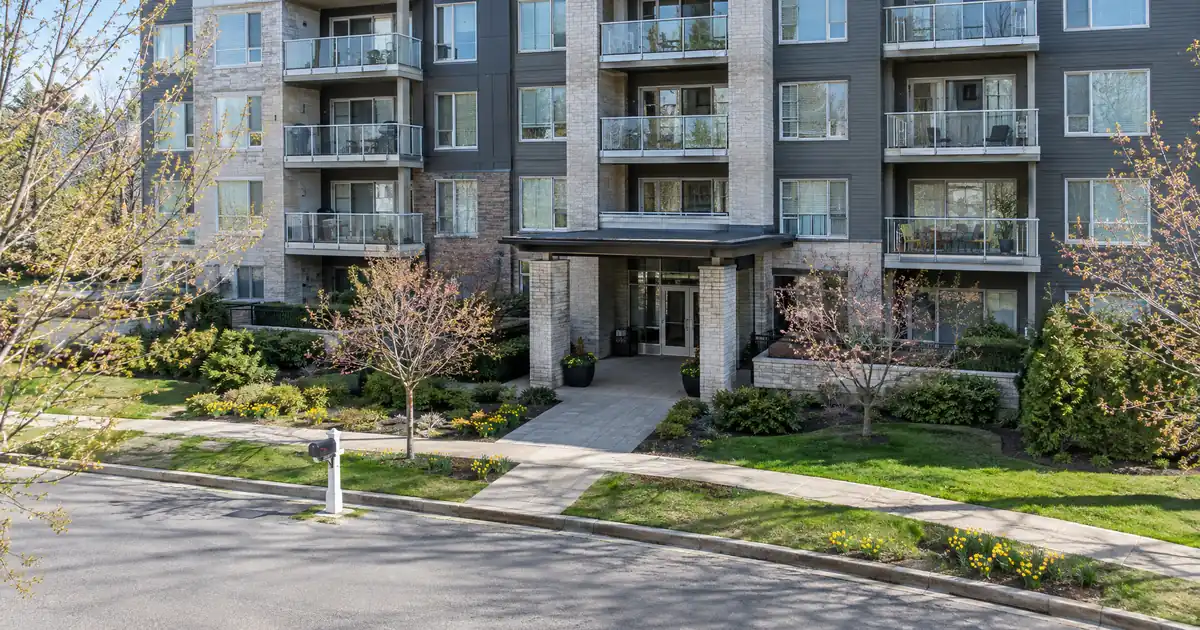
The Quick Read: A non-warrantable label describes the building, not you, and a DSCR loan can still finance a unit in that building. The lender looks mainly at whether the unit’s rent covers its full monthly payment, plus the building’s health and rental policy. Where you live matters far less than what the HOA paperwork says.
- A DSCR (debt service coverage ratio) loan is reviewed primarily on property-level rental income covering the payment, subject to lender guidelines.
- Many select programs start at 1.00 coverage. Another select-lender path goes below 1.00, with leverage and terms adjusted.
- HOA dues sit in the payment side of the ratio. On condos, they often decide the outcome.
- Purchases typically land at 75%–80% LTV on an investment property. Reserves run about six months of PITIA on most files.
- Out of state, the underwriting stays the same. Your logistics change: you need documents from the HOA before you commit.
What Does Non-Warrantable Actually Mean?
Non-warrantable means the building fails one or more project standards used by conventional lenders. It is a financing label. It is not a finding that the building is unsafe or badly run.
DSCR Calculator
Run the numbers in your market
Rate source: Freddie Mac 30-yr average via FRED® — Federal Reserve Bank of St. Louis · effective Oct 15, 2026
Prefilled with starting assumptions — enter your own rent or nightly figures, taxes, insurance, and HOA for a more accurate picture.
Program parameters update from Lendmire’s centralized guideline source. Taxes and insurance are editable estimates.
As of Oct 15, 2026 · General Freddie Mac market benchmark, not a Lendmire loan offer. Rent, nightly rate, occupancy, taxes, and insurance are editable estimates. Short-term rental figures are estimates only and vary significantly by season, property type, management approach, and local short-term-rental rules — confirm local regulations before relying on them. Qualifying income for short-term rentals varies by program — some use appraisal market rent, others use documented STR history or projections — and is confirmed in underwriting. Not a Loan Estimate, approval, or commitment to lend. Program availability and eligibility are subject to lender guidelines, credit approval, property review, and underwriting.
Conventional loans are sold to big mortgage buyers. Those buyers screen the whole project, not just your unit. If the project fails, every unit in it is shut out of conventional financing.
Common triggers include:
- A high share of investor-owned units.
- One owner holding many units.
- Commercial space in the building.
- Thin HOA reserves or many late-paying owners.
- Pending litigation.
- A developer still controlling the association.
- Hotel-style operation, often called a condotel.
DSCR loans are non-QM, which means they sit outside conventional lending rules. Scotsman Guide notes that non-QM loans finance niche property types conventional lenders typically avoid, including condotels and non-warrantable condos.
One more point on business purpose. DSCR loans are designed for non-owner-occupied investment properties. Because they are business-purpose investor loans, they are reviewed differently from a standard owner-occupied mortgage.
Key Terms Defined
DSCR (debt service coverage ratio): The property’s monthly rent divided by its monthly housing payment. Above 1.00 means rent exceeds the payment.
PITIA: Principal, interest, taxes, insurance, and association dues. It is the full monthly obligation in the DSCR math.
LTV (loan-to-value): The loan amount as a percentage of the property’s value or price. Higher LTV means less cash down.
HOA questionnaire: A form the association or its manager completes. It discloses dues, reserves, litigation, owner mix, and rental rules.
Investor concentration: The share of units owned by landlords rather than occupants.
Condotel: A condo building run with hotel features, such as a front desk, rental pool, or nightly bookings.
Reserves: Your own liquid funds, counted in months of PITIA, that a lender wants left after closing.
How Does a DSCR Lender Treat a Non-Warrantable Building?
The lender splits the building’s problems into two piles: problems that only matter to conventional lenders, and problems that threaten the collateral itself. Across the wholesale network Lendmire works with, most programs care about the second pile far more than the first.
Here is the sequence a file usually follows.
1. Project screen. The lender asks why the building is non-warrantable. Investor concentration is a typical conventional trigger that many DSCR programs tolerate. Unfinished construction is different.
2. Documents. Expect the HOA questionnaire, the budget, reserve information, the master insurance details, and the rental policy. You also supply the purchase contract, an insurance quote for your unit, and entity documents if you hold title in an LLC, subject to program terms.
3. Appraisal. For a condo unit, the appraiser typically completes a unit report (Form 1073) plus a rent schedule (Form 1007). The rent schedule is where rent used for lender review comes from.
4. The ratio. Rent against PITIA, with HOA dues included.
5. The decision. Coverage, building issues, credit, reserves, and experience get weighed together.
Pay attention to step four. It is where most condo files are won or lost, and it gets its own section next.
How Do HOA Dues Change the DSCR Math?
HOA dues go in the denominator, so high dues can sink a unit that looks strong on rent alone. This is the swing factor on condos, because dues are not a variable you can negotiate with the lender.
Run a modeled scenario. These are assumptions, not market data. Say a unit’s rent used for lender review covers PITIA at roughly 1.30x with current dues. The board then raises dues, and coverage slips to about 1.15x. Now the board also adopts a special assessment that gets folded into the monthly cost. Coverage drops to around 0.98x.
That last number is below 1.00. Here are the paths a lender may review:
- A larger down payment, which lowers the payment and lifts the ratio.
- A sub-1.00 program, available through select lenders in the network, with leverage and terms adjusted.
- An interest-only period or extended term, both available through select lenders.
- Stronger credit or more reserves as compensating factors.
None of those is a promise. Qualification stays subject to lender guidelines, credit approval, and property review.
Two cautions. First, 1.00 is where many select programs start, not a universal standard. Stronger ratios generally open better pricing and leverage. Second, clearing 1.00 does not mean the unit makes money. DSCR compares rent to PITIA only. Repairs, vacancy, management, utilities, and capital costs sit outside the calculation.
Rent evidence also matters. Lenders commonly work from the lower of the in-place lease and the appraiser’s market rent, though exact treatment varies by program.
Which Building Problems Block Conventional Loans, and Which Block Everyone?
Think in three buckets: problems that block conventional loans only, problems that block nearly every lender, and problems that vary by lender. The table shows the pattern across programs we see.
| Trigger | Blocks conventional? | Usually workable for DSCR? |
|---|---|---|
| High investor concentration | Often | Often yes |
| One owner holds many units | Often | Varies by lender |
| Commercial space | Often | Often yes if limited |
| Thin reserves or HOA delinquencies | Often | Varies; documents matter |
| Pending litigation | Often | Varies; depends on type |
| Developer-controlled HOA | Often | Rarely |
| Unfinished construction | Often | Rarely; unit must be rent-ready |
| Condotel operation | Often | Select lenders only |
Treat the right-hand column as a pattern, not a rule. Overlays differ from lender to lender. One lender’s no is not everyone’s no, and that is the main reason a broker who sees many guideline sets earns their keep on these files.
Condition matters too. A unit has to be complete and rentable. Active construction, a certificate of occupancy not yet issued, or a unit that isn’t rent-ready usually stops the file before the ratio is even tested.
What Changes When You Live in Another State?
Very little changes in underwriting. The loan is built on the property’s income, and standard purchase leverage tiers apply in every state because the network guidelines carry no state-specific LTV overlay. What changes is how you gather facts about a building you cannot visit.
Your remote checklist, in order:
1. Before you offer: ask the listing agent or management company for the budget, reserve information, rental policy, and the master insurance summary. Do this before you are under contract.
2. Read the rental policy. Minimum lease lengths, caps on the number of rentals, and tenant approval rules can limit how you rent the unit. A policy that bans short leases can break an STR plan outright.
3. Request the questionnaire early. The answers tell you whether the building’s problems are fixable or deal-ending.
4. Line up local help. You need a property manager, someone to meet the appraiser for access, and a local contact for the HOA. Associations tighten rules when they cannot find an absentee owner.
5. Plan the signing. Remote signing, such as a mobile notary or mailed documents, is common. The title company and lender set the details.
Out-of-state owners also face an exit question. A non-warrantable building can be harder to resell, because buyers needing conventional loans are shut out. That is an exit-planning issue, and it should shape how long you plan to hold.
One experience note. On condo files, the stronger submissions put the HOA documents, insurance quote, and rent schedule in the lender’s hands together. When the building’s paperwork trickles in piece by piece, coverage questions keep reopening.
DSCR vs. conventional financing
There are two common ways to finance an investment property, and they qualify you differently — here’s how investors weigh them.
Why investors choose it
- Qualifies on the property’s rental income — no personal tax returns, W-2s, or pay stubs needed to document income.
- No personal debt-to-income ceiling to clear, so existing mortgages and obligations don’t cap your borrowing the same way.
- Can be closed in an LLC, keeping the property inside a business entity.
- Built for scaling — not held to the limit on number of financed properties that conventional financing applies.
- Underwriting centers on the deal: generally qualifies when the rent covers the payment, a 1.00x coverage ratio being a common baseline (confirmed in underwriting).
- Designed specifically for investment property, including long-term and, where the program allows, short-term rentals.
Where it’s strong
- Often the lowest ongoing financing cost for a buyer who fully qualifies on personal income — a fit for a first property or a cost-first purchase.
Trade-offs for investors
- Requires full personal income documentation and must fit within a debt-to-income limit — salary, existing debts, and other mortgages all count.
- Typically held in your personal name rather than a business entity.
- Caps how many financed properties you can carry, which can become a ceiling as a portfolio grows.
- Evaluates you as a borrower as much as the property, which usually means more paperwork.
How investors usually choose: a first or single property often optimizes for the lowest financing cost; portfolio builders often optimize for leverage, vesting in an LLC, and scaling past conventional caps. The right answer depends on your goals, the property, and current guidelines — both paths run through select lenders in Lendmire’s wholesale network, with eligibility and terms confirmed in underwriting.
Does the Agency Rulebook Matter Anymore?
Only as a contrast. Conventional rules are shifting, which means a building’s status can change in either direction. Fannie Mae’s Lender Letter LL-2026-03 retires the 50% investor concentration limit for established projects reviewed under full review on investor loans. It keeps the new-project presale requirement and retires the limited review option.
HousingWire reports the reserve minimum for full review rising from 10% to 15%. The Community Associations Institute says the change shifts responsibility to lenders and associations to show a project is financially sound.
The practical read: some buildings labeled non-warrantable for investor mix may now qualify conventionally, while others may newly fail on reserves. DSCR files sit outside all of this, so your lender looks at the building under its own guidelines. Old blog posts quoting fixed percentage thresholds may be stale.
What Terms Can You Expect?
Most purchases on investment properties land at 75%–80% LTV, meaning 20%–25% down. Select lenders may adjust leverage for non-warrantable buildings, so expect the low end of that range more often than the high end. Cash-out refinances top out around 75% LTV on standard rentals across most of the network.
On credit, a 620 floor exists in parts of the network. Most programs want around 660, and 700+ unlocks the strongest leverage tiers. Reserves commonly run about six months of PITIA, stepping up to about nine months on loans above $1,500,000. Standard programs reach $3,000,000. Programs change, and every file is underwritten individually.
A larger down payment helps. It lowers the payment and can lift the ratio. It never erases leverage caps, credit floors, reserve rules, or property eligibility. The strongest files clear both tests: enough equity and enough rental coverage. Our complete DSCR loans guide covers the core mechanics for readers new to the product.
Where Does the General Rule Break?
Condotels and short-term rentals. This is the tightest category. Short-term rental purchases typically go up to 75% LTV, with a 640+ score, about 12 months of hosting history, and a 1.00 coverage floor on purchases.
| Factor | Long-term rental | Short-term rental | Condotel |
|---|---|---|---|
| Income evidence | Lease or rent schedule | Hosting history, analysis | Program records |
| Building risk | Moderate | Higher | Highest |
| Lender pool | Wider | Narrower | Select lenders |
Cash-out on a non-warrantable condo. Cash-out is usually stricter than a purchase on these buildings. Lendmire’s piece on cash-out rules for non-warrantable luxury condos at super jumbo sizes goes deeper, and another explains how much a super jumbo cash-out releases on a non-warrantable condo.
Litigation and special assessments. Material lawsuits or large assessments can become collateral concerns, even with lenient programs. Type of case matters more than the fact of a case.
Warrantability moves. A building can fix its failing items and become warrantable. It can also slide the other way. Treat today’s label as a snapshot.
First-time investors. No-ratio structures exist only through select lenders, generally for borrowers who already own a primary residence.
How Do You Decide in Practice?
Start with the building, then the ratio, then your own file. A short filter helps.
- Walk away if the HOA is developer-controlled, construction is active, or the rental policy blocks your planned use.
- Run harder numbers if dues are high, reserves look thin, or an assessment is pending.
- Keep going if the issue is investor concentration or commercial space and coverage clears with cushion.
Then compare lenders, not just prices. Because overlays differ, the same building can get a no from one program and a workable structure from another.
Tax treatment can depend on how the funds are used and how the property is held; investors should keep clear records and speak with a qualified tax professional before relying on any deduction.
The calculator on this site gives an illustrative estimate you can adjust. Treat it as a starting point, not a quote.
Frequently Asked Questions
Do I need a minimum share of owner-occupants in the building?
That standard belongs to conventional lending. Many DSCR programs do not set one, though some lenders apply their own overlays on owner mix. The building’s other issues matter more.
Can I buy in another state through an LLC?
Often yes, subject to program terms. The lender reviews the entity documents along with the property. Your home state does not change the property-based underwriting, and standard purchase leverage tiers apply everywhere.
What if my coverage lands below 1.00 after HOA dues?
Many select programs start at 1.00. A separate select-lender path takes coverage below 1.00 with leverage and terms adjusted. A larger down payment or interest-only structure may also change the ratio.
Does the HOA’s rental policy affect the loan?
Yes. Minimum lease lengths, rental caps, and tenant approval rules can limit eligibility or how you document rent. A policy that conflicts with your plan can end the deal before underwriting finishes.
Is a non-warrantable condo harder to sell later?
It can be, because buyers who need conventional financing are shut out. That shapes your exit plan and any future refinance.
If you are buying or refinancing a rental property and want to see how the numbers work, Lendmire can help you compare DSCR loan options based on the property income, credit profile, leverage, and investor goals. Lendmire is a broker arranging financing through select lenders in its wholesale network, with DSCR investor loans across 41 markets, including Washington, D.C. You can reach the team at 828-256-2183. Nothing here is a commitment to lend.
Condo status can change building by building and year by year, so the investor who requests the questionnaire first is the one who avoids paying for a deal that was never going to close.
About Lendmire
Lendmire (NMLS# 2371349), a non-QM mortgage broker serving investors in 41 markets including Washington, D.C., helps structure DSCR scenarios commonly evaluated around a property’s rental income rather than personal income paperwork, subject to lender guidelines. A Scotsman Guide Top Mortgage Workplace in 2025 and 2026, Lendmire places loans through wholesale investor lenders and is not a direct lender.
Get Started
Ready to find the right loan for you?
In about 30 seconds you can review financing options available for your investment property. No commitment required.
Informational only. Not a Loan Estimate, approval, or commitment to lend. Program availability and eligibility are subject to lender guidelines, credit approval, property review, and underwriting.
References
2. Fannie Mae Lender Letter LL-2026-03
3. HousingWire
4. Community Associations Institute advocacy update
This article is part of Lendmire’s DSCR loan program — full qualification details, guidelines, and scenarios live on the program page.
Related reading: Conventional vs DSCR Short-Term Rental Loan for a Condotel · DSCR Refinance Requirements for Better Terms on a Short-Term Rental · Projected STR Income vs Rental History for a DSCR Loan Qualification
Brandon Miller
Founder & CEO, Mortgage Loan Originator, Lendmire LLC
- Mortgage Loan Originator · NMLS# 1129696 · Verify on NMLS Consumer Access
- North Carolina Real Estate Broker · License# 343312 · Verify on NCREC
- North Carolina Insurance Producer · License# 19053198 · Property, Casualty, Life, Health · Verify on NAIC SBS
- Lendmire LLC · Firm NMLS# 2371349 · Verify firm licensure
Disclosure information. Lendmire is a state-licensed mortgage brokerage under NMLS# 2371349. Lendmire is not a depository institution, direct lender, or financial advisor — all loans referenced are placed through wholesale lender partners and are subject to each lender's underwriting standards. This article is provided for general informational purposes and is not a commitment to lend, nor does it constitute financial, legal, or tax advice. Loan programs, terms, rates, and qualification standards change without notice and depend on borrower profile, property type, and the state in which the subject property is located. Equal Housing Opportunity provider. NMLS Consumer Access: nmlsconsumeraccess.org.