
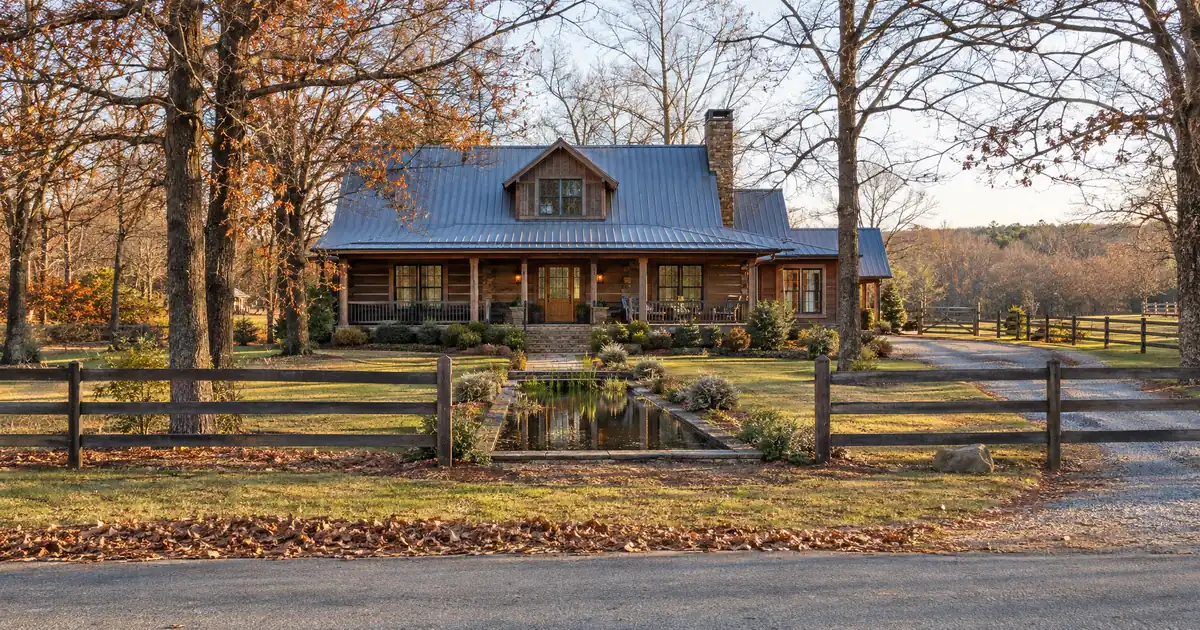
The Quick Read: Your maximum offer is the highest price that clears every test: your return target, the lender’s coverage test, the appraisal, and a long-term-rental fallback. A price that passes only one test is just the listing price. Work backward from conservative income, not forward from the asking price. This is about what you pay for the cabin, not what guests pay per night.
- Build income month by month, then cut the projection before you trust it.
- Load the full cabin expense stack before you solve for price.
- Run the DSCR test on the loan you would actually get, using the network ranges below.
- Expect the appraisal to follow house comps, not your income model.
- Write your walk-away number before you negotiate.
A cabin listing shows gross revenue and a flattering photo. It does not show the septic bill, the winter vacancy, or the permit that may not transfer at sale. Setting a ceiling forces you to price all of that in before you fall in love with the deck.
Key Terms Defined
Net operating income (NOI): Rental revenue minus operating costs, before any loan payment.
Cap rate: NOI divided by price. It tells you the yield the property earns on its price.
Cash-on-cash return: Annual cash flow after the loan payment, divided by the cash you put in.
DSCR (debt service coverage ratio): Rent or rental income divided by the full monthly obligation: principal, interest, taxes, insurance, and any HOA dues. Lenders call that obligation PITIA.
ADR: Average daily rate, meaning the average nightly price you actually collect.
LTV (loan-to-value): The loan as a percentage of the property’s value or price.
Maximum allowable offer (MAO): Investor shorthand for the highest price a deal can bear. This article calls it your ceiling.
What Does “Maximum Offer” Actually Mean?
The maximum offer is the lowest of four ceilings. No regulator defines it. It is a valuation and underwriting problem, and you solve it by stacking tests.
1. Income ceiling. Stressed NOI divided by your target cap rate, or the price where cash-on-cash hits your hurdle.
2. Financing ceiling. The price at which the rental income still covers the loan payment at the leverage a lender will allow.
3. Appraisal ceiling. What the collateral appraises for, usually anchored on residential comps.
4. Downside floor. The price at which the cabin still works as a regular long-term rental if the short-term plan fails.
One published investor framework uses a personal hurdle of roughly 10% cash-on-cash for long-term rentals and 12% for short-term rentals. It treats that hurdle as the source of the maximum price you can defensibly pay, per 5PRE’s buy-below-asking method. Those hurdles are one investor’s preference, not a national standard. Pick yours deliberately, because every point you demand lowers the price you can pay.
Step 1: Build Income Month by Month
Start with occupancy times the days in the month times your ADR. BiggerPockets gives that formula for estimated monthly income. Run it twelve times, not once.
Cabins are seasonal. A flat annual average overstates the slow months and hides winter cash-flow risk, which is the point Hostfully’s financial model guide makes. A cabin that books solid for four summer months and limps the rest of the year can look great on a three-month snapshot and fail a normalized twelve-month test.
Pull data from a rental-analytics tool, then check real booking calendars on comparable listings. Size matters. Compare your cabin to cabins with similar bedroom counts and amenities, not to the busiest listing in the county.
Step 2: Haircut the Revenue
Never underwrite the headline projection. It is a projection, not income. The exact haircut is your call, but you need one.
If the seller has history, ask for twelve months of platform payout statements and the Schedule E from their tax return. Where the seller’s figure and your comp-derived figure disagree, underwrite the lower one. Investment Grade STR recommends the same lower-of approach.
If the cabin has no hosting history, lenders typically discount third-party projections too. Your model should be at least as cautious as theirs.
Step 3: Load the Cabin Expense Stack
Cabins carry costs that a suburban rental never sees. Hostfully lists platform commissions, management, cleaning, supplies, a capital reserve, insurance, utilities, software, accounting, and maintenance as the tab most templates undercount. One investor on a BiggerPockets thread reports roughly 40% of gross going to operating costs before the loan payment. That is one operator’s experience, not a benchmark, but it shows how far net sits from gross.
Add the cabin-specific lines:
- Septic or well servicing
- Private road maintenance and winter access
- Deck, hot tub, and tree work
- Roof and drainage upkeep
- Chimney sweeps and pre-season heating checks
- Lodging taxes
- Insurance that specifically covers rental use
Standard homeowners coverage may not cover rental use, and cabin policies can carry separate deductibles for wildfire. Get a real quote before you finalize your number. Budget for taxes and insurance, which vary by county, and keep moving.
Step 4: Back-Solve the Price
Now you can solve. Two common methods:
- Cap-rate method: Maximum price equals stressed NOI divided by your target cap rate.
- Cash-on-cash method: Find the price where annual cash flow after the loan payment meets your hurdle. Price changes the down payment, the loan, and the closing costs together, so re-run the whole deal at each price you test.
Then subtract the costs that sit outside the purchase price. Furnishing, renovation, and launch costs belong in your all-in number. Hostfully’s template makes the point that the purchase price is not the all-in cost. A ceiling that ignores a furnishing budget is really a ceiling plus a surprise.
Here is how the choice of target moves the answer. A buyer demanding a higher yield gets a lower maximum price, and a buyer accepting a lower yield gets a higher one. Even a small change in your target cap rate can move the price ceiling by a meaningful amount, because the price is the net operating income divided by that target. That is why the target belongs in writing before you tour the property.
Investor commentary on cap rates for cabins is all over the place, and one national “typical” figure does not exist. One investor on a BiggerPockets thread looking at a mountain cabin normalized a seller’s NOI and found the implied return was lower than the listing suggested. The agent’s figure had reflected a closed season. Normalize first, then solve.
Step 5: Run the DSCR Test
A ceiling that wins on return can still fail the loan. DSCR compares rental income to PITIA only, and a loan that clears the coverage test is not the same as positive cash flow. Repairs, vacancy, management, utilities, and capex all sit outside the calculation.
Here is how the network treats short-term rental files. Across the wholesale network Lendmire works with, STR purchase leverage tops out at 75% LTV on the strongest files, and STR refinances go up to 70% on a cash-out. Expect a credit score of 640 or higher, and about 12 months of hosting or landlord experience. Coverage of 1.00 is where select STR programs start on both purchases and refinances, and stronger ratios open better pricing and leverage. Select lenders in the network will review coverage below 1.00 with leverage and terms adjusted. Standard loan sizes run up to $3,000,000, and reserves commonly sit around 6 months of PITIA, though they vary by lender, leverage, and loan size. All of this is subject to lender guidelines, and every file is underwritten individually.
Cabins have an eligibility trap. Manufactured homes, log homes, and barndominiums are not offered in the network’s DSCR programs. If the “cabin” you love is a log structure, the financing question ends before the math begins. Know the construction type before you write the offer.
Test your stressed revenue, not the headline number, against the payment on the loan you would actually get. If coverage fails, you have three levers: lower the price, add down payment, or change the structure. Extended terms and interest-only periods are available through select lenders. A larger down payment can lift the coverage ratio, but it never erases leverage caps, credit floors, reserve rules, or property eligibility. The strongest files clear both tests, enough equity and enough rental coverage.
For a deeper walk through how these loans work, see the complete DSCR loans guide.
Step 6: Cross-Check the Appraisal
Here is where income-based ceilings get humbled. Appraisers value a one-to-four-unit vacation rental as a house, using closed residential comparables. Investment Grade STR describes comps as the floor and a cap-rate-based income value as the ceiling, one you reach only if the income actually transfers to the buyer.
Appraisal forms don’t capture nightly income either. Form 1007 covers one unit, and Form 1025 covers two to four units. Both document monthly market rent. McKissock notes that appraisers cannot multiply a nightly rate by 30 on the 1007, and they value the real property, not the business income.
The practical result: if you offer on your income value and the appraisal lands on comps, you have a gap to fund in cash. For custom cabins, appraisers may use a cost approach, and features built purely for short-term use can lose value if that use ends. Truly comparable cabin sales are also harder to find than they look, which widens the appraisal’s margin of error. Treat the appraisal as a cap on how much of your ceiling a lender will actually lend against.
Where the Rule Breaks: Cabin Edge Cases
Thin comps. Smaller cabins can outperform larger ones in the same county, so don’t assume more bedrooms means more income.
Access, water, and sewer. Private or seasonal roads can narrow the buyer pool and complicate financing. A weak well or a failed septic system can reduce appraised value, and off-grid setups may face more limited financing. Winter access and internet service are standard inspection items.
A permit that won’t transfer. If the permit doesn’t pass to you at sale, the income value disappears. Investment Grade STR also warns that when a lender restricts a jurisdiction, the buyer pool shrinks to cash buyers and those using unusual financing, which cuts the price no matter what the property earned. Short-term rental rules can vary by city, county, HOA, and property type, so confirm local rules before relying on projected rental income. Do it before you set the ceiling, not after.
Exit risk. Investment Grade STR calls out a common seller mistake: underwriting the exit at purchase price plus appreciation instead of what the next buyer can finance. Put the exit in your offer math. Your future buyer faces the same appraisal and financing tests you do.
Tax-driven offers. Some buyers stretch the price because of expected depreciation. Don’t. Under IRS Publication 925, a short average stay changes how the activity is classified, but you still have to materially participate to use losses. Tax treatment varies; consult a qualified professional before relying on any deduction.
The Long-Term Fallback
Underwrite the cabin a second time as an unfurnished long-term rental at market lease rates. This is the dual-track approach Investment Grade STR describes. The long-term track is your cash flow if the STR strategy fails, a permit gets restricted, or you stop managing actively.
You won’t pay your ceiling off the long-term number. You use it to see how much room you have if the short-term plan stumbles. A cabin where the long-term track is badly underwater carries real risk. A cabin where it roughly holds is a safer purchase at the same price.
Turning the Ceiling Into an Offer
The ceiling is not your opening bid. It is your walk-away number. Write it down, along with your reserve target and your downside cash flow, before you talk to the seller. That discipline keeps you from drifting upward one counteroffer at a time.
A few practical points:
- Open below the ceiling. Leave room to negotiate. One published case reports closing about 17% below list after offering where the deal cleared the buyer’s underwriting, with the caveat that most sellers decline such offers (5PRE). That is one buyer’s result, not a market norm.
- Separate furnishings from real estate. Furniture, hot tubs, and equipment may be included in the deal. Price them apart from the real property, because the appraisal values only the real property.
- Protect yourself with contingencies. Permit transferability, a regulatory check, financing, and inspection are the ones that matter for a short-term rental.
- Re-run after every change. Inspection findings, a counter, an appraisal shortfall, or an insurance quote that comes in high all move NOI. Re-solve the ceiling each time.
If you plan to pull equity from the cabin later, timing and owner-use rules matter. Lendmire’s article Short-Term Rental Cash-Out Owner-Use Blocks on a Cabin or Resort Unit covers that side.
What If the Ceiling Is Below the Asking Price?
You have three honest options. Negotiate toward your number. Restructure the deal with a larger down payment or a different loan structure, accepting that leverage caps and reserve rules still apply. Or walk. Walking is a legitimate outcome, and it is cheaper than a cabin you can’t cash flow.
Common Mistakes
- Using peak-season revenue as the annual number
- Treating a rental-analytics projection as actual income
- Calling gross revenue divided by price a return
- Assuming the appraisal will follow the income
- Forgetting furnishing and launch costs
- Applying rules of thumb across property types. A cabin in the woods and a ski condo are not comparable on gross-rent multipliers
Frequently Asked Questions
How much below asking should I offer on a cabin?
It depends on the gap between your ceiling and the asking price. Offer where the deal clears your underwriting, leave room to negotiate, and accept that many sellers will decline. Don’t chase a target discount for its own sake. Let the math set the number.
Does a bigger down payment raise my maximum offer?
It can lift your DSCR by shrinking the payment, which helps the financing test. It does not change what the income supports on a return basis, and it never erases leverage caps, credit floors, reserve rules, or property eligibility.
Will the appraisal count my short-term rental income?
Usually not directly. Appraisers value the real property using residential comps, and the standard rent forms document monthly market rent, not nightly income. Plan for the appraisal to land nearer the comp-based value than your income value.
What if the cabin has no hosting history?
You can still buy it, but lenders typically discount projections for new listings, and select programs expect around 12 months of hosting experience from the borrower. Underwrite conservatively and expect a thinner cushion.
Is a log cabin eligible for a DSCR loan?
No. Log homes, manufactured homes, and barndominiums are not offered through the network’s DSCR programs. Confirm the construction type before you make an offer.
If you are buying or refinancing a rental property and want to see how the numbers work, Lendmire can help you compare DSCR loan options based on the property income, credit profile, leverage, and investor goals. Call 828-256-2183 or request a quote through Lendmire’s DSCR investor loan programs across 40 states plus Washington, D.C. Programs and guidelines change, and nothing here is a commitment to lend.
Remember the order of operations: the cabin’s stressed income sets your ceiling, and the rest of the month’s scenery is just the part you are paying extra to look at.
Investors focused on short-term rentals can review DSCR loans for Airbnb and short-term rentals.
About Lendmire
Lendmire (NMLS# 2371349) is a mortgage brokerage built around DSCR investor lending, with programs available in 41 markets, including Washington, D.C. DSCR lenders commonly evaluate rental-income coverage instead of personal income paperwork — a practical fit for LLC-owned and multi-property investors. Terms vary by lender, property, leverage, and program. Scotsman Guide named Lendmire a Top Mortgage Workplace in both 2025 and 2026.
Get Started
Ready to find the right loan for you?
In about 30 seconds you can review financing options available for your investment property. No commitment required.
Informational only. Not a Loan Estimate, approval, or commitment to lend. Program availability and eligibility are subject to lender guidelines, credit approval, property review, and underwriting.
References
1. 5PRE: Buy-Below-Asking Method
2. BiggerPockets: How to Analyze a Short-Term Rental
3. Hostfully: Vacation Rental Financial Model
4. Investment Grade STR: Pre-Purchase Questions
5. BiggerPockets Forum: Simple Rule to Analyze Short-Term Rentals
6. BiggerPockets Forum: Best Short-Term Rental Markets
7. Investment Grade STR: Dispositions
8. McKissock: Form 1007 and Short-Term Rental Appraisals
This article is part of Lendmire’s short-term rental loan program — full qualification details, guidelines, and scenarios live on the program page.
Related reading: Airbnb Income vs Long-Term Rent Fallback on a DSCR Short-Term Rental Loan · How CLTV Works on a Rental Loan · AirDNA vs Airbnb Statements for a New-Build Short-Term Rental
Brandon Miller
Founder & CEO, Mortgage Loan Originator, Lendmire LLC
- Mortgage Loan Originator · NMLS# 1129696 · Verify on NMLS Consumer Access
- North Carolina Real Estate Broker · License# 343312 · Verify on NCREC
- North Carolina Insurance Producer · License# 19053198 · Property, Casualty, Life, Health · Verify on NAIC SBS
- Lendmire LLC · Firm NMLS# 2371349 · Verify firm licensure
Disclosures. The information presented in this article is general market commentary, not financial, legal, or tax advice. Lendmire is a mortgage brokerage (NMLS# 2371349) — not a direct lender or depository institution — and loan placement is subject to lender underwriting. Nothing in this content represents a commitment to lend. Loan terms, pricing, and program availability vary based on borrower qualifications, property characteristics, and state of subject property, and are subject to change at any time. Lendmire complies with Equal Housing Opportunity requirements. Consumer access: nmlsconsumeraccess.org.