
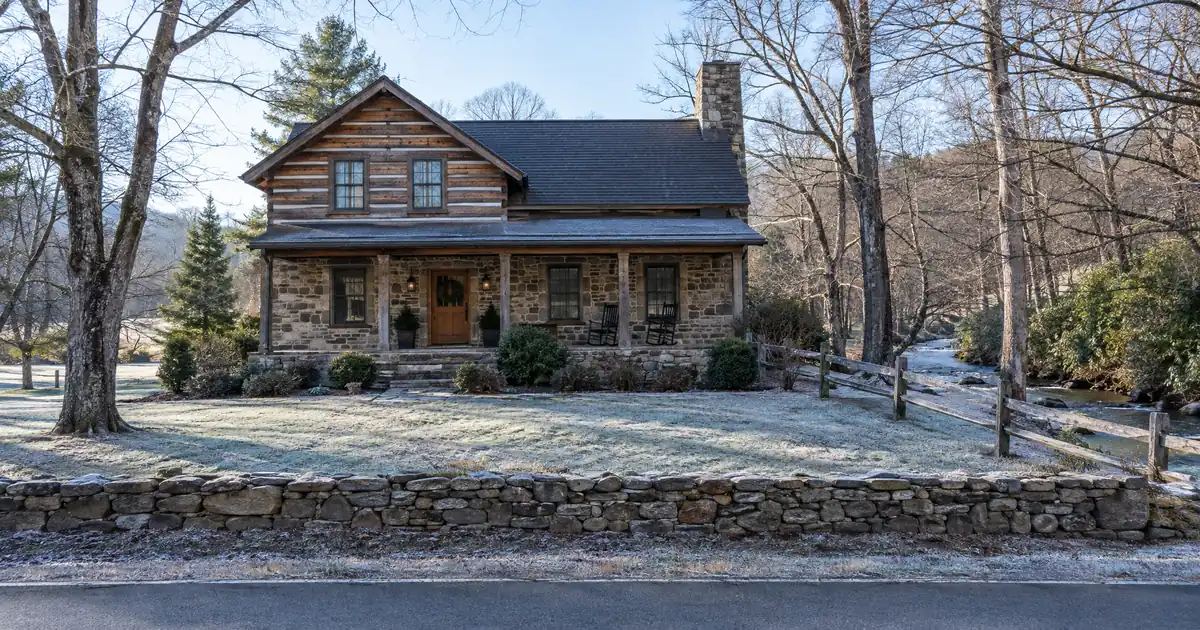
The Quick Read: A bank decline usually reflects the loan product, not the cabin. Banks underwrite your personal income and long-term lease comps, and rural short-term rental (STR) income fits neither model. A DSCR loan is reviewed primarily on property-level rental income covering the payment, subject to lender guidelines, so it is the usual next stop.
- Most STR files in Lendmire’s network run up to 75% LTV on a purchase and up to 70% on a refinance or cash-out, with a 640+ credit score and about 12 months of hosting experience.
- Coverage starts at 1.00 on both STR purchases and refinances.
- Rural adds a second filter: acreage, comp depth, and how the appraiser labels the area.
- Ask any lender in writing whether it accepts both STR income and rural collateral before you pay for an appraisal.
- Manufactured homes, log homes, and barndominiums are not offered in these programs. Each figure is subject to lender guidelines and a complete review of property type, leverage, and credit.
Why Did the Bank Say No?
Banks usually decline a rural STR for one of three reasons: the income type, the property type, or the borrower profile. Each points to a different fix, so read the decline before you re-shop.
Short-Term Rental Calculator
Run the STR numbers in your market
Rate source: Freddie Mac 30-yr average via FRED® — Federal Reserve Bank of St. Louis · effective Oct 15, 2026
Prefilled with starting assumptions — enter your nightly rate, occupancy, taxes, and insurance for a more accurate picture.
Short-term rental income is documented with a 12-month history or a market data report. Program parameters update from Lendmire’s centralized guideline source.
As of Oct 15, 2026 · General Freddie Mac market benchmark, not a Lendmire loan offer. Nightly rate, occupancy, taxes, and insurance are editable estimates. Qualifying income for short-term rentals varies by program — some use appraisal market rent, others use documented STR history or projections — and is confirmed in underwriting. Not a Loan Estimate, approval, or commitment to lend. Program availability and eligibility are subject to lender guidelines, credit approval, property review, and underwriting.
Income type. A bank loan is built around your traditional personal-income documentation and long-term rental comps. Rabbu, an STR analytics vendor, says banks often discount STR revenue against long-term comps or ignore it. Treat that as a vendor’s view, but it matches what brokers see.
Property type. Rabbu also notes that many conventional lenders reject large-acreage and rural properties. That is a collateral problem, not a judgment on you.
Borrower profile. Debt-to-income ratios, self-employment income, and a pile of existing mortgages all sink bank files. DSCR underwriting sets those aside and looks at the property.
Here is a quick way to read your decline:
| Likely reason | What it signals | Best next move |
|---|---|---|
| “STR income not eligible” | Product mismatch | DSCR lender that accepts STR |
| “Property type or acreage” | Collateral limits | Lender with acreage flexibility |
| “Debt-to-income too high” | Borrower profile | Property-income underwriting |
| “Appraisal came in low” | Thin comps or excess land | Re-scope the loan to the house |
How Does a DSCR Loan Treat a Rural STR?
A DSCR loan divides the property’s income by its full monthly obligation: principal, interest, taxes, insurance, and any HOA dues (PITIA). Clear 1.00 and the rent covers the payment. In Lendmire’s network, 1.00 is where select STR programs start, and stronger ratios open better pricing and leverage. The complete DSCR loans guide walks through the basics.
A separate select-lender path takes coverage below 1.00, with leverage and terms adjusted. Expect less cushion on those files.
One warning. Clearing 1.00 is not the same as positive cash flow. The ratio counts rent against PITIA only. Repairs, vacancy, management, utilities, and capital expenses sit outside it.
How Does Underwriting Work, Step by Step?
Underwriting a rural STR follows a set order. Skipping the early steps is how files die after the appraisal.
1. Pick the lane first. DSCR lenders fall into rough groups: some skip STRs entirely, some use only long-term rent or 12 months of history, and some accept AirDNA-style projections. Confirm in writing that a program takes both STR and rural collateral. There is no universal definition of “rural,” so ask about population, acreage, and area rules.
2. Choose how the income gets proven. A purchase with no history may lean on an appraiser’s STR analysis or a market-data projection. A refinance or an already-operating property typically leans on about 12 months of platform or property-manager records. The fallback is long-term market rent, usually lower.
3. Expect a haircut. Lenders often reduce gross STR income by an expense factor before running the ratio. Industry write-ups commonly cite 20% to 25%, and programs differ on the exact figure.
4. Appraisal. The appraisal sets value, which drives LTV. The rent schedule uses Form 1007 for single-family homes and Form 1025 for two to four units. Rural appraisers often struggle to find comps.
5. Check data depth. Market-data platforms need enough active listings near the property to produce a revenue estimate lenders will accept. Few nearby listings means weak data.
6. Insurance and legality. Short-term rental rules can vary by city, county, HOA, and property type, so investors should confirm local rules before relying on projected rental income. Standard homeowners and landlord policies often do not cover STR use, so get the right coverage quoted early.
7. Reserves and entity. Reserves commonly run around 6 months of PITIA, though they vary by lender, leverage, loan size, and transaction type. Buying in an LLC is typically workable, subject to lender program eligibility.
What Leverage and Credit Can You Expect?
On STR files across the network, purchases go up to 75% LTV on the strongest files. Refinances and cash-outs go up to 70% on short-term-rental collateral. Most programs want a 640+ score and about 12 months of host experience. Loans run up to $3,000,000 on standard programs.
A bigger down payment lowers the payment and can lift your coverage. It does not erase a leverage cap, a credit floor, or a property-type exclusion. The strongest files clear both tests: enough equity and enough rental coverage.
Run a stress test before you apply. Model the deal on long-term rent, then on a haircut projection. If it holds up at the lower number, you have a real cushion.
Where Does “Rural” Break the Rules?
Rural breaks the general rule in four places: acreage, comps, seasonality, and insurance.
Acreage. Many programs cap acreage, and excess land is often excluded from value. A price that bundles in extra acres can appraise below what you paid, which shrinks the loan. Lendmire’s piece Super Jumbo DSCR Cash-Out Rules on Acreage Properties covers this in detail.
The rural label. Many of the best-performing STRs sit in areas an appraisal calls rural. Ask the lender whether your terms change if the appraisal comes back rural. Better to hear that before the fee is spent.
Thin comps. A remote cabin may have few comparable listings. The lender may then fall back to long-term rent, which can fail the ratio. A conservative program may insist on 12 months of history instead.
Seasonality. Resort-style rural markets sometimes have no long-term rental market at all. The ratio uses annualized income, so a strong summer and a dead winter average out. Your bank account still feels the winter, so hold cash beyond the required reserves.
Insurance. Off-grid cabins raise questions about heat source, road access, and distance from fire service. Those can restrict coverage or raise its cost, so get a quote before you go under contract.
Some property types are simply not offered: manufactured homes (single- and double-wide), log homes, and barndominiums fall outside these programs. If your cabin is a log home, plan around that.
What Does the Market Say About Rural STRs?
Rural supply is growing. AirDNA’s midyear release forecasts occupancy averaging 57.4%, with demand and listings each growing 2.7%, and expects the strongest supply growth in affordable small-city, rural, and mid-size markets. AirDNA’s outlook report adds that prices are rising most in small-city and rural areas. Treat both as national context, not a promise for your market.
More supply means more comps over time. Rural data is still thinner than resort data, though, and that thinness drives many declines.
What Should You Do in the First Two Weeks After a Decline?
Work the decline like a diagnosis, then restructure the file.
1. Get the written reasons for the decline and match them to the table above. 2. Ask what income the bank counted and what it threw out. 3. Pull 12 months of platform or manager statements if you already host. 4. Gather the insurance quote, permit proof, and any acreage or survey details. 5. Ask lenders the screening questions in step one before anyone orders an appraisal. 6. Model the deal at long-term rent and at a haircut projection.
If you have no hosting history, a purchase can still work on projected income with some programs. Expect the lender to weigh it more conservatively.
Key Terms Defined
DSCR (debt service coverage ratio): Monthly property income divided by the full monthly obligation of principal, interest, taxes, insurance, and HOA dues.
PITIA: The full monthly payment: principal, interest, taxes, insurance, and association dues.
LTV (loan-to-value): The loan amount as a percentage of the property’s appraised value or price.
Non-QM: A loan that sits outside standard agency lending rules and is underwritten to its own guidelines.
Comparable listings: Nearby active rentals that a lender or data platform uses to estimate what your property can earn.
Haircut: A reduction a lender applies to projected or reported income before calculating coverage.
Where Do You Go From Here?
A rural cabin is a harder file than a suburban duplex, but it is not an unfinanceable one. The decline tells you which piece to fix. Lendmire’s piece How to Finance Your First Short-Term Rental on Business Bank Statements covers a different documentation route for investors whose income is easier to show in deposits.
If you are buying or refinancing a rental property and want to see how the numbers work, Lendmire, a DSCR-focused mortgage broker with investor loan programs across 40 states plus Washington, D.C., can help you compare DSCR loan options based on the property income, credit profile, leverage, and investor goals. Reach the team at 828-256-2183. Program terms change and every file is underwritten individually, so nothing here is a commitment to lend. Tax treatment can depend on how the funds are used and how the property is held; investors should keep clear records and speak with a qualified tax professional before relying on any deduction.
Frequently Asked Questions
Is a decline from one bank a decline from every lender?
No. A bank decline mostly reflects that lender’s product and appetite. Different lenders underwrite STR income and rural collateral differently, and a wholesale network lets one broker compare several guidelines at once.
Can I finance a rural STR with no hosting history?
Sometimes. Select programs accept an appraiser’s STR analysis or a market-data projection on a purchase. Refinances typically expect about 12 months of history. Lenders usually apply a haircut to projections.
What if my area has few comparable listings?
Thin data is a common rural problem. The lender may fall back to long-term market rent, which can lower your coverage. Run the deal at that lower number first so you know whether it still works.
Does the STR need to be permitted before I apply?
Operating without required permits can create problems with the occupancy and business-purpose representations on the loan.
Should I buy in an LLC?
Entity vesting is typically allowed, subject to lender program eligibility. Ask before you sign a purchase contract, because the loan, insurance, and title all need to match the entity.
About Lendmire
Lendmire is a non-QM mortgage brokerage (NMLS# 2371349) arranging DSCR investor loans in 41 markets, including Washington, D.C., through wholesale and investor-lending channels. DSCR loans are evaluated by the lender on rental income rather than personal income, subject to lender guidelines — a fit for LLC-owned portfolios, self-employed investors, and operators scaling beyond conventional loan caps. Recognized as a Scotsman Guide Top Mortgage Workplace in 2025 and 2026.
Get Started
Ready to find the right loan for you?
In about 30 seconds you can review financing options available for your investment property. No commitment required.
Informational only. Not a Loan Estimate, approval, or commitment to lend. Program availability and eligibility are subject to lender guidelines, credit approval, property review, and underwriting.
References
1. Rabbu
2. Rabbu: the best way to finance an STR
3. AirDNA midyear release via Yahoo Finance
This article is part of Lendmire’s short-term rental loan program — full qualification details, guidelines, and scenarios live on the program page.
Related reading: How to Finance a 2-4 Unit Airbnb With a Short-Term Rental Loan · Second-Home Mortgage vs DSCR Loan on a Short-Term Rental · How to Finance a First Airbnb With No Rental History
Brandon Miller
Founder & CEO, Mortgage Loan Originator, Lendmire LLC
- Mortgage Loan Originator · NMLS# 1129696 · Verify on NMLS Consumer Access
- North Carolina Real Estate Broker · License# 343312 · Verify on NCREC
- North Carolina Insurance Producer · License# 19053198 · Property, Casualty, Life, Health · Verify on NAIC SBS
- Lendmire LLC · Firm NMLS# 2371349 · Verify firm licensure
Important disclosures. Lendmire (NMLS# 2371349) is a licensed mortgage brokerage. Lendmire is not a direct lender, depository institution, or financial advisor. All loan inquiries are subject to lender underwriting; this article does not constitute a commitment to lend. Rates, terms, and program guidelines are subject to change without notice and vary by borrower profile, property type, and state. Information in this article is general in nature and is not financial, legal, or tax advice. Equal Housing Opportunity. NMLS Consumer Access: nmlsconsumeraccess.org.