
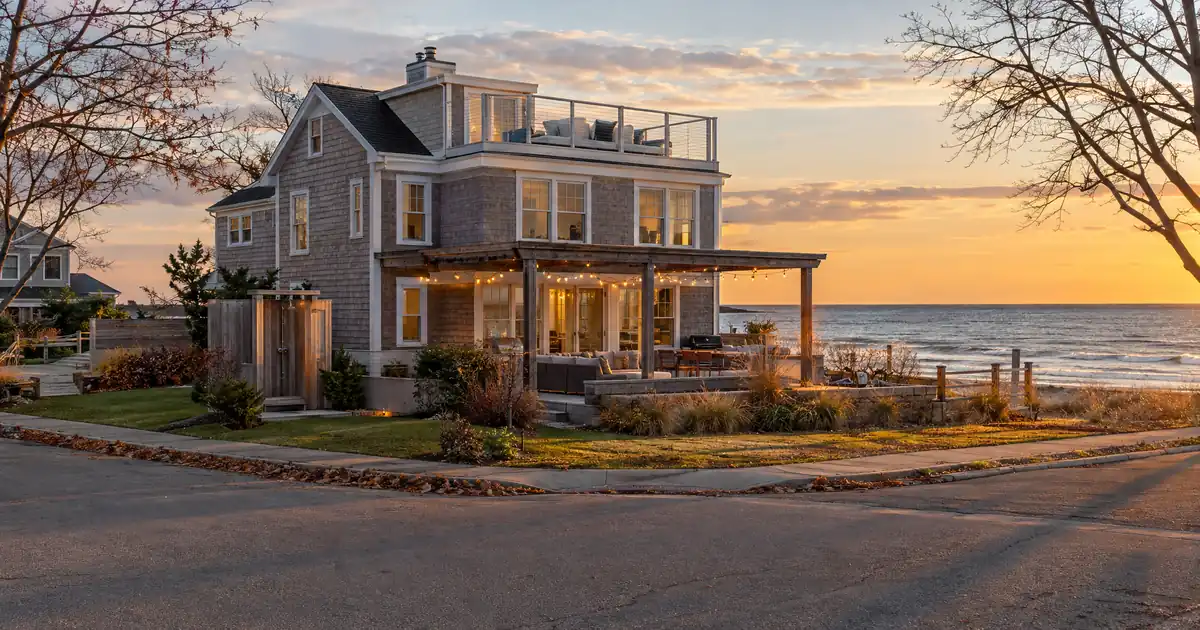
The Quick Read: You can buy a distressed Airbnb with a DSCR loan when the problem is weak bookings or a stressed seller, not a damaged building, because the loan is reviewed primarily on property-level rental income covering the payment, subject to lender guidelines, credit approval, and property review. A property that is physically unrentable generally has to be repaired first. A soft market helps you mainly through price: you can buy below peak from a motivated seller, as long as you underwrite the income conservatively.
- “Distressed” means two different things, and DSCR lenders treat them differently.
- Weak income on a sound, rent-ready home can often go straight into a DSCR purchase.
- Major repair needs usually call for rehab financing first, then a DSCR refinance.
- Underwrite on a haircut projection, never on the seller’s best year.
- Permits, HOA rules, and account transfers decide more deals than the loan does.
Key Terms Defined
DSCR (debt service coverage ratio): The property’s monthly income divided by its monthly housing obligation. Above 1.00 means the income covers the payment on paper.
PITIA: Principal, interest, taxes, insurance, and association dues. This is the payment side of the DSCR formula.
LTV (loan-to-value): The loan balance as a percentage of the property’s value or price.
Seasoning: The waiting period a lender wants between two events, such as buying a property and refinancing it.
AirDNA projection: A market-data estimate of what a short-term rental should earn, used when a property has no usable booking history.
Form 1007 and Form 1025: Appraisal forms for rent. The 1007 is the single-family rent schedule, and the 1025 is the income report for two- to four-unit properties.
Bridge loan: A short-term loan used to buy and repair a property before refinancing into longer-term financing.
Short-Term Rental Calculator
Run the STR numbers in your market
Rate source: Freddie Mac 30-yr average via FRED® — Federal Reserve Bank of St. Louis · effective Oct 15, 2026
Prefilled with starting assumptions — enter your nightly rate, occupancy, taxes, and insurance for a more accurate picture.
Short-term rental income is documented with a 12-month history or a market data report. Program parameters update from Lendmire’s centralized guideline source.
As of Oct 15, 2026 · General Freddie Mac market benchmark, not a Lendmire loan offer. Nightly rate, occupancy, taxes, and insurance are editable estimates. Qualifying income for short-term rentals varies by program — some use appraisal market rent, others use documented STR history or projections — and is confirmed in underwriting. Not a Loan Estimate, approval, or commitment to lend. Program availability and eligibility are subject to lender guidelines, credit approval, property review, and underwriting.
Two Kinds of Distressed (and Why It Matters)
The first question is whether the property is hurt, or only the operation. Mixing these up is a common reason these deals fall apart.
| Type | What it looks like | Typical financing path |
|---|---|---|
| Financially distressed | Weak bookings, stressed seller, sound home | Direct DSCR purchase |
| Physically distressed | Major repairs, unrentable condition | Rehab loan, then DSCR refinance |
A financially distressed Airbnb has a problem with income, valuation, or the seller. The roof is fine, and the kitchen works. Reviews may be mediocre, the calendar may be thin, or the owner may simply want out.
A physically distressed Airbnb has a condition problem. Think a failing roof, structural damage, or a house nobody could legally rent today.
DSCR lenders generally handle the first kind. They underwrite the property’s income, so an operation in trouble is something you can price, not something that disqualifies the deal.
The second kind usually has to be repaired before a DSCR lender will look at it. Across the lenders Lendmire places files with, minor cosmetic work is normally workable. Functional-but-tired homes get reviewed case by case. Major or structural problems generally need repairs first. Vacancy alone does not disqualify a property; an unrentable condition does.
Is a Soft Market an Opportunity or a Trap?
It is usually an opportunity in specific submarkets, not a reason to bet on a national rebound. “Soft” is local and uneven. Oversupplied pockets and falling prices exist alongside a national picture that is holding up.
Per AirDNA’s midyear press release, occupancy is forecast to average 57.4% for the year, just above the pre-pandemic average of 57.0%, with demand and listings each growing 2.7%. The same release expects the strongest supply growth in more affordable small-city, rural, and mid-size markets. AirDNA’s midyear outlook frames the current year as better for owning than for buying.
Read that as a warning and an invitation. Existing hosts hold pricing power, so a seller who is dumping a property is often the weaker operator, not a victim of a collapsing market. Buying that property below peak pricing can work. Assuming a quick return to peak revenue is the mistake.
Three signals separate a soft market from a broken one:
- Listings growing faster than demand. That points to a saturated submarket where your new listing competes with a wave of others.
- Nightly rates falling while reviews pile up. Too many similar units are chasing the same guests.
- A single-purpose property type. A condo that only works as a vacation rental has no easy fallback.
A softer price can help your coverage number directly. The same rent against a smaller payment produces a higher ratio. The catch is that the rent assumption has to survive scrutiny, which is where most distressed deals get hard.
How DSCR Underwriting Treats a Distressed Short-Term Rental
Underwriting runs in a sequence, and each step can change the answer.
Step 1: Triage the condition
Lenders and appraisers rate condition on a scale from C1 to C6. In plain terms, minor deferred maintenance is workable, while significant repairs at the lower end of the scale are not. Ask whether a stranger could rent this house tomorrow without a contractor. If yes, you are likely in financially-distressed territory. If no, plan for rehab financing.
Step 2: Choose the income basis
A lender needs a number for the property’s earning power. There are three common bases:
- Actual trailing income. This works when the property has a strong, clean booking history.
- A market-data projection. This is common when there is no history or the history is weak or messy.
- An appraiser’s rent analysis. This can support the income figure, but the form matters.
Be careful with the form. A valuation firm, Class Valuation, argues that the 1007 is a long-term-rent form, and that forcing short-term income through it can produce an artificially low DSCR. A separate short-term analysis addendum is the usual fix.
Step 3: Run the ratio
Divide the underwritten income by PITIA. Lenders apply their own haircuts to short-term gross income, which is why two lenders can quote different coverage on the same house. Many lenders in the network count only a portion of the projection, so run your own deal at a conservative figure before you submit it.
Here is where program rules matter. On a short-term-rental purchase, leverage tops out at 75% LTV. On a refinance of short-term-rental collateral, it is around 70%, and a cash-out on short-term-rental collateral is also 70%, compared with around 75% on standard long-term rentals. Expect a credit score of 640 or higher, and about 12 months of hosting or landlord experience from the borrower. Purchase files start at 1.00 coverage, and refinance files also start at 1.00. Final terms depend on lender guidelines, property type, leverage, and the borrower’s complete credit picture.
That 1.00 is where many select programs start, not a universal standard. A separate select-lender path takes coverage below 1.00, with leverage and terms adjusted. Stronger ratios open better pricing and higher leverage. Reserves vary by lender, leverage, and loan size, and they commonly run around six months of PITIA. All of this is subject to lender guidelines.
Step 4: Remember what DSCR does not measure
Clearing 1.00 does not mean the property produces positive cash flow. The ratio compares income to PITIA only. Repairs, vacancy, management, utilities, furnishing, and capital expenses all sit outside it.
A larger down payment lowers the payment and can lift the ratio. It does not erase leverage caps, credit floors, reserve rules, or property eligibility. The strongest files clear both tests: enough equity and enough rental coverage. For the full mechanics, see Lendmire’s complete DSCR loans guide.
Which Financing Path Fits Your Deal?
| Path | Best fit | Main risk |
|---|---|---|
| Direct DSCR purchase | Rent-ready, weak operation | Income assumption too high |
| Bridge or rehab loan, then DSCR | Needs real repairs | Refinance appraisal or income comes in low |
| Buy, stabilize, then refinance | Sound home, messy history | Seasoning and exit timing |
Rent-ready and weakly operated. This is the cleanest fit for a direct DSCR purchase. The lender looks at what the property can earn under a conservative basis, and the seller’s discount improves your ratio.
Physically distressed. DSCR is generally the wrong first loan. The usual route is a short-term bridge or rehab loan, then a refinance into DSCR once the home is rentable and stabilized. Your exit depends on the refinance appraisal and income holding up. Lendmire’s piece Third Airbnb Cash-Out Refinance Requirements to Buy in Another Market covers the refinance side in more detail.
Sound home, messy history. Sometimes you can buy on a projection and build your own record afterward. Reviews and listings do not carry over, so budget time and cash to set up.
Where the General Rule Breaks
Seller wants to stay on as co-host. Be cautious. Airbnb account ownership cannot be transferred, so you are buying a building, not a business. Building the operation under the seller’s account also muddies who owns the history and the income.
Seasonal income. A snapshot taken in peak season gets seen through. Lenders and your own analysis should use a full 12 months so that off-season weakness shows up.
Permits and HOA rules. Chalet notes that many permits are tied to the owner, not the property, so a buyer may need a new application. Moratoriums and caps can leave a buyer owning a house they cannot operate as planned. Short-term rental rules can vary by city, county, HOA, and property type, so investors should confirm local rules before relying on projected rental income.
Stale appraisal rent. If the appraisal reports long-term rent, the DSCR can look artificially low. A market-wide short-term analysis addendum is the fix.
Property types outside the programs. Manufactured homes (single- and double-wide), log homes, and barndominiums are not offered through the network’s DSCR programs. A distressed log cabin in a vacation market may look like a bargain, but it will not fit these loans.
Loans underwritten on projections. NerdWallet has reported on concern that loans underwritten on projected short-term-rental earnings could rest on shakier ground in a downturn. That is a good reason to treat any projection as a ceiling.
DSCR vs. conventional financing
There are two common ways to finance an investment property, and they qualify you differently — here’s how investors weigh them.
Why investors choose it
- Qualifies on the property’s rental income — no personal tax returns, W-2s, or pay stubs needed to document income.
- No personal debt-to-income ceiling to clear, so existing mortgages and obligations don’t cap your borrowing the same way.
- Can be closed in an LLC, keeping the property inside a business entity.
- Built for scaling — not held to the limit on number of financed properties that conventional financing applies.
- Underwriting centers on the deal: generally qualifies when the rent covers the payment, a 1.00x coverage ratio being a common baseline (confirmed in underwriting).
- Designed specifically for investment property, including long-term and, where the program allows, short-term rentals.
Where it’s strong
- Often the lowest ongoing financing cost for a buyer who fully qualifies on personal income — a fit for a first property or a cost-first purchase.
Trade-offs for investors
- Requires full personal income documentation and must fit within a debt-to-income limit — salary, existing debts, and other mortgages all count.
- Typically held in your personal name rather than a business entity.
- Caps how many financed properties you can carry, which can become a ceiling as a portfolio grows.
- Evaluates you as a borrower as much as the property, which usually means more paperwork.
How investors usually choose: a first or single property often optimizes for the lowest financing cost; portfolio builders often optimize for leverage, vesting in an LLC, and scaling past conventional caps. The right answer depends on your goals, the property, and current guidelines — both paths run through select lenders in Lendmire’s wholesale network, with eligibility and terms confirmed in underwriting.
Reading a Distressed Listing Before You Make an Offer
Ask why the seller is selling. The answer shapes both your price and your underwriting.
A seller who is failing at operations leaves clues. Check the listing history, review patterns, calendar blocks, and pricing. Thin photos, slow responses, and a calendar full of owner blocks suggest a fixable operation. A calendar that stays open at every price point points to a weak market, not a weak host.
Then normalize the numbers:
- Request platform earnings exports and bank receipts that tie together. Platform summaries show selected earnings detail, not verified profit.
- Strip out owner-stay nights, one-time premiums, and promotional credits.
- Confirm the legal path to operate before you count a dollar of revenue.
- Price the house off sales comparables, not off the seller’s revenue. A lender will likely disregard your own unproven income if there is no track record.
The softer the market, the more leverage you have to ask for a price built on normalized income. Sellers who bought at the peak are often anchored to their original number, so be prepared to walk away.
A Worked Example: One Deal, Two Outcomes
These are modeled assumptions, not market data. They show how the ratio moves.
Scenario A (passes). Say you buy a sound, rent-ready short-term rental at a 10% discount to its original list price. You put 25% down, which is a 75% LTV purchase. After the lender’s haircut on the AirDNA projection, rent covers PITIA at about 1.15x. That clears a 1.00 floor with some room. These specifics are subject to lender guidelines and a full review of property, leverage, and credit.
Scenario B (fails). Keep everything the same, except the market-data projection comes in 15% lower than you expected. Coverage drops to roughly 0.98x, just under the floor.
You now have choices:
1. Put more money down. A smaller loan lowers the payment, which can lift the ratio back above 1.00. It will not fix an eligibility or credit problem.
2. Look at a sub-1.00 path. These programs are available through select lenders in the network, with leverage and terms adjusted.
3. Run the long-term-rental fallback. Underwrite the property on a lease or long-term rent analysis and see whether that supports the numbers.
4. Renegotiate or walk. A price cut does the same work as a larger down payment, and it costs you nothing in equity.
Treat Scenario B as the one that decides your offer. If the deal only works at the optimistic projection, it does not work.
One pattern shows up repeatedly on files like this: the borrower’s own spreadsheet runs richer than the lender’s. Pencil your numbers at the lender’s haircut first, then see whether the purchase price still makes sense.
Fallback Plans if the Numbers Don’t Hold
A good distressed purchase has a second exit before you close.
- Mid-term rental. Furnished stays of a month or longer can steady the income when tourism softens. Properties that can pivot between short-term and mid-term use give you more options.
- Long-term rental. Rent from a lease is predictable, and it changes your underwriting basis from a projection to a lease or rent schedule.
- Sell. If you bought below peak, you may still have equity room, but that depends on the market and the property.
Hold cash for setup, a permit delay, and slow early bookings. In a soft market, the first months of a new listing can be quiet, and your reserves have to cover that gap.
If you are weighing a different market altogether, Lendmire’s piece How to Use a Cash-Out Refinance to Buy an Airbnb in Another Market covers that route. Tax treatment can depend on how the funds are used and how the property is held; investors should keep clear records and speak with a qualified tax professional before relying on any deduction.
Frequently Asked Questions
Can I use a DSCR loan on a distressed Airbnb?
Yes, when the distress is about income and not condition. A sound, rent-ready home with weak bookings can go through a DSCR purchase, subject to lender guidelines. A property needing major or structural repairs generally has to be fixed first, often with a bridge or rehab loan followed by a refinance.
Do I need short-term rental history to buy one?
Not necessarily on the property, but programs typically want about 12 months of hosting or landlord experience from the borrower. A property with no booking record can often be underwritten on a market-data projection or an appraiser’s analysis. A strong trailing record can support actual income instead.
What if the appraisal shows low rent?
Check which form the appraiser used. A long-term-rent schedule can make a short-term rental look weaker than it is. Asking for a short-term analysis addendum is the usual remedy. If coverage still falls short, a larger down payment, a price reduction, or a select-lender path below 1.00 with adjusted leverage and terms may be options.
Is a soft market a good time to buy an Airbnb?
It can be, if you buy below peak pricing and underwrite conservatively. National occupancy has held up, so the softness is mostly local. Your risk is a submarket where new listings keep arriving, so look hardest at places where supply is growing fastest.
How do I know if a market is oversupplied?
Compare listing growth to demand growth, and watch nightly rates and booking pace over time. If new listings are outrunning bookings and rates are sliding, expect more competition for your guests. Properties with a fallback to mid-term or long-term use carry less risk in those places.
Next Step
If you are buying or refinancing a rental property and want to see how the numbers work, Lendmire can help you compare DSCR loan options based on the property income, credit profile, leverage, and investor goals. Lendmire is a broker arranging DSCR financing through select lenders in its wholesale network across 41 markets, including Washington, D.C. Programs and terms change, and every file is underwritten individually.
About Lendmire
Lendmire (NMLS# 2371349) is a DSCR-focused mortgage broker that helps arrange investor financing across 41 markets, including Washington, D.C., through wholesale and investor-lending channels. DSCR eligibility is generally reviewed by the lender around the property’s rental income rather than personal income documentation, subject to lender guidelines — which works for self-employed investors, LLC operators, and portfolios above four financed properties. Scotsman Guide named Lendmire a Top Mortgage Workplace in both 2025 and 2026.
Get Started
Ready to find the right loan for you?
In about 30 seconds you can review financing options available for your investment property. No commitment required.
Informational only. Not a Loan Estimate, approval, or commitment to lend. Program availability and eligibility are subject to lender guidelines, credit approval, property review, and underwriting.
References
1. AirDNA midyear press release
4. Chalet
5. NerdWallet
This article is part of Lendmire’s short-term rental loan program — full qualification details, guidelines, and scenarios live on the program page.
Related reading: Form 1007 Market Rent vs STR Income Addendum for a DSCR Loan · Projected vs History Income for an Out-of-State First Airbnb DSCR Loan · DSCR vs Conventional Airbnb Loan Requirements at a Glance
Brandon Miller
Founder & CEO, Mortgage Loan Originator, Lendmire LLC
- Mortgage Loan Originator · NMLS# 1129696 · Verify on NMLS Consumer Access
- North Carolina Real Estate Broker · License# 343312 · Verify on NCREC
- North Carolina Insurance Producer · License# 19053198 · Property, Casualty, Life, Health · Verify on NAIC SBS
- Lendmire LLC · Firm NMLS# 2371349 · Verify firm licensure
Legal disclosures. Lendmire (NMLS# 2371349) is a state-licensed mortgage brokerage that arranges financing through wholesale lender relationships. Lendmire is not a direct lender, depository institution, or registered financial advisor. The discussion above is general informational content about real estate financing — it is not financial, legal, or tax advice, and readers should consult licensed professionals for guidance on their individual circumstances. Loan inquiries are subject to lender underwriting; this article does not represent a commitment to lend. Loan terms, rates, and qualification standards vary by borrower, property, and state, and are subject to change at any time. Equal Housing Opportunity. NMLS Consumer Access: nmlsconsumeraccess.org.