
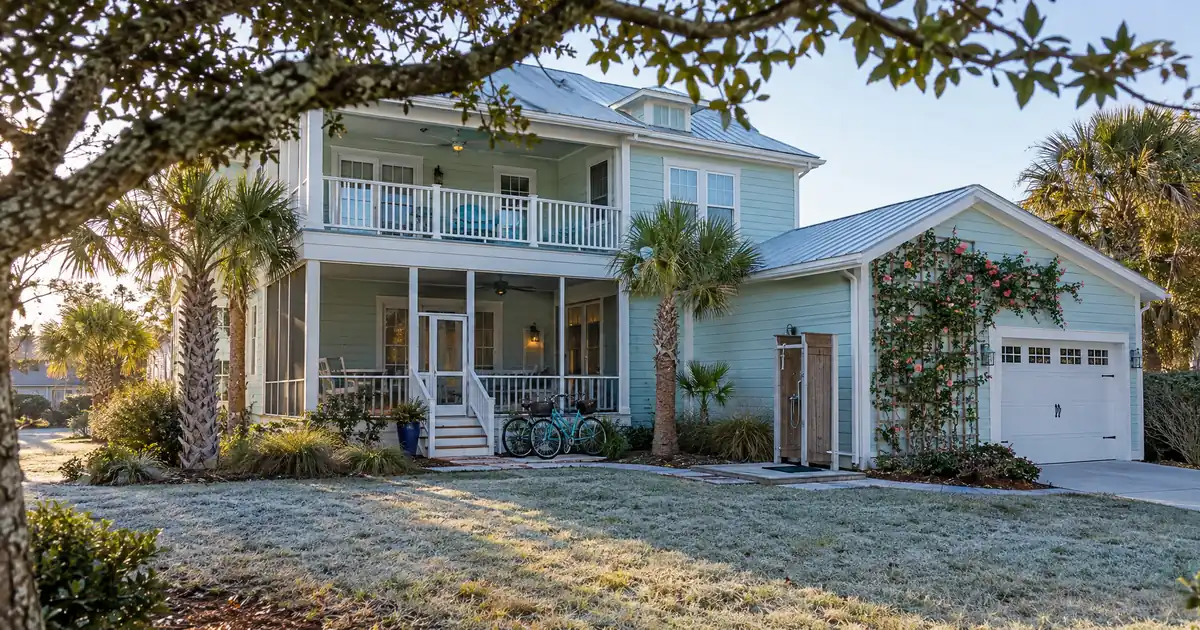
The Quick Read: Meeting the requirements means making a vacant, furnished short-term rental look rentable on paper, because a lender counts income from the property’s documented earning power, not from a seller’s sales pitch. A vacant purchase has no bookings and no lease, so the file leans on an appraisal, a market projection, and a property that is truly ready for guests.
- Turnkey is a marketing label. Lenders need evidence of condition, legal use, and income.
- Short-term rental purchases on select wholesale-network programs typically go up to 75% LTV, with a 640+ credit score and a 1.00 coverage floor on purchases.
- Income on a vacant property comes from an appraiser’s rent analysis or a market projection, not from the seller’s booking history.
- Clearing 1.00 is not positive cash flow. Repairs, vacancy, management, and utilities sit outside the ratio.
- Underwrite the deal twice before you offer: once on projected STR income and once on supported long-term rent.
Everything below is how those files actually move, step by step. Program ranges reflect select lenders in Lendmire’s wholesale network, are subject to lender guidelines, and are not a commitment to lend.
Short-Term Rental Calculator
Run the STR numbers in your market
Rate source: Freddie Mac 30-yr average via FRED® — Federal Reserve Bank of St. Louis · effective Oct 15, 2026
Prefilled with starting assumptions — enter your nightly rate, occupancy, taxes, and insurance for a more accurate picture.
Short-term rental income is documented with a 12-month history or a market data report. Program parameters update from Lendmire’s centralized guideline source.
As of Oct 15, 2026 · General Freddie Mac market benchmark, not a Lendmire loan offer. Nightly rate, occupancy, taxes, and insurance are editable estimates. Qualifying income for short-term rentals varies by program — some use appraisal market rent, others use documented STR history or projections — and is confirmed in underwriting. Not a Loan Estimate, approval, or commitment to lend. Program availability and eligibility are subject to lender guidelines, credit approval, property review, and underwriting.
What Does “Turnkey” Mean on a Vacant Airbnb?
Turnkey means two different things depending on who is talking. A marketplace uses it to describe a fully furnished rental that can take guests the day you close. Rabbu describes that as furnishings, supplies, reviews, booking calendars, and cleaning or management relationships already in place.
A lender uses no such word. To underwriting, “turnkey” translates into a list of file items: the property is in rentable condition, it can legally operate as a short-term rental, and the income number is supportable. Those are the real requirements.
Here is the catch. A turnkey label is not income documentation. A seller’s revenue claim stays a claim until it is documented, and on a vacant purchase there is nothing to document. Listings, reviews, and Superhost status generally stay with the seller’s host account. You are buying a house and a furniture package, not a track record.
Key Terms Defined
DSCR (debt service coverage ratio): A cash-flow ratio that compares a property’s rent to its monthly housing payment. On residential loans, that payment is principal, interest, taxes, insurance, and any HOA dues.
PITIA: The abbreviation for those payment pieces: principal, interest, taxes, insurance, and association dues.
LTV (loan-to-value): The loan balance as a percentage of the property’s value. Lower LTV means more of your own money in the deal.
Form 1007 and Form 1025: Appraisal rent schedules. Form 1007 covers one-unit properties, and Form 1025 covers two to four units. Both are built around monthly leases.
Market projection: A revenue estimate for a property run as a short-term rental, produced by a data platform. It shows projected income, occupancy, and nightly rate.
Haircut: The discount a lender applies to a projection to account for vacancy, fees, and cleaning.
Non-QM: Loans that sit outside standard owner-occupied mortgage rules. DSCR loans are one example.
How Does Underwriting Treat a Vacant Short-Term Rental?
Underwriting treats it as a purchase with no operating history, so the income comes from a forecast. The lender asks one question: does the property’s expected rent cover its full monthly payment? DSCR loans are designed for non-owner-occupied investment properties. Because they are business-purpose investor loans, they are reviewed differently from a standard owner-occupied mortgage. You certify the property is an investment, not a home you will live in.
Here is the sequence on a typical vacant STR file.
1. Pick the income path before you offer. The two main routes are the appraiser’s rent figure and a market projection. Decide which one the lender will use before you write the contract, not after.
2. The appraisal is ordered. The lender orders a value appraisal that includes a rent schedule. The appraisal values the real estate, not your furniture or your business income.
3. Income becomes a coverage figure. A projection gets discounted for vacancy, fees, and cleaning. The size of that discount varies by lender.
4. The lender divides by PITIA. Taxes, insurance, and HOA dues drive the bottom of the fraction more than most buyers expect.
5. Legal use and condition are checked. More on that below.
The result is a coverage ratio. On short-term rental purchases, 1.00 is the floor on the programs we place these files with, and stronger ratios open better pricing and leverage.
Which Income Number Will the Lender Use?
The lender uses the appraiser’s rent figure by default, and a market projection only when the program accepts one. Ask which before you commit, because the same house can pass on one and miss on the other.
Path one: the appraiser’s market rent. Every DSCR file gets an appraisal, and that report estimates what the property would rent for on a traditional monthly lease. McKissock notes that Form 1007 covers one-unit single-family and condo investment properties, and that lenders make the final call on income from all sources, including short-term rentals.
Path two: a market projection. Data platforms estimate what a home would earn run as an Airbnb. Programs that accept them are a minority, so this is a question for your broker, not an assumption.
Path three: an appraiser’s STR narrative. Some appraisers add a separate short-term-rental analysis. That is a supplement. It does not turn a 1007 into an STR tool.
| Income path | What it measures | Main risk |
|---|---|---|
| Appraiser long-term rent | Monthly-lease market rent | Often lower than STR potential |
| Market projection | Modeled nightly revenue | Only some programs accept it |
| Appraiser STR narrative | Comparable nightly rentals | Quality depends on comps |
Why You Cannot Multiply the Nightly Rate by 30
Fannie Mae’s appraiser guidance, reproduced by the Nevada Real Estate Division, says Form 1007 requires comparables leased monthly. It calls multiplying a nightly rate by 30 incorrect, because that ignores furnishings, other services, vacancy, and business expenses. DSCR loans are not agency products, so treat this as a picture of how appraisers think, not a DSCR rule. It explains why your own nightly-rate math rarely survives the appraisal.
HousingWire goes further, reporting that using Form 1007 for STR income often distorts DSCR calculations and produces artificially low ratios. Its suggested fix is a narrative addendum and a stress test for seasonality and occupancy. That matches what we see: a low appraisal rent can drag a strong STR deal under 1.00.
What Does a Vacant Airbnb Need to Be “Turnkey” for a Lender?
It needs to be rentable, legal, and insurable, with proof for each. Think of it as a file, not a vibe. The items below fall into groups.
Physical readiness
- Utilities on, so the appraiser can test systems.
- No unfinished work or open repairs. A property that needs a rehab is a different loan conversation.
- Furnished or ready to furnish, with the plan clear. Furnishing does not add to the appraised value, but it matters to your operating plan.
Legal readiness
- Short-term rental rules can vary by city, county, HOA, and property type, so confirm local rules before relying on projected rental income.
- STR Search recommends checking zoning, licensing, occupancy limits, parking, HOA or deed restrictions, permit transferability, and insurable use before your contingency deadlines expire.
- Techvestor adds that written confirmation from the administering authority is stronger evidence than an active platform listing. A live Airbnb page proves someone is hosting, not that they are allowed to.
Operational readiness
- Rabbu says buyers should confirm that permits, licenses, insurance, management systems, cleaning protocols, and guest-communication systems work and transfer smoothly. Licenses often do not transfer with a sale, so ask early.
Financial readiness
- A coverage ratio that clears with the lender’s number, not the seller’s.
- Reserves on hand. They vary by lender, leverage, and loan size, and about six months of PITIA is common on many files.
- An operating cushion beyond reserves, because DSCR ignores repairs, vacancy, and management.
What Are the Loan Terms for a Vacant STR Purchase?
On select programs in our network, a short-term rental purchase typically goes up to 75% LTV on the strongest files, which means at least 25% down. Most programs expect a credit score of 640 or higher. The coverage floor on a purchase is 1.00, and standard-program loan amounts go up to $3,000,000.
Refinances are tighter. A short-term rental refinance or cash-out typically tops out around 70% LTV, with a 1.00 coverage floor on refinances. These programs also usually expect about 12 months of hosting experience. That is the key difference between buying vacant and refinancing later: a purchase can run on projected income, while a refinance leans on actual history.
A larger down payment lowers the payment and can lift your ratio. It does not erase credit floors, reserve rules, or property eligibility. Strong files clear both tests: enough equity and enough rental coverage. Manufactured homes, log homes, and barndominiums are not offered in these DSCR programs.
Coverage below 1.00 is a separate path. It is available through select lenders in the network, with leverage and terms adjusted. No-ratio structures exist only through select lenders, generally for borrowers who already own a primary residence. Both are exceptions that need their own conversation, not a backup plan for a weak file.
For the full picture of how programs are built, see Lendmire’s complete DSCR loans guide.
DSCR vs. conventional financing
There are two common ways to finance an investment property, and they qualify you differently — here’s how investors weigh them.
Why investors choose it
- Qualifies on the property’s rental income — no personal tax returns, W-2s, or pay stubs needed to document income.
- No personal debt-to-income ceiling to clear, so existing mortgages and obligations don’t cap your borrowing the same way.
- Can be closed in an LLC, keeping the property inside a business entity.
- Built for scaling — not held to the limit on number of financed properties that conventional financing applies.
- Underwriting centers on the deal: generally qualifies when the rent covers the payment, a 1.00x coverage ratio being a common baseline (confirmed in underwriting).
- Designed specifically for investment property, including long-term and, where the program allows, short-term rentals.
Where it’s strong
- Often the lowest ongoing financing cost for a buyer who fully qualifies on personal income — a fit for a first property or a cost-first purchase.
Trade-offs for investors
- Requires full personal income documentation and must fit within a debt-to-income limit — salary, existing debts, and other mortgages all count.
- Typically held in your personal name rather than a business entity.
- Caps how many financed properties you can carry, which can become a ceiling as a portfolio grows.
- Evaluates you as a borrower as much as the property, which usually means more paperwork.
How investors usually choose: a first or single property often optimizes for the lowest financing cost; portfolio builders often optimize for leverage, vesting in an LLC, and scaling past conventional caps. The right answer depends on your goals, the property, and current guidelines — both paths run through select lenders in Lendmire’s wholesale network, with eligibility and terms confirmed in underwriting.
Where the General Rule Breaks
Most vacant files follow the path above. These edge cases bend it.
The appraisal comes back low. Class Valuation, an appraisal-management practitioner, states that Form 1007 cannot be used to support short-term rental appraisals. So a low 1007 figure is a measurement mismatch, not a verdict on your deal. The response is to ask whether the program accepts a projection or an STR narrative.
Two-to-four-unit properties. Form 1025 assumes monthly leases, so a nightly-comp addendum is usually needed. Small multifamily STRs add paperwork.
Seasonality. Averages hide weak months. A beach or ski house can show a healthy annual number and still run thin for part of the year. Stress-test the weak season.
A seller’s “guaranteed” booking history. It does not count toward your purchase file. The hosting account and reviews usually do not move with the deed.
Vacant with no ratio. Short-term income is often ineligible on no-ratio structures. Vacant purchases may still be allowed, but vacant refinances usually are not.
A property that needs work. If it is not rentable today, it is not turnkey. That points to a different financing step first, then a DSCR refinance once it is operating.
What Does the Investor Decision Look Like?
It looks like running the numbers twice and trusting the lower one. Before you offer, test coverage on projected STR income and again on supported long-term rent. If both clear, you have a margin. If only the projection clears, you are betting on the program accepting it.
Consider three buyers looking at similar vacant, furnished homes. No dollar figures here, only ratios, since your inputs will differ.
Buyer one gets a market projection accepted and sees coverage around 1.2x after the lender’s haircut. The long-term rent fallback lands near 1.0x. That is a comfortable file with a floor underneath it.
Buyer two has a strong projection but a program that only accepts the appraiser’s rent. The 1007 comes back and coverage sits just under 1.00. Options include a select-lender path with adjusted leverage, a higher down payment to lower the payment, or a renegotiated price.
Buyer three loves the furniture, but permits do not transfer and local confirmation is missing. The ratio is irrelevant because the legal use fails. This is the file that stalls.
Keep one point straight. DSCR compares rent to PITIA only. Clearing 1.00 is not the same as positive cash flow, because repairs, vacancy, management, utilities, and capital expenses sit outside the calculation. Treat reserves and a cash cushion as part of the plan.
One broker observation: files stall on legal use and low appraisal rent far more often than on credit. Raising those issues early is usually easier to fix than discovering them late. Ask the lender how it treats STR income before you tour, not after you are under contract.
Vacancy-focused questions also come up on larger loans, which Lendmire covers in its piece Can a Vacant Property Qualify for a Jumbo DSCR Purchase Loan?.
Tax treatment varies; consult a qualified professional before relying on any deduction.
Frequently Asked Questions
Can I buy a vacant Airbnb with a DSCR loan?
Yes, on many programs. Vacant purchases are routine because income is estimated, not documented from bookings. The file relies on an appraisal rent figure or a market projection, plus proof of condition and legal use. Qualification is subject to lender guidelines.
Do I need hosting history to buy?
Not for a purchase on most programs, since there is nothing to show. Refinances typically expect about 12 months of hosting experience. That is why many investors buy first on projected income, then refinance after the property has operated.
Does furnishing help my appraisal?
Not directly. The appraisal values the real estate, not furniture or business income, per McKissock. Furnishing matters for readiness and your operating plan.
What if the appraisal rent is too low to clear 1.00?
Ask whether the program accepts a market projection or an STR narrative. Other options include a larger down payment, a lower price, or a select-lender path that goes below 1.00 with leverage and terms adjusted.
Can I stay in the property myself?
No. DSCR loans are for investment properties, and you certify it will not be your primary residence or second home.
If you are buying or refinancing a rental property and want to see how the numbers work, Lendmire can help you compare DSCR loan options based on the property income, credit profile, leverage, and investor goals. Reach the team at 828-256-2183 or request a quote. The illustrative calculator on the site gives a rough estimate, not a quote.
About Lendmire
Lendmire (NMLS# 2371349) is a mortgage brokerage focused on DSCR investor financing, helping arrange programs through wholesale and investor-lending channels in 41 markets, including Washington, D.C. DSCR loans are evaluated by the lender on property cash flow rather than personal income, subject to lender guidelines, supporting LLC closings and accommodating investors with four or more financed properties. Scotsman Guide Top Mortgage Workplace in both 2025 and 2026.
Get Started
Ready to find the right loan for you?
In about 30 seconds you can review financing options available for your investment property. No commitment required.
Informational only. Not a Loan Estimate, approval, or commitment to lend. Program availability and eligibility are subject to lender guidelines, credit approval, property review, and underwriting.
References
1. Rabbu
2. McKissock: Form 1007 and short-term rental appraisals
3. Fannie Mae June 2024 Appraiser Update, via Nevada Real Estate Division
4. HousingWire: Short-term rentals are breaking the appraisal playbook
5. STR Search: How to buy an Airbnb property
6. Techvestor
7. Rabbu
8. Class Valuation: Form 1007 and short-term rentals
This article is part of Lendmire’s short-term rental loan program — full qualification details, guidelines, and scenarios live on the program page.
Related reading: 12-Month vs One Booking DSCR When Converting a Rental to Airbnb · DSCR vs Conventional Investment Loan for an Airbnb Property · How to Choose DSCR or Conventional for Your First Airbnb
Brandon Miller
Founder & CEO, Mortgage Loan Originator, Lendmire LLC
- Mortgage Loan Originator · NMLS# 1129696 · Verify on NMLS Consumer Access
- North Carolina Real Estate Broker · License# 343312 · Verify on NCREC
- North Carolina Insurance Producer · License# 19053198 · Property, Casualty, Life, Health · Verify on NAIC SBS
- Lendmire LLC · Firm NMLS# 2371349 · Verify firm licensure
Disclosures. The information presented in this article is general market commentary, not financial, legal, or tax advice. Lendmire is a mortgage brokerage (NMLS# 2371349) — not a direct lender or depository institution — and loan placement is subject to lender underwriting. Nothing in this content represents a commitment to lend. Loan terms, pricing, and program availability vary based on borrower qualifications, property characteristics, and state of subject property, and are subject to change at any time. Lendmire complies with Equal Housing Opportunity requirements. Consumer access: nmlsconsumeraccess.org.