
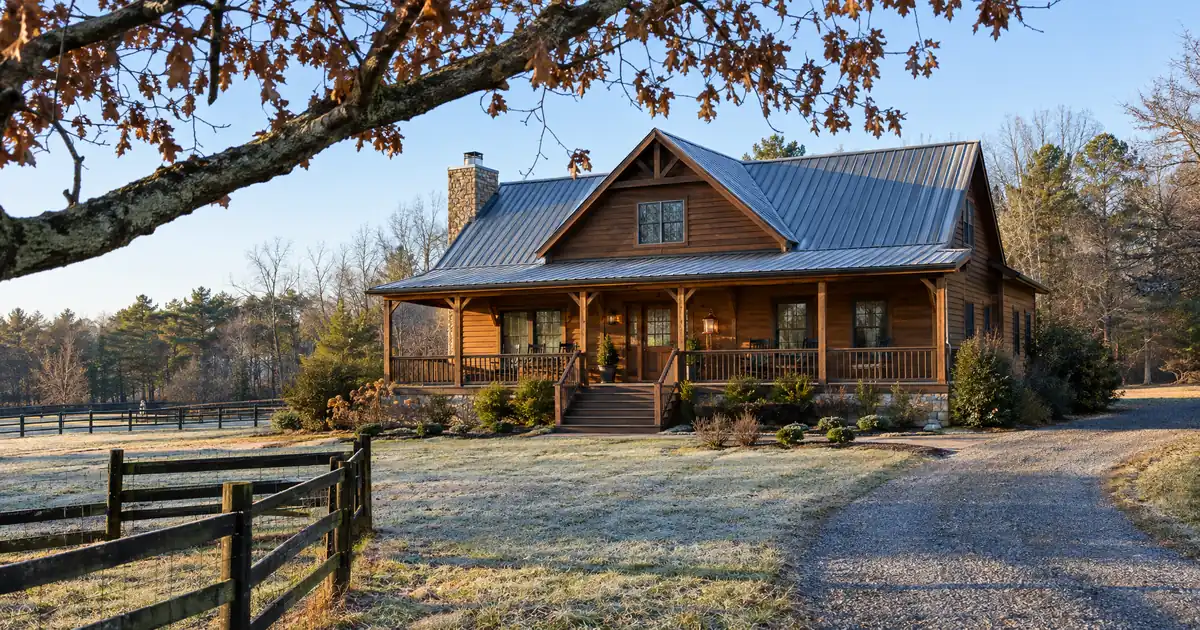
The Quick Read: Usually yes, as long as the cabin is conventionally built, legally allowed to host short-term guests, insurable, and produces enough rental coverage to clear the program minimum. A lakefront cabin is ordinary collateral for DSCR loans, which qualify primarily on property-level rental income covering the payment, subject to lender guidelines. Three things decide the outcome: legal rental status, the lender’s income method, and insurance plus appraisal.
- Short-term rental purchases typically reach up to 75% LTV; refinances and cash-outs on short-term rental collateral top out around 70%.
- Expect a 640+ credit score and about 12 months of hosting experience on most files.
- Coverage of 1.00 is where these short-term rental programs start, on purchases and on refinances.
- Log homes, manufactured homes and barndominiums are not offered, and many lakeside cabins are exactly that.
- Local permits and HOA rules can block a rental plan no matter how strong the loan file looks.
Lakefront cabins are the kind of property investors dream about and underwriters scrutinize. The loan itself is the easy part. The hard part is proving the cabin can legally earn the income you are counting on. This guide walks through the mechanics, the lake-specific traps, and the decision you actually have to make.
Short-Term Rental Calculator
Run the STR numbers in your market
Rate source: Freddie Mac 30-yr average via FRED® — Federal Reserve Bank of St. Louis · effective Oct 15, 2026
Prefilled with starting assumptions — enter your nightly rate, occupancy, taxes, and insurance for a more accurate picture.
Short-term rental income is documented with a 12-month history or a market data report. Program parameters update from Lendmire’s centralized guideline source.
As of Oct 15, 2026 · General Freddie Mac market benchmark, not a Lendmire loan offer. Nightly rate, occupancy, taxes, and insurance are editable estimates. Qualifying income for short-term rentals varies by program — some use appraisal market rent, others use documented STR history or projections — and is confirmed in underwriting. Not a Loan Estimate, approval, or commitment to lend. Program availability and eligibility are subject to lender guidelines, credit approval, property review, and underwriting.
What Lenders Treat as a Short-Term Rental
A short-term rental, for lending purposes, is a non-owner-occupied property rented by the night or week rather than on a 12-month lease. Lenders treat it as an investment property, not a second home. DSCR loans are designed for non-owner-occupied investment properties. Because they are business-purpose investor loans, they are reviewed differently from a standard owner-occupied mortgage.
That matters for a cabin you also want to use yourself. A DSCR loan is built for investment use, so a plan for heavy personal use does not fit the product. Ask your broker how a lender will view your intended usage before you write an offer.
Which Loan Fits a Lakefront Cabin?
For a cabin you plan to rent, the DSCR loan is the natural fit because it looks at the cabin’s rental income rather than your paycheck. Other paths exist, but they come with trade-offs.
| Path | Reviewed on | Rental use fit | Lake-cabin catch |
|---|---|---|---|
| DSCR investor loan | Property rental income | Built for it | Needs legal STR status |
| Second-home mortgage | Personal income | Weak | Rental income usually not the plan |
| Conventional investor loan | Personal income and taxes | Limited | STR income may not count |
| Hard money | Asset and exit plan | Short-term only | Costly bridge, not a hold |
Agency lending is mostly silent on this. Fannie Mae’s appraiser guidance says its Selling Guide does not address whether short-term rental income counts, and that the rent-schedule form is required only when rental income is used to qualify on a one-unit investment property. That silence is a big reason cabin financing lives mostly in the non-QM investor channel.
If you want the full picture of how these loans work, Lendmire’s complete DSCR loans guide covers the fundamentals.
How the Coverage Calculation Works
DSCR is the property’s qualifying income divided by its monthly PITIA. PITIA means principal, interest, taxes, insurance and any HOA dues. If the number lands at 1.00, income matches the full obligation. Above 1.00, there is cushion.
Many investors misread this. Clearing 1.00 does not mean positive cash flow. Repairs, vacancy, management, utilities and capex all sit outside the calculation. On a remote cabin those costs are real.
Short-term rental income gets adjusted before the math runs. Lenders typically apply an expense haircut to gross income, and BiggerPockets puts that haircut at roughly 20–25% as a market-wide norm. Treat that as context, not a promise: each lender in the network sets its own factor.
Here is why lakes make this tricky. Picture a cabin that books heavily from late spring through early fall and sits quiet in winter. Measured over twelve months, the average is what counts, not the July peak. A cabin that looks like 1.4x on summer income might land closer to 1.1x once the slow months are folded in. Run the annualized number before you commit.
Across the wholesale network, the stronger files show coverage comfortably above the floor, because a cushion absorbs a soft season. Select lenders in the network will review coverage below 1.00, with leverage and terms adjusted. That is a separate path from the programs that start at 1.00, not the same program with a lower floor.
How Do You Prove Income on a Cabin With No History?
Lenders accept a few kinds of evidence, and which one counts depends on the lender and program. Most short-term rental files expect about 12 months of hosting experience from the borrower, though that is different from the cabin’s own booking history.
The common options:
1. A market projection report from a data provider such as AirDNA or Rabbu. BiggerPockets notes only a small share of DSCR lenders will use these projections in underwriting, so lender selection is part of the answer.
2. The appraiser’s short-term rental analysis, used alone or alongside a projection, at the lender’s discretion.
3. Trailing 12-month records, such as a property-management statement or bank statements showing deposits, when the cabin already operates.
The appraisal usually includes the Form 1007 rent survey, which estimates traditional 12-month rent. McKissock, an appraisal education provider, says the form’s biggest limit is that it documents monthly rent rather than nightly rent or business income, and that lenders make the final call on income. Cabin income often runs well above that long-term figure, so the method a lender picks can decide whether the deal clears at all. Ask up front which method it uses.
What Is Different About a Lakefront Cabin?
Water adds value and adds underwriting questions. Five areas draw the most scrutiny: flood, insurance and taxes, septic and access, construction type, and the appraisal.
Flood. Check the flood map before you write an offer. FEMA’s FloodSmart says high-risk areas start with the letters A or V, and that flood insurance requirements can apply to properties in those zones depending on the type of financing. Whether a non-QM lender requires flood coverage is its own policy, so ask your broker rather than assuming. Standard homeowners policies generally do not cover flood, so a floodplain cabin needs separate coverage. That cost lands in the insurance line of PITIA and pulls the ratio down.
Insurance and taxes generally. Cabins often carry heavier insurance and tax lines than a typical house. Get quotes early so the coverage number is real.
Septic, well and access. Many lake cabins sit on private septic, a well, or a shared road. Septic capacity can cap the permitted bedroom count, which limits sleeping capacity and income. Lenders and appraisers look at these systems, so confirm they are in working order and legally permitted.
Construction type. Conventional frame cabins are fine. Log homes, manufactured homes (single- and double-wide) and barndominiums fall outside these programs and are not offered. If your dream cabin is a log structure, the DSCR route is closed, and that is better to learn before you fall in love.
Appraisal. Lake properties have scarce comparable sales, and waterfront add-ons such as docks and shoreline work often need separate permits. Expect the appraiser to work harder, and expect value to be more debated than on a suburban rental.
Rules That Can Block You Before the Loan Matters
A lakefront location does not make a cabin a legal short-term rental. Short-term rental rules can vary by city, county, HOA, and property type, so investors should confirm local rules before relying on projected rental income.
Three layers deserve a look:
- Local permits. A regional report on Lake Michigan communities from TheLakeLife says each township writes its own rules, caps and transfer policies. It also reports that at least one shoreline township made permits non-transferable, so a buyer must reapply after closing, and that a buyer may be shut out if the cap is already met.
- HOA and private covenants. The same report says an HOA can ban rentals even where the township has permits available. Montana Property Brokers adds that county permits do not override private covenants.
- Lake governance. On some private lakes a conservancy district may set rules on top of county ordinances, per Sweetwater Realty.
Here is the hard truth: a non-transferable permit is a deal-level risk no loan structure fixes. The loan can be perfectly approved while the income you counted on disappears. Confirm permit status in writing before you remove contingencies.
Does the Appraiser Disagree With Your Income?
Sometimes, and practice is inconsistent. HousingWire carries an appraisal-vendor view that the 1007 was built for long-term rent and can produce artificially low coverage when applied to short-term income. Class Valuation argues narrative income analyses suit short-term rentals better. AppraisalBuzz notes some lenders require long-term leases only on the 1007 and support short-term income elsewhere, while others ask appraisers to build market rent from short-term data.
For you, the takeaway is practical. Ask each lender how it handles the form before you pay for an appraisal. If the long-term figure is all that counts, a cabin that is strong on nightly income may miss on paper.
Leverage, Credit and Reserves for a Cabin
Short-term rental files are underwritten more conservatively than long-term rentals. Across the network, purchases typically reach up to 75% LTV, while refinances and cash-outs on short-term-rental collateral generally top out around 70%. Standard long-term rentals reach higher on cash-out, but that ceiling does not apply here.
Expect a minimum score of 640 and about 12 months of hosting experience. Reserves vary by lender, leverage, loan size and transaction type, and commonly sit around six months of PITIA. Standard programs run up to $3,000,000, with smaller balances routed through select lenders.
A bigger down payment lowers the payment and can lift the ratio. It does not erase leverage caps, credit floors, reserve rules or property eligibility. The strongest files clear both tests: enough equity and enough rental coverage.
If your cabin sits in a remote area, Lendmire’s piece 30-Year vs Interest-Only Short-Term Rental DSCR Loan on a Rural Cabin goes deeper on term structures available through select lenders.
When It Won’t Work, and What to Try Instead
The loan fails most often for reasons that have nothing to do with credit. Watch for these:
- The permit is capped, non-transferable or banned by the HOA.
- The cabin is log, manufactured or a barndominium.
- Annualized coverage falls short of the program floor.
- The cabin cannot be insured at a cost the numbers can absorb.
- You plan heavy personal use, which does not fit an investment loan.
Alternatives exist. If the short-term route fails, a long-term rental fallback uses the 1007 rent and may produce a lower ratio. A smaller loan amount or a larger down payment can rebuild coverage. A select lender in the network may review coverage below 1.00 with leverage and terms adjusted. And if the cabin is not rentable at all, a different property may serve you better. For a side-by-side with another property type, see Lendmire’s comparison of a short-term rental loan on a cabin versus a condo.
Tax treatment can depend on how the funds are used and how the property is held; investors should keep clear records and speak with a qualified tax professional before relying on any deduction.
A Pre-Application Checklist
Before you request a quote, gather these:
1. Written confirmation of legal short-term rental status, including permit transferability.
2. HOA or lake-association rules, if any.
3. The flood zone determination and an insurance quote.
4. Septic and well status, plus the permitted bedroom count.
5. Income evidence: projection report, trailing 12-month records, or both.
6. Proof of hosting experience and your credit profile.
7. Confirmation the cabin is conventionally built.
Key Terms Defined
DSCR (debt service coverage ratio): the property’s qualifying income divided by its monthly PITIA.
PITIA: principal, interest, taxes, insurance and any HOA dues, the full monthly obligation on the loan.
LTV (loan-to-value): the loan amount as a percentage of the property’s appraised value or price.
Form 1007: the appraisal rent survey that estimates traditional 12-month rent, not nightly income.
Seasoning: the waiting period a lender wants before certain refinances.
Frequently Asked Questions
Can I get a loan on a lakefront cabin that has never been rented?
Yes, on many files. Lenders may rely on a market projection, the appraiser’s short-term rental analysis, or both, depending on the program. You will still typically need about 12 months of hosting experience as a borrower.
Does it matter if the cabin is on the water or just near it?
A true waterfront cabin raises flood, shoreline and dock-permit questions that an off-water cabin may avoid. Off-water cabins often have easier appraisals because comparable sales are more plentiful.
Will my loan be approved if the permit is non-transferable?
A lender may approve the file, but your income plan could disappear after closing. A non-transferable permit means you may have to reapply, and a cap may keep you out. Confirm this before you commit, because no loan structure solves it.
Can I buy the cabin in an LLC?
Often yes, subject to lender program eligibility. Ask your broker how a given lender treats entity titling and whether guarantor requirements apply.
Can I use the cabin myself?
DSCR loans are built for non-owner-occupied investment property, not second homes. Heavy personal use does not fit the product, so discuss your intended use with your broker upfront.
Next Step
If you are buying or refinancing a rental property and want to see how the numbers work, Lendmire can help you compare DSCR loan options based on the property income, credit profile, leverage, and investor goals. Lendmire is a broker arranging DSCR financing through select lenders in its wholesale network across 41 markets, including Washington, D.C., and an editable, illustrative calculator can give you a rough estimate. Program details change, and every file is underwritten individually, so nothing here is a commitment to lend.
About Lendmire
Lendmire — NMLS# 2371349 — is a mortgage brokerage specializing in DSCR investor loans, helping arrange financing across 41 markets, including Washington, D.C., through wholesale and investor-lending channels. The model centers on property-level rental income reviewed by the lender rather than W-2 documentation, subject to lender guidelines, suiting entity-owned and multi-property investors. Lendmire holds Scotsman Guide Top Mortgage Workplace recognition for 2025 and 2026.
Get Started
Ready to find the right loan for you?
In about 30 seconds you can review financing options available for your investment property. No commitment required.
Informational only. Not a Loan Estimate, approval, or commitment to lend. Program availability and eligibility are subject to lender guidelines, credit approval, property review, and underwriting.
References
1. Fannie Mae Appraiser Update (June 2024)
2. BiggerPockets: DSCR Loans for Short-Term Rental Investors
3. McKissock: Form 1007 and Short-Term Rental Appraisals
5. TheLakeLife
8. HousingWire
10. AppraisalBuzz
This article is part of Lendmire’s short-term rental loan program — full qualification details, guidelines, and scenarios live on the program page.
Related reading: How Short-Term Rental Loans Work for Equity-Rich Owners Refinancing in 2026 · How to Qualify for a DSCR Loan for a First Short-Term Rental Bought Distressed · How a Short-Term Rental Lender Calculates DSCR After the Expense Haircut
Brandon Miller
Founder & CEO, Mortgage Loan Originator, Lendmire LLC
- Mortgage Loan Originator · NMLS# 1129696 · Verify on NMLS Consumer Access
- North Carolina Real Estate Broker · License# 343312 · Verify on NCREC
- North Carolina Insurance Producer · License# 19053198 · Property, Casualty, Life, Health · Verify on NAIC SBS
- Lendmire LLC · Firm NMLS# 2371349 · Verify firm licensure
Legal disclosures. Lendmire (NMLS# 2371349) is a state-licensed mortgage brokerage that arranges financing through wholesale lender relationships. Lendmire is not a direct lender, depository institution, or registered financial advisor. The discussion above is general informational content about real estate financing — it is not financial, legal, or tax advice, and readers should consult licensed professionals for guidance on their individual circumstances. Loan inquiries are subject to lender underwriting; this article does not represent a commitment to lend. Loan terms, rates, and qualification standards vary by borrower, property, and state, and are subject to change at any time. Equal Housing Opportunity. NMLS Consumer Access: nmlsconsumeraccess.org.