
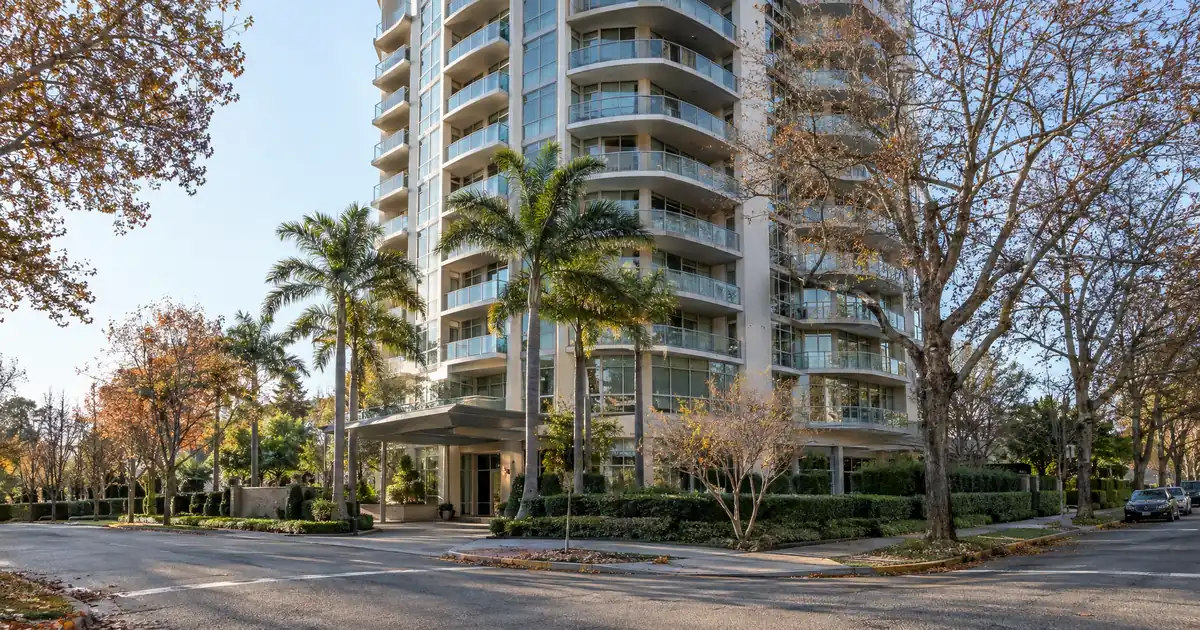
The Quick Read: A $3M-priced condotel can be financed on projected short-term rental income, but the loan amount, not the price, is the binding number. Condotel files through select wholesale programs top out at a $1,500,000 loan, subject to underwriting, so the investor funds the gap in cash. The rest of this page shows how the file gets built.
- Qualification runs primarily on the property’s rental income covering the full payment, subject to lender guidelines.
- On a purchase with no history, the income comes from the appraisal’s short-term-rent analysis, counted at 80% of gross.
- Condotels reach 75% leverage on a purchase and 65% on a refinance, and the loan stops at $1,500,000.
- Short-term rental files need coverage of 1.00 or higher and a borrower who already owns income property.
- Permission to rent nightly must be documented for the specific property before any projection matters.
What Is a Condotel, and Why Does It Change the Loan?
A condotel is a building that is legally a condominium but runs like a hotel, with a front desk and short-term rentals. Wikipedia’s condo hotel entry describes it that way. That hybrid status is why the property type matters more than the price.
Short-Term Rental Calculator
Run the STR numbers in your market
Rate source: Freddie Mac 30-yr average via FRED® — Federal Reserve Bank of St. Louis · effective Oct 15, 2026
Prefilled with starting assumptions — enter your nightly rate, occupancy, taxes, and insurance for a more accurate picture.
Short-term rental income is documented with a 12-month history or a market data report. Program parameters update from Lendmire’s centralized guideline source.
As of Oct 15, 2026 · General Freddie Mac market benchmark, not a Lendmire loan offer. Nightly rate, occupancy, taxes, and insurance are editable estimates. Qualifying income for short-term rentals varies by program — some use appraisal market rent, others use documented STR history or projections — and is confirmed in underwriting. Not a Loan Estimate, approval, or commitment to lend. Program availability and eligibility are subject to lender guidelines, credit approval, property review, and underwriting.
Big retail lenders that sell loans to the government-backed agencies generally avoid condotels. The hotel-style operation, the front desk, and the high share of investor owners make the building non-warrantable. A non-warrantable condo is a project that fails the standard rules for agency-eligible condos. These buildings need non-QM money, meaning a loan outside the standard agency box.
DSCR loans are designed for non-owner-occupied investment properties. Because they are business-purpose investor loans, they are reviewed differently from a standard owner-occupied mortgage.
Across the wholesale network Lendmire works with, condotels sit in their own box. Most programs that accept them cap leverage and loan size well below what a regular rental allows.
Why Does the $3M Price Tag Collide With the Loan Cap?
The price is not what gets underwritten. The loan amount is. In the network’s programs, condotels run to 75% on a purchase and 65% on a refinance, with a $1,500,000 loan ceiling and a $250,000 cash-in-hand limit, all subject to underwriting.
Short-term rental files carry their own ceiling of $2,000,000. When two limits apply, the lower one governs.
Run the logic on a $3M purchase. Even at the full 75% leverage, the loan would blow past the $1,500,000 condotel ceiling. The ceiling effectively holds financing to about half the price. The investor covers the rest, and that changes who this deal fits. These specifics are subject to lender guidelines and a full review of property, leverage, and credit.
This is also where the borrower picture matters. Short-term rental files go to experienced investors: someone who has owned income property for twelve months in the last thirty-six. Credit on loans in the $1,000,000 to $1,500,000 band typically needs a 700 score or better. Reserves run six months of PITIA on the subject property, and twelve for first-time investors. PITIA means principal, interest, taxes, insurance, and association dues.
Anyone who wants more leverage on a $3M asset has a different route. A non-STR rental in a non-condotel property sits on the main leverage ladder, where loans from $2M to $3M reach 75% on a purchase (credit 720+). Those are different collateral rules, and the short-term rental income path would not apply there.
How Does the Lender Calculate Coverage on a Condotel?
Coverage is the monthly qualifying rental income divided by the full monthly obligation. The denominator is PITIA, and on a condotel the dues portion can be heavy because the association pays for hotel-style amenities and staffing. A bigger denominator means the income has to work harder.
A ratio of 1.00 means the income exactly covers the payment. On short-term rental files, 1.00 is the floor, and it earns full leverage within the condotel limits. Through select wholesale programs, coverage from 0.75 to 0.99 is a real path to $2,000,000 at reduced leverage, but LTV and terms adjust, subject to underwriting. That path rests on long-term rent treatment, not nightly-rate income, and short-term rental files are not eligible for the no-ratio path.
If the file needs interest-only structure to clear coverage, a 120-month interest-only period is available on 30- and 40-year terms, up to 75% leverage. Coverage there is qualified on interest, taxes, insurance, and dues (ITIA). The program requires coverage of 0.75 or better, subject to underwriting. Terms depend on the lender’s guidelines, the property type, the leverage, and a full review of the credit profile.
Key Terms Defined
Condotel: a condominium that operates as a hotel, with a front desk and short-term rentals.
Non-warrantable condo: a condo project that falls outside standard agency eligibility rules, so it needs non-QM financing.
PITIA: principal, interest, taxes, insurance, and association dues, the full monthly obligation used to measure coverage.
Projected income: an estimate of what a short-term rental should earn, used when the property has no operating history.
FF&E: furniture, fixtures, and equipment. Appraisers separate these from the real estate, so they do not count as part of the property’s value.
Cash-in-hand: the net cash a borrower walks away with on a refinance.
How Is Projected Income Built When There Is No History?
On a purchase, the income comes from the appraiser’s short-term-rent analysis, and the network’s programs count 80% of that gross figure. On a refinance, the lender uses twelve months of actual operating history instead. Both routes require 1.00 coverage or better and an experienced investor.
Notice what is missing. A nightly rate times thirty days is not the coverage figure. Fannie Mae’s June 2024 appraiser update explains that Form 1007, the standard rent schedule, documents estimated monthly market rent. That form was built around monthly leases, not nightly stays. Agency guidelines do not govern DSCR loans, but the point carries over. A monthly-rent opinion often understates a nightly-rate property, and a nightly-rate projection overstates what a lender will count.
McKissock, an appraiser-education publisher, notes that short-term rentals behave more like hotels than monthly rentals and include FF&E. That is why a condotel appraisal calls for a narrative short-term-rent analysis rather than the plain rent form.
| Income source | When it applies | Main risk |
|---|---|---|
| Twelve months of history | Refinance | Strong, but not available on a new buy |
| Appraisal STR analysis | Purchase, no history | Counted at 80% of gross |
| Third-party data projection | Supporting evidence | Can overstate; not the coverage figure |
| Long-term rent opinion | Fallback underwriting | Often sits below nightly-rate income |
What Does a Stacked Adjustment Look Like?
Say you model a $3M-priced condotel with a gross projection that covers the full obligation at 1.50x. This is a modeled illustration, not a quote.
If the hotel’s rental program keeps a share of revenue, owner income drops first. Assume the owner keeps 90%. Coverage falls to 1.35x. Then the underwriting factor of 80% of gross applies. Coverage lands near 1.08x.
A file that looked like a 1.50x deal is really a 1.08x deal. It still clears 1.00, but with little cushion. Whether the split and the 80% factor both apply to the same file depends on how the program and appraisal treat the income, so confirm that early.
The other direction hurts. If the hotel program keeps a bigger share, or dues rise, the same file slips under 1.00. That is why you run three versions before you sign: the raw projection, the adjusted projection, and the long-term-rent fallback.
On a seven-figure price, small moves in these inputs change the ratio materially. A bit of slippage in occupancy or nightly rate flows straight through to coverage.
What Does the Appraiser Actually Value?
The appraisal sets value, which drives leverage. It does not value your furniture or the hotel business. The Tennessee Department of Commerce explains that appraisals of short-term rentals separate FF&E and business goodwill from the real property. AirDNA’s valuation guide makes the same real-versus-personal-property split.
On a condotel, this matters if the contract price bundles furnishings or a rental-program interest. If the price includes those items, the appraised real-property value may come in under the price. Leverage is then sized off the lower number. Programs that require two appraisals on larger loans add a second opinion on that value, subject to underwriting.
Mandatory or Voluntary Rental Program: Where Does the Rule Bend?
The general rule is that the appraisal’s STR analysis drives income. Several edge cases change how much weight it gets.
Mandatory versus voluntary rental programs. In a building where every owner must join the hotel’s rental pool, income is easier to evidence from program statements. In a voluntary building, lenders want unit-level evidence.
Hotel splits. Gross rent is not owner income after the hotel’s share and fees. The 90% owner share above was modeled. Your building’s split could be lower.
Seasonality. Lenders look at annual averages, not the best month. A resort condotel with a strong winter and a weak summer is underwritten on the whole year.
Cash-out. On a refinance, condotels cap at 65% leverage, and the $250,000 cash-in-hand limit applies. Cash-out also never satisfies reserves. The exact numbers vary by lender and program and follow a full review of property, leverage, and credit.
Local permission. Short-term rental rules can vary by city, county, HOA, and property type, so investors should confirm local rules before relying on projected rental income. Municipal permission has to be documented for the specific property. A strong projection is not proof the unit can legally be rented nightly.
Entity vesting. Holding title in an LLC is welcome, subject to program terms, but layered entities are not.
DSCR vs. conventional financing
There are two common ways to finance an investment property, and they qualify you differently — here’s how investors weigh them.
Why investors choose it
- Qualifies on the property’s rental income — no personal tax returns, W-2s, or pay stubs needed to document income.
- No personal debt-to-income ceiling to clear, so existing mortgages and obligations don’t cap your borrowing the same way.
- Can be closed in an LLC, keeping the property inside a business entity.
- Built for scaling — not held to the limit on number of financed properties that conventional financing applies.
- Underwriting centers on the deal: generally qualifies when the rent covers the payment, a 1.00x coverage ratio being a common baseline (confirmed in underwriting).
- Designed specifically for investment property, including long-term and, where the program allows, short-term rentals.
Where it’s strong
- Often the lowest ongoing financing cost for a buyer who fully qualifies on personal income — a fit for a first property or a cost-first purchase.
Trade-offs for investors
- Requires full personal income documentation and must fit within a debt-to-income limit — salary, existing debts, and other mortgages all count.
- Typically held in your personal name rather than a business entity.
- Caps how many financed properties you can carry, which can become a ceiling as a portfolio grows.
- Evaluates you as a borrower as much as the property, which usually means more paperwork.
How investors usually choose: a first or single property often optimizes for the lowest financing cost; portfolio builders often optimize for leverage, vesting in an LLC, and scaling past conventional caps. The right answer depends on your goals, the property, and current guidelines — both paths run through select lenders in Lendmire’s wholesale network, with eligibility and terms confirmed in underwriting.
What If the Ratio Misses?
The first lever is price-to-loan: lower the loan amount. The cap already forces a large down payment, so many investors find the coverage improves as a side effect. Debt shrinks while the income stays the same.
The second lever is interest-only structure, within the 75% ceiling and the 0.75 minimum coverage on that option. The third is a different property type. A non-condotel short-term rental or a long-term rental may sit on a different part of the leverage ladder. The fourth is simply walking away. A condotel that only works on the most optimistic projection is a risky hold regardless of financing.
| Lever | Effect | Tradeoff |
|---|---|---|
| Lower loan amount | Raises coverage | More cash down |
| Interest-only period | Lowers the qualifying obligation | Principal not paid down |
| Different property type | Opens other leverage tiers | Different income story |
| Pass on the deal | Avoids a thin file | No asset |
Honestly, this is a toss-up for many investors. The cap makes this a large-equity purchase, and a condotel brings tourism swings and management dependence. A $3M non-condotel rental may offer cleaner financing, though without the hotel’s operating infrastructure.
What Does the Diligence Checklist Look Like?
Condotel files carry more paperwork than a regular rental. Expect to assemble these items:
- The condo questionnaire, including budget, reserve study, insurance, and share of owners delinquent on dues.
- The hotel and rental-program agreement, with fee and split terms.
- Evidence that nightly rental is allowed for the specific unit.
- Entity documents, if you are vesting in an LLC.
- Proof of reserves (six months of PITIA on the subject, twelve for first-timers), documented separately from any cash-out proceeds.
- Evidence of your investor experience.
Tax treatment can depend on how the funds are used and how the property is held; investors should keep clear records and speak with a qualified tax professional before relying on any deduction.
Frequently Asked Questions
Can I qualify with no operating history?
Yes on a purchase, through select wholesale programs. The appraisal’s short-term-rent analysis supplies the income, counted at 80% of gross. You still need coverage of 1.00 or higher and the investor-experience history, subject to underwriting.
Does the lender count gross income or income after the hotel’s cut?
It depends on how the rental program pays you. The appraisal analysis starts from gross, and the 80% factor applies on top. If the program keeps a share of revenue, owner income is lower, so model both before you rely on a ratio.
Can I borrow against a $3M price?
Not at full leverage. Condotels go up to a $1,500,000 loan, and short-term rental files stop at $2,000,000, so the lower cap governs. The result is a large cash investment, subject to underwriting.
What if the building rents by the month only, or nightly rentals are restricted?
Then the projected income cannot be relied on. Permission to operate must be documented for the specific property. Rules are set locally and they change.
What if the projection and the appraisal disagree?
The appraisal governs. A third-party projection is supporting evidence, while the appraisal analysis is what the lender counts. Lendmire’s piece STR Projected Income Analysis vs Form 1007 for Airbnb DSCR Loans covers the difference.
If you are buying or refinancing a high-balance rental property and want to see how the numbers work, Lendmire can help you compare super jumbo DSCR loan options based on the property income, the loan balance, credit profile, leverage, and investor goals. The brokerage arranges business-purpose financing through select lenders in its wholesale network across 41 markets, including Washington, D.C. The complete DSCR loans guide covers the basics. Nothing here is a commitment to lend, and every file is underwritten individually.
On a condotel, the ceiling on the loan matters more than the price on the contract.
Investors focused on short-term rentals can review DSCR loans for Airbnb and short-term rentals.
For current guidelines and terms, see Lendmire’s super jumbo DSCR loan programs page.
Self-employed borrowers can compare program options on Lendmire’s self-employed mortgages page.
About Lendmire
Lendmire is a non-QM mortgage brokerage (NMLS# 2371349) arranging DSCR investor loans in 41 markets, including Washington, D.C. DSCR eligibility is generally reviewed around property-level rental income rather than personal income, subject to lender and program guidelines, a fit for self-employed investors and LLC-owned portfolios. Lendmire was recognized as a Scotsman Guide Top Mortgage Workplace in 2025 and 2026.
Get Started
Ready to find the right loan for you?
In about 30 seconds you can review financing options available for your investment property. No commitment required.
Informational only. Not a Loan Estimate, approval, or commitment to lend. Program availability and eligibility are subject to lender guidelines, credit approval, property review, and underwriting.
References
2. Fannie Mae Appraiser Update, June 2024
3. McKissock: Form 1007 and short-term rental appraisals
4. Tennessee Department of Commerce: Short-Term Rental FAQs
5. AirDNA: How to value a vacation rental property
This article is part of Lendmire’s super jumbo DSCR loan program — full qualification details, guidelines, and scenarios live on the program page.
Related reading: How to Cash Out a Super Jumbo DSCR Loan on Acreage Property · How To Clear Resort Rental Rules On A DSCR Loan After A Liquidity Event · How To Close A Jumbo DSCR Loan In An LLC Formed For The Purchase
Brandon Miller
Founder & CEO, Mortgage Loan Originator, Lendmire LLC
- Mortgage Loan Originator · NMLS# 1129696 · Verify on NMLS Consumer Access
- North Carolina Real Estate Broker · License# 343312 · Verify on NCREC
- North Carolina Insurance Producer · License# 19053198 · Property, Casualty, Life, Health · Verify on NAIC SBS
- Lendmire LLC · Firm NMLS# 2371349 · Verify firm licensure
Disclosures. The information presented in this article is general market commentary, not financial, legal, or tax advice. Lendmire is a mortgage brokerage (NMLS# 2371349) — not a direct lender or depository institution — and loan placement is subject to lender underwriting. Nothing in this content represents a commitment to lend. Loan terms, pricing, and program availability vary based on borrower qualifications, property characteristics, and state of subject property, and are subject to change at any time. Lendmire complies with Equal Housing Opportunity requirements. Consumer access: nmlsconsumeraccess.org.