
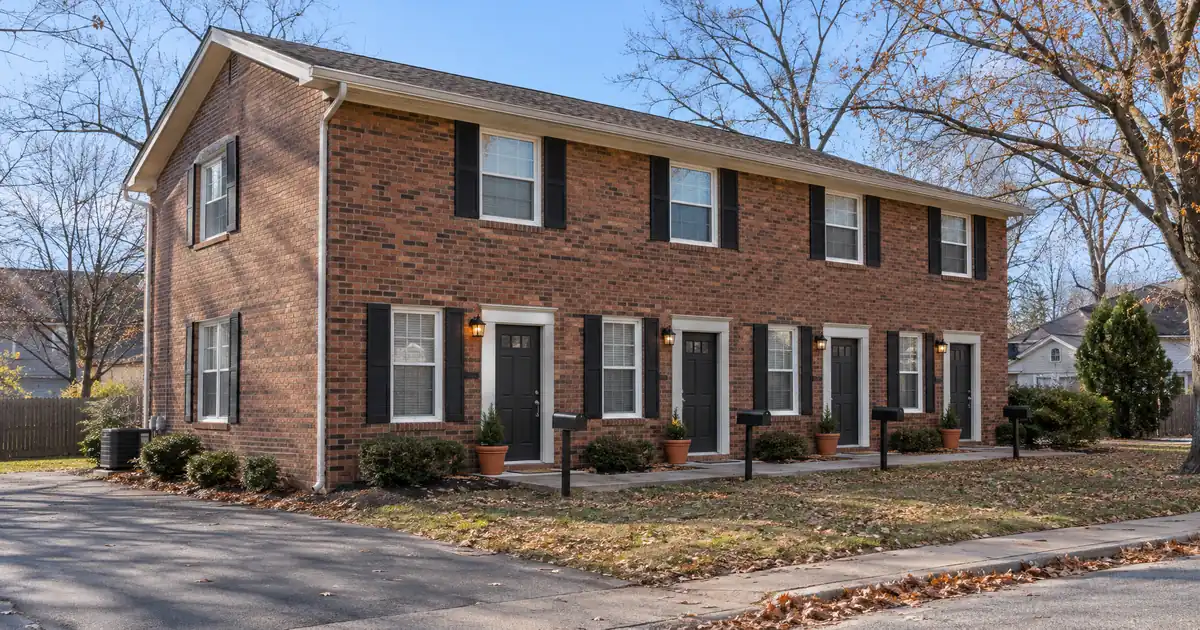
The Quick Read: You qualify by showing that the combined rent from your 2-4 unit buildings covers the combined monthly obligation, then fitting the total balance into the leverage, credit, appraisal and reserve rules for its size band. The loan is reviewed primarily on property-level rental income covering the payment, subject to lender guidelines. Only some lenders in Lendmire’s wholesale network write a true single-note blanket, so many large portfolios end up as several separate loans instead.
- Coverage is tested across the pool, and some programs also set a floor for each building.
- Size sets the terms: leverage steps down as the balance climbs, and credit and appraisal rules tighten.
- Two appraisals apply above $2,000,000, and the lower value commonly sizes the loan.
- Reserves are typically six months on the subject property, and twelve for first-time investors.
- Every building secures the whole note, so the release terms matter as much as the coverage.
What a Blanket Super Jumbo DSCR Loan Actually Is
It is three ideas stacked into one product. One note is secured by several properties. Qualification runs on the rent the buildings produce. And the balance is large enough that the file leaves standard program territory.
DSCR Calculator
Run the numbers in your market
Rate source: Freddie Mac 30-yr average via FRED® — Federal Reserve Bank of St. Louis · effective Oct 15, 2026
Prefilled with starting assumptions — enter your own rent or nightly figures, taxes, insurance, and HOA for a more accurate picture.
Program parameters update from Lendmire’s centralized guideline source. Taxes and insurance are editable estimates.
As of Oct 15, 2026 · General Freddie Mac market benchmark, not a Lendmire loan offer. Rent, nightly rate, occupancy, taxes, and insurance are editable estimates. Short-term rental figures are estimates only and vary significantly by season, property type, management approach, and local short-term-rental rules — confirm local regulations before relying on them. Qualifying income for short-term rentals varies by program — some use appraisal market rent, others use documented STR history or projections — and is confirmed in underwriting. Not a Loan Estimate, approval, or commitment to lend. Program availability and eligibility are subject to lender guidelines, credit approval, property review, and underwriting.
Take them one at a time. A blanket loan puts two or more properties under a single note, which means one payment and one closing. BiggerPockets notes that a blanket typically needs only one credit check and one asset verification, and that a release clause lets you repay part of the debt to free a single property.
The DSCR part means the lender looks at whether rent covers the payment. Your traditional personal-income documentation is not the center of the file.
“Super jumbo” is an industry label, not a legal category. In our wholesale network the standard DSCR program stops at $3,000,000. The investor ladder carries qualified borrowers from $150,000 up to $10,000,000. Lenders disagree on where “jumbo” ends and “super jumbo” begins, so size bands matter more than the label.
DSCR loans are designed for non-owner-occupied investment properties. Because they are business-purpose investor loans, they are reviewed differently from a standard owner-occupied mortgage.
Key Terms Defined
Blanket loan. One loan secured by multiple properties, with a single note and a single payment.
DSCR (debt service coverage ratio). Monthly rent divided by the monthly obligation. A result of 1.00 means rent exactly covers the payment.
PITIA. Principal, interest, taxes, insurance and association dues. It is the full monthly obligation the rent has to cover.
Cross-collateralization. Every property in the pool secures the entire debt, not just its own slice.
Release clause. The note language that says what you must repay to free one property from the pool.
Allocated amount. The share of the total loan assigned to each building. Release terms usually key off it.
LTV (loan-to-value). The loan balance as a percentage of the property’s appraised value.
Interest-only period. A stretch where you pay only interest. On this ladder it runs 120 months on 30- and 40-year terms.
Portfolio loan. Any loan a lender keeps on its own books. A blanket is a collateral structure. A portfolio loan describes who holds the loan. Some loans are both, and Lendmire’s piece DSCR Loan Vs Portfolio Loan For Rental Properties covers the difference.
How Underwriting Treats the File, Step by Step
Underwriting a blanket runs in a fixed order. Each step can change the next one, so the order below is the order a file actually travels.
1. Sort the buildings. The lender confirms every property is one to four units and acceptable collateral. A rural parcel, an unacceptable condo or a title problem can reshape the whole pool, not just one asset.
2. Establish rent for each building. For a 2-4 unit property, the appraiser produces a unit-by-unit rent schedule on Form 1025, the small residential income property report. Form 1007 is the single-family rent schedule. Form 216 is the operating income statement for leased small multifamily. These are templates, not agency rules for your loan. Each program decides whether it uses market rent or the lease, and many use the lower of the two.
3. Add the rents and the obligations. Total rent across the pool is divided by total PITIA. A strong building can carry a weaker one in that blend.
4. Check any per-building floor. Some programs also test each building against a minimum. In that case one strong asset cannot fully hide a weak one.
5. Read the size band. Loan size generally sets the maximum LTV, the credit floor, the appraisal count and the cash-out rules. On a pooled file, the band typically follows the total note amount. The lender confirms how it applies to your structure.
6. Order appraisals. Above $2,000,000, two appraisals apply, and the lower value commonly sizes the loan. High-end 2-4 unit buildings often have few true rent comparables, so expect extra scrutiny of the rent schedule.
7. Size reserves. Six months of PITIA on the subject property is typical, and twelve for first-time investors. On interest-only loans the reserve count runs on interest, taxes, insurance and dues. The program states how it measures reserves on a pooled file.
8. Verify entity, title and insurance. Entity vesting is welcome, with no layered entities. A single ownership mismatch or insurance gap can delay or change the whole transaction, because the properties close together or not at all.
A Hypothetical Portfolio, Run in Ratios
Run the numbers on three illustrative buildings. These are modeled assumptions, not market data. Assume equal monthly obligations on each to keep the arithmetic clean.
- Building A, a duplex: coverage of 1.35x.
- Building B, a triplex: coverage of 1.20x.
- Building C, a fourplex with several units under market: coverage of 0.85x.
The blend is (1.35 + 1.20 + 0.85) ÷ 3, or about 1.13x. At the pool level that clears 1.00. The fourplex alone does not.
What happens next depends on the program. A pool-only test may accept the blend. A program with a per-building floor may reject Building C outright. When that happens the broker usually works one of three options. The investor can pull Building C out and place it separately. Or the allocation shifts so the weak building carries less of the note. Or Building C goes to a select lender whose sub-1.00 path covers coverage from 0.75 to 0.99, up to $2,000,000, with LTV and terms adjusting, subject to underwriting.
Also check what your own rents prove. If Building C is under market because of a lease you can reset, the appraiser’s market rent schedule might lift it. If it is under market because the units are physically weak, no schedule fixes that.
How Size Sets the Terms
The ladder below shows the maximum leverage on an investment property at coverage of 1.00 or higher. Every figure is a ceiling through select wholesale programs, subject to underwriting. Cash-out refers to a cash-out refinance.
| Loan size | Purchase / rate-term | Cash-out | Typical credit |
|---|---|---|---|
| $150K–$1M | 80% | 75% | 660+ |
| $1M–$1.5M | 75% | Reduced | 700+ |
| $1.5M–$3M | 75% | 60% | 720+ |
| $3M–$4M | 65% | — | 700+ |
| $4M–$10M | 60%, on review | — | 700+ |
Above $4,000,000, every request is reviewed case by case before submission. Those loans are purchase or rate-and-term only, and no figure there is a flat promise. Nothing above $1,000,000 reaches 80%.
Cash-out has its own limits. Proceeds are unlimited at or below 60% LTV, and capped at $1,500,000 above 60%. Nothing is available above $3,000,000. Cash-out proceeds also cannot satisfy reserves at the top tiers. Every figure here varies by lender and program — guidelines, property type, leverage, and credit profile all apply.
Above $3,000,000, credit must be 700 or better, with a clean mortgage history over the prior 24 months and 48 months of seasoning after any credit event. Borrowers must be citizens or permanent residents, and the property cannot be rural or larger than ten acres. Up to 20 financed properties are allowed, and other financed properties do not trigger extra reserves.
Interest-only is available for 120 months on 30- and 40-year terms. It tops out at 75% LTV and requires coverage of 0.75 or better, qualified on interest, taxes, insurance and dues. For a big pool, that runway can lift the coverage ratio meaningfully. Final terms depend on lender guidelines, property type, leverage, and the borrower’s complete credit picture.
One contrast helps explain why “super jumbo” has no fixed definition. The Federal Housing Finance Agency set the one-unit conforming baseline at $832,750, up from $806,500, with a high-cost ceiling of $1,249,125. The four-unit limit is $1,601,750 in low-cost areas and $2,402,625 in high-cost areas. Those numbers only govern agency loans. A DSCR loan is not sold to the agencies, so these limits are a reference point and nothing more.
DSCR vs. conventional financing
There are two common ways to finance an investment property, and they qualify you differently — here’s how investors weigh them.
Why investors choose it
- Qualifies on the property’s rental income — no personal tax returns, W-2s, or pay stubs needed to document income.
- No personal debt-to-income ceiling to clear, so existing mortgages and obligations don’t cap your borrowing the same way.
- Can be closed in an LLC, keeping the property inside a business entity.
- Built for scaling — not held to the limit on number of financed properties that conventional financing applies.
- Underwriting centers on the deal: generally qualifies when the rent covers the payment, a 1.00x coverage ratio being a common baseline (confirmed in underwriting).
- Designed specifically for investment property, including long-term and, where the program allows, short-term rentals.
Where it’s strong
- Often the lowest ongoing financing cost for a buyer who fully qualifies on personal income — a fit for a first property or a cost-first purchase.
Trade-offs for investors
- Requires full personal income documentation and must fit within a debt-to-income limit — salary, existing debts, and other mortgages all count.
- Typically held in your personal name rather than a business entity.
- Caps how many financed properties you can carry, which can become a ceiling as a portfolio grows.
- Evaluates you as a borrower as much as the property, which usually means more paperwork.
How investors usually choose: a first or single property often optimizes for the lowest financing cost; portfolio builders often optimize for leverage, vesting in an LLC, and scaling past conventional caps. The right answer depends on your goals, the property, and current guidelines — both paths run through select lenders in Lendmire’s wholesale network, with eligibility and terms confirmed in underwriting.
Blanket or Separate Loans? A Side-by-Side
At large balances the real decision is not just whether you qualify. It is whether one note is the right structure.
| Factor | One blanket | Separate DSCR loans |
|---|---|---|
| Notes and payments | One | One per building |
| Coverage test | Pooled, sometimes per building | Each building alone |
| Selling one building | Needs a release | Pay off that loan |
| Default | Can reach every building | Contained to one |
| Weak building | Can ride inside the pool | Must stand alone |
| Appraisal burden | All buildings, together | Staggered by loan |
Separate loans are often the more flexible answer when you plan to sell buildings one at a time. Many investors choose a blanket for tidiness and later find they wanted the exit options. A blanket makes sense when you intend to hold the whole pool for years and want a single payment.
Anderson Advisors flags higher qualification standards and unique risks in blanket loans, and that matches what we see on files. Lendmire’s piece Blanket Loan Release Clauses on 2–4 Unit Rental Portfolios goes deeper on how partial releases are priced and documented.
Where the General Rule Breaks
Small portfolios may not fit a blanket program. Many blanket programs set minimum property counts and minimum total loan amounts. If you have two or three buildings, separate loans are often the cleaner route.
Release terms can be costly. Some blankets with partial-release clauses require repaying more than the allocated amount to free one property. Release pricing lives in the note and the recorded release documents, not in a program summary. Read them before you sign, not after.
Default risk is shared. Because every property secures the whole note, a missed payment can expose the entire portfolio, and it can block a sale of one building to cure the problem. BiggerPockets covers the structure, and the practical lesson is to hold reserves above the minimum.
Short-term rentals do not stretch to the top. STR files need coverage of 1.00 or higher, top out at $2,000,000, and use income at 80% of gross. That income comes from twelve months of operating history on a refinance, or the appraisal’s short-term-rent analysis on a purchase. They are open to experienced investors, meaning twelve months owning income property in the last thirty-six. Short-term rental rules can vary by city, county, HOA, and property type, so investors should confirm local rules before relying on projected rental income.
Cash-out disappears at the top. Above $3,000,000 a cash-out refinance is off the table. If your plan relies on pulling equity from a very large pool, a purchase or rate-and-term structure will not give you that.
Borrower profile matters. A recent credit event, an ownership structure with stacked entities, or a first-time-investor profile each changes the reserve, credit or leverage picture. Tax treatment can depend on how the funds are used and how the property is held; investors should keep clear records and speak with a qualified tax professional before relying on any deduction.
Across a wholesale network, the pattern is consistent. Files stall less on the coverage math than on a single building’s title, insurance or rent support. Clean those up before submission.
Pre-Submission Checklist
Answer yes or no before you apply.
- Do you have a property schedule with the unit count for every building?
- Do you have current leases and a rent roll for each building?
- Does your entity documentation match the vesting on title, with no layered entities?
- Do you know which building has the weakest coverage?
- Is your credit above the floor for your size band?
- Can you hold the reserves in cash, without relying on cash-out proceeds?
- Do you know whether you want a hold-forever pool or the freedom to sell one building?
If you answer no to the last one, price separate loans before a blanket.
Frequently Asked Questions
Does a weak building sink the whole file?
Not automatically. Pooled coverage can absorb a weaker building when the others run strong. Programs with a per-building floor can still reject it, in which case the building is swapped out, re-allocated, or placed separately through a select lender, with LTV and terms adjusting, subject to underwriting.
Does one size tier apply to the whole note?
Generally, the band follows the total loan amount on the note, and that sets leverage, credit and appraisal rules for the pool.
Can I consolidate several existing mortgages into one blanket?
Often yes, on a rate-and-term basis, because the new note pays off the old ones. The combined balance sets the tier. Above $4,000,000, it is reviewed case by case before submission, and no cash-out applies.
Do I need a minimum number of properties?
Many blanket programs set property-count and total-balance minimums.
Are reserves counted per building or for the pool?
The typical figure is six months of PITIA on the subject property, and twelve for first-time investors. Other financed properties do not add reserve requirements. How the subject is defined on a pooled file is stated by the lender. Terms depend on the lender’s guidelines, the property type, the leverage, and a full review of the credit profile.
Next Step
If you are buying or refinancing a high-balance rental property and want to see how the numbers work, Lendmire can help you compare super jumbo DSCR loan options based on the property income, the loan balance, credit profile, leverage, and investor goals. Lendmire is a broker arranging investor financing through select lenders in its wholesale network across 41 markets, including Washington, D.C. For the full picture of how these loans work, start with the complete DSCR loans guide. Programs change and every file is underwritten individually, so nothing here is a commitment to lend.
Large pools reward the investor who knows the weakest building before the lender does.
For current guidelines and terms, see Lendmire’s super jumbo DSCR loan programs page.
Lendmire’s self-employed mortgages page presents both super jumbo programs, bank statement and DSCR, side by side.
About Lendmire
Lendmire (NMLS# 2371349) is a mortgage brokerage built around DSCR investor lending, with programs available in 41 markets, including Washington, D.C. DSCR lenders commonly evaluate rental-income coverage instead of personal income paperwork — a practical fit for LLC-owned and multi-property investors. Terms vary by lender, property, leverage, and program. Scotsman Guide named Lendmire a Top Mortgage Workplace in both 2025 and 2026.
Get Started
Ready to find the right loan for you?
In about 30 seconds you can review financing options available for your investment property. No commitment required.
Informational only. Not a Loan Estimate, approval, or commitment to lend. Program availability and eligibility are subject to lender guidelines, credit approval, property review, and underwriting.
References
1. BiggerPockets: blanket mortgage overview
2. Orrick Infobytes: FHFA conforming loan limits
3. Calculated Risk: FHFA baseline conforming loan limits
4. Anderson Advisors: blanket mortgage risks
This article is part of Lendmire’s super jumbo DSCR loan program — full qualification details, guidelines, and scenarios live on the program page.
Related reading: How to Document a Super Jumbo DSCR Loan · How to Qualify a Luxury STR With a 10-Year IO Super Jumbo DSCR Loan · Jumbo vs Super Jumbo STR DSCR Loan for a Luxury Airbnb
Brandon Miller
Founder & CEO, Mortgage Loan Originator, Lendmire LLC
- Mortgage Loan Originator · NMLS# 1129696 · Verify on NMLS Consumer Access
- North Carolina Real Estate Broker · License# 343312 · Verify on NCREC
- North Carolina Insurance Producer · License# 19053198 · Property, Casualty, Life, Health · Verify on NAIC SBS
- Lendmire LLC · Firm NMLS# 2371349 · Verify firm licensure
Required disclosures. Lendmire (NMLS# 2371349) operates as a licensed mortgage broker, not a direct lender or depository. The discussion in this article is general in nature and should not be relied upon as financial, legal, or tax advice — every investment scenario is unique and should be reviewed by a qualified professional. Any loan inquiry is subject to lender underwriting, and this article is not a commitment to lend or a guarantee of approval. Mortgage rates, loan terms, and program guidelines vary by borrower, property, and state, and may change without notice. Equal Housing Opportunity. Verify licensure at NMLS Consumer Access.