
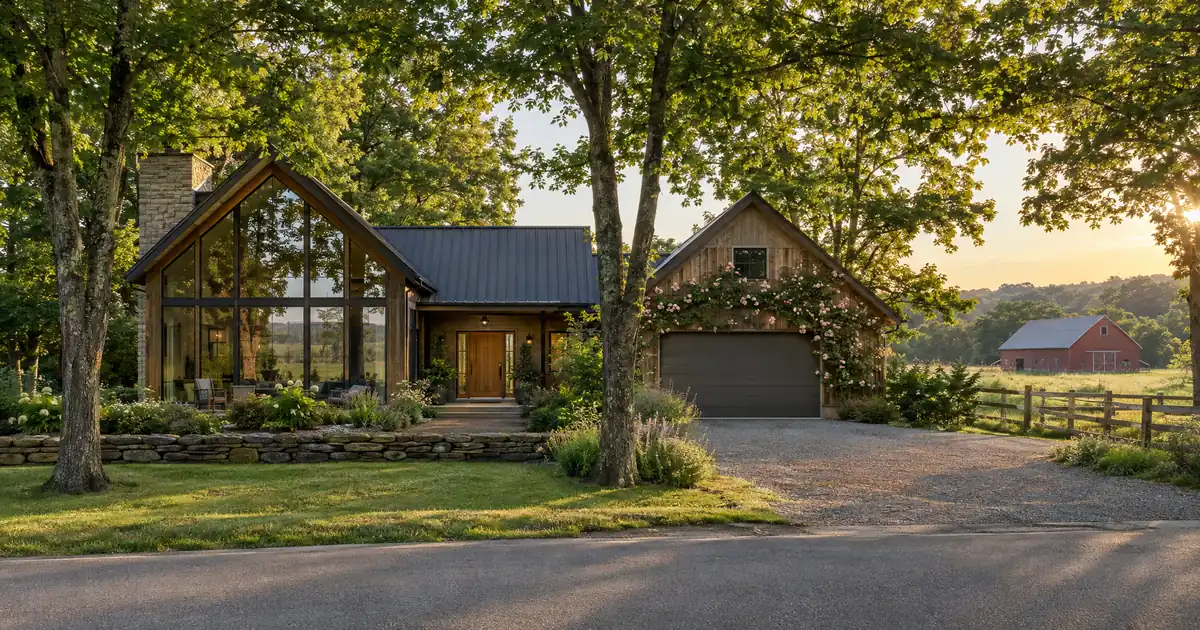
The Quick Read: A non-QM DSCR loan tests whether the property’s rent covers its payment, while a portfolio lender tests you, your balance sheet and your banking relationship, so on an $8M acreage rental the land, the loan size and the rent-to-price ratio usually decide which lender can say yes before the loan type does.
- At roughly $8M, the DSCR tier Lendmire’s network places runs about 60% leverage on a purchase or rate-and-term refinance of an investment property. That is reviewed case by case before submission, with no cash-out, subject to underwriting.
- Above $3M, the network asks for a 700 credit score or higher, citizens or permanent residents only, a ten-acre maximum, and no rural property.
- The file needs two appraisals and six months of reserves on the subject property (twelve for first-time investors), subject to underwriting.
- A portfolio lender may lend against the whole parcel, excess land included, but it underwrites you as a borrower and applies its own concentration limits.
- At this size, rent coverage is usually the hard part of a DSCR file, because high-priced assets often rent for a small slice of their price.
Here is the honest answer on who each option is for. A non-QM DSCR loan suits an investor whose acreage property is a real rental, with a house or small cluster of units on a parcel that fits the acreage and rural rules. It also suits someone whose traditional personal-income documentation does not show the full picture, or who wants the loan judged on the asset. A portfolio lender suits an investor with deep liquidity, clean financials and a willingness to bring deposits and reporting to a bank. It also suits a property that does not fit a residential rental box. Some $8M acreage deals fit neither lane without restructuring, and the sections below show where.
DSCR Calculator
Run the numbers in your market
Rate source: Freddie Mac 30-yr average via FRED® — Federal Reserve Bank of St. Louis · effective Oct 15, 2026
Prefilled with starting assumptions — enter your own rent or nightly figures, taxes, insurance, and HOA for a more accurate picture.
Program parameters update from Lendmire’s centralized guideline source. Taxes and insurance are editable estimates.
As of Oct 15, 2026 · General Freddie Mac market benchmark, not a Lendmire loan offer. Rent, nightly rate, occupancy, taxes, and insurance are editable estimates. Short-term rental figures are estimates only and vary significantly by season, property type, management approach, and local short-term-rental rules — confirm local regulations before relying on them. Qualifying income for short-term rentals varies by program — some use appraisal market rent, others use documented STR history or projections — and is confirmed in underwriting. Not a Loan Estimate, approval, or commitment to lend. Program availability and eligibility are subject to lender guidelines, credit approval, property review, and underwriting.
Side-by-Side
The DSCR column reflects the size tier Lendmire’s wholesale network places at this loan amount. The portfolio column shows published industry norms, which vary by institution.
| Factor | Non-QM DSCR (network tier at $8M) | Portfolio lender (industry norms) |
|---|---|---|
| Review basis | Rent versus full housing payment | Whole-borrower review; cash flow one input |
| Documentation | Credit, reserves, entity papers, lease or rent schedule | Financial statements, traditional personal-income documentation, liquidity review |
| Property types | 1-4 unit rentals; no rural; ten acres max | Set by the bank; unusual collateral possible |
| Entity vesting | LLC welcome, no layered entities | Often entity plus personal guarantee and covenants |
| Reserves | Six months on the subject; twelve for first-timers | Bank-specific; often tied to liquidity covenants |
| Appraisal | Two appraisals above $2M | Bank-ordered; internal collateral category applies |
| Term structure | Standardized; interest-only runway available | Negotiated; balloons and custom amortization common |
| What paces the file | Appraisals and entity documents | Credit committee and the full financial package |
| Flexibility on land | Rural and acreage tiers are fixed | Case by case, at the bank’s discretion |
Every network figure is subject to underwriting and is not a commitment to lend.
Two Terms on Different Axes
DSCR describes how a loan is underwritten. The lender divides the property’s monthly rent by the full monthly housing payment, covering principal, interest, taxes, insurance and any association dues. Portfolio describes where the loan lives after closing. The originating lender keeps it on its own books instead of selling it to investors.
The two overlap. A bank can hold a loan it underwrites on property cash flow. A non-QM DSCR loan is usually placed with capital-market investors rather than held by the originator.
One more term causes real confusion. A blanket loan is one note secured by several properties. Many articles say portfolio loan when they mean blanket loan. For one $8M asset, the realistic choice is a non-QM DSCR file against a single-asset loan held by a bank or credit union. Lendmire’s explainer DSCR Loan Vs Portfolio Loan For Rental Properties covers the multi-property version.
Where Acreage Decides the File
Acreage is the first break point. DSCR programs generally sit in a residential-rental box, and the network’s top size tiers tighten that box. Above $3M, the network excludes rural property and caps parcels at ten acres, subject to underwriting. Rural is not defined the same way everywhere. Lenders judge it from the appraisal, the surrounding development, comparable sales and their own overlays.
A working farm, timber operation or ranch is generally outside residential DSCR programs. Raw land is ineligible. Hunting leases, event income and farm-stay income generally cannot be counted to qualify, because the test is the rental income of the residence.
Land value is the second issue. A DSCR appraisal may give full weight only to the residential improvements and discount excess acreage. An $8M price can then support a smaller appraised value in a DSCR file. Comparable sales for large parcels are thin, so appraisal support often decides whether a DSCR file works at all. Above $2M the network requires two appraisals, which doubles the chance that thin comps show up on paper.
A portfolio bank works differently. It may lend against the whole parcel under its internal collateral category. Insured banks must follow written real estate lending policies built on the Interagency Guidelines, and those policies set supervisory loan-to-value limits. The FDIC’s copy of the guidelines on eCFR lists 65% for raw land and 85% for improved property. Banks set internal limits at or below those and may make exceptions based on other credit factors. So a DSCR file stuck on acreage can sometimes be solved by a bank. That is a structural point, not a promise.
What Does Rent Coverage Look Like at $8M?
Coverage is the number that makes or breaks the DSCR route. The network’s full-leverage tier requires coverage of 1.00 or higher at this size. Paths below 1.00 exist through select lenders on smaller loans, with LTV and terms adjusting, subject to underwriting, and they stop well short of $8M.
Think about the rent-to-price relationship. A luxury or land-heavy property often rents for a modest share of its purchase price, because much of the price reflects land, privacy and location rather than rental income. That is a pattern brokers see on large files, not a measured statistic. At 60% leverage the loan is smaller than the price, which helps, but the rent still has to carry the full payment.
Interest-only is the main lever. Select programs offer a 120-month interest-only period on 30- and 40-year terms, up to 75% leverage, and qualify the loan on interest, taxes, insurance and dues alone. At 60%, an $8M purchase sits inside that limit. Interest-only can lift the coverage number meaningfully, though the principal balance does not shrink during that period. Terms depend on the lender’s guidelines, the property type, the leverage, and a full review of the credit profile.
Picture an investor with a main house, a guest house and a rentable cottage on a parcel under ten acres. If the appraisal’s rent schedule clears 1.00 against the full obligation, the DSCR file has a clean story. Now picture the same price on a 40-acre estate with one residence. The rent covers a thin slice of the payment, the acreage exceeds the cap, and a bank is the more realistic conversation.
Across the network, large files like this tend to stall on the appraisal or the rent schedule long before credit becomes the issue. Strong files bring a lease or a realistic rent opinion early, and they confirm the acreage and rural question with a broker before ordering anything.
If coverage is thin, the options are lower leverage, more cash in, an interest-only structure, a bank loan, or a different collateral mix. Lendmire’s piece Refinance Hard Money With a Bank vs a Non-QM Lender is useful if a short-term loan is bridging the purchase.
When Non-QM DSCR Is the Better Fit
DSCR wins when the property meets the box and the borrower’s paper trail is the obstacle. The loan is reviewed primarily on property-level rental income covering the payment, subject to lender guidelines, so heavy write-offs and complicated returns matter less than they would at a bank.
It also wins on structure. DSCR loans are designed for non-owner-occupied investment properties. Because they are business-purpose investor loans, they are reviewed differently from a standard owner-occupied mortgage. That is why the process leans on rent, credit, reserves and entity papers instead of a debt-to-income calculation.
Scale is the other advantage. Each file is underwritten property by property, and the network allows up to 20 financed properties. It adds no extra reserve requirement for other financed holdings. An investor already stretched across many assets may hit a bank’s concentration limit long before a DSCR program stops them. The exact numbers vary by lender and program and follow a full review of property, leverage, and credit.
Entity vesting fits too. LLC title is welcome, though layered entities are not, subject to lender program eligibility. Expect members to sign personal guarantees anyway.
The costs are real. Above $3M, borrowers must be citizens or permanent residents with a clean 0x30x24 housing history and 48-month seasoning after any credit event. Cash-out is not available above $3M, so an investor hoping to pull equity out of the acreage needs a different plan. The complete DSCR loans guide walks through the standard program for readers new to the structure.
When a Portfolio Lender Is the Better Fit
A portfolio lender wins when the person is stronger than the property. Deep liquidity, clean financials and a long banking history let a bank underwrite you and tolerate an awkward asset. That might be excess acreage, a log home, a barndominium or a mixed-use parcel. Network programs can exclude those, while a bank may take them case by case.
The bank writes its own guidelines because it keeps the loan. A written lending policy covers underwriting standards, loan-to-value limits, exception approval and appraisal programs. The Cornell Legal Information Institute’s copy of the OCC’s guidelines adds that a lender with a cross-collateralized pool values the collateral as the sum across properties, less senior liens. That matters only if the $8M asset gets pooled with others.
Terms are negotiable. Custom amortization, balloons, interest-only periods and release provisions are all possible. The price is the relationship. Banks often want deposits, guarantor financials and ongoing reporting. Their requirements are bank-specific, so there is no standard checklist, but expect personal and entity financials, traditional personal-income documentation and a liquidity review.
Flexibility is the lender’s choice, though, not a rule. A bank may decline an asset that rents for little, or hold the borrower to concentration limits across a market.
DSCR vs. conventional financing
There are two common ways to finance an investment property, and they qualify you differently — here’s how investors weigh them.
Why investors choose it
- Qualifies on the property’s rental income — no personal tax returns, W-2s, or pay stubs needed to document income.
- No personal debt-to-income ceiling to clear, so existing mortgages and obligations don’t cap your borrowing the same way.
- Can be closed in an LLC, keeping the property inside a business entity.
- Built for scaling — not held to the limit on number of financed properties that conventional financing applies.
- Underwriting centers on the deal: generally qualifies when the rent covers the payment, a 1.00x coverage ratio being a common baseline (confirmed in underwriting).
- Designed specifically for investment property, including long-term and, where the program allows, short-term rentals.
Where it’s strong
- Often the lowest ongoing financing cost for a buyer who fully qualifies on personal income — a fit for a first property or a cost-first purchase.
Trade-offs for investors
- Requires full personal income documentation and must fit within a debt-to-income limit — salary, existing debts, and other mortgages all count.
- Typically held in your personal name rather than a business entity.
- Caps how many financed properties you can carry, which can become a ceiling as a portfolio grows.
- Evaluates you as a borrower as much as the property, which usually means more paperwork.
How investors usually choose: a first or single property often optimizes for the lowest financing cost; portfolio builders often optimize for leverage, vesting in an LLC, and scaling past conventional caps. The right answer depends on your goals, the property, and current guidelines — both paths run through select lenders in Lendmire’s wholesale network, with eligibility and terms confirmed in underwriting.
Recourse, Guarantees and Exit
Neither route removes personal liability. DSCR loans are usually underwritten with a guarantor even when title sits in an LLC, and the non-recourse label is loan-specific and often misunderstood. Bank loans typically pair a personal guarantee with entity covenants. Blanket structures are commonly full recourse.
Exit differs more than anything else. Bank structures often include a balloon or a short fixed period, so refinance risk is part of the decision. Network DSCR terms are standardized, with the interest-only runway as the main structural choice. Interest-only carries its own exit question, because the balance is the same when the period ends.
Tax treatment can depend on how the funds are used and how the property is held; investors should keep clear records and speak with a qualified tax professional before relying on any deduction.
The Verdict
Use a DSCR loan if the parcel is ten acres or less and not rural, the rent clears 1.00 against the full obligation, your credit is 700 or better, and you are a citizen or permanent resident. Leverage near 60% on review is acceptable, and you would rather be judged on the asset than your returns. Final terms depend on the lender’s guidelines, the property type, and the borrower’s complete credit picture.
Use a portfolio lender if the land is large, the use is mixed, or the rent is too thin to carry the payment. Choose a bank also if you have the liquidity and relationship to be underwritten as a person.
Plan for a restructure if neither fits. That might mean lower leverage, a bank for the land-heavy parcel, or a separate DSCR loan on a carved-out residence. Programs change, and every file is underwritten individually.
Frequently Asked Questions
Does acreage disqualify an $8M rental from a DSCR loan?
Not automatically, but it narrows the path. Above $3M, the network excludes rural property and caps acreage at ten acres, subject to underwriting. Rural classification comes from the appraisal and the lender’s overlays. A parcel over ten acres, or one classed as rural, will generally need a bank or a restructured collateral package.
Can a DSCR loan actually reach $8M?
Yes, through select programs in the wholesale network, which place loans up to $10,000,000. At $8M the tier is purchase or rate-and-term only, about 60% leverage on review, with 700 or higher credit and two appraisals. Short-term-rental files stop at $2,000,000. Every figure is subject to underwriting. Each figure is subject to lender guidelines and a complete review of property type, leverage, and credit.
Is a portfolio loan the same as a blanket loan?
No. Portfolio describes a loan the lender keeps on its books, and it can secure one property. Blanket describes one note secured by several properties. A single $8M asset can have a portfolio-held loan without any blanket structure.
Is a DSCR loan non-recourse?
Usually not in practice. Lenders typically want a personal guarantee from members even when title is held in an LLC. Read the loan documents for what is actually guaranteed, because the label means different things loan to loan.
Does a portfolio lender require a deposit relationship?
Often, but not always. Many banks and credit unions want deposits, guarantor financials and ongoing reporting. Requirements vary by institution, so ask early what the relationship package looks like.
Next Step
If you are buying or refinancing a high-balance rental property and want to see how the numbers work, Lendmire can help you compare super jumbo DSCR loan options based on the property income, the loan balance, credit profile, leverage and investor goals. Lendmire is a broker arranging business-purpose financing through select lenders in its wholesale network, across 41 markets, including Washington, D.C. Call 828-256-2183 to talk through an acreage file before ordering appraisals.
Lendmire’s self-employed mortgages page presents both super jumbo programs, bank statement and DSCR, side by side.
About Lendmire
Lendmire (NMLS# 2371349), a non-QM mortgage broker serving investors in 41 markets including Washington, D.C., helps structure DSCR scenarios commonly evaluated around a property’s rental income rather than personal income paperwork, subject to lender guidelines. A Scotsman Guide Top Mortgage Workplace in 2025 and 2026, Lendmire places loans through wholesale investor lenders and is not a direct lender.
Get Started
Ready to find the right loan for you?
In about 30 seconds you can review financing options available for your investment property. No commitment required.
Informational only. Not a Loan Estimate, approval, or commitment to lend. Program availability and eligibility are subject to lender guidelines, credit approval, property review, and underwriting.
References
1. eCFR, 12 CFR Part 365, Appendix A
2. Cornell LII, 12 CFR Part 34, Appendix A to Subpart D
This article is part of Lendmire’s super jumbo DSCR loan program — full qualification details, guidelines, and scenarios live on the program page.
Related reading: How to Qualify a Portfolio Luxury Rental Using a 10-Year IO DSCR Loan · How to Buy a Luxury Rental in an LLC With a DSCR Loan · How a Super Jumbo DSCR Loan Works on a Luxury Rental
Brandon Miller
Founder & CEO, Mortgage Loan Originator, Lendmire LLC
- Mortgage Loan Originator · NMLS# 1129696 · Verify on NMLS Consumer Access
- North Carolina Real Estate Broker · License# 343312 · Verify on NCREC
- North Carolina Insurance Producer · License# 19053198 · Property, Casualty, Life, Health · Verify on NAIC SBS
- Lendmire LLC · Firm NMLS# 2371349 · Verify firm licensure
Disclosures. The information presented in this article is general market commentary, not financial, legal, or tax advice. Lendmire is a mortgage brokerage (NMLS# 2371349) — not a direct lender or depository institution — and loan placement is subject to lender underwriting. Nothing in this content represents a commitment to lend. Loan terms, pricing, and program availability vary based on borrower qualifications, property characteristics, and state of subject property, and are subject to change at any time. Lendmire complies with Equal Housing Opportunity requirements. Consumer access: nmlsconsumeraccess.org.