
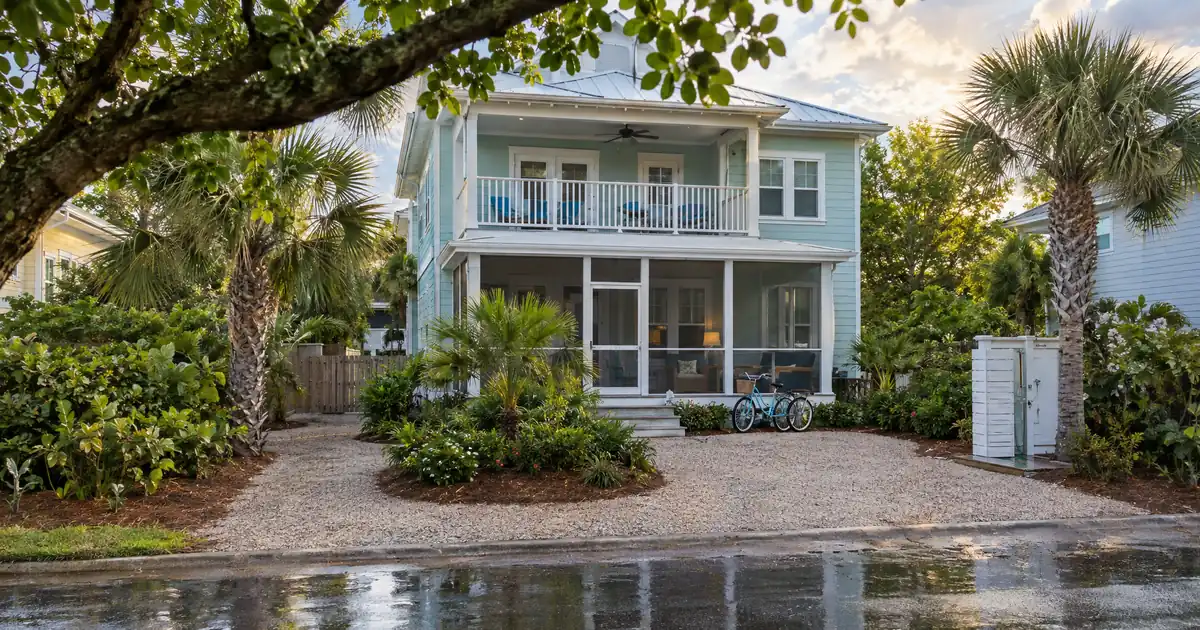
The Quick Read: A soft short-term rental market helps a DSCR investor mainly through lower purchase prices and more negotiating room, not through looser underwriting, because a smaller loan against the same income lifts the coverage ratio while lenders still test the property’s income conservatively. A DSCR loan is reviewed primarily on property-level rental income covering the payment, subject to lender guidelines. Falling prices shrink the debt side of that test, but weaker bookings can shrink the income side just as fast.
- Softness helps through price, seller motivation, and less competition from buyers who rely on personal income.
- It can hurt through lower projected or trailing revenue, which cuts the ratio from the other direction.
- On a short-term rental purchase, select programs in the network go up to 75% LTV, with a 1.00 coverage floor and a 640 minimum score.
- Clearing 1.00 is a financing test. It is not the same as positive cash flow. These specifics are subject to lender guidelines and a full review of property, leverage, and credit.
What Does “Soft” Actually Mean?
“Soft” is three separate signals, and mixing them up leads to bad deals. The first is occupancy. The second is revenue. The third is price. Only the third is reliably the buyer’s friend.
Short-Term Rental Calculator
Run the STR numbers in your market
Rate source: Freddie Mac 30-yr average via FRED® — Federal Reserve Bank of St. Louis · effective Oct 15, 2026
Prefilled with starting assumptions — enter your nightly rate, occupancy, taxes, and insurance for a more accurate picture.
Short-term rental income is documented with a 12-month history or a market data report. Program parameters update from Lendmire’s centralized guideline source.
As of Oct 15, 2026 · General Freddie Mac market benchmark, not a Lendmire loan offer. Nightly rate, occupancy, taxes, and insurance are editable estimates. Qualifying income for short-term rentals varies by program — some use appraisal market rent, others use documented STR history or projections — and is confirmed in underwriting. Not a Loan Estimate, approval, or commitment to lend. Program availability and eligibility are subject to lender guidelines, credit approval, property review, and underwriting.
On occupancy, AirDNA’s U.S. outlook report projects a slight decline through the year, citing weaker demand and faster supply growth, and notes occupancy has drifted down since its all-time peak in July 2021. A release summarizing that outlook puts the easing at about 1% and expects available listings to grow 4.6%, compared with a 20% expansion at the 2021–22 peak.
On revenue, the picture is mixed. AirDNA’s midyear outlook says slower new supply has propped occupancy up, forecasting a 57.4% average against a pre-pandemic 57.0%. It also shows some urban markets, including San Francisco, Anaheim, and Philadelphia, growing revenue per available night by roughly 10–12%. So this is not a market collapsing. Revenue is flat to soft in many places and strong in a few.
On price, AirDNA’s outlook report says rising for-sale inventory and longer listing times are softening prices in top vacation destinations, and that home values began falling in May 2025. That is the signal a DSCR investor can actually use.
Why Lower Prices Move the Coverage Ratio
The DSCR formula is income divided by the full monthly payment: principal, interest, taxes, insurance, and any HOA dues. Lower the price and you lower the loan. A smaller loan means a smaller payment against the same income, so the ratio rises.
AirDNA calls the related measure the “STR premium,” the gap between what a typical short-term rental earns and what it costs to finance. Per the outlook report, that premium reached $989 in late 2025, the highest since late 2022. It sat at $277 at its October 2023 low and $2,618 at its post-pandemic peak. Softer prices are a big reason it has recovered.
Run the numbers this way, using modeled assumptions rather than market data. Take one property with the same trailing income at three purchase prices: the original ask, a price 5% lower, and a price 10% lower, all at 75% LTV. The coverage ratio might move from the low 1.0s toward the mid 1.1s across that range. The exact move depends on taxes, insurance, and loan size. The direction is what matters: price cuts help every time, and they help most on files that start near 1.00. Terms depend on the lender’s guidelines, the property type, the leverage, and a full review of the credit profile.
The Catch: Income Can Fall Too
Here’s where the “soft market is a gift” story breaks. Soft bookings lower the revenue a data report or appraiser will show. If income drops faster than the payment, the ratio shrinks.
That is why the buyer’s edge comes from price and negotiation, not from looser underwriting. Nothing about a weak market relaxes the test. Lenders still look at what the property earns and whether it covers the payment.
Don’t over-read one bad month, either. AirDNA’s August review showed revenue per available night down 0.6% to $166 and occupancy down 3.3%, but it attributes most of that to Labor Day shifting from August into September rather than weaker demand. Calendar noise is not a trend.
How Underwriting Treats Short-Term Rental Income, Step by Step
Across the wholesale network, a short-term rental file typically rests on one of three income bases: trailing platform history, an appraiser’s short-term rental analysis, or a market-data projection on a purchase. Not every lender accepts every option. Only some accept data-service projections, so program fit matters more than most buyers expect.
Here is how the file generally moves:
1. Pick the income basis. On a refinance, the property’s own history usually carries the file. On a purchase, a market-data report or appraiser analysis often does, and your own booking calendar or a host’s estimate generally does not count.
2. Average across the year. Soft markets make this matter more. Lenders typically look at the full year, not peak months, so a summer-heavy property gets pulled down.
3. Apply any haircut. A lender may discount gross income before testing it. The size of that haircut varies by program and property, and it can cut the ratio meaningfully.
4. Divide by the full payment. Taxes, insurance, and HOA dues all land in the denominator.
5. Check the other tests. Credit score, leverage, reserves, and property eligibility all sit beside the ratio.
On a short-term rental, programs we place files with generally want a 640 or better score and about 12 months of hosting experience. Purchase leverage tops out at 75% LTV. Refinance and cash-out run up to 70%. Coverage starts at 1.00 for both purchases and refinances on select programs, and stronger ratios open better pricing and leverage. Loan sizes run up to $3,000,000 on standard programs. Reserves vary by lender, leverage, and loan size, often around six months of the full payment. All of this is subject to lender guidelines.
Lendmire’s piece Using A Market Data Report To Qualify A Short Term Rental walks through the projection route in more detail.
Key Terms Defined
DSCR (debt service coverage ratio): Monthly property income divided by the full monthly payment, used to judge whether the rent or booking income covers the loan.
PITIA: Principal, interest, taxes, insurance, and association dues, the full monthly obligation in the denominator.
LTV (loan-to-value): The loan amount as a percentage of the property’s value or price.
STR premium: AirDNA’s term for the gap between what a typical short-term rental earns monthly and what it costs to finance.
Haircut: A discount a lender applies to reported income before running the ratio.
Reserves: Liquid funds you hold after closing, usually measured in months of payments.
DSCR vs. Other Ways to Buy in a Soft Market
| Factor | DSCR investor | Conventional buyer | Cash buyer |
|---|---|---|---|
| Review basis | Property income | Personal income and DTI | None needed |
| Counts projected STR income | Some programs do | Often disallowed | Not applicable |
| Entity purchase | Common, subject to program terms | Limited | Flexible |
| Scales across properties | Yes | Hits caps | Limited by capital |
Conventional products often disallow projected short-term rental income, which is why investors turn to DSCR, per a syndicated AirDNA data analysis. A DSCR investor is not held back by traditional personal-income documentation or debt-to-income limits. When a motivated seller has few buyers left, that flexibility is real leverage. Purchasing through an LLC is common, subject to program terms.
Soft Versus Broken: A Quick Diagnostic
Not every dip is an opportunity. The cause matters more than the size.
| Cause | What it looks like | Signal |
|---|---|---|
| Oversupply | Listings grow faster than demand | Price may fall; underwrite income conservatively |
| Regulation | Local caps or bans on STR use | Avoid until rules are clear |
| Demand shock | Visitor traffic drops sharply | Wait for evidence |
Short-term rental rules can vary by city, county, HOA, and property type, so investors should confirm local rules before relying on projected rental income. Local limits can end a deal no matter what the lender’s math says.
Also remember that “soft” is not national. Price softness shows up mostly in vacation destinations. AirDNA’s podcast points to declines of roughly 7% in Gatlinburg, 8% in Broken Bow, and 5–6% in Joshua Tree, Austin, and Orlando, per AirDNA. Meanwhile some urban markets are growing. Local conditions beat national headlines.
Where the Rule Breaks: Edge Cases
Purchase versus refinance. A purchase may rest on a projection. An existing rental refinance rests on actuals. A property that had a rough soft-market year will show it in its trailing numbers, and the ratio will reflect that.
Conversion to long-term rental. If short-term numbers fail, the file may qualify on a lease or appraiser market rent instead. The trade-off is leverage. Standard rentals carry higher leverage ceilings than short-term rental files. Lendmire’s piece How Short-Term Rental DSCR Appraisal Rules Work in a Soft Market Short Sale covers how appraisers handle thin comps.
Coverage below 1.00. Here is the distinction worth knowing. A 1.00 floor is where select programs start. A separate path through select lenders in the network takes coverage below 1.00, with leverage and terms adjusted. A buyer who closes the price gap but still lands under 1.00 should expect that trade.
Second-home loans. These carry rental-day restrictions, which makes them a poor fit for short-term rental use.
Ineligible property types. Manufactured homes, log homes, and barndominiums are not offered in the network’s DSCR programs, however cheap they get.
DSCR vs. conventional financing
There are two common ways to finance an investment property, and they qualify you differently — here’s how investors weigh them.
Why investors choose it
- Qualifies on the property’s rental income — no personal tax returns, W-2s, or pay stubs needed to document income.
- No personal debt-to-income ceiling to clear, so existing mortgages and obligations don’t cap your borrowing the same way.
- Can be closed in an LLC, keeping the property inside a business entity.
- Built for scaling — not held to the limit on number of financed properties that conventional financing applies.
- Underwriting centers on the deal: generally qualifies when the rent covers the payment, a 1.00x coverage ratio being a common baseline (confirmed in underwriting).
- Designed specifically for investment property, including long-term and, where the program allows, short-term rentals.
Where it’s strong
- Often the lowest ongoing financing cost for a buyer who fully qualifies on personal income — a fit for a first property or a cost-first purchase.
Trade-offs for investors
- Requires full personal income documentation and must fit within a debt-to-income limit — salary, existing debts, and other mortgages all count.
- Typically held in your personal name rather than a business entity.
- Caps how many financed properties you can carry, which can become a ceiling as a portfolio grows.
- Evaluates you as a borrower as much as the property, which usually means more paperwork.
How investors usually choose: a first or single property often optimizes for the lowest financing cost; portfolio builders often optimize for leverage, vesting in an LLC, and scaling past conventional caps. The right answer depends on your goals, the property, and current guidelines — both paths run through select lenders in Lendmire’s wholesale network, with eligibility and terms confirmed in underwriting.
Buying From Distressed Operators
A softening market produces tired sellers. Weak operators exit, and some sell below where they would have a few years ago. That is where the discounts live. It is also where the traps live.
Before you buy, check:
- Trailing statements. Ask for the full booking history, not a highlight reel. Your lender will want the same.
- Why they are selling. Poor management, bad location, and a local rule change are three very different problems.
- Seasonality. One strong summer can disguise a weak remaining year.
- Platform history transfer. Confirm what records you inherit.
Negotiation levers beyond price include seller concessions, inspection findings, and appraisal results. Buyers who arrive with a pre-reviewed file and don’t depend on a personal-income approval can offer cleaner terms. That is the practical edge.
Stress-Testing Before You Offer
Underwrite the soft number, not the peak number. A simple method:
1. Start with conservative revenue, an average across the full year.
2. Run a second column with income 10–15% lower.
3. Test the ratio against the full payment with taxes and insurance at realistic levels.
4. Size reserves for a slower ramp-up.
5. Remember that clearing 1.00 is not positive cash flow. Repairs, vacancy, management, utilities, and capital expenses all sit outside the calculation.
If the deal only works in the optimistic column, it doesn’t work. The wry truth is that a lender’s approval of the ratio says nothing about whether you will sleep well.
Exits and Holding Through Softness
A larger down payment lowers the payment and can lift the ratio. It never erases leverage caps, credit floors, reserve rules, or property eligibility. The strongest files clear both tests: enough equity and enough coverage.
If the market stays soft, plan the exit. Cash-out refinances on short-term rental collateral run up to 70%, and about six months of seasoning is a common expectation across the network. Term structures matter too. The spine is the 30-year fixed, with 40-year terms and interest-only periods available through select lenders. A buyer holding through a slow stretch may value the lower payment those structures can offer. Our complete DSCR loans guide covers how the options fit together. Tax treatment varies; consult a qualified professional.
Frequently Asked Questions
Can I use a DSCR loan in a soft short-term rental market?
Yes, subject to lender guidelines. The property still has to cover its payment on the income basis the lender accepts. On a purchase, select programs in the network reach 75% LTV with a 640 minimum score.
Do lenders discount short-term rental income when the market is soft?
Often, yes. Lenders may average income across the year and apply a haircut before running the ratio. How large that discount runs depends on the program and the property.
Does a lower price improve my DSCR?
Yes. A lower price means a smaller loan and a smaller payment against the same income. It only helps if income holds up, since weak revenue can offset the gain.
Should I wait for prices to fall further?
It depends on why prices are falling. Oversupply can be a buying window. A regulatory change or demand shock is a different story. Waiting also carries its own risk if the market turns.
Is a soft market good for every vacation area?
No. Price softness concentrates in vacation destinations, while some urban markets are growing. Check the specific market, not the headline.
Who This Approach Fits
It fits an investor with reserves, patience, and a plan to underwrite the conservative number. It does not fit someone counting on a quick rebound or on optimistic projections. If you are buying or refinancing a rental property and want to see how the numbers work, Lendmire can help you compare DSCR loan options based on the property income, credit profile, leverage, and investor goals. Lendmire is a broker arranging financing through select lenders across 41 markets, including Washington, D.C.
Softness rewards the buyer who treats price as the lever and income as the limit.
About Lendmire
As a DSCR and non-QM mortgage broker, Lendmire — NMLS# 2371349 — connects investors with wholesale lending channels across 41 markets, including Washington, D.C. The property’s rental income, not the borrower’s traditional personal-income documentation, is central to lender review, which works for self-employed operators and portfolios beyond four financed properties. Scotsman Guide named Lendmire a Top Mortgage Workplace in both 2025 and 2026.
Get Started
Ready to find the right loan for you?
In about 30 seconds you can review financing options available for your investment property. No commitment required.
Informational only. Not a Loan Estimate, approval, or commitment to lend. Program availability and eligibility are subject to lender guidelines, credit approval, property review, and underwriting.
References
2. AirDNA/PR Newswire 2026 Outlook release
3. AirDNA 2026 Midyear Outlook
6. AirDNA STR Data Lab podcast, episode 162
This article is part of Lendmire’s short-term rental loan program — full qualification details, guidelines, and scenarios live on the program page.
Related reading: Can You Get a DSCR Loan on a Rental After Finishing the Rehab? · How DSCR Short-Term Rental Income Discounts Work on a Refinance · How DSCR Short-Term Rental Collateral Limits Work on Cabin and Rural Properties
Brandon Miller
Founder & CEO, Mortgage Loan Originator, Lendmire LLC
- Mortgage Loan Originator · NMLS# 1129696 · Verify on NMLS Consumer Access
- North Carolina Real Estate Broker · License# 343312 · Verify on NCREC
- North Carolina Insurance Producer · License# 19053198 · Property, Casualty, Life, Health · Verify on NAIC SBS
- Lendmire LLC · Firm NMLS# 2371349 · Verify firm licensure
Required disclosures. Lendmire (NMLS# 2371349) operates as a licensed mortgage broker, not a direct lender or depository. The discussion in this article is general in nature and should not be relied upon as financial, legal, or tax advice — every investment scenario is unique and should be reviewed by a qualified professional. Any loan inquiry is subject to lender underwriting, and this article is not a commitment to lend or a guarantee of approval. Mortgage rates, loan terms, and program guidelines vary by borrower, property, and state, and may change without notice. Equal Housing Opportunity. Verify licensure at NMLS Consumer Access.