
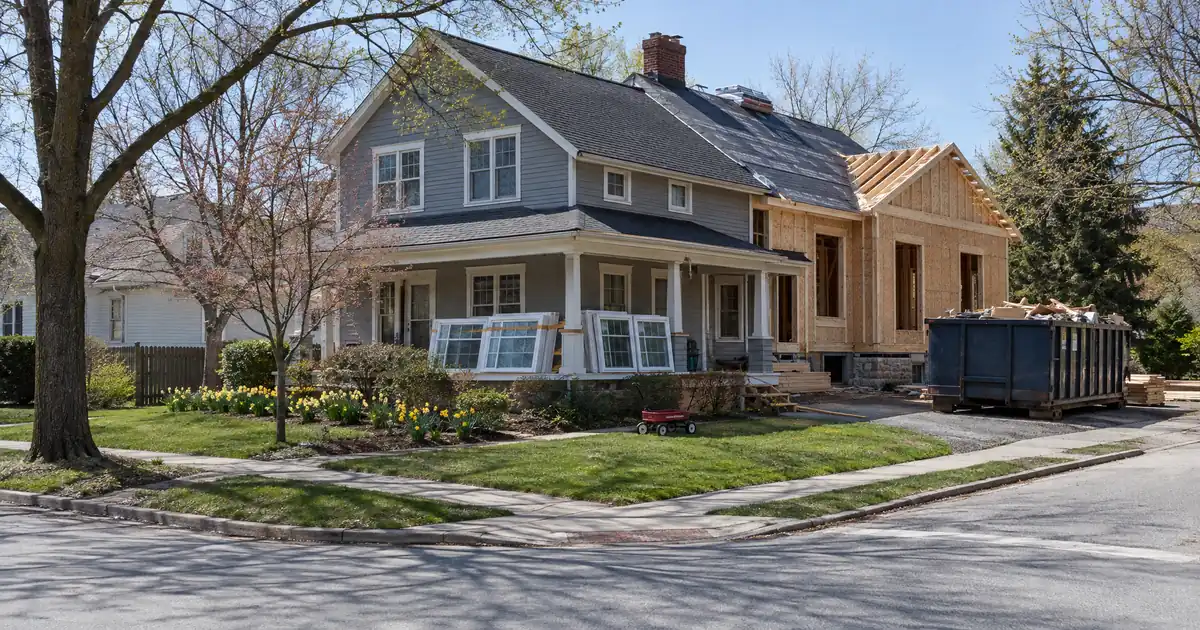
The Quick Read: Replacing a maturing bridge note on a nightly-rental property means passing two separate tests with a new lender: an appraisal that supports the payoff amount, and documented rental income that covers the full monthly obligation on the long-term loan, backed by enough hosting history and recorded ownership time to satisfy program rules.
- The new lender sizes the loan on its own appraisal, not on your after-repair estimate or your renovation budget.
- Rent must cover principal, interest, taxes, insurance and any HOA dues on the new loan, which is usually larger and fully amortizing.
- On short-term-rental collateral, select programs in the wholesale network look for roughly 12 months of hosting history and a 640+ credit score.
- Leverage on the exit is lower than many bridge borrowers expect, so the payoff has to fit under the cap.
- Start the exit file well before the balloon date approaches, because appraisal, underwriting and title all have to finish first.
Why Hard Money Exits Need a Plan on Day One
Hard money is short-term by design. Lendmire brokers hard money with terms of 6 to 18 months, interest-only, and refinance leverage of up to 65% of value on a hard money refinance. These figures vary by lender, property, and experience, and nothing here is a commitment to lend. The loan exists to get you into the property and through the rehab or furnishing phase. It does not exist to be held.
DSCR Cash-Out Calculator
Run the cash-out numbers in your market
Rate source: Freddie Mac 30-yr average via FRED® — Federal Reserve Bank of St. Louis · effective Oct 15, 2026
Prefilled with starting assumptions — enter your property’s value, balance, taxes, and insurance for a more accurate picture.
Program parameters update from Lendmire’s centralized guideline source. Taxes and insurance are editable estimates.
As of Oct 15, 2026 · General Freddie Mac market benchmark, not a Lendmire loan offer. Property value, balance, taxes, and insurance are editable estimates. Maximum loan-to-value varies by lender, program, property type, and seasoning. Not a Loan Estimate, approval, or commitment to lend. Program availability and eligibility are subject to lender guidelines, credit approval, property review, and underwriting.
That makes the exit the real underwriting question. Every bridge borrower is betting that a permanent lender will take the property at a value and income level high enough to repay the note. On a nightly rental, that bet has more moving parts than on a long-term rental, because the income is variable and fewer lenders will touch the property type at all.
Across the wholesale network, the pattern is consistent. Many mainstream investor lenders will not lend on short-term rentals. Those that do apply tighter leverage and ask for more income evidence than they would on a standard lease. Finding a lender that counts your income the way you earn it matters as much as clearing the numbers.
The Two Gates: Value and Rent Coverage
A refinance out of hard money passes through two gates, and failing either one stops the file. The first gate is value. The second is rent coverage. They are tested separately.
Gate one: the appraisal. The new lender orders its own appraisal. That number, not the value you hoped for when you bought the property, caps the loan. A furnished, high-earning Airbnb does not appraise higher because of its bookings. McKissock’s appraisal education explains that appraisers value the real property and exclude furniture, fixtures, equipment and business income, and that short-term-rental use does not change that valuation.
Gate two: the coverage ratio. The debt service coverage ratio is monthly rent used for lender review divided by the monthly PITIA on the new loan. Many select programs start at 1.00, where rent just covers the payment. A separate select-lender path takes coverage below 1.00, with leverage and terms adjusted. Stronger ratios generally open better pricing and higher leverage tiers.
The two gates can disagree. A property can appraise well and still fall short on coverage, because the new payment is larger than the interest-only bridge payment. It can also cover comfortably and still appraise short of the payoff. The loan size ends up as the lower of what value allows and what rent supports.
Interest-only bridge payments say nothing about whether the new payment is covered. Always run coverage on the permanent payment, not the one you carry today.
How Short-Term Rental Income Gets Documented
The lender decides which income evidence counts, and how much to discount it. Three types of evidence show up most often, and programs differ on which one they prefer.
| Evidence type | What it is | When it fits |
|---|---|---|
| Platform history | Booking statements plus bank deposits | Property has operated for a full year |
| Third-party projection | Market-data estimate of nightly income | Thin history, or lender allows it |
| Appraiser rent opinion | Long-term market rent from the appraisal | Fallback when STR income is not accepted |
The lender, not the appraiser, makes the final income determination, including how it weighs the rent exhibit against traditional personal-income documentation, leases or nightly contracts. Program preference matters more than most borrowers expect. The same house can qualify at different ratios depending on which method a lender uses.
Appraisal forms add a wrinkle. Fannie Mae’s appraiser update describes Form 1007 as the schedule documenting monthly market rent for a one-unit investment property. Form 1025 covers two-to-four-unit properties. These are agency appraisal forms, cited here only for what they measure. DSCR programs set their own rules.
One practical consequence: the 1007 reflects long-term market rent. If a program defaults to that figure, a property that clears 1.00 on nightly income can fail on paper. In a soft nightly-rental market, the same fallback can rescue a file. That is why matching the property to the right program matters before you apply.
What the Exit Loan Allows
The exit is a DSCR loan, underwritten primarily on the property’s rental income covering the payment, subject to lender guidelines. Lendmire arranges these through select lenders in its wholesale network across 41 markets, including Washington, D.C. For a nightly rental, the figures that matter are these, and each one varies by lender, borrower, property, and loan scenario:
- Short-term-rental refinance: around 70% LTV on a short-term-rental refinance.
- Short-term-rental cash-out: 70% LTV on short-term-rental collateral, versus 75% on a standard long-term rental.
- Hosting history and credit: about 12 months of hosting history and a 640+ score on short-term-rental files.
- Coverage: 1.00 is the floor on short-term-rental refinances in these programs.
- Reserves: commonly about 6 months of PITIA, stepping up to about 9 months on loans above $1,500,000.
- Ownership time: cash-out files generally expect about 6 months of ownership, measured from title recording.
- Loan size: up to $3,000,000 on standard programs.
- Property types not offered: manufactured homes, log homes and barndominiums fall outside these programs.
Ownership time on a cash-out file runs from recorded title. It does not start when the rehab ends or when the bridge matures. Hosting history is a second clock, and the two run separately. A property you bought long ago but only began hosting recently can still be short on history.
If the property sits in an LLC, the loan can usually be made to the entity, subject to lender program eligibility. Have entity papers ready early.
Hard money and the exit differ in a way that surprises people. The bridge was sized on project cost or after-repair value. The DSCR loan is sized on appraised value and rental coverage. A borrower who funded most of a project with bridge debt may find the exit cap sits below the payoff.
Step by Step: From Payoff Letter to Lien Release
The order of tasks matters more than the calendar. Work backward from the maturity date, and build each step so the next one can start on time.
1. Read the existing note. Confirm the maturity date, any extension terms, default provisions, and whether it carries prepayment or exit charges. Some hard money notes do. Lendmire’s own hard money program carries no prepayment penalty, but notes from lenders vary.
2. Request a written payoff statement. It sets the minimum the new loan must cover, including accrued interest and fees.
3. Choose the program before you choose the appraisal. Confirm that the lender counts nightly income and which evidence it prefers. Many lenders do not lend on short-term rentals at all, so this filter comes first.
4. Assemble the exit file. Typical items include the note and payoff letter, platform statements, bank deposits, entity documents, insurance suited to nightly rental, and title information.
5. Order the appraisal. The result tests both the payoff and the loan cap.
6. Run coverage on the new payment. Use the lender’s income method, not your best-case projection.
7. Underwriting review. The lender checks credit, reserves, property eligibility and the file as a whole.
8. Closing. Title pays off the bridge lender, records the lien release, and the DSCR loan funds.
Running a request for an extension alongside the refinance application is often sensible. It protects you if the appraisal or underwriting needs more time than the note allows.
Break-Even Math on the Payoff
Before you sign the bridge note, test whether the exit can work. The math fits in three lines, all expressed as ratios.
- Payoff ÷ appraised value = the LTV the exit must clear.
- That LTV must sit under the program cap. For a short-term-rental refinance, that is around 70%.
- Rent ÷ new PITIA must clear the coverage floor. On these programs, that is 1.00.
Consider a modeled example. Say the payoff equals 66% of the appraised value. That fits under a 70% short-term-rental refinance cap with room to spare. Now say the appraisal comes in lower, and the payoff rises to 73% of the new value. The file no longer fits, and the borrower must pay the loan down or find another route.
The same logic applies to the coverage test. Suppose the lender counts platform history and rent covers the new obligation with a ratio of about 1.15. That clears the 1.00 floor. If the same lender counts only the appraiser’s long-term rent, and the ratio falls near 0.90, the file sits in sub-1.00 territory. A select-lender path may take that, with leverage and terms adjusted, but you would be negotiating from a weaker position.
Run both versions before you buy. A property that only works on the most optimistic income method is a risk worth sizing.
Does Clearing 1.00 Mean the Property Cash Flows?
No. DSCR compares rent to PITIA and nothing else. Repairs, vacancy, management, utilities, platform fees, cleaning and capital expenses all sit outside the calculation.
Nightly rentals carry heavier operating costs than long-term leases. A property can pass at 1.00 or higher on paper while the owner covers the gap from pocket. Treat the coverage ratio as an entry ticket, not a profit forecast.
Where the General Rule Breaks
The standard path works for stabilized properties with a year of hosting history. Several situations bend it.
A newly launched listing. Without operating history, a full refinance is hard to place, because programs lean on actual hosting records. A property still being furnished is better served by a second bridge, an extension, or a short hold until history builds.
Nightly rate times 30. Many borrowers estimate monthly rent by multiplying the nightly rate by 30. Appraisers cannot do this under the agency guidance. McKissock summarizes the rule as no nightly-times-30 and no deducting business expenses from that figure, and an appraiser-education podcast episode quotes the guidance that Form 1007 cannot be used to estimate the nightly fee. That guidance governs agency appraisals and is context here, not a DSCR rule. Even so, DSCR lenders tend to share the skepticism, so build your coverage case on documented income.
An off-season appraisal. If the appraisal or application lands in a slow month, trailing history and deposits can carry the case better than a single month’s bookings.
Two-to-four units. The appraisal uses Form 1025, and the lender may still ask for extra short-term-rental support.
Payoff-only versus cash-out. A refinance that only repays the bridge is generally easier than one that returns cash. On short-term-rental collateral both sit near 70% LTV, so the difference is not the cap. Cash-out adds a longer ownership expectation of around 6 months from recorded title, plus reserve and coverage review on the larger balance.
A weak appraisal. If the new loan cannot repay the bridge in full, the borrower must bring cash to closing. That is why break-even testing comes before the purchase.
Exit Options Compared
A DSCR loan is the most common exit for a nightly rental, though it is not the only one. The right choice depends on the investor profile.
| Exit | Best for | Main risk |
|---|---|---|
| DSCR payoff-only | Stabilized STR with 12 months of history | Appraisal below payoff |
| DSCR cash-out | Equity for the next acquisition | Ownership time, larger balance to cover |
| Conventional loan | Strong personal income, few financed properties | Personal income and DTI review |
| Second bridge or extension | Rehab or furnishing not finished | Added cost, same balloon risk |
| Sale | Numbers fail every refinance test | Costs and lost hold |
A conventional exit can suit a W-2 earner with one or two properties and clean traditional personal-income documentation. Entity-held portfolios, self-employed borrowers, and investors whose personal returns don’t show the rental cleanly usually find the DSCR route more practical. A sale is a legitimate answer when the property cannot clear both gates, and the more disciplined investors treat it as a planned option rather than a failure.
Many investors refinance out of hard money into long-term rental financing once the property stabilizes, and Lendmire brokers that path through its hard money exit refinance program. For the bridge-versus-permanent tradeoff before you buy, Lendmire’s piece Hard Money Vs DSCR Loan For A Short Term Rental covers it in more detail.
If the Exit Falls Short
Three problems account for most failed exits: a low appraisal, thin hosting history, and weak coverage. Each has a different fix.
- Low appraisal: contest the value with stronger comparables, pay down the loan to fit the cap, or ask the bridge lender for an extension while you reorder.
- Thin history: extend the bridge, or hold until you have enough booking records to satisfy the program.
- Thin coverage: look at a different income method, a lower loan amount, or a select-lender path for coverage below 1.00, which adjusts leverage and terms.
Do not assume your bridge lender will also be your permanent lender. Line up a backup before the maturity date.
Key Terms Defined
Hard money loan: a short-term, interest-only loan secured by property, built to be repaid by a refinance or a sale.
DSCR: the ratio of monthly rent used for lender review to monthly PITIA on the new loan.
PITIA: principal, interest, taxes, insurance and any HOA dues, the full monthly obligation.
Payoff statement: the written figure the bridge lender will accept to release its lien.
Seasoning: the ownership time a lender expects, measured here from recorded title.
Hosting history: the documented record of bookings and deposits for a nightly rental.
Form 1007: the appraisal schedule documenting monthly market rent on a one-unit investment property.
Common Mistakes
- Assuming the after-repair value drives the loan size.
- Starting the seasoning clock at the end of the rehab instead of at recorded title.
- Skipping the written payoff request until the maturity date is close.
- Relying on the bridge lender to provide the permanent loan.
- Treating nightly rate times 30 as rent used for lender review.
- Treating a passing coverage ratio as proof the property cash flows.
- Entering the bridge note without a backup exit.
Tax treatment varies by situation, so consult a qualified tax professional about how your refinance affects deductions.
Frequently Asked Questions
Can I refinance a hard money loan right after I finish the rehab?
Sometimes, but the limiting factors are ownership time and hosting history, not rehab completion. Cash-out files generally expect about 6 months of ownership from recorded title. Short-term-rental files in the network generally want around 12 months of hosting history. A payoff-only refinance may need less ownership time, but it still needs the income evidence.
Does the refinance need a lease?
Not for a nightly rental. Programs that count short-term income look at platform statements and bank deposits, a third-party projection, or an appraiser’s rent opinion. The lender chooses which to rely on and how much to discount it.
What if my listing is vacant during the appraisal?
A vacant or off-season listing does not by itself sink the file. Appraisers value the real property, and the lender weighs income evidence separately. Trailing platform history can carry the income case if recent bookings are slow.
Can the property be held in an LLC?
Often, yes, subject to lender program eligibility. Entity documents, operating agreements and insurance naming the entity should be ready before you apply.
Is a payoff-only refinance easier than a cash-out refinance?
Generally, yes, though not because of the leverage cap. On short-term-rental collateral, both a refinance and a cash-out sit near 70% LTV. Cash-out adds about 6 months of recorded ownership and a larger balance to cover. Every file is underwritten individually.
Planning the Exit Before You Sign
If you are buying or refinancing a rental property and want to see how the numbers work, Lendmire can help you compare DSCR loan options based on the property income, credit profile, leverage, and investor goals. The complete DSCR loans guide walks through the program basics, and you can reach the team at 828-256-2183 to talk through a specific payoff.
About Lendmire
Lendmire (NMLS# 2371349) is a mortgage brokerage built around DSCR investor lending, with programs available in 41 markets, including Washington, D.C. DSCR lenders commonly evaluate rental-income coverage instead of personal income paperwork, a practical fit for LLC-owned and multi-property investors. Terms vary by lender, property, leverage, and program. Scotsman Guide named Lendmire a Top Mortgage Workplace in both 2025 and 2026.
Get Started
Ready to find the right loan for you?
In about 30 seconds you can review financing options available for your investment property. No commitment required.
Informational only. Not a Loan Estimate, approval, or commitment to lend. Program availability and eligibility are subject to lender guidelines, credit approval, property review, and underwriting.
References
1. McKissock – Form 1007 and Short-Term Rental Appraisals
2. Fannie Mae – Appraiser Update
3. The Appraisal Update podcast, Episode 172
This article is part of Lendmire’s hard money loan program — full qualification details, guidelines, and scenarios live on the program page.
Related reading: How to Refinance a Flip That Didn’t Sell Into a DSCR Rental Loan · Can You Get a Short-Term Rental Loan With No Income Verification? · How to Compare DSCR Loan Programs for Short-Term Rental Income
Brandon Miller
Founder & CEO, Mortgage Loan Originator, Lendmire LLC
- Mortgage Loan Originator · NMLS# 1129696 · Verify on NMLS Consumer Access
- North Carolina Real Estate Broker · License# 343312 · Verify on NCREC
- North Carolina Insurance Producer · License# 19053198 · Property, Casualty, Life, Health · Verify on NAIC SBS
- Lendmire LLC · Firm NMLS# 2371349 · Verify firm licensure
Legal disclosures. Lendmire (NMLS# 2371349) is a state-licensed mortgage brokerage that arranges financing through wholesale lender relationships. Lendmire is not a direct lender, depository institution, or registered financial advisor. The discussion above is general informational content about real estate financing — it is not financial, legal, or tax advice, and readers should consult licensed professionals for guidance on their individual circumstances. Loan inquiries are subject to lender underwriting; this article does not represent a commitment to lend. Loan terms, rates, and qualification standards vary by borrower, property, and state, and are subject to change at any time. Equal Housing Opportunity. NMLS Consumer Access: nmlsconsumeraccess.org.