
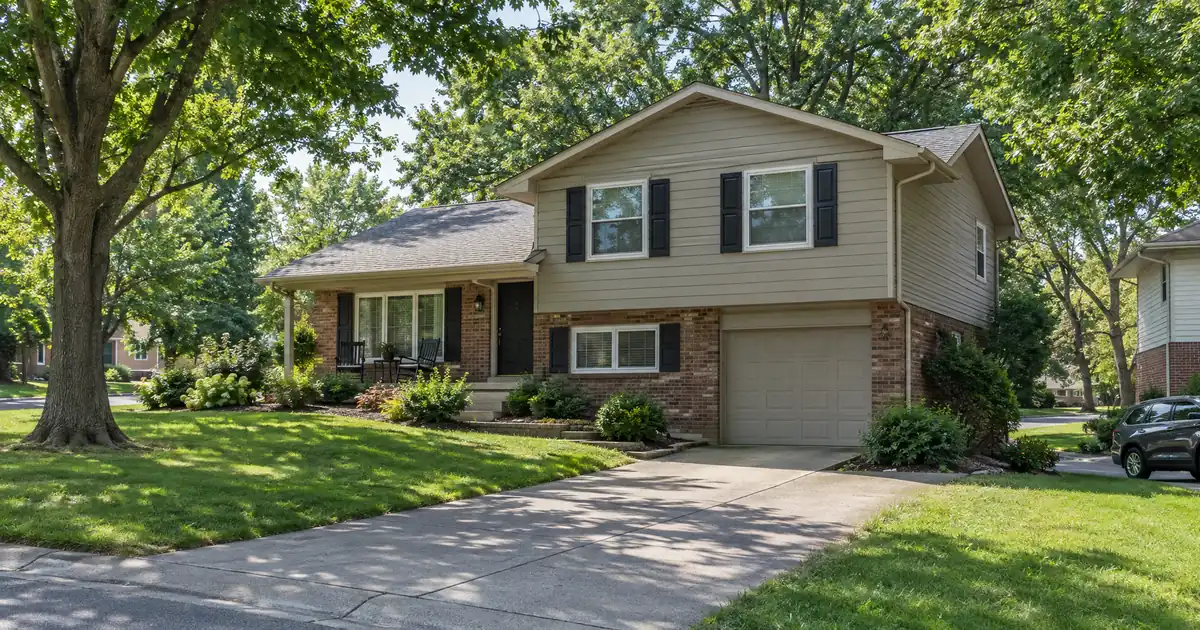
The Quick Read: Work backward from the rent: divide it by your target coverage ratio to find the largest total monthly payment the property can carry, subtract taxes, insurance, and dues, and borrow only what the leftover room supports or the leverage cap allows, whichever is lower. Thin coverage usually means a smaller loan, more cash down, or a different structure. It rarely means a flat decline.
- The loan size is set by two gates: how much equity the lender requires and how much payment the rent can cover. The tighter gate wins.
- Taxes, insurance, and dues do not shrink when the loan shrinks, so a small rent shortfall forces a larger cut in the loan.
- Interest-only helps only on programs that test the interest-only payment.
- Clearing the lender’s coverage test is not the same as positive cash flow.
Key Terms Defined
DSCR (debt service coverage ratio) is the property’s qualifying monthly rent divided by its monthly housing obligation. A result of 1.00 means the rent just covers the payment.
PITIA is principal, interest, taxes, insurance, and association dues. It is the payment the rent has to cover.
LTV (loan-to-value) is the loan balance as a percentage of the property’s value. It is the leverage gate.
The ceiling is the largest loan a program allows at a given leverage level. Sizing below it means choosing a smaller loan than that maximum.
Thin coverage means the ratio sits near or under the lender’s minimum, so a small change in rent, taxes, or insurance flips the result.
Cash-out refinance replaces your current loan with a larger one and pays you the difference.
Reserves are liquid funds, counted in months of PITIA, that you hold after the deal funds.
Non-QM describes loans that government-sponsored buyers cannot purchase. Scotsman Guide describes DSCR loans as a non-QM type, secured by the property’s expected cash flow.
What Does Sizing Below the Ceiling Actually Mean?
It means you ask for less than the program would otherwise allow. You do this because the full amount does not pass the rent test.
Say a purchase program allows 80% LTV. You can borrow up to that, but only if the rent covers the payment on that balance. If it does not, the loan comes down until it does. Exact terms depend on the lender’s guidelines, property type, leverage, and a full review of the borrower’s file.
The sizing is rarely the lender being stubborn. Most lenders in the network apply the same two tests and then take the smaller answer.
Residential DSCR loans on one-to-four-unit rentals divide rent by PITIA. They do not divide net operating income by debt service, which is how commercial loans work. That is why the residential test is often friendlier than new investors expect. Operating costs like repairs and management never enter the formula.
Across our wholesale network, 1.00 is where select programs start. It is a floor for those programs, not a universal standard. Stronger ratios tend to open better pricing and more leverage, and eligibility always depends on the credit profile, reserves, property, and lender guidelines.
The Two Gates: Equity and Rent
The loan amount is the lower of two numbers. One comes from leverage and one comes from coverage.
| Gate | What sets it | What moves it |
|---|---|---|
| Leverage (LTV) | Value and program matrix | Value, down payment, transaction type |
| Coverage (DSCR) | Rent versus PITIA | Rent, loan size, taxes, insurance, structure |
| Credit and reserves | Score tier, months of PITIA | Cash on hand, score, loan size |
On most purchase files in the network, leverage lands at 75% to 80% LTV. Select high-leverage programs reach 85% with roughly a 700-plus score. Cash-out refinances top out around 75% LTV across most of the network, and about six months of ownership is the common seasoning expectation.
Here is how to tell which gate binds. If the lender’s value comes in low, leverage is the problem, and more cash down fixes it. If the lender’s rent comes in low, or taxes and insurance are heavy, coverage is the problem. A lower purchase price alone does not help coverage unless it also lowers the payment.
A larger down payment lowers the payment and can lift the ratio. It never erases leverage caps, credit floors, reserve rules, or property eligibility. The strongest files clear both tests: enough equity and enough rental coverage.
The Back-Solve, Step by Step
You can size the loan on paper before you ever call a lender. Four steps get you there.
Step 1: Pick the rent. Use the rent the lender will count, not the rent you hope for. The next section covers which rent that is.
Step 2: Find the maximum payment. Divide the rent by your target ratio. At a 1.00 target, the maximum PITIA equals the rent. At 1.20, it is the rent divided by 1.20, so you carry less debt.
Step 3: Remove the fixed costs. Subtract the taxes, insurance, and association dues from the maximum payment. Use real bills and real insurance quotes, not guesses. What remains is the room for principal and interest.
Step 4: Convert room to loan. The loan’s terms and amortization turn that payment room into a balance. Your broker can run that conversion. Then compare the balance to the LTV cap and take the smaller loan.
In plain text, the formula reads: maximum payment equals rent divided by target ratio, and maximum principal-and-interest room equals that payment minus taxes, insurance, and dues.
Worked Example: A Cash-Out Request at 0.95x
Run the numbers on a modeled cash-out refinance. These inputs are assumptions, not market data.
Assume the investor requests the full 75% LTV for a standard rental. The new payment pushes coverage to about 0.95x. On a program with a 1.00 floor, the loan has to come down. Every figure here varies by lender and program — guidelines, property type, leverage, and credit profile all apply.
Index the rent to 1.00. At 0.95x, the full PITIA equals about 1.053. Now assume principal and interest make up 80% of that payment, with taxes and insurance making up the other 20%. These shares are modeled for illustration.
To reach 1.00, the total payment must fall by about 0.053. Taxes and insurance stay put at about 0.21. That means the principal-and-interest portion has to fall from about 0.84 to about 0.79, a cut of roughly 6%.
So a 5% shortfall in coverage forces about a 6% cut in the loan. The fixed costs absorb none of the reduction. The heavier taxes and insurance weigh on the file, the larger that gap grows.
In leverage terms, the request lands near 70% LTV. That lines up with a jumbo-sized illustration where a cash-out at 75% sits near 1.00x and trimming it to 70% lifts coverage to about 1.07x. The investor gets less cash out than the 75% headline suggests, but the loan fits. Final terms depend on lender guidelines, property type, leverage, and the borrower’s complete credit picture.
Plan for the reduction as cash. A 6% cut in the loan means that amount comes out of the proceeds you expected, or goes into the deal as extra down payment on a purchase.
Tax treatment can depend on how the funds are used and how the property is held; investors should keep clear records and speak with a qualified tax professional before relying on any deduction.
Resize or Restructure? The Same Deal Two Ways
The same 0.95x deal has two broad fixes. You can shrink the loan, or you can change what the lender measures.
Resize. Cut the loan to about 70% LTV on the cash-out. This works on every program, because it lowers the payment directly. The cost is less cash out, or more cash in. These specifics are subject to lender guidelines and a full review of property, leverage, and credit.
Restructure. Select lenders in the network offer interest-only periods and extended terms. An interest-only period removes principal from the test. The lender then reviews the file on interest, taxes, insurance, and dues. Taxes and insurance still count in full.
Here is the catch. Some programs test the amortizing payment that begins after the interest-only period. On those programs, interest-only adds nothing to the ratio. It also never raises the LTV ceiling. It changes the payment, not the leverage.
A practical rule: if coverage sits just under 1.00 and the program tests the interest-only payment, interest-only can close the gap. If the program tests the amortizing payment, more down or a smaller loan is the answer. Ask which payment is tested before you choose. Lendmire’s piece How to Use Interest-Only to Qualify a Thin-Coverage Luxury Rental DSCR Loan goes deeper on that structure.
Also remember that the payment steps up later on an interest-only loan. You are borrowing room now and paying for it down the road.
The Lever Ladder
Not every fix costs the same. This table ranks the common levers from the most direct to the most situational.
| Lever | What it changes | Trade-off |
|---|---|---|
| Smaller loan or more down | Lowers payment directly | Needs more cash |
| Better rent evidence | Raises counted rent | Only works if the rent is real |
| Interest-only period | Lowers tested payment | Only on some programs; payment steps up |
| Longer term (40-year) | Lowers payment | Select lenders only; slower paydown |
| Different lender in network | Different floors and tests | Terms and leverage differ |
| Sub-1.00 path | Allows lower coverage | Leverage and terms adjust |
You can combine levers. A modest paydown plus better rent documentation often beats a single large move.
Which Rent Counts?
The rent number in your numerator test is not the one on the listing. It is the one the lender can support.
For a single-family rental, the appraiser documents estimated monthly market rent on Form 1007. For two-to-four-unit properties, the appraiser uses Form 1025. Fannie Mae’s appraiser update describes the 1007 as the way an appraiser documents estimated monthly market rent. We cite the form names here only for the appraisal method. They do not govern DSCR programs.
McKissock Learning notes that the 1007 estimates monthly market rent from comparable rentals, and that how that income is used is ultimately the lender’s call.
With a signed lease, most programs we place files with use the lower of the lease and market rent. An above-market lease does not lift the ratio. A below-market legacy lease can pull it down, even when the appraiser thinks the unit could rent for more.
If the lender’s rent figure looks low, check the comps the appraiser used. They can lag current asking rents. Supporting evidence, such as a corrected unit count or stronger comparable leases, can help the file.
When the Property Is a Short-Term Rental
Short-term rentals work differently, because a nightly rate multiplied by 30 does not produce market rent. Income for these files is supported with other documentation.
Leverage also differs. On a purchase, short-term-rental collateral tops out at 75% LTV. On a cash-out refinance, short-term-rental collateral is limited to 70%, while a standard rental allows up to 75%. Expect a 640-plus score and about 12 months of hosting history. For a fuller look, see Lendmire’s piece STR DSCR Below vs Above the Ceiling for an LLC Investor. Terms depend on the lender’s guidelines, the property type, the leverage, and a full review of the credit profile.
Short-term rental rules can vary by city, county, HOA, and property type, so investors should confirm local rules before relying on projected rental income.
Below 1.00 and No-Ratio Are Different Paths
These two get confused all the time, and they are not the same thing.
Coverage below 1.00 is available through select lenders in the network, with leverage and terms adjusted. Scotsman Guide reports that some non-QM lenders will go below 1.0 when other assets compensate for the shortfall, and that terms vary by lender. Typically that means lower leverage and a stronger file overall.
No-ratio loans skip the coverage calculation entirely. They are available only through select lenders, generally for borrowers who already own a primary residence. Their leverage envelope is tighter, and some property situations, such as a vacant property, do not fit.
To keep the picture clear: 1.00 is where many select programs start, and a separate select-lender path takes coverage below 1.00 with adjusted terms. These are different programs, not one program whose floor moves.
Where the Rule Breaks
The back-solve works for most one-to-four-unit rentals. These edge cases bend it.
A vacant property. There is no lease, so the appraiser’s market rent is the only basis. Vacancy alone does not disqualify a file.
Large balances. Standard programs run up to $3,000,000. Above $2,500,000, the network generally holds to 30-year fixed structures. Credit, reserves, and appraisal requirements often become the binding gates before the ratio does. Reserves are commonly around 6 months of PITIA, and loans above $1,500,000 typically step up to about 9 months. Conservative rate-term files at modest leverage under $1,500,000 can see reserves waived. These vary by lender, leverage, and loan size.
Five-plus unit properties. These tend to move toward commercial-style underwriting, which divides net operating income by debt service. The back-solve above does not apply the same way.
Ineligible property types. Manufactured homes, log homes, and barndominiums are not offered in the network’s DSCR programs. No sizing trick changes that.
Credit tiers. A 620 floor exists in parts of the network, but most programs want around 660. A score of 700-plus unlocks the strongest leverage tiers. A thin-coverage file with a thin score has two weak points, not one.
Decision Guide: Resize, Restructure, Re-Document, or Walk
Use this order of questions.
1. Is the lender’s rent low compared with real comparable leases? Re-document first. It costs little and fixes the numerator.
2. Is the ratio just under the minimum? Try a small paydown or an interest-only period on a program that tests the interest-only payment.
3. Is the gap larger? Resize the loan, and be ready for less cash out or more cash in.
4. Is the property one you want at much lower leverage? Ask about the sub-1.00 path through select lenders, knowing terms adjust.
5. Does it only work with heavy trimming and a thin reserve cushion? Consider walking or waiting.
One more honest point. A ratio of 1.00 means the rent covers the payment, nothing more. Repairs, vacancy, management, utilities, and capital expenses sit outside the calculation. Clearing the test is not the same as positive cash flow, so a deal that qualifies at exactly 1.00 can still lose money in a bad month.
Before You Make an Offer
Estimate rent used for lender review before you write the contract, not after the appraisal. Run this checklist.
- Pull the real tax bill and an actual insurance quote.
- Find the association dues, if any.
- Estimate market rent from comparable leases, and note whether a lease is above or below it.
- Run the back-solve at a target of 1.00 and again at a stronger target.
- Compare the result with the leverage cap, and plan for the cash gap.
- Confirm your credit tier and reserve months.
- Ask your broker which payment the program tests, and what happens if the appraisal comes in low.
If the deal only works at the very top of the leverage range, treat it as thin. A small bump in insurance can undo it.
Frequently Asked Questions
Does thin coverage mean my DSCR loan will be declined?
Not automatically. It usually means a smaller loan, more cash down, or a different structure, and the outcome depends on lender guidelines, credit, reserves, and the property. Some files need a different lender in the network, and some are better to walk away from.
Why does a small rent shortfall shrink the loan so much?
Taxes, insurance, and dues stay the same when the loan gets smaller. Only the principal and interest piece can move, so it absorbs the whole adjustment. That is why a 5% coverage gap can mean a cut of around 6% or more in the balance.
Can interest-only get me to 1.00?
Sometimes. It helps when the program tests the interest-only payment and your ratio is just under 1.00. It does nothing when the program tests the amortizing payment, and it never raises the LTV ceiling.
Does a signed lease set the rent the lender uses?
Not by itself. With a lease, most programs use the lower of the lease and the appraiser’s market rent. An above-market lease does not raise the ratio.
Is a ratio over 1.00 the same as positive cash flow?
No. The test compares rent to PITIA only. Vacancy, repairs, management, utilities, and capital expenses sit outside it.
Run It Before You Offer
If you are buying or refinancing a rental property and want to see how the numbers work, Lendmire can help you compare DSCR loan options based on the property income, credit profile, leverage, and investor goals. Lendmire is a broker that arranges financing through select lenders in its wholesale network across 41 markets, including Washington, D.C. For the full picture of how these loans work, read the complete DSCR loans guide. Programs change, every file is underwritten individually, and nothing here is a commitment to lend.
About Lendmire
Lendmire is a DSCR-focused mortgage brokerage, NMLS# 2371349, placing investor loans across 41 markets, including Washington, D.C. DSCR eligibility is generally reviewed by the lender around a property’s rental income rather than personal income documentation, which fits LLC-held rentals, self-employed investors, and portfolios scaling past conventional financed-property limits. Scotsman Guide named Lendmire a Top Mortgage Workplace in both 2025 and 2026.
Get Started
Ready to find the right loan for you?
In about 30 seconds you can review financing options available for your investment property. No commitment required.
Informational only. Not a Loan Estimate, approval, or commitment to lend. Program availability and eligibility are subject to lender guidelines, credit approval, property review, and underwriting.
References
1. Scotsman Guide – Alternative lending offers new pools for lenders to wade in
2. Fannie Mae – Appraiser Update, June 2024
3. McKissock Learning – Form 1007 and short-term rental appraisals
4. Scotsman Guide – Invest in Your Future
This article is part of Lendmire’s DSCR loan program — full qualification details, guidelines, and scenarios live on the program page.
Related reading: Can You Get a DSCR Loan for an Airbnb in Illinois? · Can You Get a DSCR Loan for an Airbnb in Kentucky? · One Multi-State DSCR Loan vs. a Loan in Each State
Brandon Miller
Founder & CEO, Mortgage Loan Originator, Lendmire LLC
- Mortgage Loan Originator · NMLS# 1129696 · Verify on NMLS Consumer Access
- North Carolina Real Estate Broker · License# 343312 · Verify on NCREC
- North Carolina Insurance Producer · License# 19053198 · Property, Casualty, Life, Health · Verify on NAIC SBS
- Lendmire LLC · Firm NMLS# 2371349 · Verify firm licensure
Important disclosures. Lendmire (NMLS# 2371349) is a licensed mortgage brokerage. Lendmire is not a direct lender, depository institution, or financial advisor. All loan inquiries are subject to lender underwriting; this article does not constitute a commitment to lend. Rates, terms, and program guidelines are subject to change without notice and vary by borrower profile, property type, and state. Information in this article is general in nature and is not financial, legal, or tax advice. Equal Housing Opportunity. NMLS Consumer Access: nmlsconsumeraccess.org.