
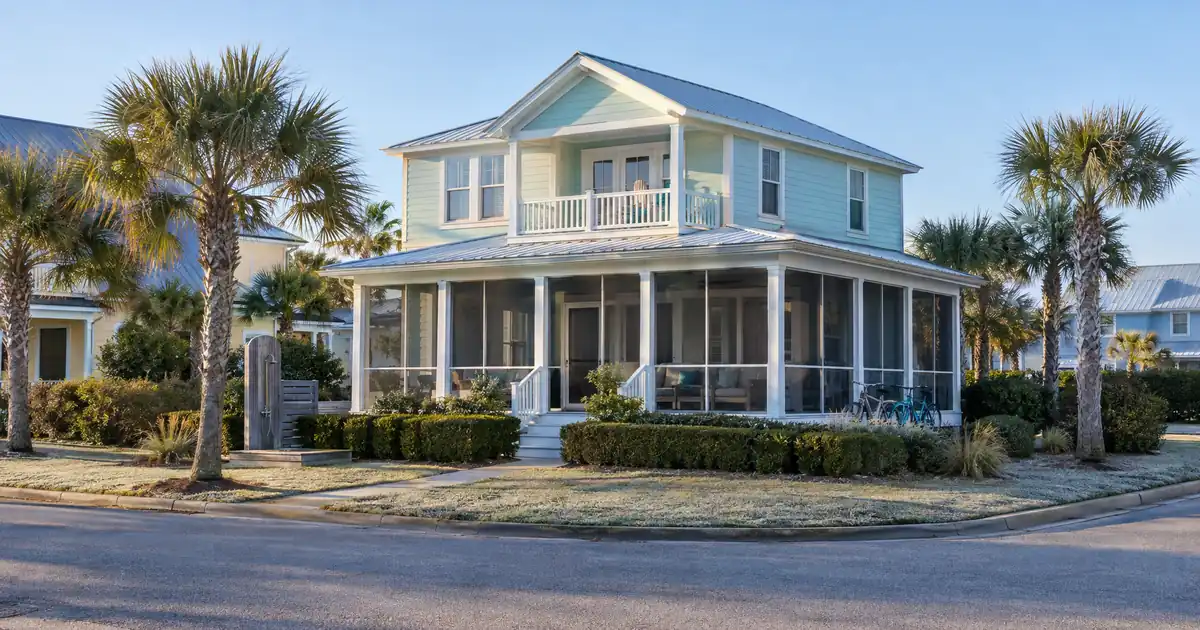
The Quick Read: Usually, yes: a DSCR cash-out refinance can fund a buyout when the appraised value supports a loan big enough for the old payoff, closing costs, and the partner’s share, and when the property’s rent still covers the full payment on that larger loan, subject to lender guidelines. The new loan pays off the old mortgage. The leftover cash goes to the departing sibling or partner. No special buyout product exists; the payout is simply a use of proceeds on an ordinary investor cash-out.
- Two tests decide it: enough equity, and enough rent coverage on the bigger payment.
- Airbnb collateral sits lower: across our network, short-term-rental cash-out leverage tops out around 70% LTV, versus about 75% on a standard rental.
- History matters: expect to show about 12 months of hosting records, plus a 640 minimum score on short-term-rental files.
- A payoff, not a deed, releases the departing owner from the old loan. Leverage, reserves, and pricing vary by lender and program; the final terms follow the full file review.
Key Terms Defined
DSCR (debt service coverage ratio): monthly rent divided by the full monthly housing payment. A result of 1.00 means rent equals the payment.
PITIA: principal, interest, taxes, insurance, and any association dues. It is the payment a DSCR loan measures rent against.
Cash-out refinance: a new loan larger than the old one, with the extra money paid out at closing.
LTV (loan-to-value): the loan balance as a percentage of the appraised value.
Seasoning: the waiting period a lender wants after you acquire a property before it will lend against the equity.
Due-on-sale clause: a mortgage term that lets the current lender demand payoff if the property is transferred without its consent.
Short-Term Rental Calculator
Run the STR numbers in your market
Rate source: Freddie Mac 30-yr average via FRED® — Federal Reserve Bank of St. Louis · effective Oct 15, 2026
Prefilled with starting assumptions — enter your nightly rate, occupancy, taxes, and insurance for a more accurate picture.
Short-term rental income is documented with a 12-month history or a market data report. Program parameters update from Lendmire’s centralized guideline source.
As of Oct 15, 2026 · General Freddie Mac market benchmark, not a Lendmire loan offer. Nightly rate, occupancy, taxes, and insurance are editable estimates. Qualifying income for short-term rentals varies by program — some use appraisal market rent, others use documented STR history or projections — and is confirmed in underwriting. Not a Loan Estimate, approval, or commitment to lend. Program availability and eligibility are subject to lender guidelines, credit approval, property review, and underwriting.
How Does a Buyout Get Classified?
A buyout is a cash-out refinance because cash comes back at closing. It does not matter whether the file began as a no-cash-out request. Once money leaves the closing table for your sibling, cash-out leverage limits apply.
| Scenario | Loan type | Leverage ceiling |
|---|---|---|
| Pay off old loan only | No-cash-out refinance | Up to 70% LTV (STR) |
| Payoff plus partner payout | Cash-out refinance | Up to 70% LTV (STR) |
| Same, on a standard rental | Cash-out refinance | Up to 75% LTV |
Those ceilings are typical for select lenders in our wholesale network. Each file is reviewed individually, and nothing here is a commitment to lend. A sibling who is only being repaid capital is a different situation from one who is giving up ownership. Your operating agreement or the original note usually settles which one you have.
What Are the Two Tests?
The first test is equity. Take the appraised value, apply the maximum LTV, then subtract the old payoff, closing costs, and any reserves. What remains is the most you can pay out.
The second test is rent coverage. DSCR is rent divided by PITIA, and a bigger loan means a bigger payment. So the ratio drops as the buyout grows. On short-term-rental refinances, a 1.00 coverage floor is where select programs start, and stronger ratios open better pricing and leverage.
The two tests pull against each other. A property can have plenty of equity and still miss on coverage. It can also cover easily and still lack the equity to fund the payout. The strongest files clear both.
One caution belongs here. Clearing 1.00 is not the same as positive cash flow. DSCR counts only the housing payment. Repairs, vacancy, management, utilities, and capital expenses sit outside the calculation, and in a seasonal Airbnb they matter a lot.
What Does the Math Look Like? (A Worked Example in Percentages)
Treat these inputs as modeled assumptions, not market data. Call the appraised value 100%.
Base case.
- Maximum cash-out loan on short-term-rental collateral: 70% of value.
- Old mortgage payoff: 45% of value.
- Closing costs and reserves, modeled: 3% of value.
- Room left for the payout: 22% of value.
- Equity is 55% of value, and the departing partner owns 30% of it, so the payout is 16.5% of value. Terms vary by lender guidelines, property type, leverage, credit profile, and full file review.
That leaves a cushion of 5.5% of value, which helps if the appraisal lands a little low. Coverage would then be tested on the new, larger loan.
Shortfall case. Same property, but the departing sibling owns half. The payout becomes 27.5% of value against 22% available. The gap is 5.5% of value. You have four levers:
1. Bring cash to closing to cover the gap.
2. Renegotiate the payout to a lower figure, or stage it in two payments.
3. Use a sibling note for part of the price, with terms your family agrees to in writing.
4. Add value first, then refinance. An improvement may support a higher appraised value, depending on comps and underwriter review.
A buyout agreement should also say what happens if the appraisal comes in low. Without that clause, a value shortfall becomes a family dispute at the worst moment.
What Changes When the Collateral Is an Airbnb?
Short-term-rental collateral sizes smaller than the same house rented long-term. Across our network, short-term-rental purchases reach up to 75% LTV, while refinances and cash-outs generally run up to 70%. Most programs we place files with expect a 640 minimum score and about 12 months of hosting history.
On a refinance of an operating Airbnb, lenders want actual results. That means trailing-twelve-month platform payouts or manager statements that tie to bank deposits. Projections are mostly a purchase tool. Lendmire’s piece Can an Out-of-State Owner Use Airbnb Income for a DSCR Cash-Out? walks through that evidence in more detail.
A few points trip up buyouts specifically:
- Whose account earned the income? If the departing partner ran the listing, the platform statements must tie to the borrower and entity on the new loan.
- Thin history. With under 12 months of results, a lender may lean on the appraiser’s market rent instead. That can lower the income used and shrink the loan.
- Owner-occupancy. The property must be non-owner-occupied, with permits, insurance, and association rules that allow paid guests.
Short-term rental rules can vary by city, county, HOA, and property type, so investors should confirm local rules before relying on projected rental income. Property types such as manufactured homes, log homes, and barndominiums are not offered through these programs.
Who Is on Title? (And Who Has to Sign)
Title determines the paperwork. Here is how the common setups differ:
| Title situation | Who signs | First step |
|---|---|---|
| Siblings own personally | All co-owners | Agree on price, then refinance |
| LLC owns, partners are members | LLC plus a guarantor | Document the membership change |
| Buyout leaves one member | Remaining owner | Refinance as a normal entity file |
| Inherited, title not cleared | Heirs or estate | Clear title before applying |
On the DSCR side, the LLC can generally stay on title with a personal guarantor behind it, subject to lender program eligibility. If partners hold title personally, each departing co-owner signs a deed. Many investors vest the entity at the refinance closing instead of deeding in first. If the buyout leaves a single-member LLC, it refinances like any other entity-titled investment property.
Lendmire’s piece Can a Practice Owner Buy Out a Partner With a Bank Statement HELOC? covers a similar partner exit built around a different qualification path.
What Is the Step-by-Step Sequence?
1. Put the price method in writing. Decide how value is set before the appraisal is ordered. A common approach ties the price to the refinance appraisal and lets the departing owner dispute it with a second appraisal at their own expense.
2. Confirm ownership and seasoning. On most files in our network, lenders expect about 6 months of ownership from the recorded deed before a cash-out. That is lender policy, not a federal rule, and a partner buyout generally does not waive it.
3. Size the loan by subtraction. Use value times the maximum LTV, minus payoff, costs, and reserves. Reserves vary by lender, leverage, and loan size, and are commonly around 6 months of PITIA.
4. Check the old loan for a prepayment charge. An early buyout can collide with one.
5. Document the Airbnb income. Gather twelve months of payouts, bank deposits, and permits.
6. Test coverage on the new payment, using the appraiser’s market-rent schedule if hosting history is thin.
7. Close with a payoff. The new loan retires the old note, and the departing owner’s deed or assignment is recorded.
For the full picture of how these programs fit together, see the complete DSCR loans guide.
DSCR vs. conventional financing
There are two common ways to finance an investment property, and they qualify you differently — here’s how investors weigh them.
Why investors choose it
- Qualifies on the property’s rental income — no personal tax returns, W-2s, or pay stubs needed to document income.
- No personal debt-to-income ceiling to clear, so existing mortgages and obligations don’t cap your borrowing the same way.
- Can be closed in an LLC, keeping the property inside a business entity.
- Built for scaling — not held to the limit on number of financed properties that conventional financing applies.
- Underwriting centers on the deal: generally qualifies when the rent covers the payment, a 1.00x coverage ratio being a common baseline (confirmed in underwriting).
- Designed specifically for investment property, including long-term and, where the program allows, short-term rentals.
Where it’s strong
- Often the lowest ongoing financing cost for a buyer who fully qualifies on personal income — a fit for a first property or a cost-first purchase.
Trade-offs for investors
- Requires full personal income documentation and must fit within a debt-to-income limit — salary, existing debts, and other mortgages all count.
- Typically held in your personal name rather than a business entity.
- Caps how many financed properties you can carry, which can become a ceiling as a portfolio grows.
- Evaluates you as a borrower as much as the property, which usually means more paperwork.
How investors usually choose: a first or single property often optimizes for the lowest financing cost; portfolio builders often optimize for leverage, vesting in an LLC, and scaling past conventional caps. The right answer depends on your goals, the property, and current guidelines — both paths run through select lenders in Lendmire’s wholesale network, with eligibility and terms confirmed in underwriting.
Why Does a Payoff Matter More Than a Deed?
A quitclaim deed removes a name from title. It does not remove that person from the mortgage. Only a payoff releases the liability, which is why the refinance does double duty: it funds the buyout and frees your sibling from the old note.
Sequencing also protects you from the due-on-sale clause. Federal law defines it as a provision that lets a lender call the loan if all or any part of the property, or an interest in it, is transferred without the lender’s prior written consent, as the text of 12 U.S.C. §1701j-3 lays out. A quitclaim out, or a deed into an LLC, before the refinance can give your current lender that right. Investors in one BiggerPockets thread on quitclaiming to an LLC describe the same risk with either deed type.
A refinance that pays off the old loan at closing avoids the problem. So the order is: agree on terms, refinance, then record the deed or membership change at closing.
What About Siblings Who Inherited?
The same statute exempts a transfer to a relative resulting from the death of a borrower, for residential property with fewer than five units. That protects the inherited loan while it stays in place. It does not protect a new refinance, and it gives no protection when title moves to an LLC, according to an estate-planning attorney’s write-up on WealthCounsel.
Agency rules offer a contrast, nothing more. The Fannie Mae Selling Guide carves out exceptions for inherited or legally awarded property, but those rules are written for owner-occupied and second-home borrowers. Do not assume they carry over to an Airbnb DSCR loan. DSCR files are non-agency, so ask each lender how it handles a buyout inside the seasoning window.
Can You Still Use the Airbnb Personally?
Plan on not living there. DSCR loans are designed for non-owner-occupied investment properties. Because they are business-purpose investor loans, they are reviewed differently from a standard owner-occupied mortgage. Occasional personal stays or relatives using the house can conflict with that treatment, so raise it with your broker before you apply rather than after.
How Do the Alternatives Compare?
| Route | Reviewed on | Keeps asset | Releases sibling | Main limit |
|---|---|---|---|---|
| DSCR cash-out | Property rent | Yes | Yes | Equity and coverage |
| Bridge loan | Property and exit | Yes | Yes | Short term, must refinance |
| Phased payout or note | Family terms | Yes | Not until paid | Needs agreement |
| Sale | Market | No | Yes | Sale costs, lost asset |
A bridge loan suits a property that is not yet rent-ready or seasoned, or when the payout deadline arrives first. Phased payouts or extra cash from you can close a shortfall. Selling ends the dispute but also ends your ownership.
When Is This the Wrong Move?
Skip the DSCR route when coverage is thin on the larger loan, since a bigger buyout lowers the ratio. It also fails when equity can’t cover the payout after costs, or when a sibling won’t sign. A property still in open probate usually can’t be refinanced until title is clear. In those cases, a bridge, a staged payout, or a sale may be the cleaner path.
Honestly, a new Airbnb with under a year of hosting history is the most common stumbling block. The equity may be there while the income evidence is not.
Frequently Asked Questions
Can my sibling stay on the loan after the buyout?
Not if the goal is a clean exit. Staying on the old note leaves them liable. A payoff at closing releases them, and the new loan is written to you or your entity.
Does the buyout cash have to come from the loan?
No. You can combine loan proceeds with your own cash, or use a sibling note for part of the price. The loan has to cover the old payoff and costs, and any shortfall on the payout is yours to fill.
Do I need to wait after inheriting before I refinance?
Seasoning is set by lender policy. Across our network, about 6 months of ownership from the recorded deed is a common expectation for a cash-out, and a buyout generally does not waive it. Confirm with the specific lender.
What if the appraisal comes in low?
A low value shrinks the loan and the room for the payout. Build a value-shortfall clause into the buyout agreement, and be ready to bring cash or renegotiate the price.
Can I buy out a partner in my LLC?
Often yes. The LLC can generally stay on title with a personal guarantor behind it, subject to lender program eligibility. The membership assignment and an amended operating agreement should be documented, and the payoff releases the old note.
What to Gather Before You Talk to a Lender
- The operating agreement, deed, or estate documents showing who owns what.
- Twelve months of platform payouts and matching bank deposits.
- The current mortgage statement, including any prepayment terms.
- Your agreed buyout price and how value will be set.
- Proof the property is non-owner-occupied, plus permits, insurance, and association rules.
If you are buying or refinancing a rental property and want to see how the numbers work, Lendmire can help you compare DSCR loan options based on the property income, credit profile, leverage, and investor goals. Lendmire is a broker arranging financing through select lenders in its wholesale network, across 41 markets including Washington, D.C. Loan terms vary by borrower, property, and lender. This is not a commitment to lend.
An Airbnb buyout rarely fails on the mortgage itself; it fails when the equity, the coverage ratio, and the family agreement are not settled in that order before the appraiser arrives.
About Lendmire
As a non-QM mortgage broker (NMLS# 2371349), Lendmire facilitates DSCR investor loans across 41 markets, including Washington, D.C. DSCR eligibility is generally reviewed around property-level rental income instead of personal income documentation, subject to lender guidelines, serving LLC-structured portfolios and self-employed borrowers who don’t fit conventional boxes. A two-time Scotsman Guide Top Mortgage Workplace (2025, 2026).
Get Started
Ready to find the right loan for you?
In about 30 seconds you can review financing options available for your investment property. No commitment required.
Informational only. Not a Loan Estimate, approval, or commitment to lend. Program availability and eligibility are subject to lender guidelines, credit approval, property review, and underwriting.
References
2. BiggerPockets: transferring title to an LLC by quitclaim deed
3. WealthCounsel: transferring title of mortgaged real property
4. Fannie Mae Selling Guide B2-1.3-02
This article is part of Lendmire’s short-term rental loan program — full qualification details, guidelines, and scenarios live on the program page.
Related reading: Renting to a Parent vs. a Stranger on a DSCR Loan · Can a DSCR Loan Use Market Rent for an Inherited Tenant? · How Much Savings Matter on a Retiree’s Part-Time Airbnb DSCR Loan
Brandon Miller
Founder & CEO, Mortgage Loan Originator, Lendmire LLC
- Mortgage Loan Originator · NMLS# 1129696 · Verify on NMLS Consumer Access
- North Carolina Real Estate Broker · License# 343312 · Verify on NCREC
- North Carolina Insurance Producer · License# 19053198 · Property, Casualty, Life, Health · Verify on NAIC SBS
- Lendmire LLC · Firm NMLS# 2371349 · Verify firm licensure
Important disclosures. Lendmire (NMLS# 2371349) is a licensed mortgage brokerage. Lendmire is not a direct lender, depository institution, or financial advisor. All loan inquiries are subject to lender underwriting; this article does not constitute a commitment to lend. Rates, terms, and program guidelines are subject to change without notice and vary by borrower profile, property type, and state. Information in this article is general in nature and is not financial, legal, or tax advice. Equal Housing Opportunity. NMLS Consumer Access: nmlsconsumeraccess.org.