
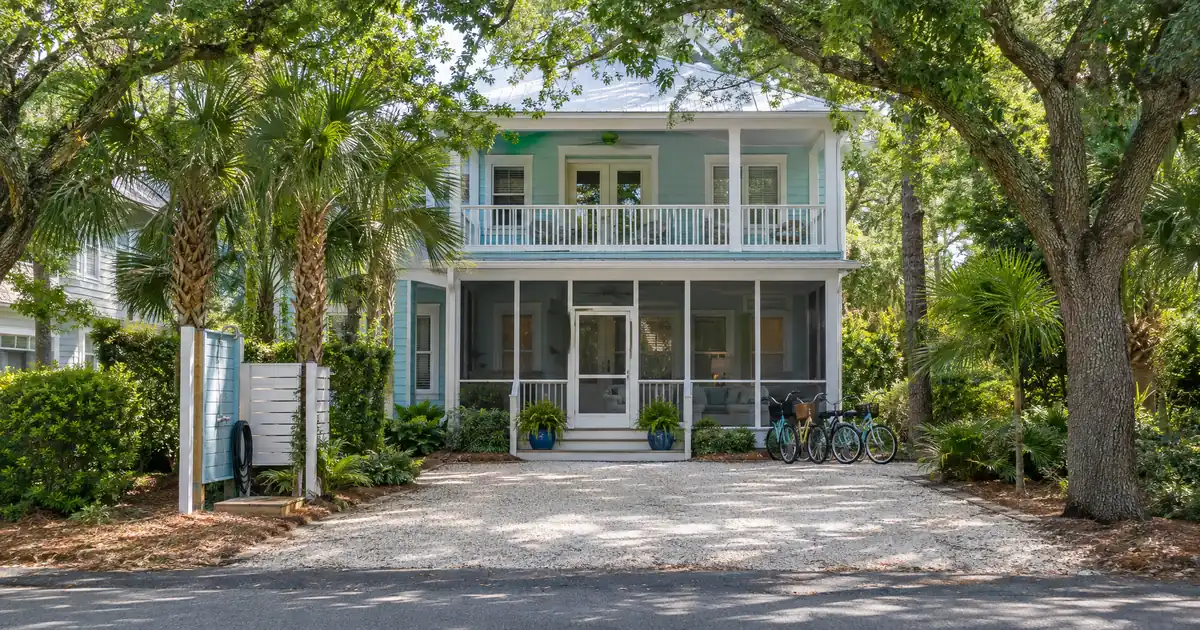
The Quick Read: A storm claim on a financed short-term rental runs through two parties at once. The insurance carrier decides what it owes, and the lender’s loan documents decide how the money is released for repairs. You file the claim, but the check for the building usually carries the lender’s name next to yours. Your loan payment also keeps coming due while the unit sits empty.
- Your policy must be written for short-term rental use, because many standard homeowner and landlord forms exclude hosting.
- Wind and flood are often separate coverages, and a percentage deductible on wind can be large.
- Loss-of-rents or business-income coverage is the bridge that carries the payment while the property is dark.
- Platform host protection is not property insurance and does not replace your own policy.
- Repair money is often released in stages, so you may need cash to start the work.
Key Terms Defined
DSCR (debt service coverage ratio) is monthly rent divided by the full monthly housing obligation: principal, interest, taxes, insurance, and any HOA dues. A DSCR loan is reviewed primarily on property-level rental income covering the payment, subject to lender guidelines.
PITIA is that full obligation. It stands for principal, interest, taxes, insurance, and association dues.
Mortgagee clause is the part of your insurance policy that names the lender as a protected party. It is why the lender appears on claim checks.
Loss draft is the process a lender or servicer uses to hold insurance money and release it as repairs progress.
Loss of rents is coverage that replaces rental income when a covered event, such as a storm, makes the unit unusable.
Named-storm deductible is a separate deductible for hurricane-type events. It is often a percentage of the insured value rather than a flat amount.
Host protection is a booking platform’s own damage and liability program for guest stays. It is not a property insurance policy.
Short-Term Rental Calculator
Run the STR numbers in your market
Rate source: Freddie Mac 30-yr average via FRED® — Federal Reserve Bank of St. Louis · effective Oct 15, 2026
Prefilled with starting assumptions — enter your nightly rate, occupancy, taxes, and insurance for a more accurate picture.
Short-term rental income is documented with a 12-month history or a market data report. Program parameters update from Lendmire’s centralized guideline source.
As of Oct 15, 2026 · General Freddie Mac market benchmark, not a Lendmire loan offer. Nightly rate, occupancy, taxes, and insurance are editable estimates. Qualifying income for short-term rentals varies by program — some use appraisal market rent, others use documented STR history or projections — and is confirmed in underwriting. Not a Loan Estimate, approval, or commitment to lend. Program availability and eligibility are subject to lender guidelines, credit approval, property review, and underwriting.
What Coverage Should Be in Place Before the Storm?
Before a storm, the policy has to match the loan file and the property’s use. That means the right named insured, the right address, the right lender clause, and coverage written for nightly rental. Most claim problems start at this stage, long before any shingles come off.
Across the wholesale network, lenders treat insurance as a condition of the loan. They look for dwelling coverage, guest liability, and protection for lost rent. They also want the lender listed correctly on the policy, and a wrong mortgagee clause is one of the most common mismatches on a file.
The policy form matters as much as the limits. Ramsey Solutions notes that many homeowner and landlord policies exclude business activity such as Airbnb hosting. Telling an insurer a rental is owner-occupied to get a cheaper policy is a bad trade. An occupancy mismatch can give the carrier grounds to deny the claim.
Here is how the main perils usually line up with the policy that responds.
| Event | Policy that usually responds | Watch for |
|---|---|---|
| Wind damage to the building | Property policy or separate wind policy | Percentage deductible |
| Named-storm or hurricane damage | Named-storm coverage | Exclusions in standard forms |
| Flood and storm surge | Separate flood policy | No income protection |
| Lost bookings after covered damage | Loss-of-rents or business income | Uninhabitable trigger |
| Guest injury or guest property damage | Liability and host protection | Weather events excluded |
Insurance also sits inside your coverage figure. Premiums, wind add-ons, and flood coverage all land in the PITIA. AirDNA ties a hurricane-area premium directly to lower net operating income and a lower DSCR. A storm-zone property can look strong on rent and still lose coverage once the real insurance quote goes into the denominator.
Local rules are a separate question. Short-term rental rules can vary by city, county, HOA, and property type, so investors should confirm local rules before relying on projected rental income.
What Does Airbnb Host Protection Not Cover in a Storm?
Host protection does not cover your storm loss. It is a guest-stay program, and it does not replace a property policy or income coverage. Forbes Advisor reports that Airbnb Host Protection does not cover loss of income, although some insurer endorsements can. Treat that page as a general guide, since platform terms change.
Ramsey describes platform protections as supplemental. AirDNA says a true short-term-rental policy typically covers guest damage, liability, and lost income when a covered event makes the property unrentable. That last piece is the one that matters after a storm.
Many investors discover the gap only after the cancellations start. A hurricane takes the roof, guests cancel, and the platform’s program does nothing about the empty calendar. Only your own policy, with the right income endorsement, answers that loss.
What Happens First When the Storm Hits?
Your first moves are to protect the property, document everything, and notify both the carrier and the lender. The order below keeps you from losing coverage or leverage over small mistakes.
1. Make the property safe and stop further damage. Tarp the roof, shut off water, and board openings. Keep every receipt, because policies usually require reasonable steps to prevent more loss.
2. Document before you repair. Take photos and video of every room and the exterior. Record the date, the time, and who found each problem.
3. Notify the carrier. Open the claim and ask what the policy requires for proof of loss.
4. Notify the lender or servicer. The standard residential security instrument calls for prompt notice to both the carrier and the lender. DSCR notes are lender-specific, so read yours for the exact wording.
5. Preserve booking records. Save the calendar, cancellations, guest messages, and platform payout history. These support any lost-income claim.
6. Keep paying the loan. Damage does not pause the obligation, and any hardship option is at the servicer’s discretion.
Step six surprises people the most. The CFPB’s disaster-finance guidance states that a damaged home does not suspend the duty to keep paying the mortgage. On a short-term rental with no bookings, your income coverage and cash reserves carry the payment.
What Does the Carrier Need, and What Does the Lender Need?
The carrier and the lender want overlapping documents for different reasons. The carrier is deciding what it owes. The lender is protecting its collateral and deciding when to release money.
| Item | Carrier | Lender or servicer |
|---|---|---|
| Photos, video, damage notes | Yes | Often |
| Repair estimate or contractor bid | Yes | Yes, for release |
| Proof of loss | Yes | May file if you do not |
| Repair plan and permits | Sometimes | Yes, for staged release |
| Booking and cancellation records | Yes, for income | Helpful for the file |
| Insurance declarations page | Yes | Yes |
Sherafy, a law-firm consumer explainer, describes the usual servicer process. The servicer collects the estimate, the contractor bid, the repair plan, and permits. It then releases an initial portion of the money and more at later work stages.
Build one folder for the carrier and one for the lender. Send each what it asks for, and keep copies of everything. Servicer requirements vary, and no single documentation package fits every note.
How Do Claim Proceeds Reach the Repairs?
For building damage, the claim check is usually written to both you and the lender or servicer. You cannot cash it alone. The money goes into a controlled release process, and repairs are paid in stages.
The CFPB explains that an adjuster evaluates the damage. The insurer then pays either replacement cost or actual cash value, depending on the policy. The settlement check is generally made out to both the owner and the mortgage servicer or lender. Consumer Reports adds that insurers include the mortgagee so the lender’s financial interest is protected, and that endorsement and payout procedures vary by lender.
The standard security instrument has a built-in decision. Proceeds go to restoration or repair if repair is economically feasible and the lender’s security is not lessened. If not, they are applied to the loan balance. That is the standard residential form, and DSCR notes are written by each lender, so treat it as a reference point only.
In practice, DSCR notes vary a lot on loss-draft terms. Some are short on detail. Others spell out claim-size thresholds and inspection steps. Smaller claims are often handled with little friction, and larger ones bring the lender in more deeply. Read your note before you close, not after the storm.
Contents and living-expense proceeds are generally not the lender’s real-estate collateral. For a business-use rental, how furnishings and income proceeds get paid depends on the policy and the note, so confirm it with the servicer.
The staged release creates a cash-flow problem. Contractors often want a deposit before the first release arrives. You may need to front some of that money, and your reserves, which commonly run around six months of PITIA but vary by lender and loan, help cover it.
How Does a Dark Property Affect Your DSCR?
While the unit is empty, income drops and the loan payment does not. How that affects the ratio depends on whether anyone is testing it.
Most of the time, nobody is. DSCR is measured when you buy or refinance, not every month. A storm in the middle of a loan does not trigger a new calculation. It strains your cash, not your qualification.
Here is what the network’s short-term rental programs typically look for, subject to lender guidelines:
- Purchase leverage: up to 75% LTV on a short-term rental purchase on the strongest files.
- Refinance and cash-out leverage: up to 70% LTV on a short-term rental refinance or cash-out.
- Credit score: a 640 minimum.
- Hosting history: typically about 12 months.
- Coverage floor: 1.00 on both purchases and refinances.
- Loan size: up to $3,000,000 on standard programs.
A 1.00 coverage floor is where select programs start, not a universal standard. Coverage below 1.00 is available through select lenders in the network, with leverage and terms adjusted. Clearing 1.00 also does not mean the property produces positive cash flow. Repairs, vacancy, management, utilities, and capital costs all sit outside the DSCR calculation.
A lender reviewing a refinance on a storm-hit rental usually wants to see the repairs finished and bookings returning. A refinance application that lands mid-rebuild gets harder to document. For more on that situation, see Lendmire’s piece How to Use a DSCR Loan on a Storm-Hit Airbnb With Lost Bookings.
A Modeled Example
This scenario is hypothetical and uses assumed ratios, not market data.
- Before the storm: the rental clears about 1.25x on its trailing income.
- During repairs: the unit earns nothing, and loss-of-rents coverage, if it applies, supplies replacement income.
- After repairs: the renewed policy carries a higher premium and a percentage wind deductible, and coverage settles near 1.10x.
The takeaway is simple. The same property can still clear a 1.00 floor after the storm, but the cushion is thinner. If premiums keep climbing at renewal, the cushion keeps shrinking.
DSCR vs. conventional financing
There are two common ways to finance an investment property, and they qualify you differently — here’s how investors weigh them.
Why investors choose it
- Qualifies on the property’s rental income — no personal tax returns, W-2s, or pay stubs needed to document income.
- No personal debt-to-income ceiling to clear, so existing mortgages and obligations don’t cap your borrowing the same way.
- Can be closed in an LLC, keeping the property inside a business entity.
- Built for scaling — not held to the limit on number of financed properties that conventional financing applies.
- Underwriting centers on the deal: generally qualifies when the rent covers the payment, a 1.00x coverage ratio being a common baseline (confirmed in underwriting).
- Designed specifically for investment property, including long-term and, where the program allows, short-term rentals.
Where it’s strong
- Often the lowest ongoing financing cost for a buyer who fully qualifies on personal income — a fit for a first property or a cost-first purchase.
Trade-offs for investors
- Requires full personal income documentation and must fit within a debt-to-income limit — salary, existing debts, and other mortgages all count.
- Typically held in your personal name rather than a business entity.
- Caps how many financed properties you can carry, which can become a ceiling as a portfolio grows.
- Evaluates you as a borrower as much as the property, which usually means more paperwork.
How investors usually choose: a first or single property often optimizes for the lowest financing cost; portfolio builders often optimize for leverage, vesting in an LLC, and scaling past conventional caps. The right answer depends on your goals, the property, and current guidelines — both paths run through select lenders in Lendmire’s wholesale network, with eligibility and terms confirmed in underwriting.
Where Does the General Rule Break?
The rules above describe the usual path. Several situations bend them.
Wrong policy form or undisclosed rental use. If the carrier treats hosting as excluded business activity, it may deny the claim. That denial is separate from the lender’s rights. In some cases the mortgagee clause protects the lender even when the insurer denies the borrower, which leaves you owing the loan with no insurance money.
Flood versus wind. Flood is a separate policy. Federal rules require flood coverage on loans from federally regulated lenders in mapped high-risk flood zones, and many private DSCR lenders require it by contract anyway. A flood policy can satisfy the lender while paying nothing for lost rent.
Loss of rents versus short-term-rental income. Loss-of-rents wording on a landlord policy is usually built around lease rent. Nightly income swings by season, so a short-term rental often needs business-income wording instead. Loss-of-rents coverage generally pays only when a covered peril causes physical damage that makes the unit uninhabitable. A power outage or a closed road that cancels bookings usually does not count.
Blanket or portfolio notes. If several rentals sit under one blanket note, one idle house can pull down pooled coverage even while the others keep paying. Release, substitution, and paydown terms live in the loan documents.
Underinsurance and rebuild costs. If the rebuild costs far more than the payout, repair may not be economically feasible under the note. The lender may then apply proceeds to the balance instead of funding repairs. Limits set from market value rather than replacement cost are a frequent cause.
Entity mismatch. If the property is held in an LLC but the policy names you personally, the carrier can dispute who it owes. Lenders vary on this, and LLC-titled loans are subject to lender program eligibility. Match the named insured to the borrower on the note.
Condos. A condo adds a master policy, your unit policy, and possible loss assessments. Find out which one pays for what before a storm, not after.
Post-loss renewal. After a major claim, a carrier may reprice or decline to renew. A higher premium later lowers your ratio, which matters if you plan to refinance.
What Should You Confirm With Your Lender and Carrier?
Some answers are lender-specific. Ask these before you need them:
- What does the note say about notice, loss drafts, and release stages?
- At what claim size does the servicer step in?
- Does your policy name the borrower exactly as the note does?
- Is the wind deductible a flat amount or a percentage?
- Does your income coverage require the unit to be uninhabitable, and for how long does it pay?
- Is flood covered separately, and does it include any income protection?
- Does the policy explicitly allow short-term rental use?
Tax treatment varies; consult a qualified professional about how insurance proceeds and repair costs apply to you.
Frequently Asked Questions
Do I have to tell my DSCR lender about storm damage?
Usually yes. The standard residential security instrument calls for prompt notice to both the carrier and the lender, and DSCR notes are written by each lender. Read yours for the exact duty. Even where the wording is thin, the lender is on the policy and will see the claim, so telling it yourself avoids an awkward surprise.
Why is my lender’s name on the claim check?
The policy carries a mortgagee clause that protects the lender’s interest in the building. That is why the structural payment is generally made out to both you and the lender or servicer. The servicer then holds the money and releases it as repairs progress, based on the note’s loss-draft terms.
Will Airbnb’s host protection pay for storm damage or lost bookings?
No. Platform protection is a supplemental guest-stay program and does not cover loss of income. Your property policy, plus any loss-of-rents or business-income coverage, answers the storm loss. Check the endorsement wording, because coverage differs by carrier.
Does a damaged, empty rental hurt my DSCR loan right away?
No. Your DSCR is measured when you buy or refinance, not every month. The immediate problem is cash flow, since the payment keeps coming due with no bookings. A later refinance application will look weak until repairs finish and income returns. Lenders weigh that case by case.
Can I refinance or take cash out while the property is still recovering?
It is difficult. Short-term rental refinance and cash-out programs typically top out at 70% LTV and look for about 12 months of hosting history. A property with a gap in bookings is harder to document. For one angle on that question, see Lendmire’s article on whether a storm-hit Airbnb can get a DSCR cash-out. Each file is reviewed individually, subject to lender guidelines.
Next Steps
If you are buying or refinancing a rental property and want to see how the numbers work, Lendmire can help you compare DSCR loan options based on the property income, credit profile, leverage, and investor goals. Lendmire is a broker that arranges DSCR financing through select lenders in its wholesale network across 41 markets, including Washington, D.C. For the full picture of how these loans work, read the complete DSCR loans guide. The sturdiest storm-zone files are the ones where the insurance is sorted out before the weather turns.
For current guidelines and terms, see Lendmire’s DSCR loan programs page.
About Lendmire
Lendmire — NMLS# 2371349 — is a DSCR and non-QM mortgage brokerage with investor loan programs in 41 markets, including Washington, D.C. DSCR eligibility is commonly reviewed by the lender around property-level rent rather than personal income documentation, subject to lender guidelines, and the brokerage helps arrange financing for LLC-owned portfolios beyond conventional financed-property limits. Recognized by Scotsman Guide as a Top Mortgage Workplace in 2025 and 2026.
Get Started
Ready to find the right loan for you?
In about 30 seconds you can review financing options available for your investment property. No commitment required.
Informational only. Not a Loan Estimate, approval, or commitment to lend. Program availability and eligibility are subject to lender guidelines, credit approval, property review, and underwriting.
References
1. Ramsey Solutions: Short-Term Rental Insurance
2. AirDNA: Debt Service Coverage Ratio
3. Forbes Advisor: Short-Term Rental Insurance
4. AirDNA: Short-Term Rental Insurance Guide
5. CFPB: Protecting and rebuilding your finances after a disaster
6. Sherafy
7. CFPB: How do home insurance companies pay out claims?
8. consumerreports.org: Avoid Insurance Surprises Rebuilding After a Disaster
This article is part of Lendmire’s short-term rental loan program — full qualification details, guidelines, and scenarios live on the program page.
Related reading: DSCR Rent Rules for an Airbnb Switching to Long-Term Rental · How Much Each Lever Lifts a DSCR on a Furnished Rental · DSCR Refinance Requirements for Keeping a Rental After Divorce
Brandon Miller
Founder & CEO, Mortgage Loan Originator, Lendmire LLC
- Mortgage Loan Originator · NMLS# 1129696 · Verify on NMLS Consumer Access
- North Carolina Real Estate Broker · License# 343312 · Verify on NCREC
- North Carolina Insurance Producer · License# 19053198 · Property, Casualty, Life, Health · Verify on NAIC SBS
- Lendmire LLC · Firm NMLS# 2371349 · Verify firm licensure
Legal disclosures. Lendmire (NMLS# 2371349) is a state-licensed mortgage brokerage that arranges financing through wholesale lender relationships. Lendmire is not a direct lender, depository institution, or registered financial advisor. The discussion above is general informational content about real estate financing — it is not financial, legal, or tax advice, and readers should consult licensed professionals for guidance on their individual circumstances. Loan inquiries are subject to lender underwriting; this article does not represent a commitment to lend. Loan terms, rates, and qualification standards vary by borrower, property, and state, and are subject to change at any time. Equal Housing Opportunity. NMLS Consumer Access: nmlsconsumeraccess.org.