
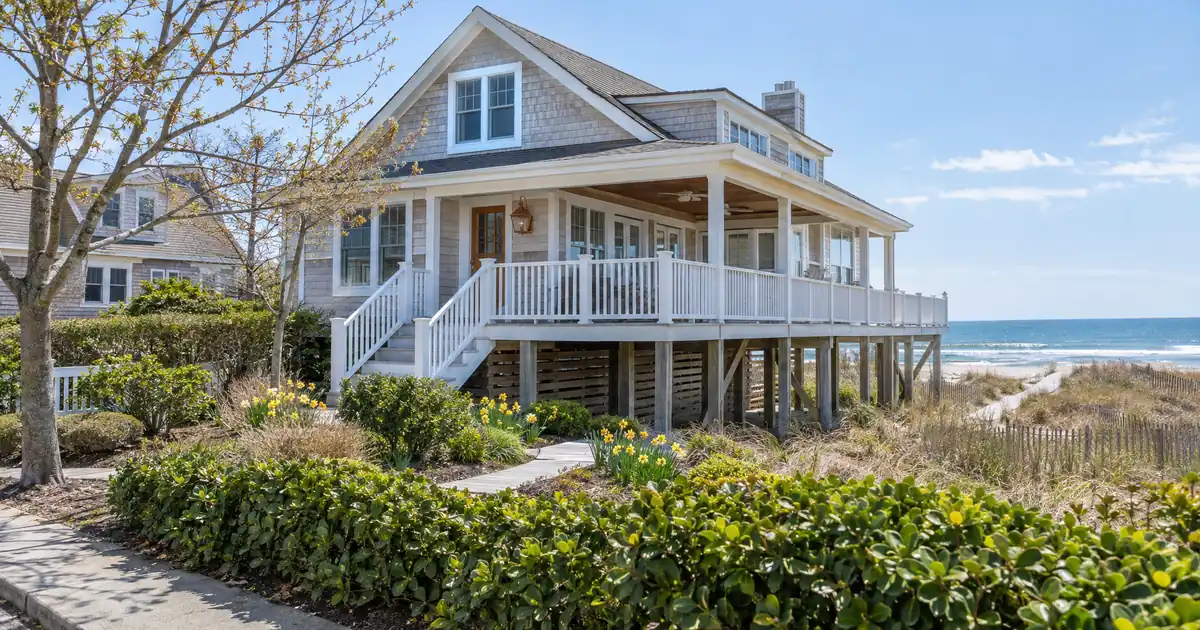
The Quick Read: A DSCR loan can work on a storm-hit Airbnb, but the lender will look at repair status, insurance, and the income you can document before it looks at the rent, so the order you tackle the work in matters as much as the ratio itself. Lost bookings drag down trailing income. The strongest files pick the right income evidence and are usually repaired before they are submitted.
- Condition and insurance get reviewed first. A damaged property is not waved through because the loan is built on rent.
- Months of storm downtime can pull a trailing income average down, so the income evidence you lead with matters.
- On short-term rental collateral, the network’s programs typically run up to 75% LTV on a purchase and about 70% on a refinance, subject to lender guidelines.
- Clearing the coverage ratio does not mean the property makes money. Repairs, vacancy, and management sit outside the math.
- A repaired, insured property with documented income is the strongest position to apply from.
Can You Apply While the Property Is Damaged?
Usually the better move is to repair first and apply second. Lenders in the network want collateral that is insurable, in good condition, and able to earn rent. A property that is half-repaired or uninsurable is a hard file on any program.
Short-Term Rental Calculator
Run the STR numbers in your market
Rate source: Freddie Mac 30-yr average via FRED® — Federal Reserve Bank of St. Louis · effective Oct 15, 2026
Prefilled with starting assumptions — enter your nightly rate, occupancy, taxes, and insurance for a more accurate picture.
Short-term rental income is documented with a 12-month history or a market data report. Program parameters update from Lendmire’s centralized guideline source.
As of Oct 15, 2026 · General Freddie Mac market benchmark, not a Lendmire loan offer. Nightly rate, occupancy, taxes, and insurance are editable estimates. Qualifying income for short-term rentals varies by program — some use appraisal market rent, others use documented STR history or projections — and is confirmed in underwriting. Not a Loan Estimate, approval, or commitment to lend. Program availability and eligibility are subject to lender guidelines, credit approval, property review, and underwriting.
The answer depends on which transaction you are doing:
- Purchase of a damaged STR. Most DSCR programs want a turnkey or stabilized property. Heavy damage often means short-term renovation or bridge financing first, then a DSCR refinance once the property is repaired and operating.
- Refinance of an STR you already own. The lender wants proof that repairs are done, or at least that insurance proceeds and a repair scope are in place.
- Cash-out refinance. Do not assume cash-out will fund the repairs. With materially damaged collateral, a renovation loan often fits better.
- An existing DSCR loan. The payment is still due while the property is offline. Your options run through your servicer, not a new application.
This article walks through how underwriting treats each piece. It is built from how DSCR files are structured across the wholesale network, plus public insurance and disaster-relief sources. No published rule covers this exact scenario, so program details differ by lender.
DSCR in Plain Terms
DSCR stands for debt service coverage ratio. It is the property’s rent used for lender review divided by its monthly obligation. That obligation is PITIA: principal, interest, taxes, insurance, and association dues. A result of 1.00 means income matches the obligation. A result of 1.20 means income runs 20% above it.
The loan is reviewed primarily on property-level rental income covering the payment, subject to lender guidelines. Your personal income is not the main test. Credit, reserves, and equity still apply. The complete DSCR loans guide covers the basics if the term is new.
For storm-hit properties, one point matters more than any other. DSCR compares rent to PITIA and nothing else. Repairs, vacancy, utilities, management fees, and capital spending are outside it. A file can clear the floor and still lose money every month.
Where Your Property Stands
Your status decides your path more than your rent does. Use this table to find yours.
| Your situation | What lenders look at | Likely path |
|---|---|---|
| Damaged, not habitable | Scope of repairs, insurance, claim status | Repair first, then apply |
| Repaired, bookings recovering | Proof of repair, recent income | Appraiser analysis or fallback rent |
| Operating, weak trailing history | Months of downtime in statements | Lead with other income evidence |
| Open insurance claim | Claim disclosure, payee, repair plan | Resolve or document before applying |
Two other cases deserve a mention. In one, the house stands but access roads or utilities are out. Bookings stop even though the building is fine, and the appraiser may still see a marketability issue. In the other, the property cannot be insured at a workable cost after the storm. If it cannot be insured, the loan generally cannot move forward.
How Underwriting Counts Income After Storm Downtime
Here is how the review typically runs, in order.
Step 1: Pick the transaction. Purchase, rate-and-term refinance, and cash-out each treat damage differently, as covered above.
Step 2: Check condition and insurance. The lender confirms the policy is in force, the carrier still covers the property, any claim is disclosed, and repairs restore the collateral. An inspection or appraisal update is common. Income comes after this.
Step 3: Establish qualifying income. On short-term rentals the common paths are:
- Twelve months of platform history, property-management statements, or bank statements showing deposits.
- An appraiser’s short-term rental analysis based on comparable properties.
- A market projection, generally on transactions where history does not exist.
- Long-term market rent from the appraiser, on Form 1007 for a single-family home or Form 1025 for a two-to-four unit property. This is the conservative fallback.
Many programs average the trailing months. Months with no bookings count as zero in that average rather than being skipped. Whether a program adjusts for a declared disaster varies by lender and is not something to assume.
Step 4: Choose what to lead with. If trailing history is unrepresentative, ask which evidence the program accepts. The three main routes compare like this:
| Income method | Strength | Weakness |
|---|---|---|
| Trailing actuals | Real, documented bookings | Storm months pull it down |
| Appraiser STR analysis | Market-based, not tied to downtime | Depends on comparables |
| Long-term rent fallback | Simple and conservative | Usually lower than STR income |
Many programs also expect about 12 months of hosting history on short-term rental refinances and purchases. Lenders generally use the lower of the lease or the appraiser’s rent when long-term rent is the basis. Lendmire’s piece on using projected Airbnb income on a refinance covers how projections are treated.
Step 5: Run the ratio. Qualifying income divided by PITIA, compared with the program floor.
Step 6: Re-check insurance cost. Post-storm premium increases or non-renewals raise the insurance line in PITIA. A stale insurance estimate that understates the real premium can surface late in the file, raising PITIA and lowering the coverage ratio.
A Worked Example (Modeled, Not Market Data)
Run the numbers on a modeled property. These inputs are assumptions chosen for illustration, not figures from any market.
Say a coastal rental covered its full obligation at roughly 1.30x in a normal booking year. A storm hits, and the property is offline for part of the trailing twelve months. Those zero-income months pull the average down, and the same statements now read near 0.95x.
The owner has choices to bring to a lender:
- Wait until bookings resume and the trailing window reflects normal operation.
- Ask whether the program accepts an appraiser’s short-term rental analysis instead of trailing actuals.
- Compare the long-term rent fallback, which might land closer to 1.00x.
- Ask about the select-lender path below 1.00, where leverage and terms are adjusted.
Notice what the example leaves out. Even at 1.30x the property might not be profitable once repairs and management are counted. Each option is subject to lender guidelines, credit review, and property review.
Insurance and Claim Mechanics
Insurance decides whether the storm was a bump or a crisis. It also affects the loan directly.
Platform protection mostly does not cover storms. Airbnb’s AirCover is aimed at guest-caused damage. One host insurance explainer notes that hurricanes, floods, wildfires, and earthquakes are excluded. Ramsey Solutions adds that platform protections are supplemental, and that homeowners and many landlord policies often exclude business activity such as hosting.
Lost income is only insured if the right coverage was in force. Business-income coverage replaces income a rental would have earned had a covered loss not forced it offline. Proper Insurance explains that a standard homeowners policy has no income coverage, and landlord policies carry loss of rents instead. The Hartford lists wind among covered causes for business income coverage. Flood and wind are often carved out or sub-limited, so the policy language controls.
Other points that matter at the lender’s desk:
- Named-storm deductibles. Coastal policies often use a percentage deductible, which can dwarf a flat dollar deductible because it applies to the building limit.
- Who is on the claim check. The lender is usually a payee, and repair funds are often released in draws.
- Open claims. Disclose them. A lender that finds an undisclosed claim late tends to pause the file.
- Insurance proceeds as income. Lenders differ on whether business-income payments count as rent used for lender review. Treat it as lender-specific and ask before you apply.
Tax treatment can depend on how the funds are used and how the property is held; investors should keep clear records and speak with a qualified tax professional before relying on any deduction.
What Disaster Aid Actually Covers
Insurance comes first. Federal disaster programs for individuals are built around primary residences and cannot duplicate benefits insurance already paid. An investor’s rental is generally not their target.
The Small Business Administration is a different story. Its physical damage loan page says vacation and secondary homes are excluded from its home disaster loans, but qualified rental properties may be eligible under the business physical loan program. Damage must sit in a declared disaster area, and insurance proceeds are deducted. A Congressional Research Service report explains that economic injury loans fund working capital for obligations the borrower would have met but for the disaster, based on actual economic injury.
Whether your property counts as a qualified rental is the agency’s call. Do not plan around eligibility until you have heard from them. Any new debt also lands in your credit profile and cash picture, which a DSCR lender will see.
DSCR vs. conventional financing
There are two common ways to finance an investment property, and they qualify you differently — here’s how investors weigh them.
Why investors choose it
- Qualifies on the property’s rental income — no personal tax returns, W-2s, or pay stubs needed to document income.
- No personal debt-to-income ceiling to clear, so existing mortgages and obligations don’t cap your borrowing the same way.
- Can be closed in an LLC, keeping the property inside a business entity.
- Built for scaling — not held to the limit on number of financed properties that conventional financing applies.
- Underwriting centers on the deal: generally qualifies when the rent covers the payment, a 1.00x coverage ratio being a common baseline (confirmed in underwriting).
- Designed specifically for investment property, including long-term and, where the program allows, short-term rentals.
Where it’s strong
- Often the lowest ongoing financing cost for a buyer who fully qualifies on personal income — a fit for a first property or a cost-first purchase.
Trade-offs for investors
- Requires full personal income documentation and must fit within a debt-to-income limit — salary, existing debts, and other mortgages all count.
- Typically held in your personal name rather than a business entity.
- Caps how many financed properties you can carry, which can become a ceiling as a portfolio grows.
- Evaluates you as a borrower as much as the property, which usually means more paperwork.
How investors usually choose: a first or single property often optimizes for the lowest financing cost; portfolio builders often optimize for leverage, vesting in an LLC, and scaling past conventional caps. The right answer depends on your goals, the property, and current guidelines — both paths run through select lenders in Lendmire’s wholesale network, with eligibility and terms confirmed in underwriting.
The Program Numbers for Short-Term Rental Collateral
Across the wholesale network, short-term rental files typically follow these guidelines, subject to lender approval and not a commitment to lend:
- Purchase leverage: up to 75% LTV (loan-to-value, the loan as a share of the property’s value) on the strongest files.
- Refinance leverage: around 70% LTV.
- Cash-out: a 70% ceiling on short-term-rental collateral, versus 75% on standard rentals.
- Credit: a 640 minimum score on STR files, with higher scores supporting stronger terms.
- Coverage: a 1.00 floor on STR purchases and a 1.00 floor on STR refinances. 1.00 is where many select programs start; a separate select-lender path takes coverage below 1.00, with leverage and terms adjusted.
- Experience: about 12 months of hosting history is typically expected.
- Loan size: up to $3,000,000 on standard programs, with smaller balances routed through select lenders.
- Seasoning: cash-out refinances commonly expect about 6 months of ownership.
- Reserves: commonly around 6 months of PITIA, varying by lender, leverage, loan size, and transaction type.
A larger down payment lowers the monthly obligation and can lift the ratio. It does not erase leverage caps, credit floors, reserve rules, or property eligibility. Strong files clear two tests: enough equity and enough rental coverage.
Manufactured homes, log homes, and barndominiums fall outside these DSCR programs. Short-term rental rules can vary by city, county, HOA, and property type, so investors should confirm local rules before relying on projected rental income.
Edge Cases Where the Rule Bends
- Disaster between approval and closing. A file can remain subject to review before the loan is sold on, and may need post-closing evidence of condition and repairs.
- Flood zone. Flood coverage is generally required inside a mapped flood zone and not otherwise, though lenders differ.
- Larger unit counts. Many DSCR programs exclude short-term rentals on five-to-eight unit buildings. Where they are allowed, STR units may be treated as vacant for income.
- Declared versus undeclared disaster. Government aid depends on the declaration. Insurance and lender review do not.
- Conventional route. A conventional loan would require full income documentation and a debt-to-income calculation, which is a different test entirely.
Carrying the Payment While the Property Is Offline
The mortgage does not pause because bookings did. Reserves exist for this. If you hold an existing loan, call your servicer early, describe the damage, and ask what options exist. Keep the claim timeline, repair contractor bids, and cancellation records together.
Document cancelled, refunded, and paid bookings separately, because a clean file shows what was lost to the storm and what was ordinary vacancy. A lender can work with a clear record. It cannot work with guesses.
Documents to Gather Before You Apply
- Twelve months of platform payouts, property-management statements, or bank statements.
- The insurance declarations page, including wind and flood deductible structure.
- Claim correspondence, payment records, and the repair scope and contractor invoices.
- Photos showing repaired condition and any final inspection.
- Booking calendars showing cancellations during the storm period.
- Any disaster-loan paperwork, if you pursued it.
Mistakes to Avoid
- Applying while trailing statements show the worst months, without asking about other income evidence.
- Overstating occupancy or understating damage. Misrepresentation puts the whole file at risk.
- Assuming AirCover or a homeowners policy replaced your lost bookings.
- Letting an insurance quote go stale just before closing.
- Treating a passing coverage ratio as proof the deal is profitable.
Key Terms Defined
Trailing history: the most recent twelve months of income statements a program reviews to see what the property actually earned.
Loss-of-rents coverage: insurance that replaces rent you would have earned when a covered loss makes the property unrentable.
Named-storm deductible: a deductible set as a percentage of coverage, triggered when a named storm causes the loss.
Appraiser’s STR analysis: an appraiser’s estimate of short-term rental income, built from comparable properties rather than your own bookings.
Reserves: liquid funds you keep after closing, measured in months of the full monthly obligation.
Seasoning: the waiting period a lender wants between buying a property and refinancing it.
What to Do Next
If you are buying or refinancing a rental property and want to see how the numbers work, Lendmire can help you compare DSCR loan options based on the property income, credit profile, leverage, and investor goals. As a broker, it arranges financing through select lenders in its wholesale network across 41 markets, including Washington, D.C. The site’s illustrative calculator can show how different income assumptions change the coverage ratio.
Frequently Asked Questions
Can I use the DSCR loan to pay for storm repairs?
Not reliably. With materially damaged collateral, a lender will want repairs done or funded before a DSCR refinance. A renovation or bridge loan often fits better, followed by a DSCR refinance once the property is operating. Cash-out proceeds should not be counted on to fund the work, and the 6-month seasoning expectation still applies.
Will lost bookings automatically sink my application?
No, but they can lower the income a lender sees. Zero-income months pull a trailing average down. Depending on the program, other income evidence such as an appraiser’s short-term rental analysis or long-term market rent may be reviewed instead. Each option is subject to lender guidelines, credit approval, and property review.
Does insurance payout count as rental income?
It depends on the lender. Some treat business-income payments differently from booking revenue, and policies vary on what is covered. Ask the loan officer before relying on proceeds in your numbers.
What if my ratio ends up below 1.00?
Then 1.00 programs are likely out of reach on that income. A separate select-lender path takes coverage below 1.00, with leverage and terms adjusted. Waiting for bookings to recover, adding a larger down payment, or switching the income evidence can also change the result.
Should I keep a long-term rental fallback in mind?
Yes. A property that also rents on a conventional lease has a conservative income number to fall back on. It is not storm-specific advice, but it gives an appraiser and a lender a second view when bookings are disrupted. Properties that cannot be rented long-term may be harder to place.
About Lendmire
Lendmire, NMLS# 2371349, is a non-QM mortgage broker serving real estate investors in 41 markets, including Washington, D.C., through DSCR investor loan programs. Qualification is generally reviewed around the subject property’s rental income, not the borrower’s W-2 history — a practical fit for LLC-titled portfolios and self-employed investors. All scenarios remain subject to lender review and program guidelines. Two consecutive Scotsman Guide Top Mortgage Workplace recognitions (2025, 2026).
Get Started
Ready to find the right loan for you?
In about 30 seconds you can review financing options available for your investment property. No commitment required.
Informational only. Not a Loan Estimate, approval, or commitment to lend. Program availability and eligibility are subject to lender guidelines, credit approval, property review, and underwriting.
References
1. Uplisting – Airbnb Host Insurance
2. Ramsey Solutions – Short-Term Rental Insurance
3. Proper Insurance – Loss of Business Income
4. The Hartford – Airbnb Insurance
5. SBA – Physical Damage Loans
6. Congressional Research Service – SBA Disaster Loan Program FAQ
This article is part of Lendmire’s short-term rental loan program — full qualification details, guidelines, and scenarios live on the program page.
Related reading: Short Sale vs Lost Rental for a DSCR Loan Waiting Period · How to Choose a DSCR Loan or Bank Commercial Loan on a Rental · How a Portfolio DSCR Loan Handles Condos When Consolidating
Brandon Miller
Founder & CEO, Mortgage Loan Originator, Lendmire LLC
- Mortgage Loan Originator · NMLS# 1129696 · Verify on NMLS Consumer Access
- North Carolina Real Estate Broker · License# 343312 · Verify on NCREC
- North Carolina Insurance Producer · License# 19053198 · Property, Casualty, Life, Health · Verify on NAIC SBS
- Lendmire LLC · Firm NMLS# 2371349 · Verify firm licensure
Disclosures. The information presented in this article is general market commentary, not financial, legal, or tax advice. Lendmire is a mortgage brokerage (NMLS# 2371349) — not a direct lender or depository institution — and loan placement is subject to lender underwriting. Nothing in this content represents a commitment to lend. Loan terms, pricing, and program availability vary based on borrower qualifications, property characteristics, and state of subject property, and are subject to change at any time. Lendmire complies with Equal Housing Opportunity requirements. Consumer access: nmlsconsumeraccess.org.