
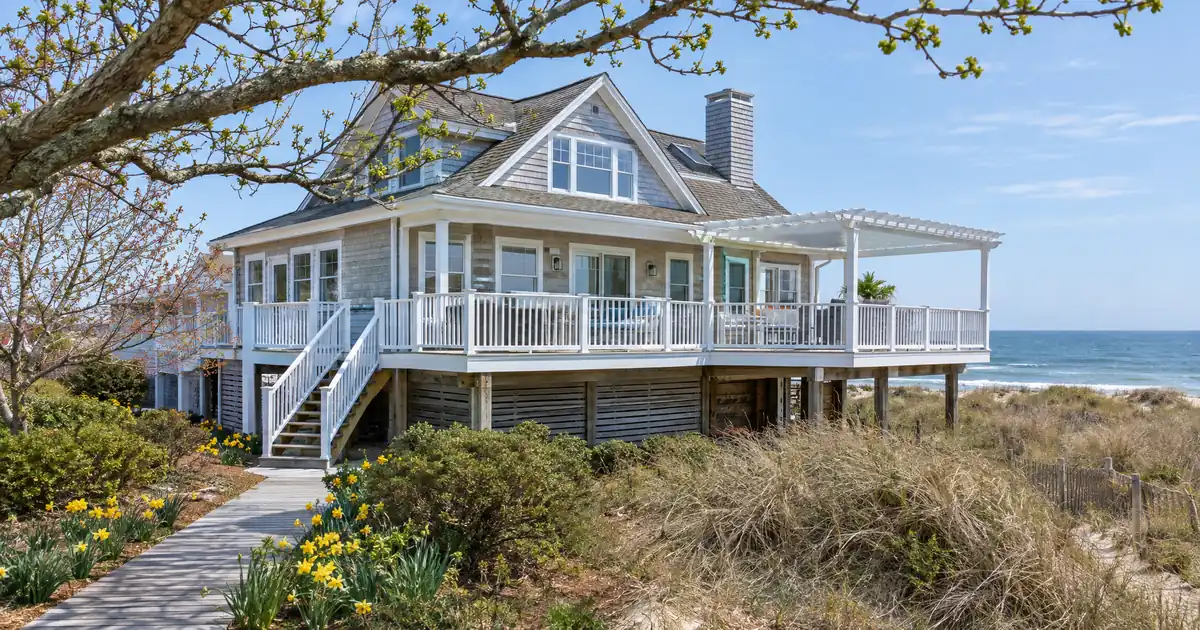
The Quick Read: Usually, but only for the nights the property can legally be rented to guests, and only when the lender’s program accepts the income method. Under a night cap, the file is limited to the allowed nights or falls back to long-term rent. Under a hosted-only rule, a non-resident owner generally cannot use nightly income at all.
- A night cap limits revenue. A hosted-only rule limits who may operate.
- A strong AirDNA projection does not override a local rule.
- Short-term rental loans in the network typically reach up to 75% LTV on a purchase and up to 70% on a refinance or cash-out, with a 640 score and a 1.00 coverage floor. All of it is subject to lender guidelines.
- Run every deal at long-term rent first. That is your fallback number.
- Check the ordinance, the HOA documents and permit transferability before you make an offer.
Short-term rental rules can vary by city, county, HOA, and property type, so investors should confirm local rules before relying on projected rental income.
Short-Term Rental Calculator
Run the STR numbers in your market
Rate source: Freddie Mac 30-yr average via FRED® — Federal Reserve Bank of St. Louis · effective Oct 15, 2026
Prefilled with starting assumptions — enter your nightly rate, occupancy, taxes, and insurance for a more accurate picture.
Short-term rental income is documented with a 12-month history or a market data report. Program parameters update from Lendmire’s centralized guideline source.
As of Oct 15, 2026 · General Freddie Mac market benchmark, not a Lendmire loan offer. Nightly rate, occupancy, taxes, and insurance are editable estimates. Qualifying income for short-term rentals varies by program — some use appraisal market rent, others use documented STR history or projections — and is confirmed in underwriting. Not a Loan Estimate, approval, or commitment to lend. Program availability and eligibility are subject to lender guidelines, credit approval, property review, and underwriting.
How Does a Lender Decide What Airbnb Income Counts?
A lender counts short-term income only when the property can legally operate that way for the borrower. If it can, the file uses one of a few income sources. If it can’t, the file uses long-term rent or is declined as a short-term rental.
Across the wholesale network, the sources tend to fall in this order, from most conservative to least:
1. Long-term rent schedule. The appraiser’s market rent for a standard lease.
2. Twelve months of host history. Platform statements or deposits showing what the property earned.
3. An appraiser’s short-term analysis. It names its data source, uses comparable short-term rentals, and shows daily rate, occupancy, seasonality and vacancy.
4. A third-party projection. A published report, most often on purchases with no history.
Programs differ on which of these they accept. Some lenders apply a haircut to projected income before dividing. Others want the lower of two numbers. Haircut sizes vary too, so treat any single percentage you see online as one program’s choice, not a rule.
The network’s short-term rental programs also expect about 12 months of hosting history from the borrower. A first-time host is not shut out of every path, but the file gets narrower.
The legal-use check comes first because everything else depends on it. If the city says the owner can’t run nightly rentals, a spreadsheet can’t change that. Underwriters read that as income that doesn’t exist.
Why Does the Appraisal Often Pull Income Down?
Appraisals return a long-term rent schedule, not a nightly income figure. Form 1007 covers one unit and Form 1025 covers two to four units. Fannie Mae’s appraiser update describes Form 1007 as documenting monthly market rent on a single-family investment property. It is a rent schedule, not a short-term income tool.
McKissock explains that appraisers cannot multiply nightly income by 30 to produce monthly rent. It also says the lender, not the appraiser, decides how income is counted.
HousingWire reports that using Form 1007 for short-term income often distorts the DSCR, producing artificially low ratios. It suggests analyzing short-term income through a narrative addendum instead.
Here is the practical result. You show a lender a strong projection. The appraisal comes back with long-term rent. The coverage number drops, sometimes below 1.00. That surprise is common on files in capped markets, and it is avoidable if you ask early which income source the lender will accept and who prepares it.
One note on agencies. Fannie Mae’s guidance is useful for form names only. DSCR loans are non-agency, and the lender sets its own file rules.
What Does a Night Cap Do to the Income?
A night cap limits how many nights a year an unhosted stay can be rented. Income counts only up to that limit. If the projection assumes year-round occupancy, it overstates what the ordinance allows, and a careful lender will not underwrite the overstatement.
Local examples show the pattern. A Lofty explainer on San Francisco describes a 90-night cap on unhosted stays, tied to a primary-residence requirement. An Awning guide to California rules reports a 120-night unhosted cap in the city of Los Angeles. Both sources are secondary, so confirm the current rule on the city’s own site.
Think about what a cap does to a file. Say a projection assumes the property books most of the year. The ordinance allows a fraction of those nights. A lender has three ways to respond:
- Count only the allowed nights. Use the rate and occupancy from the data, but stop at the cap.
- Fall back to long-term rent. Use the appraisal’s rent schedule and ignore nightly income.
- Decline the file as a short-term rental. This happens when the legal use is unresolved.
How the allowed nights get counted is a program choice. Across the network, the cleaner files document the cap, show platform statements for nights booked against it, and run both numbers. The weaker files lean on an uncapped projection and discover the problem late.
A capped property can also mix uses. Some investors rent nightly up to the cap and place a longer lease in the remaining months. Lenders view mixed use case by case, and the lease side needs to be documented like any long-term rent.
Here is a worked comparison using ratios only. Say a property clears about 1.25x on a full-year projection. Cap the nights and the same property might land near 1.00x. The long-term rent fallback might come in below 1.00x on a high-priced purchase. These are modeled assumptions, not market data. The lesson is the spread. Same address, three coverage numbers.
If the fallback lands below 1.00, options exist. A sub-1.00 path is available through select lenders in the network, with leverage and terms adjusted. Interest-only or extended-term structures through select lenders can also change the payment side of the ratio. Qualification stays subject to lender guidelines, credit approval and property review.
What Does a Hosted-Only Rule Do?
A hosted-only rule allows short-term stays only when the owner lives in the home. For a non-resident investor, nightly income is generally unavailable. This is a different problem from a night cap, and it is the one that catches buyers off guard.
The reason is simple. DSCR loans are designed for non-owner-occupied investment properties. Because they are business-purpose investor loans, they are reviewed differently from a standard owner-occupied mortgage. The borrower certifies they will not live there. A hosted-only license assumes they will.
Those two requirements collide. Some cities make the conflict plain.
- San Francisco. Hosted stays have no cap, but the host must live in the unit.
- Los Angeles (city). Hosted rentals have no cap. The Awning guide says investment properties and second homes cannot be listed as unhosted rentals.
- Santa Monica. The ordinance effectively allows hosted rentals only, as Minut reports in its California rules overview.
A hosted-only city does not make the rental business impossible. It makes the nightly path unavailable to a non-resident owner. You still have options:
| Path | How it works | Tradeoff |
|---|---|---|
| Long-term DSCR | Underwrite on a standard lease | Lower income, usually lower coverage |
| Buy in an open market | Pick a place where a permit is enough | Different market, different rents |
| Owner-occupied loan | Live there and host | Not a DSCR file, different rules |
The first path works as long as the property is rented under a standard lease. The second requires you to look elsewhere. The third leaves DSCR behind entirely.
Night Cap vs. Hosted-Only vs. Permit Cap
These rules sound alike and behave differently. This table separates them.
| Rule | Who it limits | Income effect | Likely file outcome |
|---|---|---|---|
| Night cap | Unhosted stays | Revenue limited to allowed nights | Capped income or long-term rent |
| Hosted-only | Non-resident owners | Nightly income unavailable | Long-term rent or decline as STR |
| Permit cap | New applicants | Permit may be unobtainable | Fallback until permit is shown |
| Permit only | Anyone | None, once registered | Short-term income can count |
Permit-only markets are the friendliest. You need the paperwork and tax registration, but no residency exception.
Two edge cases deserve attention. First, does the permit transfer on sale? Some don’t. A seller’s permit that disappears at closing leaves the buyer with no legal use. Second, can the HOA ban it? Yes, even where the city allows it. A lender looking at condo or HOA documents will see that.
Which Income Counts? A Decision Flow
Start at the rule type and work down:
1. No cap and a permit is held (or obtainable). Short-term income can count, using the program’s accepted source.
2. Night cap. Count only the allowed nights, or use long-term rent.
3. Permit cap with a waitlist. Treat the legal use as unresolved. Expect the long-term fallback until a permit exists.
4. Hosted-only. Use long-term rent, or look at another market.
5. Mixed rule. Underwrite the stricter piece, then document the rest.
One more structure is worth knowing. That is the medium-term rental approach, and income is then documented with leases. Definitions vary by jurisdiction, so check the local one before building a plan around it.
DSCR vs. conventional financing
There are two common ways to finance an investment property, and they qualify you differently — here’s how investors weigh them.
Why investors choose it
- Qualifies on the property’s rental income — no personal tax returns, W-2s, or pay stubs needed to document income.
- No personal debt-to-income ceiling to clear, so existing mortgages and obligations don’t cap your borrowing the same way.
- Can be closed in an LLC, keeping the property inside a business entity.
- Built for scaling — not held to the limit on number of financed properties that conventional financing applies.
- Underwriting centers on the deal: generally qualifies when the rent covers the payment, a 1.00x coverage ratio being a common baseline (confirmed in underwriting).
- Designed specifically for investment property, including long-term and, where the program allows, short-term rentals.
Where it’s strong
- Often the lowest ongoing financing cost for a buyer who fully qualifies on personal income — a fit for a first property or a cost-first purchase.
Trade-offs for investors
- Requires full personal income documentation and must fit within a debt-to-income limit — salary, existing debts, and other mortgages all count.
- Typically held in your personal name rather than a business entity.
- Caps how many financed properties you can carry, which can become a ceiling as a portfolio grows.
- Evaluates you as a borrower as much as the property, which usually means more paperwork.
How investors usually choose: a first or single property often optimizes for the lowest financing cost; portfolio builders often optimize for leverage, vesting in an LLC, and scaling past conventional caps. The right answer depends on your goals, the property, and current guidelines — both paths run through select lenders in Lendmire’s wholesale network, with eligibility and terms confirmed in underwriting.
What Documents Does a Capped Property Need?
Gather these before the lender asks:
- Permit and registration proof, including the permit’s transfer rules
- Platform statements showing nights booked against the cap
- Any city compliance or tax filing records
- HOA or condo documents confirming rentals are allowed
- The appraisal’s rent schedule, plus any short-term analysis
- A twelve-month income history if you are refinancing
On a purchase, you won’t have the history. Expect the lender to lean on the appraisal and a projection, and expect the legal-use proof to matter more.
Refinances differ in one way. The network’s short-term rental refinance programs reach up to 70% LTV, below the purchase ceiling, and a track record helps. Cash-out on short-term rental collateral is also capped at 70%. Standard long-term rentals on a cash-out go to 75%. Leverage, reserves, and pricing vary by lender and program; the final terms follow the full file review.
Stress-Test Before You Offer
Run the deal three ways before you write an offer:
1. Full projection at the lender’s likely haircut.
2. Capped nights, if a cap applies.
3. Long-term rent only.
If the third number lands below 1.00, you have a decision to make. Either the deal works as a long-term rental with adjusted terms, or you need a different property. Clearing 1.00 also isn’t the same as positive cash flow. The DSCR compares rent to the full housing payment only. Repairs, vacancy, management, utilities and capital costs sit outside the calculation, and nightly rentals run heavier on all of them.
Rules can also change after closing. A new cap or hosted-only rule can arrive mid-loan, and a later refinance would be underwritten under the new rule. California’s SB 346 is one example of enforcement tightening. Keep your records clean.
One more lens: Lendmire’s piece on how super jumbo DSCR short-term income rules work covers the larger-balance version of these questions. Loan sizes in the network run up to $3,000,000 on standard programs, with smaller balances routed through select lenders. For the full picture of programs, see the complete DSCR loans guide.
Strong files across the network tend to share the same habits. The borrower checks the ordinance first, orders the right documents, and shows a lender both the short-term and long-term numbers. Reserves vary by lender, leverage and loan size, commonly around six months of PITIA, which is principal, interest, taxes, insurance and any HOA dues.
Mistakes That Sink These Files
- Trusting an uncapped projection. It assumes nights the ordinance doesn’t allow.
- Multiplying the nightly rate by 30. Appraisers can’t do it, and lenders don’t accept it.
- Assuming a permit means it’s fine. Permits can be capped, non-transferable or tied to a primary residence.
- Assuming hosted stays work for investors. They generally require you to live there.
- Skipping the HOA. The city can say yes while the HOA says no.
- Treating AirDNA as the appraisal. It supports income. The appraisal still supports value.
If you are buying or refinancing a rental property and want to see how the numbers work, Lendmire can help you compare DSCR loan options based on the property income, credit profile, leverage, and investor goals. Call 828-256-2183 or request a quote. Tax treatment varies; consult a qualified professional.
Key Terms Defined
DSCR. The debt service coverage ratio: the property’s rent divided by its full monthly housing payment.
PITIA. Principal, interest, taxes, insurance and association dues, the full monthly obligation.
Night cap. A local limit on how many nights a year an unhosted short-term rental can be booked.
Hosted-only rule. A local rule that allows short-term stays only while the owner lives in the home.
Form 1007. The appraisal form that documents monthly market rent on a single-family rental.
Long-term rent fallback. The standard lease rent a lender uses when short-term income can’t be counted.
Frequently Asked Questions
Is the capped revenue what gets counted?
Generally, yes, if the program accepts the method. The lender counts the allowed nights, or ignores nightly income and uses long-term rent. A projection built on more nights than the cap allows won’t hold up in underwriting.
Can I buy in a hosted-only city with a DSCR loan?
You can, but not on nightly income as a non-resident owner. The loan requires non-owner occupancy, and the license requires you to live there. The usual path is long-term rent, subject to lender guidelines and the property’s legal use.
Does a projection automatically count?
No. Programs differ on whether they accept a third-party projection, and many apply a haircut or want other support. On a purchase it is often a strong option, so the legal-use proof matters even more.
What if the rules change after I close?
The existing loan stays in place, but a later refinance would be underwritten under the new rule. If a cap or hosted-only rule arrives, your nightly income could shrink or disappear, so stress-test at long-term rent before you buy.
Does a 30-day stay strategy avoid night caps?
Sometimes. Some jurisdictions treat stays of 30 or more nights as outside the short-term rules, but definitions vary. Income would then be documented with leases, and you should confirm the local definition first.
About Lendmire
Lendmire (NMLS# 2371349) is a DSCR-focused mortgage broker that helps arrange investor financing across 41 markets, including Washington, D.C., through wholesale and investor-lending channels. DSCR eligibility is generally reviewed by the lender around the property’s rental income rather than personal income documentation, subject to lender guidelines — which works for self-employed investors, LLC operators, and portfolios above four financed properties. Scotsman Guide named Lendmire a Top Mortgage Workplace in both 2025 and 2026.
Get Started
Ready to find the right loan for you?
In about 30 seconds you can review financing options available for your investment property. No commitment required.
Informational only. Not a Loan Estimate, approval, or commitment to lend. Program availability and eligibility are subject to lender guidelines, credit approval, property review, and underwriting.
References
1. Fannie Mae Appraiser Update
2. McKissock: Form 1007 and Short-Term Rental Appraisals
3. HousingWire: Short-Term Rentals Are Breaking the Appraisal Playbook
4. Lofty: San Francisco Short-Term Rental Laws
5. Awning: California Short-Term Rental Laws
6. Minut: California Short-Term Rental Laws
This article is part of Lendmire’s short-term rental loan program — full qualification details, guidelines, and scenarios live on the program page.
Related reading: DSCR Flood Insurance Rules for a Lakefront or Riverfront Rental · Super Jumbo DSCR Cash-Out Use of Proceeds Rules and Documentation · How to Qualify for a Super Jumbo DSCR Loan With High Debt-to-Income
Brandon Miller
Founder & CEO, Mortgage Loan Originator, Lendmire LLC
- Mortgage Loan Originator · NMLS# 1129696 · Verify on NMLS Consumer Access
- North Carolina Real Estate Broker · License# 343312 · Verify on NCREC
- North Carolina Insurance Producer · License# 19053198 · Property, Casualty, Life, Health · Verify on NAIC SBS
- Lendmire LLC · Firm NMLS# 2371349 · Verify firm licensure
Disclosure information. Lendmire is a state-licensed mortgage brokerage under NMLS# 2371349. Lendmire is not a depository institution, direct lender, or financial advisor — all loans referenced are placed through wholesale lender partners and are subject to each lender's underwriting standards. This article is provided for general informational purposes and is not a commitment to lend, nor does it constitute financial, legal, or tax advice. Loan programs, terms, rates, and qualification standards change without notice and depend on borrower profile, property type, and the state in which the subject property is located. Equal Housing Opportunity provider. NMLS Consumer Access: nmlsconsumeraccess.org.